
Restaurant in Bolzano, Italy
Castel Flavon - Haselburg
100ptsCross-Regional Castle Kitchen

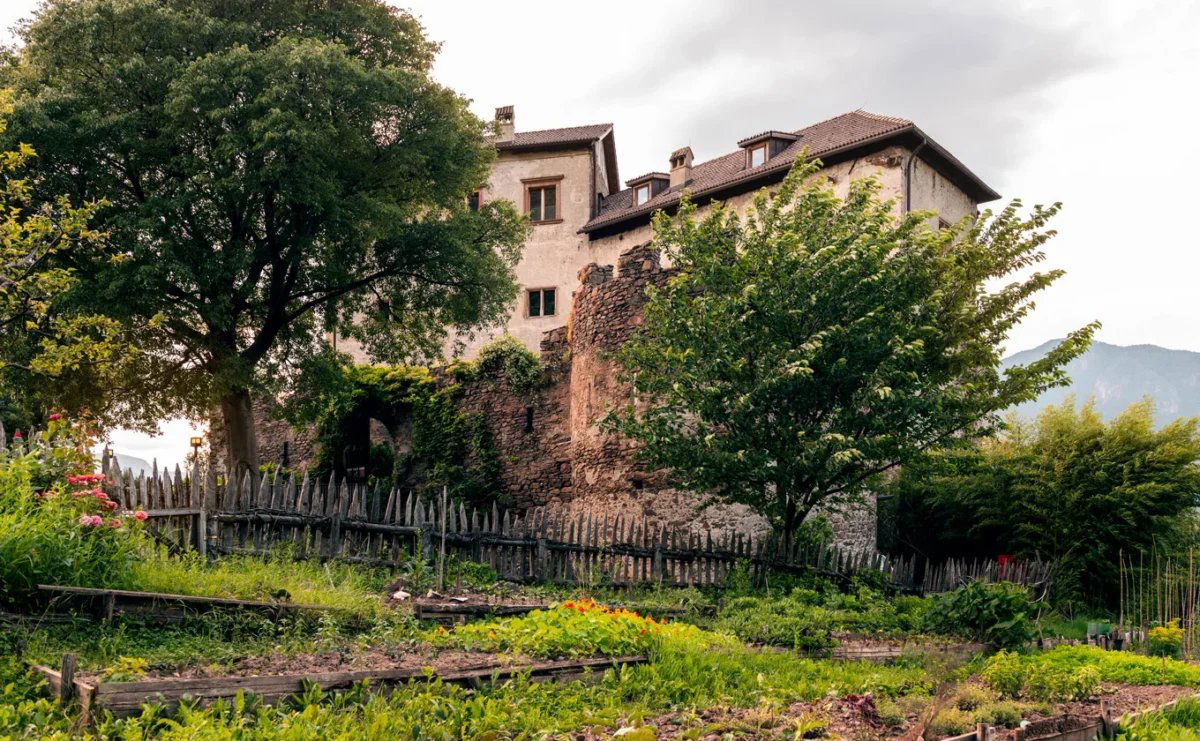
About Castel Flavon - Haselburg
A medieval castle above Bolzano's rooftops, Castel Flavon earns its climb with a panoramic terrace that frames the Dolomites and a kitchen under Michele Iaconeta that moves fluidly between Pugliese Mediterranean instincts and South Tyrolean alpine tradition. The result is one of the more compelling cross-regional dining propositions in the Alto Adige, where the setting and the cooking reinforce each other rather than compete.
Above the City, Between Two Culinary Worlds
The approach to Castel Flavon tells you something important before you ever sit down. A series of hairpin turns climbs out of Bolzano's valley floor, and the city drops away with each bend. By the time the medieval stonework comes into view, you are already in a different register, somewhere between the Germanic market town below and the high alpine terrain above. That physical transition is, it turns out, a reasonable metaphor for what happens at the table.
South Tyrol has spent decades working out what its food identity actually is. The region sits at a crossroads where Austrian-inflected comfort cooking meets northern Italian produce culture, and the most interesting kitchens in the province have learned to treat that friction as material rather than problem. At Castel Flavon, the resolution comes from an unlikely direction: a chef with roots in Puglia, Italy's deep south, who has taken up residence at one of the province's most dramatically positioned dining rooms and found productive tension between his own Mediterranean instincts and the alpine larder surrounding him.
The Ingredient Logic of a Cross-Regional Kitchen
South Tyrol's produce credentials are genuine and specific. The valley floors around Bolzano yield apple orchards of considerable quality, while the higher pastures produce dairy and cured meats that have defined the regional table for centuries. Speck Alto Adige IGP, canederli, and aged mountain cheeses are not decorative references here — they are the foundational materials of a larder that any serious kitchen in the area has to reckon with.
Michele Iaconeta arrives at that larder with a different set of references. Puglia's culinary logic is built on olive oil, legumes, oily fish, and the kind of vegetable-forward cooking that treats the south's seasonal abundance as primary rather than supporting. When a chef trained in that tradition takes on alpine ingredients, the results tend either toward uncomfortable compromise or genuine synthesis. The distinction matters: compromise produces dishes that feel regionally confused, while synthesis produces dishes that feel like they could only exist in one place.
The kitchen at Castel Flavon leans toward the latter. The menu moves between what the Michelin recognition describes as a more Mediterranean chord and explorations of northern dishes that reinterpret local traditions, and that range is the point. A legume preparation carries Pugliese weight and depth while drawing on valley produce. A cured meat course might acknowledge speck's IGP heritage while introducing a southern herb logic that shifts the flavour context. The sourcing discipline is evident in both directions: this is not a kitchen dropping decorative pasta on a menu of schnitzel, but one working through what two distinct Italian food cultures share at the level of ingredient quality and seasonal attentiveness.
For context on how Bolzano's dining scene handles the same north-south tension from different angles, Loewengrube holds firmly to modern interpretations of Tyrolean tradition, while Laurin approaches the city's culinary dual identity from a more polished modern cuisine framework. Marechiaro addresses the seafood dimension that Iaconeta's Pugliese background inevitably touches, and Vögele anchors the regional end of the spectrum at a more accessible price point.
The Terrace and What It Does to a Meal
Dining rooms inside medieval castles can easily become theatrical exercises where the setting overwhelms the food. Castel Flavon avoids that trap partly through geography. The panoramic terrace positions the Dolomite ridgelines and Bolzano's valley as backdrop rather than spectacle, meaning the view operates as continuous environmental context rather than a set-piece moment. Meals here tend to lengthen because the physical surroundings encourage a pace that the city below, with its busy Piazza Walther and tight pedestrian lanes, does not particularly support.
That unhurried quality is worth factoring into how you approach a booking. The castle sits at via Castel Flavon 48, and the ascent by car through the hairpin turns is a genuine decompression sequence. Visitors arriving on a warm evening will find the terrace the obvious choice; the outdoor setting and altitude combine to keep temperatures comfortable when the valley is still holding summer heat.
Castel Flavon in the Broader Alto Adige Dining Context
Alto Adige's fine dining scene has developed considerable depth over the past two decades, anchored partly by Michelin recognition across multiple properties and partly by a regional food culture serious enough to sustain it. Atelier Moessmer Norbert Niederkofler in Brunico represents the province's most austere expression of alpine sourcing philosophy, where the mountain larder is treated as both constraint and creative engine. Castel Flavon occupies a different position: it brings southern Italian ingredient logic into conversation with that same alpine larder, which places it in a smaller, more unusual niche within the regional picture.
For reference points further afield in Italian fine dining, the cross-regional synthesis approach at Castel Flavon shares conceptual ground with how kitchens like Osteria Francescana in Modena and Le Calandre in Rubano treat regional identity as a starting point for genuine creativity rather than a constraint. The ambition is different in scale, but the underlying approach to ingredient provenance as the primary creative material is consistent. Dal Pescatore in Runate and Enoteca Pinchiorri in Florence illustrate how Italian fine dining at its most considered tends to treat sourcing as foundational rather than incidental, a sensibility Castel Flavon shares at its own scale and altitude.
Back in Bolzano, ConTanima operates at the city's creative ceiling with a price point to match, offering a useful comparison for those deciding how Castel Flavon fits into a broader Alto Adige dining itinerary. See our full Bolzano restaurants guide for a complete picture of the city's current table, and our guides to Bolzano hotels, bars, wineries, and experiences for the full city context.
Planning Your Visit
The castle's address at via Castel Flavon 48 means a car or taxi is the practical choice; the hairpin ascent rules out most walking approaches from the city centre. Given the setting and the kitchen's Michelin recognition, booking ahead is advisable, particularly for terrace seating during the warmer months when demand concentrates on outdoor tables. Pricing information is not publicly listed in a standardised format, but the combination of Michelin recognition and castle-terrace positioning places Castel Flavon in the mid-to-upper range of Bolzano's dining market, broadly comparable to the €€€ tier occupied by Laurin and Marechiaro, though specific menu pricing should be confirmed directly with the restaurant.
Frequently Asked Questions
- Is Castel Flavon - Haselburg okay with children?
- The castle terrace and the ascent by road make this a more considered choice for families with young children. The setting is atmospheric rather than casual, and the kitchen's Michelin-recognised cooking is pitched at a deliberate, course-by-course pace. At Bolzano's mid-to-upper price range, it is better suited to older children who are comfortable with longer, quieter meals than to those who prefer a lively, informal environment.
- Is Castel Flavon - Haselburg better for a quiet night or a lively one?
- Quiet, without question. The castle's elevation above the city, the terrace views across the valley, and a kitchen that rewards attention over speed all point toward an unhurried evening. If you are looking for the social energy that Bolzano's centre generates on a summer evening, the city's wine bars and more informal restaurants serve that purpose better. Castel Flavon is where you go when the point is the meal itself.
- What's the leading thing to order at Castel Flavon - Haselburg?
- The kitchen's strength lies in the intersection of Pugliese Mediterranean instincts and South Tyrolean alpine ingredients, so the dishes that draw most directly on both traditions are where Michele Iaconeta's approach is most coherent. Michelin's description of the cooking specifically highlights moments where the menu reinterprets local northern traditions through a southern lens, which suggests those cross-regional dishes are the ones that show the kitchen's thinking most clearly. Specific current menu items should be checked at the time of booking.
- Can I walk in to Castel Flavon - Haselburg?
- Walk-ins are unlikely to be reliable at a Michelin-recognised restaurant in a setting with limited covers and strong demand for terrace tables, particularly in summer. The castle's location above the city on a road requiring a car or taxi also means spontaneous visits from the city centre involve planning regardless. Contact the restaurant directly to confirm current booking policy and availability.
Recognized By

Similar venues by awards
Related editorial
- Best Fine Dining Restaurants in ParisFrom three-Michelin-star icons to the next generation of Parisian chefs pushing boundaries, these are the restaurants that define fine dining in the world's culinary capital.
- Best Luxury Hotels in RomeFrom rooftop terraces overlooking ancient ruins to Michelin-starred hotel dining, these are the luxury hotels that make Rome unforgettable.
- Best Cocktail Bars in KyotoFrom sleek lounges to hidden speakeasies, Kyoto's cocktail scene blends Japanese precision with global influence in ways you won't find anywhere else.
Save or rate Castel Flavon - Haselburg on Pearl
Keep this venue in your Pearl passport, rate it after you visit, and track it alongside every other place you collect.