
Restaurant in Polignano a Mare, Italy
Casanova
100ptsPugliese Tradition, Palazzo Setting

About Casanova
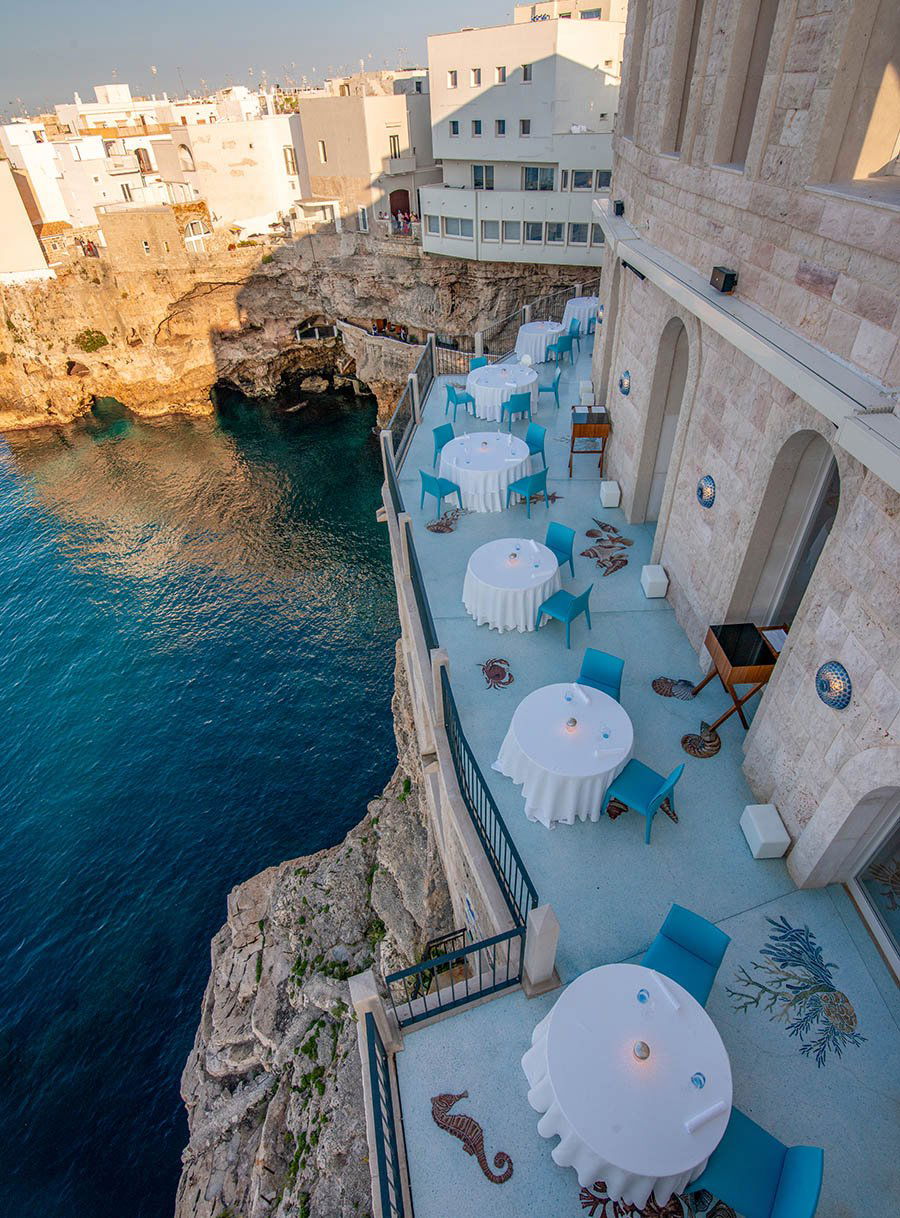
Set on the first floor of the Palazzo del Suono del Mare in Polignano a Mare's historic centre, Casanova brings Puglia's coastal larder into formal focus, pairing mosaic floors and Venetian chandeliers with sea views and a panoramic terrace. The kitchen reinterprets the gastronomic traditions of Puglia and broader Italy with contemporary results. It represents the more considered, setting-conscious end of dining in this clifftop town.
Where the Adriatic Frames the Plate
Polignano a Mare has always traded on its geology. The town sits on a limestone promontory above the Adriatic, its medieval centre a compact grid of whitewashed streets that ends, abruptly, at sheer sea cliffs. That physical drama has made it one of the more photographed towns on the Pugliese coast, and it has also shaped the ambitions of its serious restaurants. In this context, a dining room with unobstructed sea views is not incidental — it is an argument about what a meal here should feel like.
Casanova occupies the first floor of the Palazzo del Suono del Mare, one of the historic buildings fronting the town's Piazza San Benedetto. The room's mosaic floors and Venetian chandeliers place it in an architectural register that is older and more formal than the agrarian trattoria tradition that defines much of Puglian eating. The panoramic terrace extends the offer outdoors in fine weather, giving the sea views a directness that the interior windows mediate more gently. In cities like Rome or Florence, a room this composed is unremarkable; in a coastal town of this scale, it signals a particular level of intent.
Puglia's Larder and What It Means for the Plate
The editorial angle at restaurants like this one is always partly agricultural. Puglia produces more olive oil than any other Italian region, and its coastline provides some of the Adriatic's most consistent fish and shellfish. The heel of Italy's boot has, for centuries, been a net exporter of raw ingredients rather than finished gastronomy — the wheat that built Italian pasta, the tomatoes that anchored southern Italian cooking, the orecchiette and taralli that defined its own vernacular food. The contemporary Puglian restaurant's task is to bring that larder into finer focus without flattening its character into a generic Italian tasting menu.
Casanova's approach, according to the available record, is to work within the gastronomic traditions of Puglia and Italy while reinterpreting them. That positioning matters. It places the kitchen in the creative-regional category rather than the strict-preservation category. The leading cooking in this mode, found across southern Italy at addresses like Quattro Passi in Marina del Cantone or, at the apex of the form, Reale in Castel di Sangro, draws on hyperlocal sourcing and applies contemporary technique without erasing provenance. The ingredient remains legible; the cooking deepens rather than disguises it.
For a coastal kitchen in Polignano, that means the Adriatic is doing most of the heavy lifting on sourcing. The sea here delivers ricci di mare (sea urchin), polpo, and the local riccio , each with a character formed by the clear, relatively shallow waters of the southern Adriatic. Inland, the Murge plateau provides lamb, aged cheeses, and the fava beans and cicorie that define the most honest Puglian cucina povera. A kitchen drawing on both territories has access to a range that many more celebrated Italian regions cannot match for sheer diversity across a short distance.
Polignano's Dining Scene in Wider Context
Polignano a Mare is a small town, and its dining scene should be read accordingly. It does not carry the institutional density of, say, Modena, where Osteria Francescana anchors a whole culinary identity, or of Milan, where Enrico Bartolini operates in a peer environment of dozens of serious restaurants. Polignano's serious dining tier is thin but genuine, shaped by the town's growing status as a destination for Italian and international travellers who arrive via Bari, roughly 35 kilometres to the north.
Within that local context, Casanova sits at the formal end of the spectrum. For a sense of the town's wider range, Jamantè offers a more contemporary approach to Puglian ingredients, while Meraviglioso Osteria Moderna operates in the osteria-modern register that has become common across southern Italian towns that blend tradition with lighter, more current formats. Casanova's Palazzo setting and its more deliberate architectural staging put it in a different category from either, closer in spirit (if not in scale or recognition) to the kind of grand-setting regional cooking found at Dal Pescatore in Runate or Enoteca Pinchiorri in Florence, where the room's history is part of what you are paying for.
The Italian fine dining tier has become sharply stratified in recent years. At the summit sit the three-Michelin-star houses , Le Calandre in Rubano, Piazza Duomo in Alba, Atelier Moessmer Norbert Niederkofler in Brunico , each operating with significant investment in both technique and identity. Below that, a broader middle tier of regionally serious restaurants does the more locally grounded work of keeping Italian culinary geography alive. Casanova belongs to the latter conversation, which is the more important one for understanding what Puglia tastes like right now.
Planning a Visit
Polignano a Mare is accessible by train from Bari on the Ferrovie del Sud Est regional line, a journey of roughly 30 minutes. The town's historic centre is compact and walkable; Piazza San Benedetto, where Casanova sits at number 5, is within a few minutes of most of the old town's key points. The terrace is the draw in spring and summer, when Adriatic light holds well into the evening, though the interior room's architecture stands on its own in cooler months. Booking ahead is advisable during the peak summer season, when Polignano's popularity as a day-trip and short-stay destination from Bari and beyond compresses demand significantly. For broader planning across the town, the EP Club Polignano a Mare restaurants guide covers the full range of dining options, and the hotels guide addresses the town's growing accommodation offer, which now includes several cliff-positioned properties. The bars guide, wineries guide, and experiences guide complete the picture for those spending more than a single day in the area.
Frequently Asked Questions
What do people recommend at Casanova?
Casanova's kitchen focuses on the gastronomic traditions of Puglia and Italy, reinterpreted with contemporary technique. Given the setting and sourcing context, dishes drawing on Adriatic seafood and Puglian regional produce form the core of what the cuisine does well. The panoramic terrace is consistently cited alongside the cuisine as part of what makes the experience worth the visit. For the fullest read on current menu directions, contacting the restaurant directly before your visit is the most reliable approach.
What is the leading way to book Casanova?
Casanova is located at Piazza San Benedetto 5 in Polignano a Mare. The town experiences high visitor demand during the summer months, when booking well in advance is practical rather than optional. Given that phone and online booking details are not consolidated in a single public record at time of writing, visiting the restaurant directly or asking your hotel in Polignano to assist with a reservation is the most dependable route, particularly during peak season in July and August.
What do critics highlight about Casanova?
The available critical record points to the setting as a defining element: the palazzo location, mosaic floors, Venetian chandeliers, and sea-view terrace create a formal staging that is uncommon for a town of Polignano's size. The cuisine's engagement with Puglian tradition, approached through a reinterpretive rather than strictly preservationist lens, is the second consistent thread. In the wider context of Italian regional fine dining, the combination of serious setting and regional-ingredient focus positions Casanova at the more considered end of the local spectrum.
Can Casanova accommodate dietary restrictions?
Specific information on dietary accommodation is not confirmed in the available record. Italian kitchens working in the regional-creative mode typically have enough range in their sourcing to work with common dietary requirements when informed in advance. Contacting the restaurant directly before your reservation is the appropriate step; Polignano a Mare's hotel concierges can often assist with advance communication for guests staying in the area. See also the full Polignano a Mare dining guide for alternatives if specific requirements need a broader set of options. For international comparison on how fine dining kitchens handle dietary requests, Le Bernardin in New York and Atomix both publish detailed advance-request processes that illustrate what the category standard looks like at the highest level.
Recognized By

Similar venues by awards
Related editorial
- Best Fine Dining Restaurants in ParisFrom three-Michelin-star icons to the next generation of Parisian chefs pushing boundaries, these are the restaurants that define fine dining in the world's culinary capital.
- Best Luxury Hotels in RomeFrom rooftop terraces overlooking ancient ruins to Michelin-starred hotel dining, these are the luxury hotels that make Rome unforgettable.
- Best Cocktail Bars in KyotoFrom sleek lounges to hidden speakeasies, Kyoto's cocktail scene blends Japanese precision with global influence in ways you won't find anywhere else.
Save or rate Casanova on Pearl
Keep this venue in your Pearl passport, rate it after you visit, and track it alongside every other place you collect.