
Restaurant in Villaviciosa, Spain
Casa Eladia, Piñera, Rozaes
100ptsAsturian Proximity Cooking
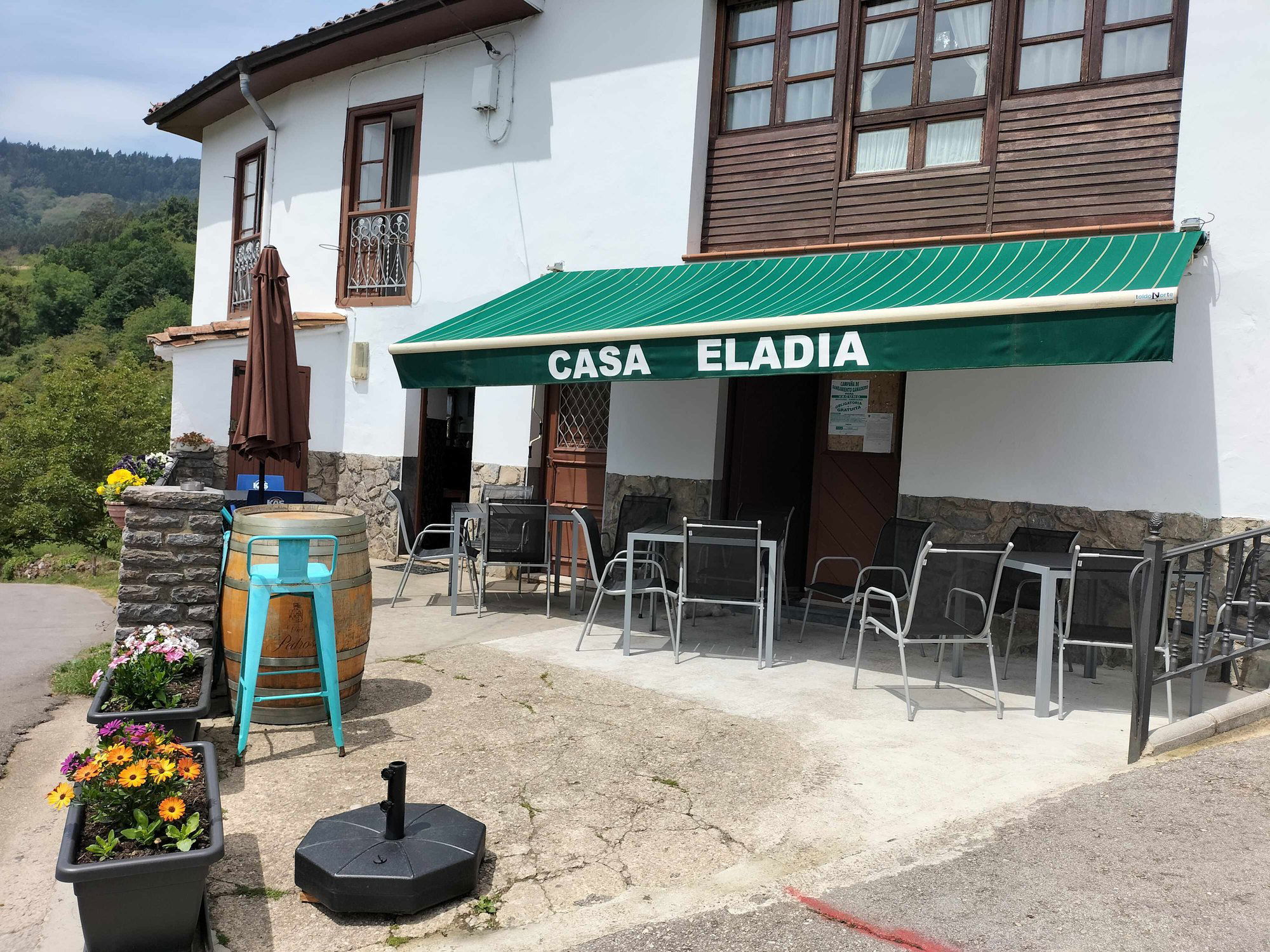
About Casa Eladia, Piñera, Rozaes
On the VV-10 road through Piñera, outside Villaviciosa, Casa Eladia represents the kind of rural Asturian dining room that has anchored local food culture for generations. The setting is working countryside, and the cooking follows the same logic: ingredients sourced close, prepared without interference, and served in a format that prioritises the table over the spectacle. For visitors to Asturias, it belongs on the same itinerary as the region's more widely publicised addresses.
Where the Road Through Piñera Leads
The VV-10 cuts through some of the greenest terrain in northern Spain, past hedgerows, dairy farms, and the kind of low-slung stone buildings that have served Asturian travellers for centuries. Casa Eladia sits at number 23 along this road, in the hamlet of Piñera near Rozaes, a few kilometres outside the market town of Villaviciosa. Arriving here, you are not pulling up to a dining destination that announces itself with signage or a car park full of out-of-town plates. You are arriving at a place that reads, immediately, as part of its surroundings rather than set apart from them. That relationship between building and land is not incidental. It is the premise on which this kind of Asturian dining room operates.
The Asturian Rural Table: What It Means in Practice
Asturias has one of the most coherent regional food identities in Spain, and it is built almost entirely on proximity. The coast delivers fresh seafood within hours of leaving the water. The interior, with its Atlantic climate and unusually consistent rainfall, produces some of the country's richest pastureland, supporting dairy herds and free-range livestock that supply a network of rural kitchens. This is not a food culture shaped by import logistics or seasonal menus engineered around market trends. It is shaped by what is available within a short radius, prepared according to methods that have changed slowly across generations.
That context matters when situating Casa Eladia in the broader picture of Asturian dining. Spain's most discussed restaurants, places like Arzak in San Sebastián, Azurmendi in Larrabetzu, or El Celler de Can Roca in Girona, operate in a register of deliberate transformation: technique applied to raw material to produce something that transcends its source. Rural Asturian cooking operates on the opposite principle. The ingredient is the argument, and the kitchen's job is to not get in the way. Casa Marcial in Arriondas represents the point where that rural tradition has been formalised into Michelin recognition. Casa Eladia, in Piñera, sits in a different tier: the kind of place where the tradition is expressed without institutional scaffolding around it.
Sourcing as the Central Logic
Across Asturias, the leading rural dining rooms share a sourcing pattern that is worth understanding before you visit. Dairy comes from local herds; the cheeses, particularly the blue-veined cabrales and the sharper gamonéu, are produced in the mountains to the south and west. Seafood arrives from the Cantabrian coast, which runs along the entire northern edge of the region, supplying merluza, chipirones, and percebes to kitchens that have been cooking them the same way for decades. Inland, fabas asturianas, the large white beans that anchor the region's signature dish, are grown in small quantities by producers who sell to restaurants and markets with no middleman involved.
For a place like Casa Eladia, on the VV-10 through Piñera, that supply chain is not a marketing narrative. It is the operational reality of cooking in a rural Asturian hamlet where the alternative is sourcing from further away at greater cost and lower quality. This is the structural advantage that rural kitchens in the region have always held over urban restaurants trying to replicate their output: the ingredients are simply closer, and the relationship between supplier and kitchen is direct in a way that urban supply chains rarely allow.
The same logic applies across Spain's most ingredient-driven regional cuisines. Aponiente in El Puerto de Santa María has built an entire creative framework around marine ingredients that most kitchens discard. Ricard Camarena in València works within a strict local sourcing discipline that limits the menu to what the Valencian hinterland produces in a given season. In each case, the constraint of proximity becomes the source of the cooking's character. At the rural Asturian table, that constraint has simply been operating longer and without the conceptual apparatus of contemporary fine dining around it.
Villaviciosa and Its Position in Asturian Dining
Villaviciosa is a market town of modest scale, leading known outside Asturias for its connection to cider production: the surrounding valleys are planted with the apple varieties that supply the region's natural cider industry, and the town's espalles, the long, thin-necked cider houses, are a fixture of local social life. The broader Villaviciosa municipality extends into rural hinterland that includes hamlets like Piñera and Rozaes, where the agricultural character of the area is most legible.
For visitors assembling an Asturian dining itinerary, Villaviciosa functions as a useful base. It sits roughly equidistant between Gijón to the west and Ribadesella to the east, and the VV-10 road network connects it to the rural inland without requiring significant travel time. Alenda in Villaviciosa represents the town's more contemporary dining register. Casa Eladia, in Piñera, occupies a different position on that spectrum, one where the format and the setting are continuous with the agricultural landscape rather than distinct from it. Our full Villaviciosa restaurants guide maps both registers in more detail.
Asturias as a whole remains less travelled than the Basque Country or Catalonia for international food visitors, despite holding a regional food culture that is at least as coherent and arguably more consistent at the everyday level. Destinations like Mugaritz in Errenteria, Martin Berasategui in Lasarte-Oria, or DiverXO in Madrid draw international attention because of award recognition and media coverage. Asturias draws a quieter, more informed audience, one that is less interested in tasting menus and more interested in what the land actually produces.
Planning a Visit
Casa Eladia is located at VV-10, 23, in Piñera, within the municipality of Villaviciosa, Asturias. The address places it on a rural road rather than in the town centre, so a car is the practical requirement for reaching it. Contact details and current hours are not available through this listing; the surest approach is to ask locally in Villaviciosa or check for current information through regional Asturian food directories before travelling. Rural Asturian dining rooms in this category often operate on reduced schedules midweek and may close between lunch and dinner service, so confirming opening times before making the journey is advisable. For comparison with other regional Spanish addresses that operate in a similarly ingredient-led tradition, Cenador de Amós in Villaverde de Pontones, Noor in Córdoba, and Atrio in Cáceres each demonstrate how regional Spanish traditions translate into very different dining formats depending on geography and culinary inheritance.
Frequently Asked Questions
- What kind of setting is Casa Eladia, Piñera, Rozaes?
- Casa Eladia sits on the VV-10 rural road in Piñera, a hamlet within the Villaviciosa municipality in Asturias. The setting is agricultural countryside rather than a town centre, which places it firmly in the tradition of Asturian rural dining rooms that have historically served communities connected to farming and land-based food production. It is not a destination in the contemporary fine-dining sense; it is a place shaped by its surroundings in the way that the leading rural Spanish tables tend to be.
- What should I eat at Casa Eladia, Piñera, Rozaes?
- Specific menu information is not available through this listing, so dish-level recommendations cannot be verified here. What the Asturian rural dining tradition reliably offers at addresses of this type includes fabada asturiana, Cantabrian seafood preparations, and locally sourced dairy and cheese. The cooking at places like Casa Marcial in Arriondas, which represents the formalised end of the same tradition, gives a useful reference for understanding the ingredient register that defines the region.
- Is Casa Eladia, Piñera, Rozaes child-friendly?
- Rural Asturian dining rooms in this category are generally structured around family meals, with formats and service pacing that accommodate tables of mixed ages. Asturias has a strong tradition of multigenerational dining, and the countryside setting is consistent with that culture. That said, specific facilities or policies at Casa Eladia are not confirmed in available data, so contacting the venue directly before visiting with young children is the prudent step.
- Is Casa Eladia the kind of place worth travelling specifically to from outside Asturias?
- For visitors whose primary interest is the Asturian rural food tradition rather than Michelin-tier tasting menus, the answer is yes, provided you are already building an itinerary around the region. Asturias is one of the few areas in Spain where the everyday rural table has remained as coherent and ingredient-driven as the acclaimed restaurant tier, and addresses like Casa Eladia, on the VV-10 through Piñera, represent that continuity at its most direct. It pairs logically with Villaviciosa as a base and with regional Asturian cider culture as a complementary thread through the same geography.
Related editorial
- Best Fine Dining Restaurants in ParisFrom three-Michelin-star icons to the next generation of Parisian chefs pushing boundaries, these are the restaurants that define fine dining in the world's culinary capital.
- Best Luxury Hotels in RomeFrom rooftop terraces overlooking ancient ruins to Michelin-starred hotel dining, these are the luxury hotels that make Rome unforgettable.
- Best Cocktail Bars in KyotoFrom sleek lounges to hidden speakeasies, Kyoto's cocktail scene blends Japanese precision with global influence in ways you won't find anywhere else.
Save or rate Casa Eladia, Piñera, Rozaes on Pearl
Keep this venue in your Pearl passport, rate it after you visit, and track it alongside every other place you collect.