
Restaurant in Hoi An, Vietnam
Cargo Club Cafe & Restaurant
100ptsRiver-Street Multi-Level Dining
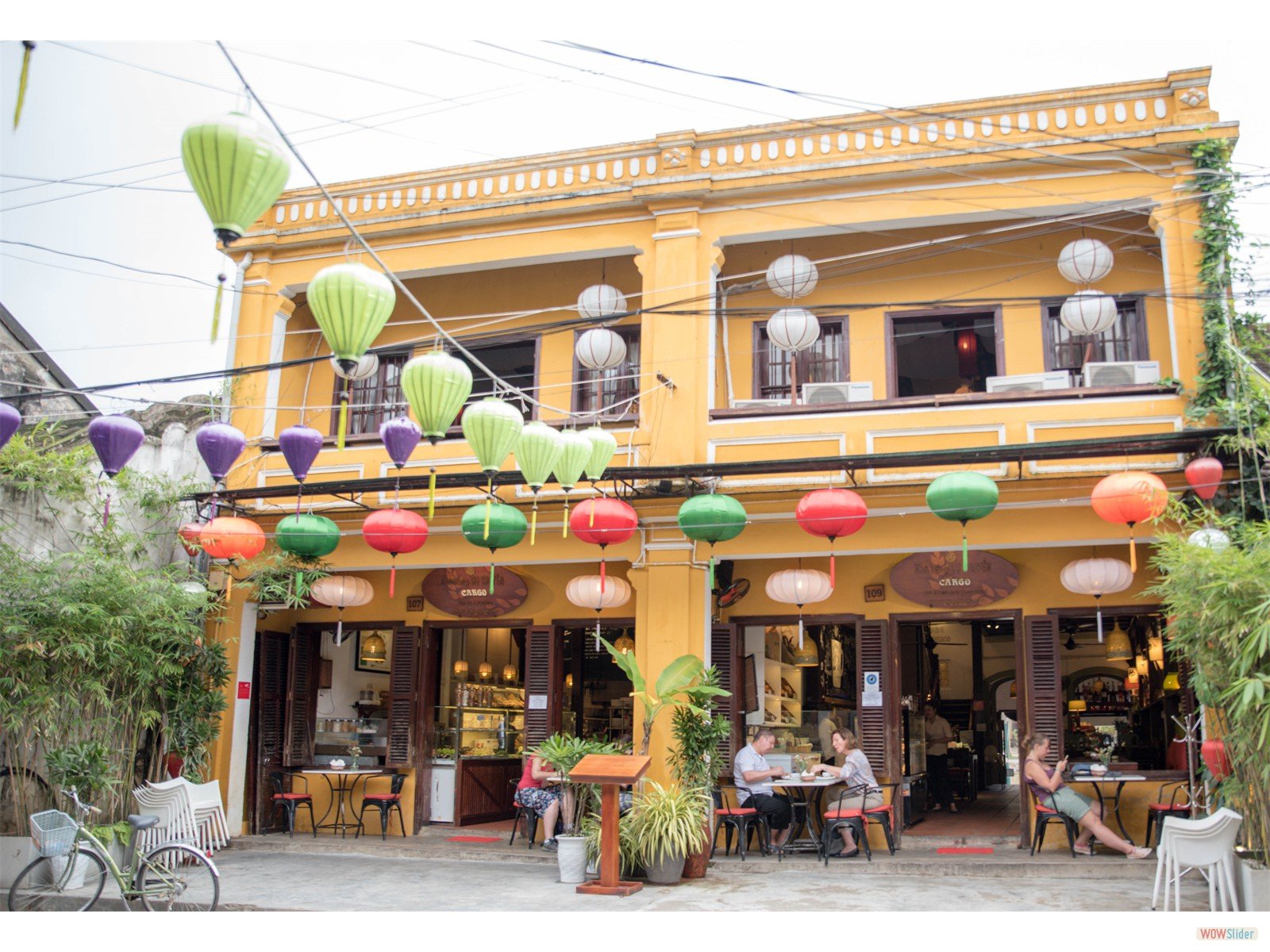
About Cargo Club Cafe & Restaurant
On Hoi An's principal heritage street, Cargo Club Cafe and Restaurant occupies a multi-floor shophouse at 109 Nguyen Thai Hoc, where the upper levels look out across the Thu Bon River and the Ancient Town's tiled roofscape. The address places it inside the tight ingredient supply chain that connects the Old Town to Tra Que vegetable village and the regional coastal catch, positioning it within the cuisine tradition that defines Central Vietnam's most distinctive food culture.
Where the Ancient Town Meets the River Table
Nguyen Thai Hoc Street runs parallel to the Thu Bon River through the heart of Hoi An's UNESCO-listed Ancient Town, and the buildings along it carry the layered evidence of centuries of trade. The French colonial shophouses, the Chinese merchant facades, the Japanese-influenced rooflines: this is a street that has always been about exchange. Cargo Club Cafe & Restaurant sits at number 109 on that stretch, occupying a multi-storey space that places diners at the intersection of the town's mercantile past and its contemporary food scene. Before you step inside, the address itself frames what you are about to eat.
Ingredient Provenance in Central Vietnam's Kitchen
Central Vietnam operates a distinct culinary register from the north and south. Hue's imperial cooking tradition, with its emphasis on small dishes and ceremonial presentation, presses down from the north. The coastal abundance of Da Nang and the broader Quang Nam province shapes what arrives fresh daily. Hoi An sits at that confluence, and its restaurant scene has historically drawn on both: the herbs grown in nearby Tra Que village, the seafood pulled from the South China Sea through Cua Dai, the white rose dumplings and cao lau noodles that use local well water and regional ash-treated noodles unavailable to exact replication anywhere else.
This provenance matters when assessing any restaurant in the Ancient Town. The ingredient supply chain here is genuinely compressed. Tra Que vegetable village sits roughly four kilometres from the Old Town, and its morning harvest cycle means that fresh herbs, water spinach, and aromatic greens move from soil to kitchen within hours. Venues positioned to access that supply chain, and the catch arriving through the town's market infrastructure, are working with fundamentally different raw material than an operation relying on distribution networks from Da Nang or further afield. In a dining scene where sourcing proximity is a structural advantage, not just a marketing narrative, that distinction carries weight.
For a wider view of how ingredient sourcing shapes the Central Vietnam dining scene, [Saffron in Hue City](https://www.enprimeurclub.com/restaurants/saffron-hue-city-restaurant) offers a useful comparison point, while [La Maison 1888 in Da Nang](https://www.enprimeurclub.com/restaurants/la-maison-1888-da-nang-restaurant) shows how the coastal ingredient tradition translates into a more formally European framework.
Hoi An's Multi-Level Dining Format
The Ancient Town has developed a recognisable typology of restaurant format: the ground-floor street cafe operating as both local hangout and tourist entry point, and the upper-floor dining room that captures the rooftop view across tiled roofs toward the river. Cargo Club occupies that two-register format, with the cafe level drawing foot traffic from the street and the upper floors offering a view that the address on Nguyen Thai Hoc makes genuinely worthwhile. This is not incidental architecture. The Thu Bon River view from the upper levels of buildings on this street is among the more coherent urban vistas in Central Vietnam, and venues that position dining rooms to face it are making a deliberate editorial choice about the meal's context.
The broader peer set in Hoi An's Ancient Town includes operations with similarly split formats. [Before and Now](https://www.enprimeurclub.com/restaurants/before-and-now-hoi-an-restaurant) and [42 Đường Phan Bội Châu](https://www.enprimeurclub.com/restaurants/42-duong-phan-boi-chau-hoi-an-restaurant) both reflect the town's capacity to run hybrid cafe-restaurant models that serve different dining moments across the same day. The street food complement is anchored nearby: [Banh Mi Phuong (Hoi An)](https://www.enprimeurclub.com/restaurants/banh-mi-phuong-hoi-an-hoi-an-restaurant) and [Bánh Mì Phượng](https://www.enprimeurclub.com/restaurants/banh-mi-phuong-hoi-an-restaurant) represent the other end of that spectrum, where format is stripped to its most functional.
The Ancient Town's Dining Ecology
Hoi An's restaurant scene operates under a specific set of pressures that distinguish it from Vietnam's major cities. The UNESCO listing creates a physical constraint: new development is restricted, which means the dining stock is largely fixed within existing shophouse footprints. That creates a premium on multi-floor use of space and on the quality of the building envelope itself. It also means that venues with riverfront or courtyard access hold a structural advantage over those on interior lanes.
The town's tourism calendar creates seasonality that any serious visitor should factor in. The dry season, running roughly from February through July, delivers the conditions most associated with Hoi An's visual appeal: lantern-lit evenings, manageable temperatures, and the busy riverside atmosphere that fills street-level terraces. The wet season, particularly October and November, brings flooding risk to lower-lying parts of the Ancient Town, which affects access to some addresses. Planning around that cycle is practical intelligence, not atmospheric preference. [115 Đ. Trần Cao Vân](https://www.enprimeurclub.com/restaurants/115-d-tran-cao-van-hoi-an-restaurant) represents another address navigating the same seasonal constraints.
For comparison across Vietnam's dining scene more broadly, [Gia in Hanoi](https://www.enprimeurclub.com/restaurants/gia-hanoi-restaurant) and [Akuna in Ho Chi Minh City](https://www.enprimeurclub.com/restaurants/akuna-ho-chi-minh-city-restaurant) show how different cities approach the same question of regional ingredient sourcing with considerably more institutional support and supply chain infrastructure than a mid-sized heritage town like Hoi An can access.
Planning Your Visit
109 Nguyen Thai Hoc places Cargo Club within walking distance of the Ancient Town's covered market and the main lantern-lit streets that concentrate evening foot traffic. The address is navigable on foot from most accommodation inside the Old Town boundaries, and cycling from hotels on the Cua Dai beach corridor, roughly four to five kilometres east, is standard practice among regular visitors. As with most Ancient Town venues, the practical advice is to arrive at the building and assess the floor you want to sit on before committing: the street-level cafe register and the upper-floor dining room serve different purposes, and the view differential between them is meaningful. Specific booking arrangements, hours, and current menu pricing are leading confirmed directly with the venue, as none of those details were available at time of writing.
For additional context on the full range of dining options across Hoi An, our [full Hoi An restaurants guide](https://www.enprimeurclub.com/cities/hoi-an) covers the scene in detail. Elsewhere in the region, [Mi Quang Ba Vi in Thanh Khe](https://www.enprimeurclub.com/restaurants/mi-quang-ba-vi-thanh-khe-restaurant), [Bau Troi Do in Son Tra](https://www.enprimeurclub.com/restaurants/bau-troi-do-son-tra-restaurant), and [Nhà hàng Madame Lân in Hai Chau](https://www.enprimeurclub.com/restaurants/nha-hang-madame-lan-hai-chau-restaurant) give a sense of how Central Vietnam's dining culture extends across the wider Da Nang metro area. Further north, [Le Pont Club in Hai Phong](https://www.enprimeurclub.com/restaurants/le-pont-club-hai-phong-restaurant), [Phuong Nhung Restaurant in Cat Hai](https://www.enprimeurclub.com/restaurants/phuong-nhung-restaurant-cat-hai-restaurant), and [Duyên Anh Restaurant in Phu Vang](https://www.enprimeurclub.com/restaurants/duyen-anh-restaurant-phu-vang-restaurant) complete a picture of Vietnam's coastal dining geography. For a different register entirely, [Le Bernardin in New York City](https://www.enprimeurclub.com/restaurants/le-bernardin) and [Lazy Bear in San Francisco](https://www.enprimeurclub.com/restaurants/lazy-bear) show what formal tasting-menu formats look like when applied to similarly coastal-ingredient-dependent cuisine at a different scale of investment.
Frequently Asked Questions
What is the signature dish at Cargo Club Cafe & Restaurant?
Cargo Club's position in Hoi An's Ancient Town places it within a cuisine tradition built around regional specialties: cao lau noodles, white rose dumplings, and fresh herb-laden dishes that draw on the Tra Que vegetable supply. Specific signature dishes were not available in verified records at time of writing; the venue's current menu is leading confirmed directly.
Is Cargo Club Cafe & Restaurant reservation-only?
Hoi An's mid-range cafe-restaurant formats typically operate on a walk-in basis, particularly at street level, with busier dinner periods on the upper floors filling faster during peak tourist season from February through July. No confirmed booking policy was available at time of writing. Given the venue's location on one of the Ancient Town's primary pedestrian streets, arriving slightly before the evening dinner rush is a practical approach.
What do critics highlight about Cargo Club Cafe & Restaurant?
No specific critical reviews or award citations were available in verified records at time of writing. Within Hoi An's dining ecology, the venues that receive consistent editorial attention tend to be those that handle the balance between regional cooking authenticity and the needs of an international visitor base without collapsing either end. Cargo Club's address and format place it in that tier of the conversation.
Can Cargo Club Cafe & Restaurant accommodate dietary restrictions?
Central Vietnamese cuisine includes a significant number of dishes that are naturally vegetable-forward, drawing on Tra Que herb gardens and market produce. If dietary requirements are a factor, contacting the venue directly before visiting is the reliable approach. No verified details on specific dietary accommodation policies were available at time of writing.
Should I spend on a full dinner at Cargo Club Cafe & Restaurant versus a quicker meal?
The multi-level format at 109 Nguyen Thai Hoc makes Cargo Club a venue where the meal's register can shift depending on where you sit and how long you stay. The upper-floor river view is the structural argument for committing to a longer dinner rather than a quick street-level stop. Pricing details were not available in verified records at time of writing, but Hoi An's Ancient Town generally sits in an accessible price bracket relative to comparable heritage-town dining scenes in Southeast Asia.
Is Cargo Club Cafe & Restaurant a good choice for understanding Hoi An's local food traditions?
Venues on Nguyen Thai Hoc with multi-floor formats and proximity to the Ancient Town market are well-positioned to serve the regional specialties that define Hoi An's food identity: cao lau, white rose dumplings, and fresh herb dishes tied to local ingredient supply chains. Cargo Club's address puts it inside that tradition rather than operating as an outlier. For visitors wanting to build a broader picture of Central Vietnamese food before or after their visit to the Ancient Town, [Gia in Hanoi](https://www.enprimeurclub.com/restaurants/gia-hanoi-restaurant) and [Saffron in Hue City](https://www.enprimeurclub.com/restaurants/saffron-hue-city-restaurant) offer useful regional comparison points.
Related editorial
- Asia's 50 Best Restaurants 2026: The Chairman and Wing Go 1-2 from the Same BuildingThe Chairman takes No. 1 and Wing climbs to No. 2 at Asia's 50 Best Restaurants 2026. Both operate from the same Hong Kong building. Here's what it means.
- Four Seasons Yachts Debut: 95 Suites, 11 Restaurants, and a March 2026 Maiden VoyageFour Seasons I launches March 20, 2026, with 95 suites, a one-to-one staff ratio, and 11 onboard restaurants. Worth tracking if you want hotel-grade service at sea.
- LA Michelin Guide 2026: Seven New Restaurants from Tlayudas to Uzbek DumplingsMichelin's March 2026 California Guide update adds six LA restaurants and one Montecito newcomer, spanning Oaxacan tlayudas, Uzbek manti, and Korean-Italian pasta.
Save or rate Cargo Club Cafe & Restaurant on Pearl
Keep this venue in your Pearl passport, rate it after you visit, and track it alongside every other place you collect.