
Restaurant in Santa Rosa Beach, United States
Cafe Thirty-A
100ptsGulf Coast Fine Casual
About Cafe Thirty-A
Cafe Thirty-A sits on one of the Florida Panhandle's most scenically demanding corridors, where the gulf-front highway 30A has quietly produced a dining culture serious enough to reward advance planning. The restaurant addresses that corridor's appetite for refined, locally grounded cooking in a setting that reads more destination than drive-through. For visitors mapping a proper meal along the Emerald Coast, it belongs in the itinerary.
The 30A Dining Corridor and Where Cafe Thirty-A Sits Within It
Highway 30A threads a narrow band of Florida Panhandle coast between Inlet Beach and Dune Allen, connecting a string of planned communities whose residents and repeat visitors have, over two decades, developed expectations that outpace the typical beach-town offer. The result is a dining corridor that supports a tier of restaurants genuinely competing on culinary terms, not just on location. In that context, Cafe Thirty-A at 3899 East County Highway 30A in Santa Rosa Beach occupies the upper register: the kind of address that draws diners who, the rest of the year, are eating at places like Le Bernardin in New York City or Providence in Los Angeles.
That demographic pressure has shaped how the better 30A kitchens operate. The expectation is not casual beach fare but something closer to what you find at a serious regional American restaurant in a mid-sized city: sourcing that references the Gulf, technique that does not flinch from complexity, and a room that takes the experience seriously without tipping into formality. Cafe Thirty-A has built its standing inside that expectation.
Gulf Coast Cooking as a Culinary Tradition
The Florida Gulf Coast, and the Panhandle specifically, does not have the same culinary mythology as New Orleans or the Carolina Low Country, but it operates from a comparable set of raw materials. The eastern Gulf produces red snapper, grouper, amberjack, and blue crab with a seasonal consistency that rewards kitchens willing to build menus around what arrives rather than what was planned. The better Gulf Coast restaurants treat the water not as a backdrop but as a supply chain.
That orientation connects the 30A scene to a broader American tradition of place-anchored cooking visible at places as different as Blue Hill at Stone Barns in Tarrytown and Single Thread Farm in Healdsburg: the idea that a restaurant's location is its primary creative constraint, not just its address. On the Panhandle, that means working with Gulf species at their moment of peak availability, incorporating the Lowcountry influences that move west along the Florida coast, and acknowledging the Southern cooking traditions that arrive overland from Alabama and Georgia. Cafe Thirty-A operates in that layered register, where geography informs the plate without reducing it to a postcard.
This is also what separates the more considered 30A addresses from the volume operations that populate any coastal tourist corridor. Roux 30A draws on Louisiana Creole lineage to anchor its menu in a regional tradition; FOOW positions Gulf seafood inside a contemporary framework; Modica Market and Cafe Tango each address different corners of the corridor's appetite. Cafe Thirty-A sits closer to the white-tablecloth end of that distribution, where the expectation is a full evening rather than a casual stop.
The Approach to the Room
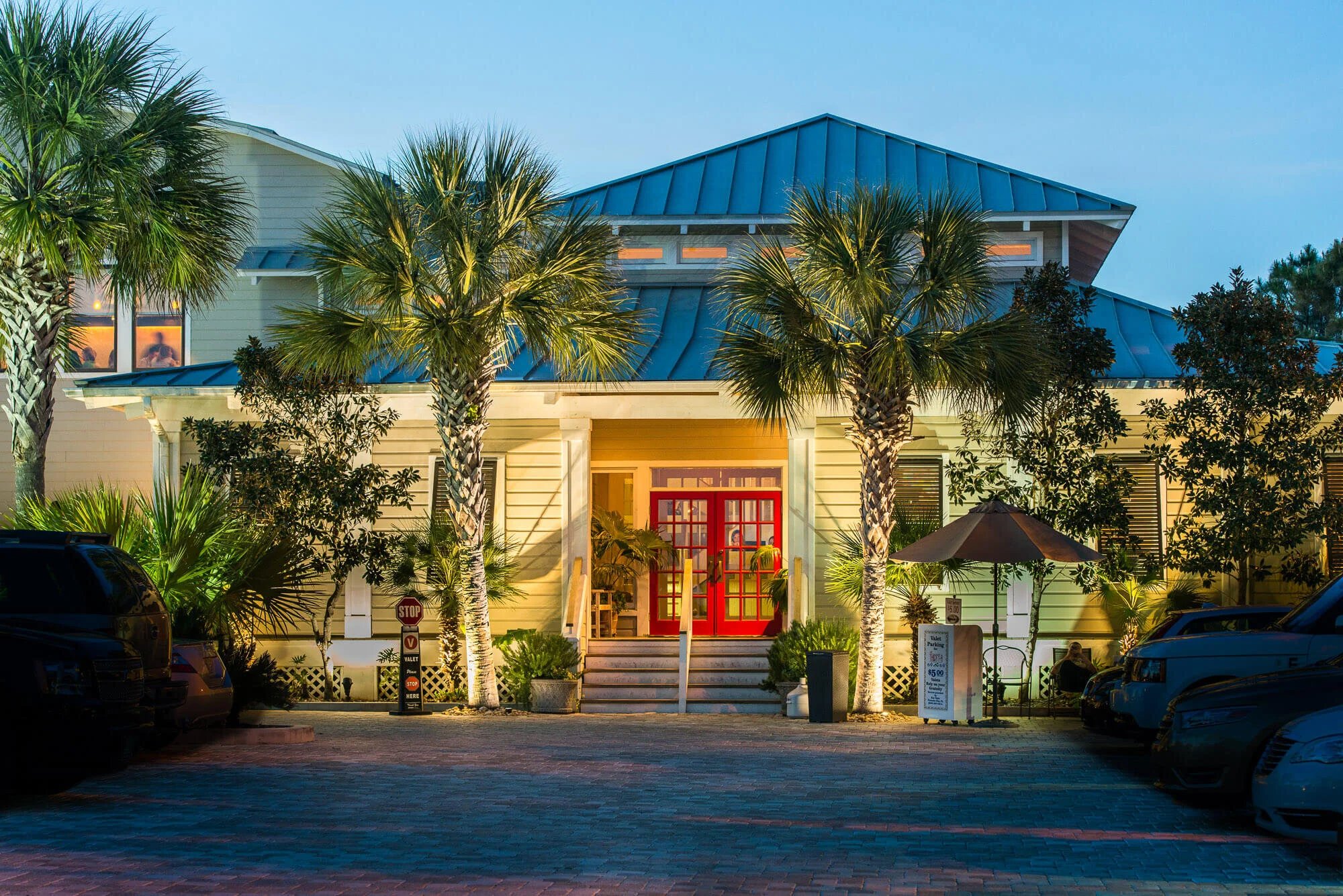
The highway 30A approach to the restaurant sets a particular register before you arrive at the door. The corridor runs close to the coast, with old-growth scrub oak and saw palmetto filling the inland side and glimpses of the Gulf visible through beach access breaks. The light in the late afternoon moves quickly from hard to amber, and the restaurants that have learned to use their setting rather than fight it tend to feel more considered once you are inside.
Cafe Thirty-A's positioning on this corridor places it among the addresses where the room's seriousness is calibrated to match the kitchen's ambition. That calibration matters on 30A more than it might elsewhere, because the dining population on any given evening can range from vacationing families to year-round residents who have eaten at The French Laundry in Napa, Smyth in Chicago, or Addison in San Diego. A room that reads appropriately to both ends of that range is a logistical achievement as much as a design one.
Peer Context Along the Corridor
Placing Cafe Thirty-A in its competitive set requires looking at what 30A's upper tier collectively does and does not do. The corridor does not yet produce the kind of formal tasting-menu experiences you find at Atomix in New York City or The Inn at Little Washington, nor the farm-system depth of Lazy Bear in San Francisco. What it produces instead is a category of restaurant that rewards visitors who understand regional American cooking: places where the sourcing is credible, the technique is serious, and the occasion does not require a jacket but does require a reservation.
Within that peer set, Cafe Thirty-A has held a position at the upper end of the corridor's fine-dining offer long enough to have shaped what diners expect from the category here. That kind of sustained position in a seasonal market is not accidental. It requires consistent kitchen output across a high-volume summer season and a quieter winter period, two very different operational challenges. Restaurants with comparable longevity and positioning in other American coastal contexts, like Frasca Food and Wine in Boulder or Emeril's in New Orleans, demonstrate that sustained regional authority is built over years of consistent execution rather than a single breakout season.
Planning Your Visit
The 30A corridor runs at high occupancy from Memorial Day through Labor Day, and the better-regarded restaurants fill their reservation books several weeks ahead during peak summer. Visiting outside those months, in late September through November or in March before spring break traffic peaks, typically means shorter booking windows and a more local dining room. The address is on the eastern section of 30A in Santa Rosa Beach, accessible by car along the coastal highway. For visitors building a broader itinerary along the corridor, our full Santa Rosa Beach restaurants guide maps the dining options by style and occasion.
Frequently Asked Questions
- What should I order at Cafe Thirty-A?
- Without a confirmed current menu on record, specific dish recommendations would be speculative. The broader pattern at this tier of 30A restaurant is a focus on Gulf seafood, with preparations that reference both Southern coastal tradition and contemporary American technique. At comparable addresses with strong sourcing credentials, the fish-led courses tend to reflect what the Gulf is producing at that moment in the season, so asking the floor team what arrived that week is a reliable approach.
- Should I book Cafe Thirty-A in advance?
- Along the 30A corridor, restaurants at the upper end of the dining tier fill quickly during summer, particularly from June through August when the Emerald Coast draws its largest visitor volume. Planning several weeks ahead for peak-season visits is prudent. The off-season window from October through February typically allows shorter booking horizons, and some evenings may be available with less lead time.
- What has Cafe Thirty-A built its reputation on?
- Cafe Thirty-A's standing on the 30A corridor rests on its consistent positioning at the refined end of local dining, in a market where the expectation from a significant portion of the dining population is set by serious restaurants in major American cities. In a coastal seasonal market, that kind of sustained positioning requires kitchen consistency across high- and low-volume periods, which is itself a form of credential.
- Is Cafe Thirty-A allergy-friendly?
- If dietary restrictions or allergies are a consideration, contacting the restaurant directly before booking is the appropriate step. Gulf Coast menus at this tier frequently feature shellfish and finfish as primary proteins, so guests with seafood allergies should confirm kitchen capacity to accommodate alternatives. No allergy-specific policy information is currently confirmed in our records.
- How does Cafe Thirty-A compare to other fine-dining options on the 30A corridor?
- The 30A corridor supports a small cluster of restaurants operating at a genuinely refined level, including Roux 30A, FOOW, and Cafe Tango. Cafe Thirty-A tends to occupy the white-tablecloth end of that distribution, where the format leans toward a full evening rather than a casual stop, making it the appropriate choice when the occasion calls for a more formal meal on the coast.
Related editorial
- Best Fine Dining Restaurants in ParisFrom three-Michelin-star icons to the next generation of Parisian chefs pushing boundaries, these are the restaurants that define fine dining in the world's culinary capital.
- Best Luxury Hotels in RomeFrom rooftop terraces overlooking ancient ruins to Michelin-starred hotel dining, these are the luxury hotels that make Rome unforgettable.
- Best Cocktail Bars in KyotoFrom sleek lounges to hidden speakeasies, Kyoto's cocktail scene blends Japanese precision with global influence in ways you won't find anywhere else.
Save or rate Cafe Thirty-A on Pearl
Keep this venue in your Pearl passport, rate it after you visit, and track it alongside every other place you collect.