
Restaurant in Papeete, French Polynesia
Café Maeva Marché de Papeete
100ptsMarket-Floor Polynesian
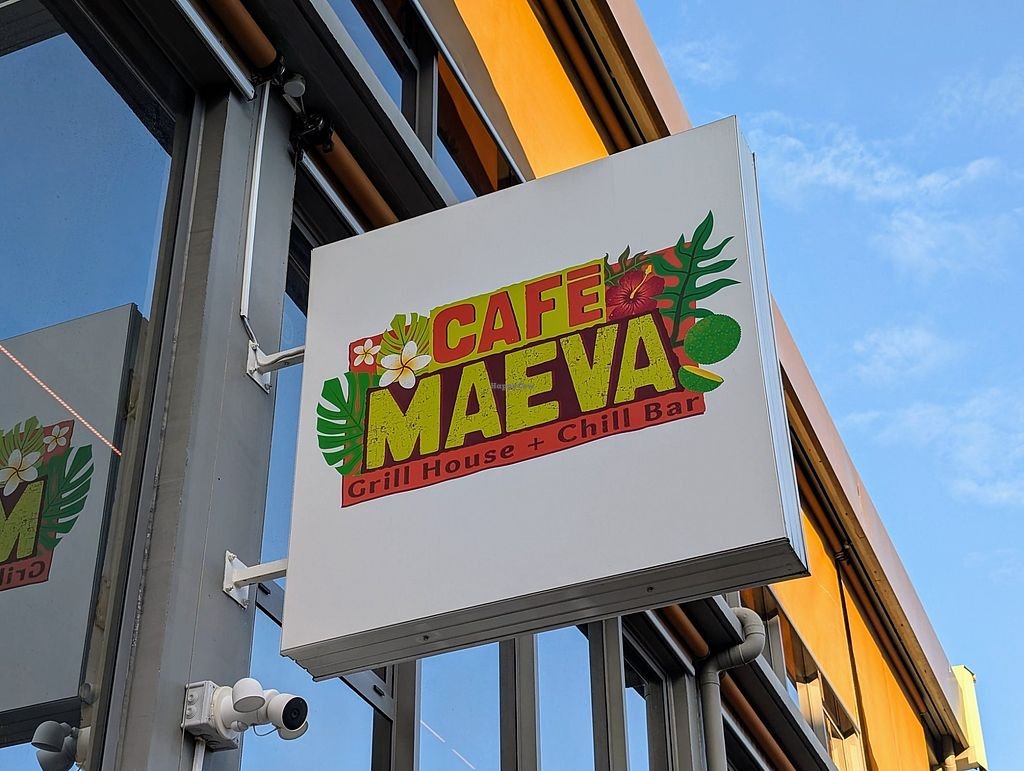
About Café Maeva Marché de Papeete
Café Maeva sits inside the Marché de Papeete, Tahiti's central market, where Polynesian cooking tradition and French colonial influence meet in one of the territory's most candid dining settings. The market context defines the experience: produce sourced from the surrounding stalls, a clientele that runs from local traders to inter-island travelers, and a rhythm set by the market's own opening hours rather than restaurant convention.
Inside the Marché de Papeete: Where Tahiti's Food Culture Operates Without Pretense
The Marché de Papeete is not a tourist amenity dressed up as a local market. It is the logistical and cultural center of Papeete's food supply, a two-story structure in the heart of the city where vendors arrive before dawn to set out reef fish, taro, fei bananas, and woven goods for a clientele that is, overwhelmingly, Tahitian. Approaching on any weekday morning, the building asserts itself through sound and smell before it comes into view: the wet-stone scent of fish on ice, the calls between stall holders, the low hum of a city going about its provisioning. Café Maeva sits within this environment, not adjacent to it, and that positioning is the first and most important thing to understand about what the café is and what it is not.
Market cafés of this type occupy a specific place in the eating cultures of French-influenced Pacific territories. They are not restaurants in the formal sense. They are not street food in the transient sense either. They occupy a third category: embedded eating, where the kitchen draws from the stalls surrounding it and the clientele arrives with an appetite shaped by physical labor and genuine hunger rather than leisure and occasion. The closest analogues outside the Pacific would be the market-hall bistros of Lyon or the covered-market lunch counters of provincial Brittany, where institutional cooking tradition and local-produce proximity produce food that is direct, seasonal, and without performance.
The Cultural Architecture of Polynesian Market Cooking
Understanding what a café inside the Marché de Papeete represents requires a brief account of how Polynesian food culture stratified under French administration. French Polynesia carries two parallel culinary traditions that have never fully merged. One is the pre-contact Polynesian kitchen: cooking defined by root vegetables, fish prepared raw with lime and coconut milk (poisson cru being the most recognized example internationally), earth-oven techniques, and a reliance on the breadfruit, taro, and banana triad that sustained island populations across centuries. The other is the French administrative and settler influence that introduced baguettes, coffee culture, charcuterie, and the bistro as a social institution. The market café in Papeete is the point where these two traditions intersect most naturally, because the market itself is the place where both food cultures are sourced, sold, and consumed side by side.
Poisson cru remains the reference point against which any serious eating in Tahiti is benchmarked. Where a venue's version falls on a spectrum from supermarket-assembly to genuine craft preparation tells you a great deal about its relationship to local sourcing. The market context of Café Maeva places it structurally closer to the craft end of that spectrum, given that the raw materials are available meters from the kitchen, though the specific execution is a matter for firsthand assessment rather than assumption.
For travelers calibrating where Papeete's market café sits relative to the territory's broader dining range, it helps to map the wider field. The French Polynesian dining scene runs from embedded local spots like this through to destination-format restaurants across the islands. 54 Rue Paul Gauguin and L'O A La Bouche represent Papeete's more composed restaurant tier. Farther afield, Le Taha'a in Tahaa and Otemanu in Vaitape operate within resort-anchored fine dining formats, and Le Kenae in Taiohae carries the French Polynesian tradition into the Marquesas. The market café is not competing with any of these. It is a different function entirely: provisioning, not occasion dining.
Across Tahiti's outer neighborhoods and neighboring islands, other formats address different parts of the dining market. Blue Banana in Punaauia, Restaurant Te Tiare in Faaa, and Restaurant Te Honu Iti in Moorea Maiao all serve distinct communities with distinct formats. On the Taiarapu peninsula, Loula et Rémy in Taiarapu Est and O Belvédère in Pira E extend the island's dining reach well beyond Papeete. The Lucky House Fare Manuia Restaurant in Bora Bora addresses that island's visitor economy with a different price logic altogether. The market café exists outside all of these competitive sets. Its peer group is other market institutions, not restaurants.
The Market as the Venue's Most Reliable Credential
Without formal award recognition, a Michelin listing, or the kind of chef-credential trail that anchors restaurants in cities like New York or San Francisco, the trust signal here is the institution itself. The Marché de Papeete has operated as the city's primary food distribution point for generations. Cafés embedded in functioning wholesale markets earn their standing through daily use by a local clientele that has no tolerance for poor quality and no obligation to return. That is a different kind of accountability than a restaurant review cycle, and it is not a lesser one.
European dining travelers who understand the logic of Dal Pescatore in Runate or the produce-driven discipline of Atelier Moessmer Norbert Niederkofler in Brunico will recognize a similar structural principle at work here, even in a radically different register: the kitchen's quality is bounded by what the surrounding market makes available, and in a market of this depth and freshness, the ceiling is higher than it first appears.
Planning Your Visit
The Marché de Papeete operates on market time, which means activity is concentrated in the early morning through midday. Visitors who arrive expecting lunch-service hours may find the energy diminishing. Saturday mornings draw the heaviest traffic and the widest produce selection, which makes them the most instructive visit for understanding how the market functions, though they also mean more competition for space and seating. The café's address is within the central Papeete market building at 98714. No booking infrastructure exists for a venue of this type; seating is walk-in and organized by availability. Our full Papeete restaurants guide covers the broader dining map for visitors planning time across multiple price points and formats.
Frequently Asked Questions
What's the leading thing to order at Café Maeva Marché de Papeete?
Poisson cru is the reference dish for any serious eating in Tahiti, and a market café with direct access to the surrounding fish stalls is structurally well-positioned to produce a version worth eating. Beyond that, market cafés in Papeete typically offer plates organized around the day's available produce, taro preparations, and grilled or braised fish, with a French-inflected café menu (coffee, bread, simple cooked plates) running alongside. The honest answer is that menu specifics at this type of venue shift daily with supply, so arriving hungry and ordering what is freshest on a given morning is the appropriate strategy.
How far ahead should I plan for Café Maeva Marché de Papeete?
Planning ahead in the conventional restaurant sense does not apply here. The café operates within a public market structure without reservations, which means access is a function of timing rather than booking. For Papeete visitors combining the market with broader dining across the territory, including table-service restaurants and resort dining in Bora Bora or Moorea, those other venues require advance planning, particularly during peak season between July and August. The market café itself simply requires arriving early in the day.
Is Café Maeva Marché de Papeete a good introduction to Polynesian food culture for first-time visitors to Tahiti?
As an entry point into how Tahiti actually feeds itself, the Marché de Papeete and the cafés within it offer more direct access to Polynesian food culture than most hotel restaurants or visitor-facing dining rooms in the territory. The market structure brings together the produce, the preparation traditions, and the daily provisioning logic of a Polynesian port city in one building. For travelers who want to understand French Polynesian cuisine as a living practice rather than a curated presentation, the market context is one of the most useful places in Papeete to spend a morning.
Related editorial
- Asia's 50 Best Restaurants 2026: The Chairman and Wing Go 1-2 from the Same BuildingThe Chairman takes No. 1 and Wing climbs to No. 2 at Asia's 50 Best Restaurants 2026. Both operate from the same Hong Kong building. Here's what it means.
- Four Seasons Yachts Debut: 95 Suites, 11 Restaurants, and a March 2026 Maiden VoyageFour Seasons I launches March 20, 2026, with 95 suites, a one-to-one staff ratio, and 11 onboard restaurants. Worth tracking if you want hotel-grade service at sea.
- LA Michelin Guide 2026: Seven New Restaurants from Tlayudas to Uzbek DumplingsMichelin's March 2026 California Guide update adds six LA restaurants and one Montecito newcomer, spanning Oaxacan tlayudas, Uzbek manti, and Korean-Italian pasta.
Save or rate Café Maeva Marché de Papeete on Pearl
Keep this venue in your Pearl passport, rate it after you visit, and track it alongside every other place you collect.