
Restaurant in Cartagena, Colombia
Café Rialto
100ptsOrigin-Forward Coastal Coffee
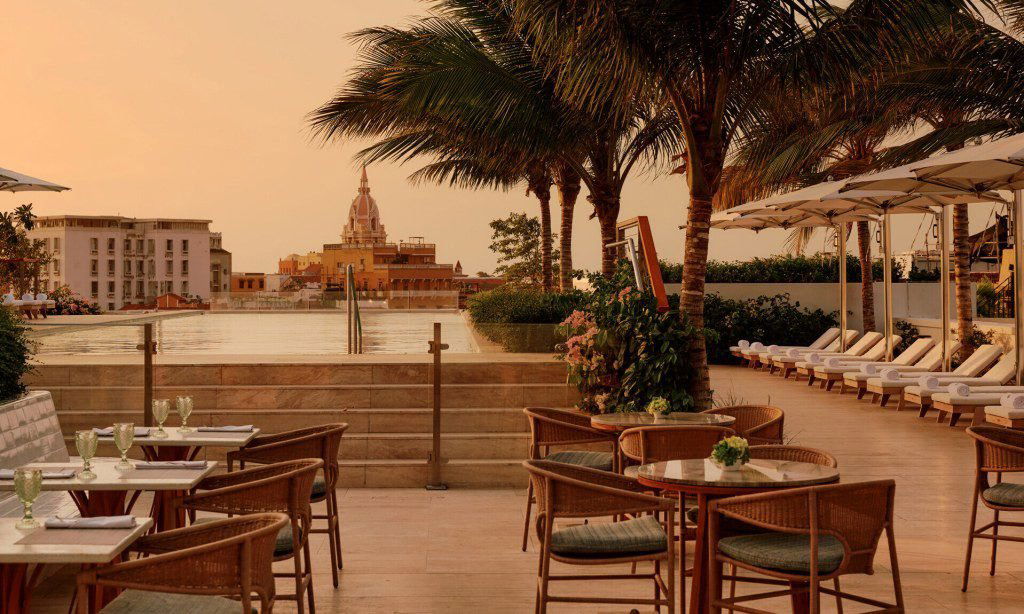
About Café Rialto
Café Rialto sits inside Cartagena's specialty coffee circuit, serving Colombian single-origin brews alongside pastries and desserts rooted in local tradition. The café draws from the country's deep coffee-growing heritage, positioning itself within a city that increasingly takes its café culture as seriously as its colonial architecture. A reliable stop for those moving between the walled city's heavier dining commitments.
Colombian Coffee Culture and the Cartagena Café Scene
Cartagena's café culture has shifted noticeably over the past decade. Where the walled city once offered only generic tinto served at restaurant tables, a generation of specialty-focused spots has taken hold, each drawing on Colombia's position as one of the world's most geographically varied coffee-producing nations. The country's growing regions — Huila, Nariño, Sierra Nevada, Antioquia — produce beans with distinct elevation signatures and processing profiles, and the better Cartagena cafés have begun treating those differences as a menu architecture rather than a footnote. Café Rialto operates within this movement, offering speciality Colombian coffee alongside pastries and desserts in a city that, until recently, would have offered you little choice between espresso and nothing at all.
That context matters. In a dining city dominated by seafood and coastal Colombian cooking , the kind of plates you'll find across the spectrum from AniMare to Casa Pestagua , the café tier has historically played a supporting role, filling the gaps between meals. The shift toward specialty coffee has changed that dynamic. A well-executed café now functions as a destination in its own right, not merely a caffeine stop between the Castillo San Felipe and a dinner reservation.
Fire, Tradition, and the Processing Question
Colombian coffee's relationship with heat is more foundational than it might first appear. The traditions that define the country's coffee output , sun-drying on raised beds, wood-fired drying in some rural processing stations, the careful calibration of roast temperatures that determines whether a Nariño washed lot reads as citrus-bright or stone-fruit dense , are as rooted in fire and controlled heat as any open-flame kitchen technique. A café serious about single-origin Colombian coffee is, in its own way, operating within a tradition of thermal craft: roast curves, extraction temperatures, and brewing ratios that determine whether a cup expresses the origin it was grown in or flattens it into commodity territory.
This is relevant to how Café Rialto fits into its city. Cartagena's more ambitious dining rooms , places like 1621 The Restaurant and Canales 5 Brasserie Moderne , are increasingly sourcing regionally and treating Colombian produce with the same attention that the country's coffee sector has long applied to its beans. A café that holds itself to similar sourcing standards, drawing from Colombia's producing regions rather than defaulting to generic blends, positions itself as part of a broader food-and-drink seriousness that the city is building toward.
Pastries, Desserts, and the Local Baking Register
The pastry and dessert side of Café Rialto's offer places it within a different Colombian tradition: the country's baking culture, which spans everything from the humble pan de bono and buñuelo to more elaborate tortas and dulces de leche constructions found in colonial-era cities like Cartagena and Popayán. Colombia's coastal baking has its own register, leaning on coconut, panela, and tropical fruits in ways that distinguish it from the highland tradition centred in Bogotá and the coffee axis. A café in Cartagena that takes its pastry and dessert program seriously has rich regional material to draw on, and the city's position as a high-traffic international destination means it can sustain a café that pitches its product above the generic tourist-bakery level.
This is the tier Cartagena's better café stops occupy: not the perfunctory coffee-and-croissant format borrowed from European templates, but something that reflects the actual geography and sugar traditions of the Colombian coast. That the city's food scene has grown ambitious enough to support venues at multiple points on this spectrum , from the high-end cooking of Andrés Carne de Res in Cartagena to neighbourhood spots with serious coffee programs , signals genuine maturation in the local hospitality offer.
Where Café Rialto Sits in the Cartagena Dining Circuit
Cartagena's food scene is increasingly well-documented and competitive. The city attracts Colombian domestic tourists, international visitors, and a growing number of food-focused travellers who are using the country as a multi-city itinerary, moving between Cartagena, Bogotá, and Medellín. Those travellers have already encountered serious coffee culture at the source , Colombia's farm-level tourism infrastructure in Antioquia and the coffee axis is among the most developed in South America , and they arrive in Cartagena with calibrated expectations. Café Rialto's speciality Colombian coffee positioning speaks directly to that audience.
Within Cartagena specifically, the café sits in a different competitive tier than the city's full-service restaurants. It is not competing with the experiential scale of a venue like Andrés Carne de Res in Chía, nor with the formal tasting-menu ambitions of Colombia's most decorated rooms, such as Harry Sasson in Bogotá. Its peer set is the specialty café format: relatively accessible on price, focused on a narrow but well-executed product range, and dependent on repeat visits and word-of-mouth rather than reservation-driven dining traffic. For a broader view of where Café Rialto sits within the city's food and drink offer, the full Cartagena restaurants guide maps the full range of options across neighbourhoods and meal occasions.
Colombia's Coffee Circuit Beyond Cartagena
Travellers building a Colombia dining itinerary will find that coffee culture reads differently across the country's cities. In Bogotá, specialty roasters and third-wave cafés have concentrated in La Candelaria and the Chapinero neighbourhood, producing a café scene with genuine international depth , a context that venues like Debora Restaurante in Bogotá operate alongside. In Medellín, the café culture benefits from proximity to the Antioquia growing region, with farm-to-cup traceability that gives baristas direct sourcing relationships. In Cali, the coffee tradition intersects with the city's Pacific-coast food identity, as seen in spots adjacent to venues like Sevichería Guapi in Santiago de Cali and Domingo in Cali. Cartagena's café scene is younger and less dense than these, but the coastal city's growing tourism base has accelerated its development.
On the Caribbean coast more broadly, Donde Mama in Barranquilla and BK Burukuka in Santa Marta represent the dining ambition the region is developing across categories. Coffee culture is part of that wider hospitality story.
Planning a Visit
Café Rialto is most naturally positioned as a morning or mid-afternoon stop, timed around the rhythms of Cartagena's walled city. The heavier heat of the afternoon makes a cool café with a considered coffee program a more appealing proposition than the midday sun warrants, and the city's dinner reservations at spots like AniMare or Casa Pestagua tend to run late into the evening, leaving the late afternoon as natural café territory. Address, hours, and specific pricing are leading confirmed directly with the venue before visiting, as these details are subject to change. Given Cartagena's high visitor volumes during the dry season months of December through March and again around Semana Santa, popular café spots in the walled city can see significant foot traffic during peak hours, and arriving early or outside the midday rush generally makes for a calmer experience.
Frequently Asked Questions
What do people recommend at Café Rialto?
Café Rialto's focus on speciality Colombian coffee is the clearest draw, with the café operating within a growing Cartagena scene that treats origin coffee as a serious product rather than a commodity. Colombia's producing regions , including Huila, Nariño, and Sierra Nevada , each carry distinct cup profiles, and a speciality-focused café in this city should be interrogated on which origins it is currently sourcing. Pastries and desserts complete the offer, rooted in the coastal Colombian baking tradition that distinguishes Cartagena from highland café culture. For broader context on where this café sits in the city, the Cartagena restaurants guide covers the full dining range.
Should I book Café Rialto in advance?
Café-format venues in Cartagena's walled city do not typically operate advance reservations in the way that dinner restaurants such as 1621 The Restaurant or Canales 5 do. That said, Cartagena is a high-traffic tourist destination, particularly from December through March and during Semana Santa, and specialty cafés in the historic centre see considerable visitor pressure during those windows. Arriving outside peak hours , early morning or mid-afternoon , is a more reliable approach than attempting to time a lunch-hour visit during high season.
What's the defining idea at Café Rialto?
The defining idea is the application of Colombia's coffee-growing depth to a coastal city context. Cartagena is not a coffee-producing region, but it is a city with the tourism base and hospitality ambition to support a serious specialty coffee offer. Café Rialto's combination of Colombian single-origin coffee with local pastry and dessert traditions places it at the intersection of the country's two most export-significant food identities: its coffee and its regional sweets culture. That positioning is more considered than a generic café offer, even if the venue's public profile remains relatively low compared to the city's headline dining rooms.
Is Café Rialto worth it?
For travellers already moving through a Colombia itinerary that includes serious dining at venues like X.O. in Medellín or Harry Sasson in Bogotá, a specialty café stop in Cartagena represents a low-stakes, high-reward decision. The price point for coffee and pastries sits well below the city's restaurant tier, and the category , Colombian single-origin coffee in a Colombian city , is one where the raw material quality justifies genuine attention. The question is less whether the category is worthwhile and more whether this specific venue is executing its coffee and pastry program at the level the specialty positioning implies, which is leading assessed on arrival.
Does Café Rialto offer Colombian regional coffee varietals, or does it serve a house blend?
Given Café Rialto's speciality Colombian coffee positioning, the venue likely draws from the country's distinct producing regions rather than a generic house blend, though the specific origins on offer will rotate with harvest cycles and sourcing relationships. Colombia's coffee calendar means that different regions , Huila, Nariño, Cauca, Sierra Nevada , come into their best-quality lots at different times of year, so the coffee offer at a serious speciality café should shift seasonally. Travellers interested in tasting specific regional profiles are leading served by asking the barista directly about current origins, which is standard practice at any cafe operating in the specialty Colombian coffee tradition.
Related editorial
- Asia's 50 Best Restaurants 2026: The Chairman and Wing Go 1-2 from the Same BuildingThe Chairman takes No. 1 and Wing climbs to No. 2 at Asia's 50 Best Restaurants 2026. Both operate from the same Hong Kong building. Here's what it means.
- Four Seasons Yachts Debut: 95 Suites, 11 Restaurants, and a March 2026 Maiden VoyageFour Seasons I launches March 20, 2026, with 95 suites, a one-to-one staff ratio, and 11 onboard restaurants. Worth tracking if you want hotel-grade service at sea.
- LA Michelin Guide 2026: Seven New Restaurants from Tlayudas to Uzbek DumplingsMichelin's March 2026 California Guide update adds six LA restaurants and one Montecito newcomer, spanning Oaxacan tlayudas, Uzbek manti, and Korean-Italian pasta.
Save or rate Café Rialto on Pearl
Keep this venue in your Pearl passport, rate it after you visit, and track it alongside every other place you collect.