
Restaurant in Arona, Italy
Blu
100ptsHome-Style Lacustrine Cooking

About Blu
On Piazza del Popolo with views across Lake Maggiore to the Rocca d'Angera, Blu operates in a register that is increasingly rare on northern Italy's lakeside dining circuit: honest, ingredient-led cooking without theatrical packaging. Chef Roberta's fried fish plate draws from the lake's own catch, while sommelier Carlo oversees a wine program built around considered regional pairings. A reliable address for visitors and locals alike.
Lake Maggiore on a Plate: The Case for Freshwater Fish in Italian Lakeside Cooking
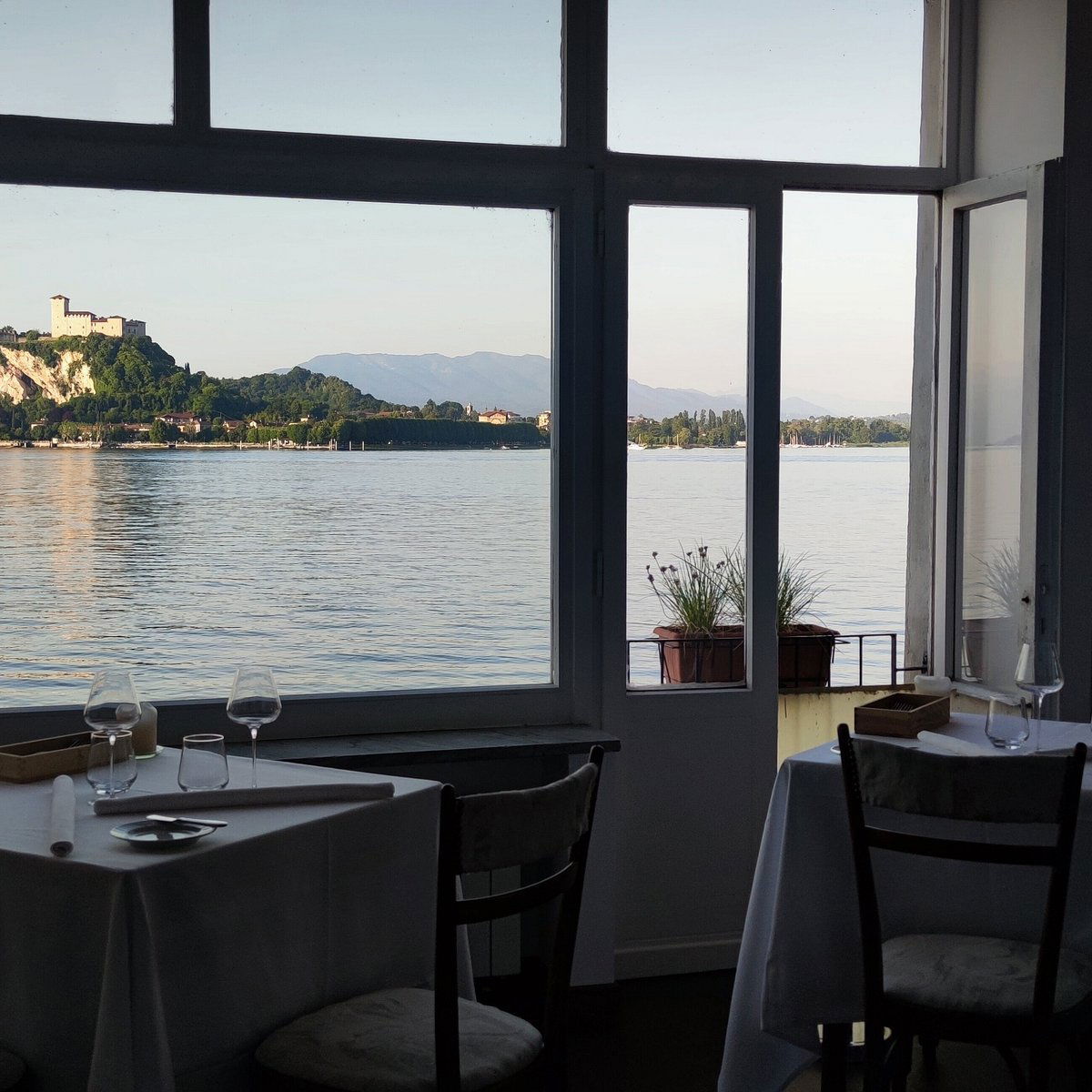
Piazza del Popolo in Arona is one of those squares that functions as a natural amphitheatre for the lake. Sit at its edge and the water fills your sightline; beyond it, the Rocca d'Angera rises on the Lombardian shore. This is the setting Blu occupies, with a shaded outdoor terrace that gives direct access to that view and interior dining rooms bright enough to register the shift in light as the afternoon moves toward evening. The geography is not incidental to the food: the kitchen at Blu draws its central ingredient directly from what you see in front of you.
Freshwater fish cooking has a long and underappreciated place in northern Italian gastronomy. While the country's premium restaurant circuit tends to anchor its fish courses in Adriatic or Mediterranean sourcing, the lakes of Piedmont and Lombardy have sustained their own distinct tradition for centuries. Lago Maggiore's catch includes zander, whitefish, trout, and the small, bony alborella, a species almost never found on restaurant menus outside the lake district. These are not prestige ingredients in the way that turbot or langoustine are prestige ingredients. Their value is hyperlocal and seasonal, and cooking them well requires familiarity rather than technique-for-its-own-sake.
From the Lake Floor Up: How Blu Approaches Its Ingredients
The kitchen at Blu works within that tradition rather than around it. Chef Roberta describes her approach as "home-style" cooking, which in northern Italian terms means a disciplined orientation toward flavour over presentation: produce-led, unfussy, built on the logic of what the season yields. That self-description is worth reading seriously rather than as false modesty. The register it signals, honest and ingredient-first, is a meaningful counterpoint to the creative tasting-menu model that dominates Italy's most decorated restaurants.
Italy's three-Michelin-star tier, represented by houses such as Osteria Francescana in Modena, Le Calandre in Rubano, Dal Pescatore in Runate, and Enrico Bartolini in Milan, operates on a fundamentally different premise: the ingredient is often the starting point for a conceptual move. At Enoteca Pinchiorri in Florence, Piazza Duomo in Alba, or Reale in Castel di Sangro, produce from specific producers and specific terroirs anchors menus that run to twelve courses or more. Blu occupies a different coordinate entirely. The comparison is not competitive; it is categorical. What matters here is whether the fish on your plate came from the lake you are looking at, and whether it was cooked by someone who understands it.
The signature preparation, named "dal fondale alla superficie" (literally, from the depths to the surface), is a fried fish dish combining zander, whitefish, trout, and alborella with seasonal vegetables. The title is a small piece of culinary poetry, but the logic behind it is practical: it uses the whole available catch across different depths and habits of the lake's fish population. Frying is one of the most exacting tests of freshness in any fish kitchen. Oil temperature, timing, and the moisture content of the fish determine whether the result is light and immediate or heavy and muted. A dish built around this technique and around ingredients sourced locally is making an argument about provenance that plating aesthetics alone cannot manufacture.
The Room and the Wine: What the Experience Actually Looks Like
The dining rooms at Blu are described as bright and relaxing, a combination that suits the lakeside hour well. The terrace, shaded for afternoon sittings when the western light can be direct, shifts the experience outdoors without sacrificing comfort. The view across to the Rocca d'Angera, a medieval fortress on the Borromean island shore, is a constant reference point and one of the more arresting backdrops in the Piedmontese lake district. Arona itself sits at the southern end of Lake Maggiore, closer to Milan than the more photographed northern resorts of Stresa and Verbania, which gives it a more workaday local character and a dining scene that reads less to visiting tourists and more to residents.
Front of house, sommelier Carlo handles wine recommendations with what the record describes as style and elegance. The wine context here matters: the southern Lago Maggiore shore sits close to the DOC zones of Colline Novaresi and Ghemme, and not far from Gattinara and the broader Piemontese nebbiolo belt. A thoughtful house wine program in this position has access to a serious regional cellar if the selection skews local. Whether Blu's list extends into Barolo or Barbaresco territory, or stays with the lighter nebbiolo-based reds of the lake district, is not documented in the available record, but the recommendation to involve Carlo in the pairing decision is the practically useful one regardless. Two of the most applauded international fish restaurants, Le Bernardin in New York City and Atomix in New York City, both demonstrate how essential a calibrated beverage program is to a menu built around a single ingredient category. At a smaller, more local scale, the same principle holds.
Where Blu Sits in Arona's Dining Picture
Arona's restaurant scene is compact but covers multiple registers. Condividere represents the classic cuisine tradition, while qapaq brings Peruvian technique to the lakeside. Blu operates in its own lane: locally sourced freshwater fish, terrace dining on a piazza with direct lake views, and a kitchen that frames its cooking around what the water yields rather than around culinary reference points imported from elsewhere. For the full picture of where to eat, drink, and stay in the area, the Arona restaurants guide, Arona hotels guide, Arona bars guide, Arona wineries guide, and Arona experiences guide cover the broader territory.
In terms of Italy's Alpine and pre-Alpine lake dining circuit, the comparison that comes to mind geographically is Atelier Moessmer Norbert Niederkofler in Brunico, which has built a three-Michelin-star reputation on Alpine sourcing principles and hyperlocal produce. The Niederkofler model and Blu's model share an orientation toward sourcing from the immediate environment, even if the scale, format, and ambition are entirely different. Both make a point about what grows, swims, or grazes in proximity. Quattro Passi in Marina del Cantone makes a related argument on the Amalfi coast: that cooking close to the source of the ingredient is a position in itself, not a limitation.
Planning Your Visit
Blu sits directly on Piazza del Popolo, 35, in Arona, placing it within easy walking distance of the town's ferry and hydrofoil connections across the lake. The terrace makes it a natural choice for lunch or early dinner when the light on the Rocca d'Angera is leading. Given the square's profile and the restaurant's position, reservations during summer weekends and Italian public holidays are advisable; this is a piazza address with lake views, and that combination draws a crowd. Contact details and current booking availability are not listed in the available record, so approaching via the restaurant directly on arrival or through Arona's local tourism channels is the practical route for planning.
Frequently Asked Questions
What do regulars order at Blu?
Order the "dal fondale alla superficie" fried fish. It is the kitchen's defining preparation and the clearest expression of what Chef Roberta's ingredient-led approach actually means in practice: a mix of lake-caught zander, whitefish, trout, and alborella, fried and served with seasonal vegetables. Everything else on the menu follows the same logic, but this dish is the one that communicates the Blu point of view most directly.
Is Blu better for a quiet night or a lively one?
Piazza del Popolo has natural energy, especially through the summer months, but the restaurant's character skews toward relaxed rather than animated. The bright dining rooms and shaded terrace create a setting suited to conversation over a leisurely meal. Arona's dining scene does not trend toward late-night theatre, and Blu fits that grain: a restaurant where the lake view and the food are the evening's content, not peripheral to it.
Does Blu work for a family meal?
In a lakeside Piedmontese town like Arona, restaurants on the main piazza generally accommodate multi-generational tables without issue, and the unfussy, home-style cooking register at Blu fits that context. There is no documented prix-fixe or tasting-menu format that would constrain younger diners, and the direct fish-based menu is approachable across most appetites.
Recognized By

Similar venues by awards
Related editorial
- Best Fine Dining Restaurants in ParisFrom three-Michelin-star icons to the next generation of Parisian chefs pushing boundaries, these are the restaurants that define fine dining in the world's culinary capital.
- Best Luxury Hotels in RomeFrom rooftop terraces overlooking ancient ruins to Michelin-starred hotel dining, these are the luxury hotels that make Rome unforgettable.
- Best Cocktail Bars in KyotoFrom sleek lounges to hidden speakeasies, Kyoto's cocktail scene blends Japanese precision with global influence in ways you won't find anywhere else.
Save or rate Blu on Pearl
Keep this venue in your Pearl passport, rate it after you visit, and track it alongside every other place you collect.