
Restaurant in Namur, Belgium
Basile cuisine gourmande
100ptsOrganic Farm Provenance

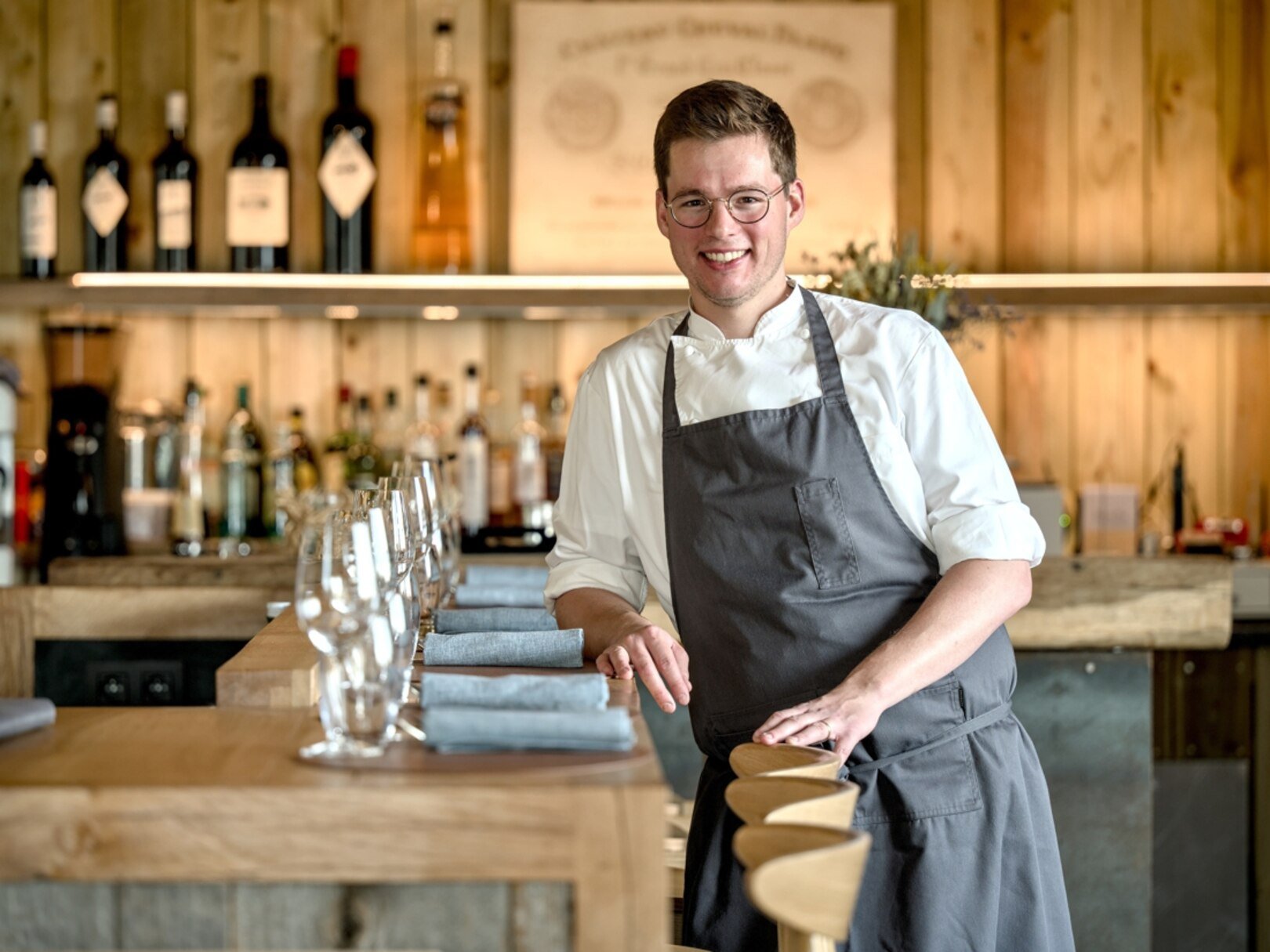
About Basile cuisine gourmande
Set in the courtyard of an organic farm outside Namur, Basile cuisine gourmande represents the more committed end of farm-to-table dining in Wallonia. The kitchen draws directly from its agricultural surroundings, and the effort required to reach it — a rural address in Bovesse, near Perwez — functions less as an obstacle than as a signal of what to expect inside: cooking built around provenance rather than convenience.
A Farm Courtyard as Dining Room
There is a tier of European restaurant that uses the word 'farm' as shorthand for a particular aesthetic — exposed beams, linen tablecloths, a vegetable on the plate that was photographed rather than grown. Basile cuisine gourmande, set in the courtyard of a working organic farm in Bovesse, operates differently. The address itself — Chaussée de Charleroi 13, in Perwez, well outside the restaurant circuit of central Namur , establishes the premise before you sit down. Getting there is part of the deal, and the kitchen's relationship with its agricultural surroundings is the governing logic of what ends up on the plate.
In the broader context of fine dining in Wallonia, this kind of sourcing-first positioning is relatively rare. The region's restaurant culture tilts toward classical French preparation, and some of its most recognised addresses , including those operating at the €€€ price tier in Namur itself , treat ingredient provenance as a supporting note rather than the main argument. Basile cuisine gourmande inverts that hierarchy.
The Organic Farm Context in Belgian Fine Dining
Belgium's fine dining scene has long been calibrated around technique. Restaurants like Hof van Cleve - Floris Van Der Veken in Kruishoutem, Boury in Roeselare, and Zilte in Antwerp built their reputations on kitchen craft, with sourcing as a supplement to that craft. A smaller cohort has moved in a different direction: placing ingredient origin at the centre and treating technique as the means of expressing that origin rather than overriding it. Willem Hiele in Oudenburg operates within that philosophy, as does Bartholomeus in Heist with its coastal sourcing logic.
Basile cuisine gourmande belongs to this second current, but with a specific inflection: the farm is not a supplier at a distance , it is the physical setting. That proximity between production and preparation is less common even among sourcing-focused restaurants, most of which maintain some geographic separation between kitchen and field. The courtyard format collapses that distance in a way that changes the atmosphere as much as the menu.
What Sourcing at This Level Actually Means
Farm-to-table as a phrase has been diluted through overuse. At its weakest, it describes a seasonal salad from a named local producer. At its most committed, it describes a kitchen whose menus are determined by what is ready rather than what a chef has pre-planned, and whose ingredient decisions are made in conversation with people who grow and raise food under specific conditions. The organic certification of the farm at Bovesse places it within a defined agricultural standard, which has practical implications for what the kitchen receives: no synthetic inputs, attention to soil health, production cycles that follow biological rather than commercial logic.
That kind of sourcing imposes constraints that classical French kitchens typically resist. It limits what is available and when. It means the kitchen cannot always guarantee a consistent menu across multiple service weeks. For a certain type of diner, that unpredictability is precisely the point. For others, it requires a different relationship with the experience , less about ordering a specific dish and more about encountering what the land is producing at the moment of your visit.
In Namur's restaurant scene, this positioning sets Basile cuisine gourmande apart from its urban peers. Bistro Camélia works with seasonal produce at a more accessible price point, and Attablez-vous brings creative French technique to the €€€ tier. But neither is embedded in a working farm, and neither resolves the sourcing question in quite the same architectural way. The comparison set for Basile cuisine gourmande is less about price tier and more about philosophy , which makes it an outlier in the Namur context and a more natural peer of farm-embedded restaurants operating at comparable ambition levels across northern France and the Netherlands.
The Ambition Behind the Rural Address
Young chef-owners who open in rural locations rather than city centres are making an argument through geography. The move to Bovesse, rather than a dining street in Namur, signals that the concept is not designed to absorb foot traffic or benefit from proximity to other restaurants. It is designed around a specific idea , and that idea requires a specific location. This is a pattern recognisable in other ambitious rural openings across Europe, where the address becomes inseparable from the proposition. The inconvenience is structural, not accidental.
That structural inconvenience also affects the dining experience in ways that a city restaurant cannot replicate. Arriving at a farm courtyard in the Walloon countryside, particularly outside summer months when the agricultural landscape reads in a starker register, changes the frame around the meal. The context is legible in a way that an urban dining room cannot manufacture. For restaurants whose identity depends on that kind of legibility , where the food's origin is meant to be felt, not just described on a menu , the physical environment is doing significant editorial work.
For comparable ambition operating from a city-centre position, Bozar Restaurant in Brussels and L'Espièglerie in Namur offer different registers of contemporary Belgian cooking. La table du Royal Snail and Brasserie du Quai extend the range of options across the Namur area. See the full Namur restaurants guide for the broader picture.
Planning Your Visit
Basile cuisine gourmande is located at Chaussée de Charleroi 13 in Perwez, in the Bovesse area , not in central Namur. A car is the practical means of arrival for most visitors; the address does not lend itself to arrival by public transport. Given the farm setting and the sourcing-led format, contact ahead of your visit is advisable to confirm service days and current menu format, as both may shift with seasonal availability. The effort of planning and travelling to a farm outside the city is, in this case, built into the experience rather than peripheral to it.
For those planning a broader stay in the region, the full Namur hotels guide, bars guide, wineries guide, and experiences guide cover the full range of options across the area. For reference points at the outer end of the farm-rooted dining spectrum internationally, Le Bernardin in New York City and Emeril's in New Orleans illustrate how sourcing commitments have played out in very different urban contexts.
Frequently Asked Questions
- What is the atmosphere like at Basile cuisine gourmande?
- The setting is a working organic farm courtyard in Bovesse, outside Namur , which means the atmosphere is agricultural and rural rather than urban or formal. The physical context does significant work in establishing the dining experience: the landscape, the farm buildings, and the distance from the city are all part of what you are there for. Compared to the €€€ restaurants operating in central Namur, the register here is defined by place and provenance rather than conventional fine dining formality.
- What dish is Basile cuisine gourmande famous for?
- The kitchen's identity is built around its direct relationship with the organic farm, which means the menu follows what is in production rather than a fixed set of signature preparations. The cooking draws on what the farm yields at the time of your visit. Rather than arriving with a specific dish in mind, the expectation is to encounter what is ready , which is a different frame than most recognised restaurants in the region operate within.
- Is Basile cuisine gourmande suitable for children?
- The farm setting and the sourcing-led format make Basile cuisine gourmande more approachable in terms of environment than a formal city-centre restaurant at a comparable price level. Whether it suits a specific family depends on the children and the price expectations involved. For families looking for a lower-commitment entry point to Namur's dining scene, Brasserie du Quai at the €€ tier offers a more conventional setting. Contact the restaurant directly before visiting with children to confirm the current format.
Recognized By

Similar venues by awards
Related editorial
- Best Fine Dining Restaurants in ParisFrom three-Michelin-star icons to the next generation of Parisian chefs pushing boundaries, these are the restaurants that define fine dining in the world's culinary capital.
- Best Luxury Hotels in RomeFrom rooftop terraces overlooking ancient ruins to Michelin-starred hotel dining, these are the luxury hotels that make Rome unforgettable.
- Best Cocktail Bars in KyotoFrom sleek lounges to hidden speakeasies, Kyoto's cocktail scene blends Japanese precision with global influence in ways you won't find anywhere else.
Save or rate Basile cuisine gourmande on Pearl
Keep this venue in your Pearl passport, rate it after you visit, and track it alongside every other place you collect.