
Restaurant in Mueang Khon Kaen, Thailand
Bamee Kuang Tang
100ptsIsan Street Bowl
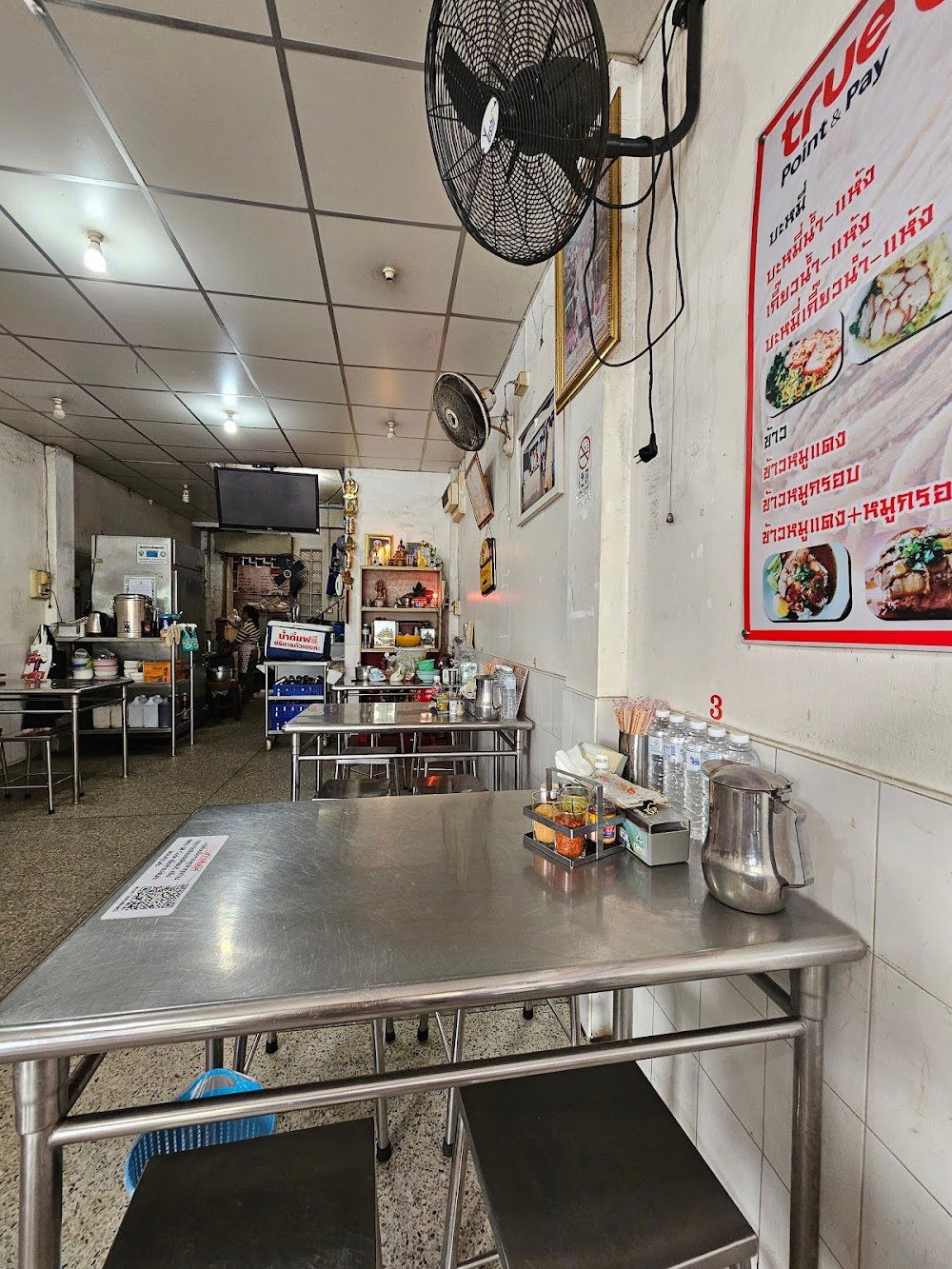
About Bamee Kuang Tang
Bamee Kuang Tang on Phimphasut Road serves egg noodle dishes rooted in the everyday cooking traditions of Khon Kaen's urban core. The spot sits within a city where street-level noodle culture runs deep and ingredient provenance shapes taste far more than kitchen ambition. For travellers passing through Isan's commercial hub, it represents the kind of fixed address that local regulars use as a reference point.
Khon Kaen's Noodle Culture and Where Bamee Kuang Tang Fits
Khon Kaen is the commercial and administrative centre of the Isan region, and its food scene reflects that dual identity: practical, deeply local, and shaped by decades of working-class eating habits rather than by tourism pressure. Within that context, egg noodle shops, known in Thai as bamee shops, occupy a specific and respected position. They are not street food in the improvised sense. They are fixed-address operations with consistent suppliers, repeating clientele, and an accumulated understanding of what the neighbourhood expects on the plate. Bamee Kuang Tang, located at 18/22 Phimphasut Road in the Nai Mueang subdistrict, sits in exactly that category.
Phimphasut Road runs through the inner urban district, an area where residents rather than visitors set the pace. The streets here are lined with the kind of eating places that answer to local judgement rather than guidebook approval. For a bamee operation to hold its ground in such an environment over time, it has to get the sourcing right, because regulars in this part of Thailand know immediately when an ingredient has been substituted or a stock has been diluted.
What Drives Bamee: The Ingredient Logic Behind the Bowl
Egg noodles in the Thai context carry a different set of sourcing expectations than, say, rice noodle dishes. The noodles themselves, typically made from wheat flour and egg, arrive either fresh from local producers or dried, and the difference is legible in texture from the first bite. Fresh bamee has a slightly springy resistance and an egg-rich flavour that dried noodles cannot replicate. Shops that source fresh noodles are making a daily commitment, since fresh product has a short window and demands reliable supply relationships.
Beyond the noodle, the stock is the primary carrier of flavour in a bowl of bamee. Pork-based broths, common in this format, require long cooking from quality bones and aromatics. The Isan region has its own pork production infrastructure, and cooks who source locally from that supply chain produce stocks with a different depth than those working from commercial concentrate. This is not a romantic point about provenance for its own sake. It is a practical one: the fat content, the gelatin extraction, and the aromatic profile of a broth are direct outcomes of what went into the pot and for how long.
Toppings in bamee shops across Thailand follow a familiar grammar, with red pork (char siu), fish balls, wontons, and blanched greens appearing in various combinations. The quality gap between versions of the same topping is significant. Char siu made in-house from well-sourced pork carries a different caramel and fat balance than the pre-sliced commercial version. Khon Kaen's urban eating culture, shaped by a population that moves regularly between home cooking and street eating, tends to notice and reward that difference.
Eating in the Inner Nai Mueang District
The Nai Mueang subdistrict is where much of Khon Kaen's daily commercial life concentrates, and its eating options range from market stalls open at dawn through to sit-down shops serving through the lunch hour and into the evening. Bamee shops in Thailand typically operate on tight windows, often breakfast through mid-afternoon, because fresh noodle stock depletes and is not replenished in the way a restaurant kitchen might leading up a sauce. Visiting Bamee Kuang Tang with that timing logic in mind is worth factoring into any plan. Arriving early in the service period generally means tasting the product at its leading, when the broth is freshest and the noodle supply has not been sitting.
For travellers building a fuller picture of the city's food culture, Khon Kaen rewards the kind of sequential eating that covers different formats across a single day. [Khon Kaen Khaaw Muu Yaang](https://www.enprimeurclub.com/restaurants/khon-kaen-khaaw-muu-yaang-mueang-khon-kaen-restaurant) represents the grilled pork tradition that sits alongside noodle culture in the Isan eating hierarchy, while [Mana](https://www.enprimeurclub.com/restaurants/mana-mueang-khon-kaen-restaurant) and [See Na Nuan Cafe](https://www.enprimeurclub.com/restaurants/see-na-nuan-cafe-mueang-khon-kaen-restaurant) speak to the city's expanding cafe and lighter-meal register. [กะแกราอิ๊เก้](https://www.enprimeurclub.com/restaurants/b64fbb7f-mueang-khon-kaen-restaurant) and [ร้านตัม ตาตู เนื้อย่าง แอนด์นุดเดิ้ลยำตำ](https://www.enprimeurclub.com/restaurants/71c394d2-mueang-khon-kaen-restaurant) extend the range further into grilled meat and mixed noodle formats that define this part of Isan's eating culture. The [full Mueang Khon Kaen restaurants guide](https://www.enprimeurclub.com/cities/mueang-khon-kaen) maps these across the city's distinct zones.
Bamee in the Broader Thailand Noodle Conversation
Egg noodle culture in Thailand exists in a different tier from the tasting-menu-driven restaurant movement that has drawn international attention to places like [Sorn in Bangkok](https://www.enprimeurclub.com/restaurants/sorn-bangkok-restaurant) or destination-restaurant operations like [PRU in Phuket](https://www.enprimeurclub.com/restaurants/pru-phuket-restaurant). That gap is not a hierarchy so much as a difference in intent. Sorn's ingredient sourcing philosophy, which has earned it significant recognition, and the sourcing logic behind a well-run provincial bamee shop are operating on the same underlying principle: the ingredient matters, and where it comes from shapes what ends up in the bowl. The execution contexts are entirely different, but the principle holds at both ends of the formality spectrum.
Across the Northeast, comparable noodle formats appear in cities like Udon Thani, where operations like [Baan Chik Pork Noodles](https://www.enprimeurclub.com/restaurants/baan-chik-pork-noodles-udon-thani-restaurant) occupy similar community anchoring roles. In Khon Kaen specifically, [Baan Heng](https://www.enprimeurclub.com/restaurants/baan-heng-khon-kaen-restaurant) represents the city's longer-standing family-format eating tradition, and understanding how these different formats coexist clarifies what each one is actually doing for its audience. Bamee Kuang Tang is not competing with a broader restaurant category. It is serving the specific, recurring need for a well-executed bowl at a practical price point, for people who know exactly what that should taste like.
Elsewhere in Thailand's regional food map, ingredient-led thinking shapes places as different as [AKKEE in Pak Kret](https://www.enprimeurclub.com/restaurants/akkee-nonthaburi-restaurant), [Anuwat in Phang Nga](https://www.enprimeurclub.com/restaurants/anuwat-phang-nga-restaurant), and [Ayutthayarom in Phra Nakhon Si Ayutthaya](https://www.enprimeurclub.com/restaurants/ayutthayarom-phra-nakhon-si-ayutthaya-restaurant). Each reflects a local supply chain and a local eating logic. The national picture, when you read it as a series of regional sourcing decisions rather than a uniform cuisine, becomes considerably more interesting.
Planning a Visit
Bamee Kuang Tang is located at 18/22 Phimphasut Road in the Nai Mueang subdistrict of Khon Kaen. The address sits within the city's inner district, reachable by tuk-tuk, motorcycle taxi, or on foot from the central commercial area. No booking infrastructure is available in the current public record, which is consistent with the walk-in, counter-service format standard to this type of operation. Arriving during the earlier part of the day's service window, before stocks thin out, is the practical approach. Pricing at this category of bamee shop across Thailand typically falls in the 40 to 80 baht range per bowl, though no confirmed figure is available for this address specifically.
Frequently Asked Questions
Would Bamee Kuang Tang be comfortable with kids?
In Thailand's bamee shop format, children are a standard part of the customer mix, and Khon Kaen's everyday eating venues are built around family use rather than adult-only dining. The format here, quick service, simple seating, and a menu built around mild-to-moderate flavours, is well suited to families. At the price point typical of this category, ordering multiple bowls for a group is not a cost concern.
Is Bamee Kuang Tang better for a quiet night or a lively one?
The bamee shop format in Thai cities generally runs to a daytime and early-evening rhythm rather than a late-night one. Khon Kaen has livelier options for evening eating and the city's growing bar and cafe scene covers that ground. This address is better understood as a purposeful daytime or early-meal stop, where the draw is the bowl rather than the atmosphere. No awards or late-night credentials are on record here that would suggest otherwise.
What's the leading thing to order at Bamee Kuang Tang?
No confirmed menu data is available in the public record for this address. In the bamee format broadly, the standard starting point is the shop's signature bowl with its house broth, whichever noodle gauge the kitchen favours (typically thin or medium egg noodle), and the primary toppings the cook is known for. Asking for the default or most popular option when you arrive is the most reliable approach at this type of operation, where the menu is often shorter and more focused than it appears.
How does Bamee Kuang Tang fit into Khon Kaen's wider noodle culture?
Khon Kaen's Nai Mueang district has sustained a network of fixed-address noodle shops that serve the city's working and commercial population across morning and midday hours. Within that network, a shop's longevity at a single address is itself a signal of consistency, since the local clientele who depend on it will redirect to competitors without sentiment if quality slides. Bamee Kuang Tang's Phimphasut Road address places it within that network, and its continued presence there is the most meaningful data point available about its standing in the local category.
Related editorial
- Asia's 50 Best Restaurants 2026: The Chairman and Wing Go 1-2 from the Same BuildingThe Chairman takes No. 1 and Wing climbs to No. 2 at Asia's 50 Best Restaurants 2026. Both operate from the same Hong Kong building. Here's what it means.
- Four Seasons Yachts Debut: 95 Suites, 11 Restaurants, and a March 2026 Maiden VoyageFour Seasons I launches March 20, 2026, with 95 suites, a one-to-one staff ratio, and 11 onboard restaurants. Worth tracking if you want hotel-grade service at sea.
- LA Michelin Guide 2026: Seven New Restaurants from Tlayudas to Uzbek DumplingsMichelin's March 2026 California Guide update adds six LA restaurants and one Montecito newcomer, spanning Oaxacan tlayudas, Uzbek manti, and Korean-Italian pasta.
Save or rate Bamee Kuang Tang on Pearl
Keep this venue in your Pearl passport, rate it after you visit, and track it alongside every other place you collect.