
Restaurant in Cheoin, South Korea
에버리움펜션
100ptsGyeonggi Self-Catering Retreat
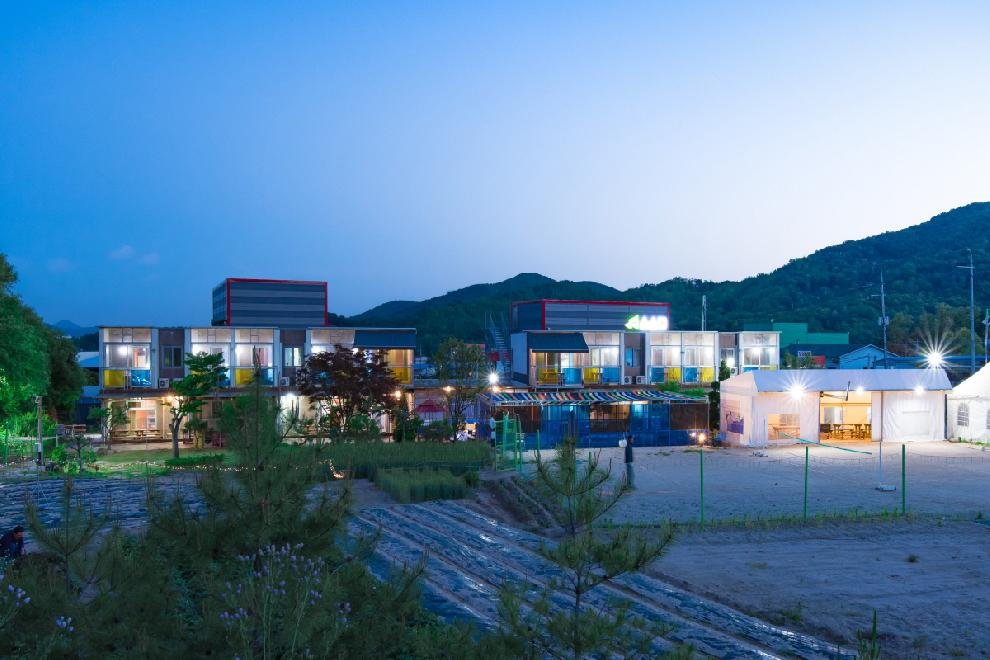
About 에버리움펜션
에버리움펜션 sits in Yongin's Pogok-eup district, part of the pension-style accommodation tradition that defines leisure stays across Gyeonggi-do. As a destination in the orbit of Cheoin, it represents the region's quieter alternative to Seoul's hospitality density — a format where self-contained rural stays draw urban visitors seeking distance from the capital's pace. Details on rates and booking are best confirmed directly with the property.
Pension Culture in Gyeonggi-do: The Cheoin Context
The pension format — a self-contained rural or semi-rural lodge, usually family-run, positioned between a guesthouse and a private villa — has become one of South Korea's most distinctive hospitality categories. Gyeonggi-do, the province encircling Seoul, holds a particularly dense concentration of these properties, partly because the province's varied terrain (low mountains, river valleys, agricultural flatlands) makes it accessible within an hour or two from the capital, and partly because Korean urban culture maintains a strong appetite for deliberate withdrawal from metropolitan density. Yongin's Pogok-eup district, where 에버리움펜션 is located along Gokhyeon-ro, sits within that broader pattern: a township that functions as a pressure valve for Seoul and Suwon residents looking for a slower weekend rhythm. For more on how this region's dining and lodging options fit together, see our full Cheoin restaurants guide.
The Physical Setting and Approach
Arriving along Gokhyeon-ro in Pogok-eup, the visual register shifts from the commercial corridors of greater Yongin to the lower-rise, greener character of this sub-district. Properties in this pocket of Cheoin-gu tend to occupy plots where the boundary between building and landscape is deliberately softened , a design instinct that aligns with what Korean pension guests typically seek: the sense of being contained within a natural environment without the logistics of true camping. The address at 354-1 Gokhyeon-ro places 에버리움펜션 within this residential-rural edge zone, characteristic of Gyeonggi-do pension clusters that have grown around scenic driving routes from the capital.
In the pension category across Korea, the physical environment is the primary product. Kitchens, outdoor terraces, and the surrounding topography carry more weight in the guest experience than formal hospitality services. This makes ingredient sourcing and self-catering central to how visitors actually spend their time , a point worth examining in more detail below.
Ingredient Sourcing and the Pension Self-Catering Tradition
The pension model in Korea differs structurally from European bed-and-breakfast formats in one important way: guests frequently bring or source their own food, and the kitchen is a functional part of the stay rather than an afterthought. This transforms the relationship between accommodation and local food supply chains in ways that don't apply to hotel dining. Visitors to Pogok-eup and the broader Cheoin-gu area have access to the agricultural supply networks that serve this part of Gyeonggi-do , a province with active production in vegetables, rice, and seasonal produce, feeding both local markets and the capital.
Gyeonggi-do's proximity to Seoul has historically made it a provisioning zone: farms here have long supplied the city's markets, and that supply chain runs in both directions. Weekend visitors moving outward from Seoul often stop at roadside markets and local agricultural co-operatives en route, a pattern that turns the drive to a Pogok-eup pension into a light sourcing exercise. The ingredients brought into a property like 에버리움펜션 thus reflect the seasonal produce calendar of the region , spring wild greens, summer stone fruits, autumn root vegetables, winter kimchi fermentation culture , rather than a curated restaurant menu. This connection to place through food sourcing, informal as it is, constitutes one of the more honest expressions of Korean regional ingredient identity, removed from the premium framing that venues like 권숙수 - Kwon Sook Soo in Gangnam-gu or Mingles in Seoul apply to similar raw materials.
For context on how Korean culinary tradition handles regional ingredients at the formal dining end of the spectrum, Doosoogobang in Suwon , a short drive from Pogok-eup , and Injegol in Inje County both represent the structured restaurant treatment of regionally sourced Korean produce. The contrast with the pension self-catering experience is instructive: the same ingredients, two completely different institutional frameworks.
Positioning Within the Gyeonggi-do Stay Market
Pension properties in Gyeonggi-do operate across a wide quality spectrum. At the lower end, the format is functional and basic; at the upper end, properties compete on design, outdoor facilities, and environmental positioning. Without confirmed star ratings, pricing tiers, or award records for 에버리움펜션, placing it precisely within that spectrum requires direct enquiry with the property. What can be said is that Pogok-eup has developed a cluster of accommodation options that serve both leisure visitors and those using Yongin as a staging point for the wider Gyeonggi-do region.
The comparison set for a Gyeonggi-do pension is not the formal hotel market. Properties like those reviewed by EP Club in coastal and mountain regions , Mori in Busan or Double T Dining in Gangneung , reflect dining-led destination stays where the kitchen programme is central. The pension format inverts that logic: accommodation and environment are primary; the food experience is self-directed. Both are valid frameworks for Korean leisure travel; they simply serve different motivations.
Planning Your Stay
Cheoin-gu is accessible from central Seoul via the Gyeongbu Expressway and connecting routes toward Yongin, with Pogok-eup reachable in approximately 40 to 60 minutes from southern Seoul depending on traffic conditions , a journey that makes it realistic as a weekend or short-break destination rather than a day trip. Korean pension bookings are typically handled through domestic platforms such as Naver, Yanolja, or Goodchoice, or directly via the property's own channels; for 에버리움펜션, confirming availability and current rates directly with the venue is advised given that no booking portal or website details are currently listed in public records. Weekend bookings in Gyeonggi-do pension clusters, particularly during spring (late March through May) and autumn (September through November), tend to fill quickly as these are the peak domestic leisure travel seasons in Korea.
Visitors with an interest in the wider Gyeonggi-do and Korean regional dining context beyond the pension format can also reference EP Club coverage of Gabojeong Galbi #2 in Suwon, Market Café in Incheon, and further afield, Gyeongju Wonjo Kongguk for a sense of how regional Korean food traditions vary across the peninsula. For those extending travel beyond the mainland, Cheon Jee in Jeju and Hinode in Seogwipo offer further reference points. EP Club also covers international benchmarks for comparison: Le Bernardin in New York City and Lazy Bear in San Francisco illustrate how ingredient sourcing and provenance framing operate at the formal fine dining end of the spectrum, offering a useful contrast to the informal sourcing culture of Korean pension stays. Additional EP Club coverage of Korean dining includes Baegyangsa Temple in Jangseong-gun, The Flying Hog in Seogwipo, Dining Room in Busan, and Pho Saigon in Junggu.
Frequently Asked Questions
- Can I bring kids to 에버리움펜션?
- The pension format in Gyeonggi-do is typically family-oriented by design, and properties in Pogok-eup generally accommodate families with children. That said, specific facilities , fencing, shallow pools, play areas , vary significantly between properties and price tiers. Confirming directly with 에버리움펜션 is the only reliable way to assess suitability for young children, particularly given that no facility details are currently available in public records.
- What's the vibe at 에버리움펜션?
- The atmosphere at a Gyeonggi-do pension in this part of Yongin sits in a quieter, semi-rural register: low-density surroundings, weekend-retreat pace, and a guest culture oriented around outdoor space, self-catering, and rest. It is not a bar-and-restaurant-driven hospitality environment in the way that Seoul venues like Mingles or urban addresses in Gangnam-gu operate. The draw is environmental and restorative rather than gastronomic.
- What dish is 에버리움펜션 famous for?
- No confirmed signature dish or in-house kitchen programme is documented for 에버리움펜션. In the Korean pension format, self-catering typically replaces restaurant service, meaning the food experience reflects what guests bring or source locally rather than a chef-driven menu. For structured Korean dining in the region, Doosoogobang in Suwon provides a nearby reference point.
- What's the leading way to book 에버리움펜션?
- No website or booking platform details are currently available in public records for this property. Korean pension bookings are most commonly handled through domestic platforms (Naver, Yanolja, Goodchoice) or by direct contact with the venue. Given the popularity of Gyeonggi-do pension stays during spring and autumn, early enquiry is advisable regardless of booking channel.
- Is 에버리움펜션 suitable for a solo traveller, or is it geared toward groups and families?
- The pension format across Gyeonggi-do skews toward groups, couples, and families , partly because the self-catering kitchen and common outdoor spaces are designed for shared use, and partly because per-room pricing in the pension category is rarely structured to reward solo occupancy. Visitors travelling alone would be better served confirming minimum occupancy expectations directly with the property. The wider Cheoin and Yongin area does offer alternative accommodation formats more suited to individual travellers.
Related editorial
- Best Fine Dining Restaurants in ParisFrom three-Michelin-star icons to the next generation of Parisian chefs pushing boundaries, these are the restaurants that define fine dining in the world's culinary capital.
- Best Luxury Hotels in RomeFrom rooftop terraces overlooking ancient ruins to Michelin-starred hotel dining, these are the luxury hotels that make Rome unforgettable.
- Best Cocktail Bars in KyotoFrom sleek lounges to hidden speakeasies, Kyoto's cocktail scene blends Japanese precision with global influence in ways you won't find anywhere else.
Save or rate 에버리움펜션 on Pearl
Keep this venue in your Pearl passport, rate it after you visit, and track it alongside every other place you collect.