
Restaurant in Chippendale, Australia
Automata Restaurant
100ptsWarehouse-Era Progressive
About Automata Restaurant
Automata occupies a converted industrial space on Kensington Street, one of Chippendale's most concentrated dining addresses. The kitchen works within a progressive Australian idiom, drawing on produce sourcing and technical precision that places it alongside Sydney's more serious tasting-format restaurants. For first-timers, the street-level setting belies the ambition inside.
Kensington Street and the Scene That Surrounds It
Chippendale's dining identity was redrawn over the past decade as former warehouse and printing precinct blocks on and around Kensington St were converted into a concentrated cluster of serious restaurants. The street functions less like a strip and more like a deliberate curatorial exercise — a handful of addresses, each operating at a level of intent that sets the precinct apart from Sydney's more diffuse dining neighbourhoods. Automata, at number five, is among the addresses that established Kensington Street's reputation as a destination rather than a commuter pass-through. Its neighbours include A1 Canteen, and the physical environment of the block rewards a slow approach: exposed brick, high ceilings, the particular acoustics of a room designed for something other than eating that has been thoughtfully repurposed.
The broader context matters here. Sydney's progressive fine-dining tier — the restaurants operating tasting formats with considered wine programs and explicit relationships to produce sourcing , is smaller than the city's reputation suggests. Most of the serious work happens in a handful of rooms, and Automata has been part of that short list since it opened. That positioning is what makes it worth understanding on its own terms rather than as background noise in a larger neighbourhood story.
Where the Food Comes From, and Why That Shapes the Plate
Among the markers that separate Australian progressive restaurants from their international counterparts, ingredient provenance has emerged as the defining one. The question being asked in kitchens like Automata's is not simply what to cook, but where everything originates and whether that origin is traceable and defensible. This is the same axis that defines Brae in Birregurra, which grows much of what it serves on its own property, and Attica in Melbourne, where native ingredient research has become a form of cultural methodology. Automata operates within that same conversation, translated into an urban Sydney context where the kitchen's sourcing relationships with growers and producers replace the on-site farm model.
The Australian continent's produce diversity is unusually broad for its landmass: coastal seafood from cold southern waters and tropical northern reefs, cool-climate vegetables and stone fruit from highlands and tablelands, native herbs and greens that carry flavour profiles with no European equivalent. Kitchens working in this mode are making a claim , that the leading expression of a dish comes from understanding its raw material at the point of growth rather than at the point of delivery. That claim requires supply chain discipline that many urban restaurants sidestep. The restaurants that commit to it, as Automata does within its format, produce food that reads differently from technically similar but sourcing-agnostic menus.
For comparison, Pipit in Pottsville and Provenance in Beechworth pursue analogous sourcing logic in regional settings where proximity to producers is a structural advantage. In a city like Sydney, the discipline required to maintain those relationships without geographic convenience is a different kind of commitment, and it shapes both the menu's range and its seasonal responsiveness.
Format, Pace, and What to Expect
Sydney's tasting-format restaurants occupy a specific position in the city's dining economy. They ask for more time, more money, and more trust than à la carte rooms, and in return they offer a sequenced experience where each element is accountable to a larger whole. Automata operates within this format , a progressive menu where the kitchen sets the direction and the guest follows. That compact is not for everyone, and it is not designed to be. The restaurants in this tier, from Ormeggio at The Spit in Mosman to Rockpool in Sydney, succeed when the kitchen's confidence in its own sequencing is matched by an awareness of pacing and proportion.
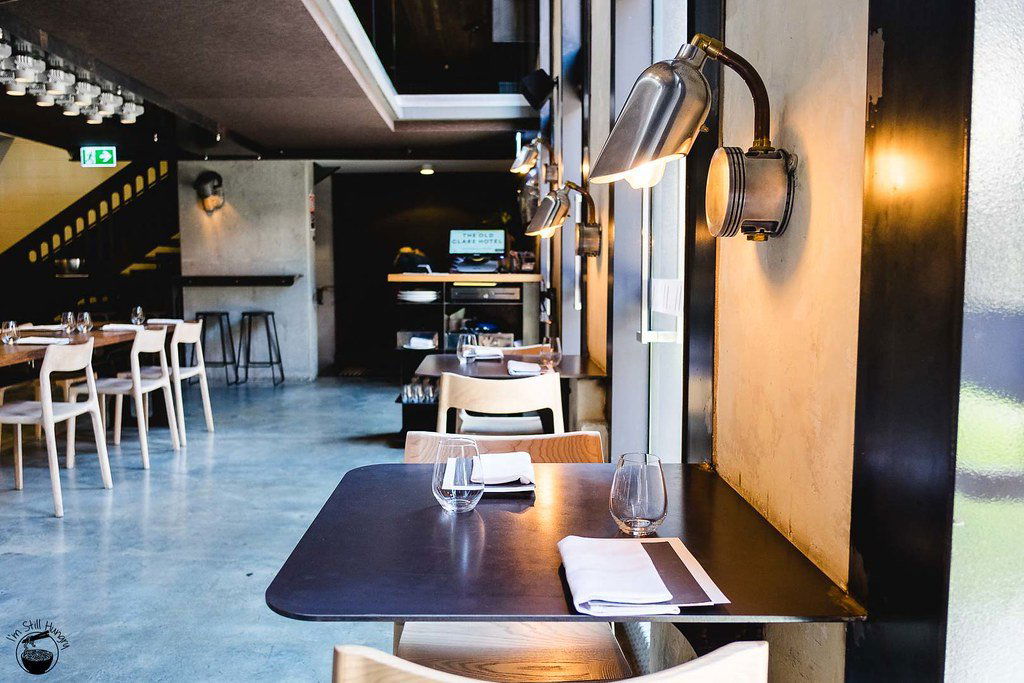
The Kensington Street setting gives Automata a character that many Sydney fine-dining rooms lack. The converted industrial architecture creates a spatial register that is neither formal nor casual , a place where the cooking is serious but the room does not perform seriousness at the guest. That gap between ambition and atmosphere is one the Australian restaurant scene has narrowed considerably over the past decade, as operators recognised that the white-tablecloth idiom imported from European fine dining was often a poor fit for Australian social culture. Automata is part of the generation of rooms that made that recalibration.
Automata in the Australian Progressive Dining Network
To position Automata accurately, it helps to map it against the broader Australian progressive tier. Botanic in Adelaide and Hentley Farm in Seppeltsfield anchor the South Australian end of the conversation, while Laura at Pt Leo Estate in Merricks and Attica define the Melbourne pole. In Sydney, the tasting-format progressive tier is thinner on the ground than the city's dining volume might suggest , which gives each of the rooms operating at that level a more distinct weight. Automata has held its position in that set for long enough to be considered a reference point rather than an emerging option.
Outside Australia, the template Automata most closely references is the technically precise, produce-led tasting-menu format that emerged from American kitchens over the past fifteen years. Rooms like Lazy Bear in San Francisco and, at a different price tier, Le Bernardin in New York City share the underlying logic , that the kitchen's relationship to its raw materials is the most honest signal of its intent. In that framing, Automata reads as part of an international current rather than a local novelty.
For readers planning a broader Australia trip, the same sourcing-led ethos extends to coastal settings: Salt Water Restaurant in Cairns and Lizard Island Resort in Lizard Island operate with proximity to tropical northern seafood that changes the ingredient calculus entirely. Aloft in Hobart and Wills Domain in Yallingup extend the network to Tasmania and Western Australia respectively.
Planning Your Visit
Automata sits at 5 Kensington Street, Chippendale , a short walk from Central Station, which makes it accessible from most of Sydney's inner suburbs without requiring a taxi or rideshare. The Kensington Street precinct is compact enough to visit on foot if you are already in the area, and the density of dining options on the block means an evening here can extend naturally before or after your reservation. For anyone building a Sydney dining itinerary around the progressive tier, Chippendale deserves a dedicated evening rather than an afterthought slot. Our full Chippendale restaurants guide maps the precinct's broader options if you are planning around a multi-restaurant visit.
Frequently Asked Questions
- Is Automata Restaurant a family-friendly restaurant?
- Chippendale's Kensington Street precinct, where Automata operates, leans toward adult dining rather than family-casual formats. Tasting-menu restaurants at this price tier in Sydney generally work better for parties comfortable with a longer, sequenced meal at a relaxed adult pace , not because children are unwelcome in principle, but because the format and pacing are calibrated for that context. Families with younger children will find more accommodating options elsewhere in the precinct or in the broader Chippendale and Surry Hills area.
- What's the overall feel of Automata Restaurant?
- The room reads as the particular register Sydney progressive dining has settled into over the past decade: serious cooking in a setting that does not perform formality. The converted industrial architecture on Kensington Street sets a tone that is grounded and confident rather than theatrical. For a city like Sydney , where fine dining once defaulted to imported European staging , that combination of technical ambition and physical ease is now the relevant benchmark, and Automata has been part of establishing it.
- What dish is Automata Restaurant famous for?
- Automata operates in a tasting-menu format where the menu rotates with the kitchen's seasonal sourcing and produce relationships, so no single dish defines the restaurant across time. What the kitchen is known for, in the context of Sydney's progressive dining conversation, is the coherence of its sequencing and the discipline of its ingredient sourcing rather than any fixed signature. Readers expecting a single standout dish should understand that the format's logic works against that framing by design.
- How does Automata compare to other serious tasting-menu restaurants in Sydney?
- Within Sydney's small progressive tasting-format tier, Automata has occupied a consistent position since it opened on Kensington Street in Chippendale. Its peer set is defined less by geography than by shared commitment to produce sourcing and menu coherence , placing it in conversation with Australian restaurants like Brae in Birregurra and Attica in Melbourne rather than with Sydney's larger or more casual dining rooms. The Chippendale setting gives it a spatial character that distinguishes it from harbour-view or hotel-based fine-dining formats operating in the same city.
Related editorial
- Best Fine Dining Restaurants in ParisFrom three-Michelin-star icons to the next generation of Parisian chefs pushing boundaries, these are the restaurants that define fine dining in the world's culinary capital.
- Best Luxury Hotels in RomeFrom rooftop terraces overlooking ancient ruins to Michelin-starred hotel dining, these are the luxury hotels that make Rome unforgettable.
- Best Cocktail Bars in KyotoFrom sleek lounges to hidden speakeasies, Kyoto's cocktail scene blends Japanese precision with global influence in ways you won't find anywhere else.
Save or rate Automata Restaurant on Pearl
Keep this venue in your Pearl passport, rate it after you visit, and track it alongside every other place you collect.