
Restaurant in Schluchsee, Germany
Auerhahn
150ptsSeasonal Regional Five-Course

About Auerhahn
Auerhahn sits inside a beautifully renovated hotel in Schluchsee, where a wood-panelled ceiling and traditional tiled stove set the scene for a five-course fine dining menu built around seasonal Black Forest ingredients. Chef Yann Bosshammer brings experience from several well-regarded kitchens to a format that reads as the most serious restaurant proposition in the area. Book ahead if you are not staying at the hotel.
A Renovated Interior Doing Real Work
The Black Forest's fine dining scene has historically concentrated in the spa towns and resort corridors further north, around Baiersbronn, where Schwarzwaldstube has long anchored the region's most ambitious cooking. Schluchsee sits at the southern edge of this tradition, quieter and less trafficked by restaurant-focused visitors. That geography matters when assessing Auerhahn: it is not trying to compete within a dense peer cluster, but to serve as the serious dining option for a town that attracts visitors primarily for the lake and the surrounding forest landscape.
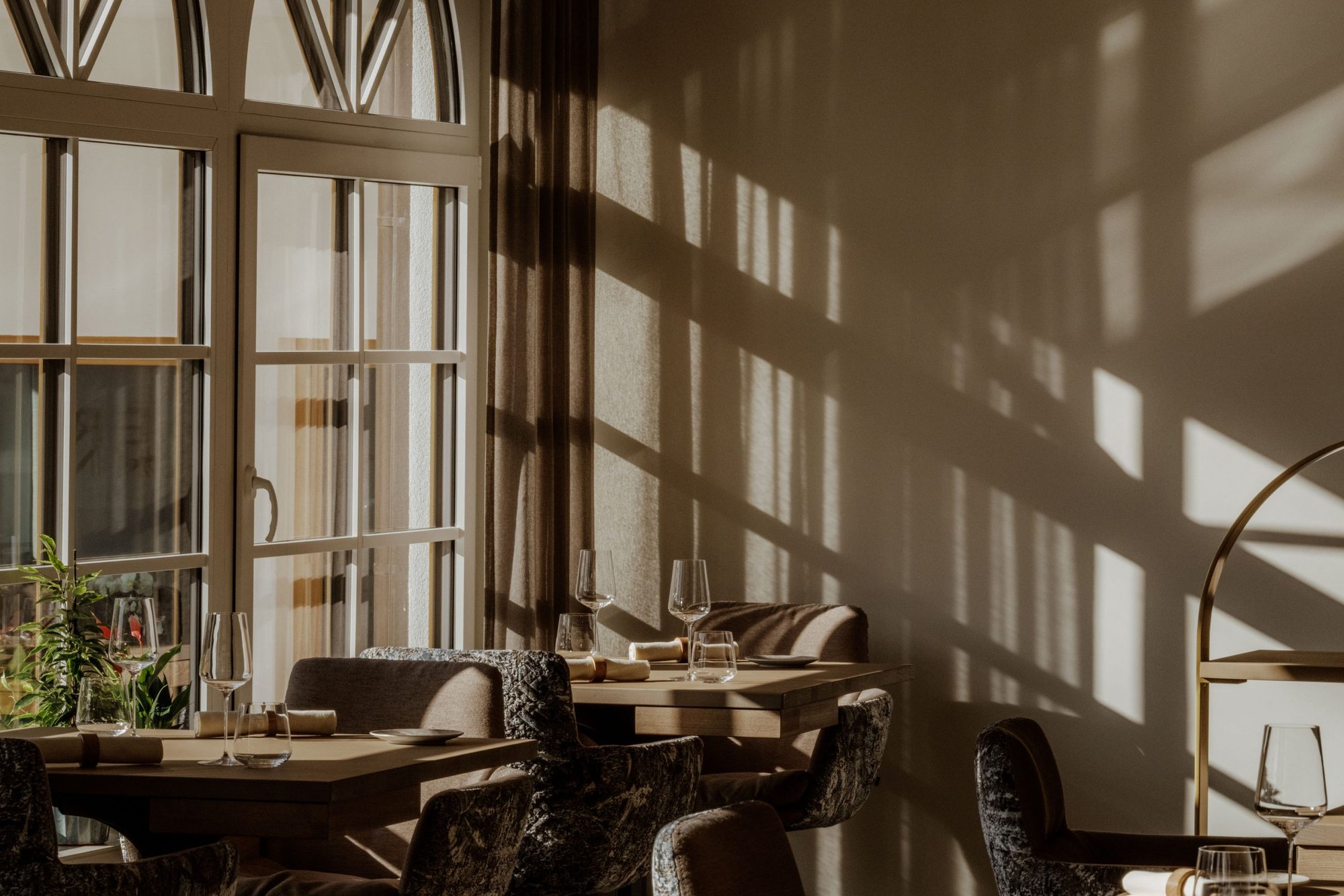
The room earns its place in that context. Renovated with care, the space retains a wood-panelled ceiling and a striking tiled stove that read as genuinely old rather than decorative pastiche. Alcoves break the room into smaller, more contained sections, which produces a level of intimacy unusual in hotel dining rooms of this type. The renovation has modernised the hotel around it without stripping the character from the restaurant itself, which is the harder editorial choice and the right one for this setting.
What the Menu is Actually About
Structure at Auerhahn is a five-course fine dining menu, which positions it clearly within the set-format tier of German fine dining rather than the fully open à la carte tradition. That format is now the dominant model across ambitious German restaurants, from Aqua in Wolfsburg to CODA Dessert Dining in Berlin, because it allows a kitchen to control sourcing with precision and reduce waste at the ingredient level. At smaller operations in rural settings, that control is not just an aesthetic choice; it is a practical necessity when supply chains are shorter and seasonal windows are narrower.
Chef Yann Bosshammer's approach, as documented in available records, is built around seasonal and regional sourcing, with premium ingredients presented through technically considered cooking. The Black Forest region offers a specific larder: game, freshwater fish from mountain lakes and streams, foraged ingredients across the warm months, and dairy from the plateau farms. A kitchen that commits to this sourcing model operates differently from one pulling from broad international supply, because the menu is constrained by what is available within the relevant season and radius. That constraint, when handled well, produces a coherence that menus built from global sourcing often lack.
This connects to a broader pattern visible across Germany's serious regional restaurants. Places like Waldhotel Sonnora in Dreis and Schanz in Piesport have demonstrated that operating outside Germany's urban centres does not require a compromise on ingredient quality; in many cases, proximity to primary producers gives rural kitchens advantages that city restaurants cannot replicate. Auerhahn occupies a similar structural position, with the Black Forest as its immediate sourcing territory rather than an aspiration.
Chef Credentials in Context
Germany's regional fine dining market has developed a recognisable pathway: a chef trains at established operations, often at the Michelin tier, then takes a position in a smaller city or rural setting where the competitive pressure is lower but the sourcing opportunities are often richer. Yann Bosshammer's CV follows that arc, with experience at what the venue's own records describe as renowned establishments before taking the kitchen at Auerhahn following the hotel's reopening. That trajectory is not unusual among German chefs of his generation; JAN in Munich and ES:SENZ in Grassau both built their early reputations on chefs who had absorbed technique at the top tier before opening in settings where the format gave them more control.
The visual component of the cooking is noted explicitly in the available record: dishes are described as both skilful and visually appealing, which in the current German fine dining vocabulary signals a kitchen that understands plating as communication rather than decoration. Whether that extends to a fully developed tasting aesthetic is something a visit would need to confirm, but the baseline standard implied by the credentials is above what most hotel restaurants in towns of this size can sustain.
Owner Marius Tröndle also runs Mühle in Schluchsee, a Modern French operation at the same address group, which means Auerhahn sits within a small but deliberate hospitality portfolio rather than existing as an isolated project. That dual-venue ownership model is increasingly common in German leisure destinations, where a single operator managing both a casual and a fine dining option can share back-of-house infrastructure without compromising the identity of either format.
How Auerhahn Sits in the German Fine Dining Map
Germany's fine dining scene is broader and more geographically dispersed than its international profile suggests. Paris and Tokyo dominate global restaurant conversations, but Germany has produced a sustained generation of precise, technically serious kitchens, several of which operate in settings far from Frankfurt or Munich. Victor's Fine Dining by Christian Bau in Perl, Vendôme in Bergisch Gladbach, and Restaurant Haerlin in Hamburg represent different nodes of that network, each anchored to a region and a specific sourcing logic. Auerhahn operates at a smaller scale than any of these, but within Schluchsee's context, it is the restaurant doing the most formally ambitious work.
For international visitors used to the density of fine dining in cities, this comparison might seem generous. For visitors already committed to the southern Black Forest for its own reasons, the relevant question is what Auerhahn delivers against what else is available within the area, and on that measure it represents a clear step up.
Planning a Visit
Auerhahn is located at Vorderaha 4 in Schluchsee. Guests not staying at Hotel Auerhahn should book the five-course fine dining menu in advance, as walk-in availability at this format and price tier is not reliable. The hotel itself has been tastefully modernised alongside the restaurant renovation, making an overnight stay a practical option for those travelling from further afield, whether from Freiburg to the west or across the Swiss border. Service is described as cordial, which in the context of formal German dining typically means attentive without formality for its own sake. For visitors looking to map the broader dining and hospitality options in the town, our full Schluchsee restaurants guide covers the complete picture, and our Schluchsee hotels guide includes the full accommodation range. Further options in the area are covered across our Schluchsee bars guide, our Schluchsee wineries guide, and our Schluchsee experiences guide.
Frequently Asked Questions
Is Auerhahn a family-friendly restaurant?
Auerhahn runs a formal five-course fine dining menu, which places it firmly in the adult-oriented, occasion-dining tier. Schluchsee as a destination is family-friendly, but Auerhahn's format, pacing, and price point are calibrated for a different audience. Families with children would find the town's more casual options a better fit.
How would you describe the vibe at Auerhahn?
Quiet, considered, and rooted in the building's original character. The retained wood-panelled ceiling and tiled stove give the room a warmth that newer fit-outs in German hotel restaurants rarely achieve. Alcoves create separation between tables, so the atmosphere is intimate rather than open. This is a room built for conversation at a measured pace, not for the energy that drives urban restaurant floors.
What should I eat at Auerhahn?
The five-course fine dining menu is the format the kitchen is structured around, and it is the right choice for anyone eating here seriously. Chef Bosshammer's documented approach to seasonal and regional sourcing means the menu reflects what the Black Forest produces at the relevant time of year. Ordering within that format, rather than seeking alternatives, is the way to experience what the kitchen is actually doing.
Recognized By

Similar venues by awards
Related editorial
- Best Fine Dining Restaurants in ParisFrom three-Michelin-star icons to the next generation of Parisian chefs pushing boundaries, these are the restaurants that define fine dining in the world's culinary capital.
- Best Luxury Hotels in RomeFrom rooftop terraces overlooking ancient ruins to Michelin-starred hotel dining, these are the luxury hotels that make Rome unforgettable.
- Best Cocktail Bars in KyotoFrom sleek lounges to hidden speakeasies, Kyoto's cocktail scene blends Japanese precision with global influence in ways you won't find anywhere else.
Save or rate Auerhahn on Pearl
Keep this venue in your Pearl passport, rate it after you visit, and track it alongside every other place you collect.