
Restaurant in Yerevan, Armenia
At Gayane's
100ptsArmenian Hearth Cooking
About At Gayane's
At Gayane's on Tumanyan Street occupies a quiet but deliberate position in Yerevan's dining scene, where Armenian home-cooking traditions meet considered sourcing and an atmosphere shaped by domestic warmth rather than restaurant formality. For travellers moving through a city reclaiming its culinary identity, this address on one of central Yerevan's most walkable corridors serves as a grounding point for understanding what the cuisine actually tastes like when it is not performing for tourists.
What Tumanyan Street Tells You Before You Sit Down
Central Yerevan's dining character is not built around a single grand boulevard but along a sequence of mid-city streets where cafes, wine bars, and family-format restaurants share blocks with bookshops and small galleries. Tumanyan Street is one of those corridors: walkable, residential in feeling despite its central location, and increasingly home to restaurants that draw from Armenian domestic cooking rather than the European-inflected menus that dominated the city's fine-dining tier through the 2000s. At Gayane's, at number 35b, sits within that context. The building approach is understated, which is consistent with how Yerevan's more serious kitchens tend to present themselves: the signal is in the reputation, not the facade.
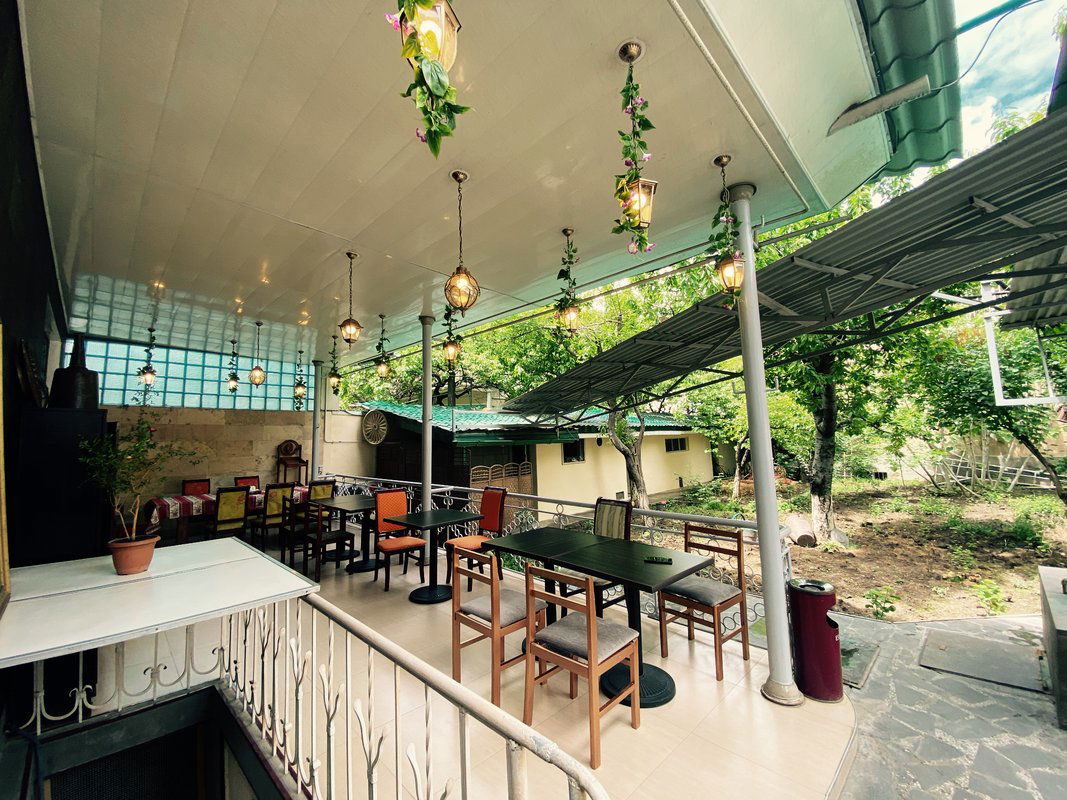
The atmosphere inside belongs to a format that recurs across the South Caucasus: spaces that evoke a well-kept family home rather than a designed restaurant environment. Heavy textiles, wooden furniture, and the kind of table density that allows conversation rather than proximity to strangers are standard features of this register. It is a format that draws deliberate contrast with the polished internationalism of hotel dining and the more self-consciously modern Armenian restaurants that have opened in the city's northern districts since 2018.
The Sourcing Framework Behind Armenian Home Cooking
Understanding what a restaurant like At Gayane's is doing requires a brief account of how Armenian ingredient culture works. Armenia is a landlocked, largely mountainous country with strong seasonal farming traditions, a historical reliance on preservation techniques (dried fruits, pickled vegetables, aged cheeses, cured meats), and a cuisine shaped by both abundance in summer and scarcity across the rest of the year. The herbs that define many dishes, tarragon, fenugreek, mint, and the sour notes from sumac and dried barberry, come from highland farms and domestic gardens as much as from wholesale suppliers.
Restaurants operating in the home-cooking tradition within Yerevan occupy a position analogous to what farm-to-table operators do in Western markets, but the supply chain relationship is often older and less mediated by marketing language. Sourcing from village producers, using seasonal produce without treating it as a selling point, and cooking to a standard set by domestic memory rather than culinary school curricula: these are the baseline expectations of the format. At Gayane's is understood within Yerevan's dining culture as a practitioner of this approach, placing it in the same general bracket as Dolmama and Dolmama - Armenia's Restaurant, both of which have built reputations on Armenian home-cooking foundations, though with varying degrees of refinement in presentation.
The distinction between these operators lies less in the sourcing philosophy, which is broadly shared, and more in the dining register. Buzand Cafe Restaurant and Flying Ostrich by Dolmama represent adjacent positions in the market, the former leaning toward cafe-format accessibility, the latter toward a more contemporary Armenian kitchen. At Gayane's sits closer to the unmediated domestic end of the spectrum, which is both its point of differentiation and the reason it attracts visitors who have already worked through Yerevan's more prominent addresses.
Armenia's Culinary Traditions in a Global Register
Yerevan's restaurant scene in 2024 is at an interesting inflection point. The city has absorbed a significant influx of visitors and relocating professionals since 2022, which has accelerated demand for both international formats and higher-quality representations of Armenian cooking. The pressure on traditional restaurants is real: some operators have moved toward crowd-pleasing simplification; others have held the line on technique and sourcing. Restaurants committed to the domestic-cooking tradition occupy a niche that has parallels in other regional cuisines: the Georgian equivalent operates in Tbilisi; the Lebanese equivalent survives in specific Beirut neighbourhoods. In each case, the restaurant's value proposition depends on not optimising for tourists while still being accessible to informed visitors.
For context, the sourcing-led philosophy that defines At Gayane's is not categorically different from what drives recognised practitioners in other regions. Atelier Moessmer Norbert Niederkofler in Brunico and Reale in Castel di Sangro both operate from a position of deep regional sourcing and culinary identity — the difference is institutional recognition and price tier. Armenian home-cooking restaurants are simply operating this philosophy without the Michelin infrastructure to name it. Similarly, the sea-to-plate discipline at Uliassi in Senigallia reflects the same fundamental principle: the ingredient's provenance shapes the dish's meaning. At the opposite end of the accessibility spectrum, Le Bernardin in New York City and Atomix in New York City demonstrate how this sourcing philosophy scales when combined with formal fine-dining infrastructure. At Gayane's operates without that infrastructure, which is consistent with its format and price positioning.
For travellers also exploring Armenia beyond Yerevan, Dilijan in the northern resort town of Dilijan and Poloz Mukuch in Gyumri offer related but distinct expressions of Armenian cooking in very different urban contexts. Gyumri's restaurant culture in particular carries a more Soviet-era sensibility in both interior design and menu construction. Our full Yerevan restaurants guide maps the broader dining scene across price tiers and neighbourhood zones.
Planning Your Visit to At Gayane's
At Gayane's is located at 35b Tumanyan Street in central Yerevan, within walking distance of Republic Square and the city's main hotel district. No booking platform or phone number is listed in publicly available sources at time of writing; the most reliable approach is to visit directly or ask hotel concierge staff, who maintain working relationships with the city's established restaurants. Arrival in the earlier part of the evening typically gives more flexibility than peak hours. Given the domestic-cooking format, the menu reflects seasonal availability, which makes the timing of a visit relevant: spring and early summer bring fresh herbs and vegetables; autumn brings preserved and dried goods to the foreground. The address is central enough that it fits naturally into an evening that begins or ends at one of Yerevan's wine bars on the same street network.
Frequently Asked Questions
- What should I eat at At Gayane's?
- Prioritise dishes built around Armenia's preserved and fermented ingredient traditions: herb-heavy salads, stuffed vegetables, and preparations using dried fruits and sour-note condiments reflect the kitchen's strongest territory. The menu at this format of restaurant follows seasonal availability, so ask what is fresh rather than ordering from a static list. The domestic-cooking register means portions tend toward generosity rather than precision plating.
- What's the leading way to book At Gayane's?
- No online booking system or public phone number is confirmed in current sources. In Yerevan's mid-range restaurant tier, walk-in visits or concierge-assisted reservations remain the standard approach, particularly for visitors staying in the central hotel zone near Republic Square. Arriving before 7pm increases the probability of securing a table without a wait.
- What's At Gayane's leading at?
- The kitchen's strength lies in the domestic-cooking tradition rather than modernised Armenian cuisine. That means slow-cooked meats, herb-forward preparations, and dishes that reflect the country's preservation culture rather than contemporary plating conventions. It occupies a different position from Yerevan's more internationally oriented restaurants such as Dragon Garden, which draws from Chinese cooking traditions, placing At Gayane's squarely in the Armenian culinary canon.
- Can At Gayane's adjust for dietary needs?
- No confirmed information on dietary accommodation policy is available in public sources. Armenian home-cooking menus are frequently meat-heavy, though vegetable and grain dishes appear consistently across the tradition. If dietary requirements are specific, contact the restaurant directly before visiting; in Yerevan, direct communication is more reliable than assuming policy from category norms. The city's dining scene is generally accommodating toward individual requests at the mid-range tier.
- Should I splurge on At Gayane's?
- At Gayane's occupies the mid-range tier of Yerevan's restaurant market, which in an Armenian context means pricing significantly below what comparable quality would cost in Western European cities. The value proposition is not luxury but authenticity and depth of culinary tradition. Relative to Yerevan peers in the same home-cooking category, the spend is in line with the format. Visitors accustomed to restaurants like Lazy Bear in San Francisco or Emeril's in New Orleans will find the pricing modest by any international benchmark.
- Is At Gayane's a good introduction to Armenian cuisine for first-time visitors?
- For travellers encountering Armenian food seriously for the first time, the domestic-cooking format at Gayane's is more instructive than Yerevan's more polished or internationally adapted addresses. The kitchen operates within a culinary tradition shaped by highland agriculture, seasonal preservation, and centuries of shared South Caucasian food culture, making the menu a more direct expression of Armenian ingredient logic than modernised interpretations. Pair a meal here with a visit to the Vernissage market to understand the raw material side of the same tradition. Restaurants like Dal Pescatore in Runate and Quattro Passi in Marina del Cantone offer a useful comparative frame from Italy, where regional home-cooking traditions have been preserved and refined over similar generational timescales, and where HAJIME in Osaka shows what happens when that regional specificity meets formal fine-dining ambition.
Related editorial
- Best Fine Dining Restaurants in ParisFrom three-Michelin-star icons to the next generation of Parisian chefs pushing boundaries, these are the restaurants that define fine dining in the world's culinary capital.
- Best Luxury Hotels in RomeFrom rooftop terraces overlooking ancient ruins to Michelin-starred hotel dining, these are the luxury hotels that make Rome unforgettable.
- Best Cocktail Bars in KyotoFrom sleek lounges to hidden speakeasies, Kyoto's cocktail scene blends Japanese precision with global influence in ways you won't find anywhere else.
Save or rate At Gayane's on Pearl
Keep this venue in your Pearl passport, rate it after you visit, and track it alongside every other place you collect.