
Restaurant in Aarhus, Denmark
AmoRomA
100ptsRoman Tradition, Aarhus Address
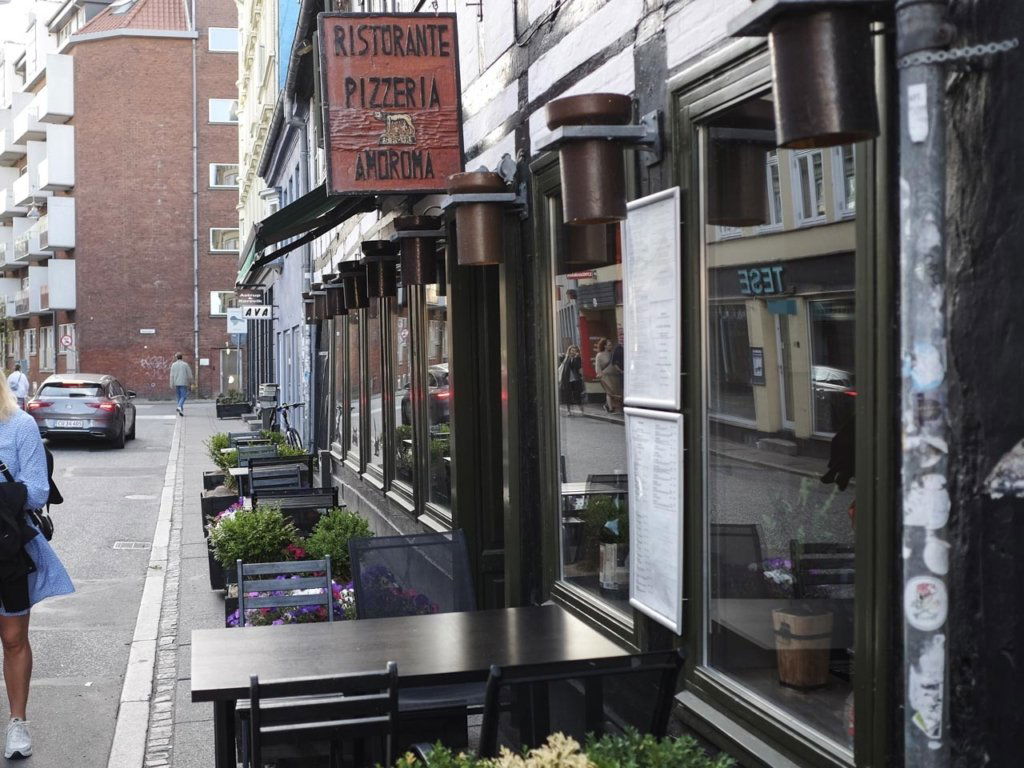
About AmoRomA
On Vestergade in central Aarhus, AmoRomA occupies a corner of the city's mid-tier dining scene where Italian-inflected cooking meets Danish ingredient discipline. The name nods to Rome, but the address is firmly Jutland, and the kitchen works the tension between those two reference points. For Aarhus diners who want something other than New Nordic orthodoxy, it represents a distinct alternative.
Where the Address Says Aarhus and the Kitchen Says Rome
Vestergade runs through the older commercial core of Aarhus, a street of mixed retail and hospitality that sits a short walk from the ARoS museum and the cathedral quarter. It is not the city's most curated dining strip — that distinction belongs to the Latin Quarter lanes nearby — but it draws a reliable footfall of locals who treat it as a practical rather than destination address. Into that context, AmoRomA positions itself as something editorially specific: a room where Italian culinary references are handled with the ingredient seriousness that Aarhus, as a city, now expects from its restaurants.
Denmark's dining culture has spent the better part of two decades arguing that Nordic ingredients, treated with precision, constitute a complete culinary language. That argument has produced extraordinary restaurants in Aarhus , Frederikshøj, Domestic, and Gastromé all operate within that tradition at the upper end of the price spectrum , but it has also created space for restaurants that work from a different pantry. AmoRomA's Italian orientation places it in a smaller cohort: kitchens in Denmark that take southern European culinary logic seriously without defaulting to red-sauce approximations or tourist-facing pasta formats.
The Ingredient Argument: What Comes Through the Door
In Italian cooking traditions, the sourcing question is almost always the first question. Roman cuisine in particular is built on a short list of carefully chosen inputs: the cut of meat, the age of the cheese, the provenance of the cured product. When that tradition migrates north, the sourcing argument becomes more complex. Denmark has exceptional primary produce , coastal fish, heritage-breed pork, root vegetables with genuine flavour depth , but the imported Italian pantry staples that anchor classic Roman dishes require either direct import relationships or reliable specialist suppliers.
The restaurants in Aarhus that have successfully integrated non-Nordic culinary traditions tend to be those that treat the sourcing question with the same rigour that the New Nordic movement applied to local produce. Substans on Frederiksgade is one reference point; A-Kin Thai is another. Both have found their footing by being specific about where their ingredients come from and why those sources matter. AmoRomA, at Vestergade 60, occupies a similar position for Italian-leaning cooking: the kitchen's credibility depends on whether the ingredients justify the culinary reference, and whether the gap between Italian tradition and Danish supply chain is handled honestly rather than papered over with generic Mediterranean gestures.
That tension is, in many ways, what makes Italian restaurants outside Italy worth taking seriously. The good ones treat the distance from source as a creative constraint rather than an excuse. The Vestergade address puts AmoRomA in a neighbourhood where diners are experienced enough to notice the difference.
Aarhus as a Dining City: The Context That Shapes Expectations
Aarhus has a dining culture that punches well beyond its population size of roughly 350,000. The city holds multiple Michelin-starred restaurants and has produced chefs whose work is discussed in the same breath as Copenhagen's more celebrated kitchens. Geranium in Copenhagen and Jordnær in Gentofte represent the national ceiling, but Aarhus restaurants like Frederikshøj have their own Michelin recognition and are held in similar regard by the regional dining community.
This context shapes what local diners bring to any restaurant on Vestergade. The bar for ingredient quality, kitchen technique, and menu coherence is set by a small cluster of serious restaurants that have been operating at high standards for years. Mid-market Italian concepts in this environment face a more demanding audience than they would in cities where the fine dining reference points are weaker. That is not necessarily a disadvantage: it means the diners who seek out AmoRomA are making an informed choice, not a default one.
For comparison, Denmark's broader regional dining circuit includes strong destination restaurants like Henne Kirkeby Kro in Henne, LYST in Vejle, and Dragsholm Slot Gourmet in Hørve , all of which have built reputations on produce-driven, place-specific cooking. Frederiksminde in Præstø, Ti Trin Ned in Fredericia, Tri in Agger, Pearl by Paul Proffitt in Kruså, and Syttende in Sønderborg round out a regional circuit where sourcing and culinary honesty are consistent expectations. AmoRomA sits at the Aarhus end of that wider Danish dining conversation.
Internationally, the model of restaurants that transplant a specific regional Italian tradition into a non-Italian city with genuine fidelity to sourcing has produced some of the most interesting dining in recent years. Le Bernardin in New York City demonstrated for decades that European culinary traditions could be maintained with full integrity outside their home geography, provided the supply relationships were built seriously. Lazy Bear in San Francisco showed a different version of the same thesis: that culinary specificity and ingredient provenance could drive a loyal audience even in a market saturated with options. The question AmoRomA poses for Aarhus diners is whether it operates with comparable seriousness of purpose.
Planning a Visit: What to Know Before You Go
AmoRomA is located at Vestergade 60, 8000 Aarhus, in central Aarhus. The address is walkable from Aarhus Central Station in under ten minutes and sits within the older city core. For visitors arriving by car, parking in the central city is metered; the adjacent side streets and the Bruuns Galleri car park off Banegårdspladsen are the practical options. Aarhus is compact enough that most visitors staying within the city centre will find the walk direct. For a broader view of where AmoRomA sits within the city's dining options, the full Aarhus restaurants guide provides category-by-category context.
Frequently Asked Questions
- Is AmoRomA okay with children?
- At a mid-market price point in a city like Aarhus, the format is generally relaxed enough to accommodate families, though the central city dinner crowd skews adult in the evenings.
- Is AmoRomA formal or casual?
- In Aarhus, where even the Michelin-level restaurants tend to avoid stiff formality, a venue at this price point will almost certainly run a casual to smart-casual register. If you are arriving from a Frederikshøj or Gastromé dinner earlier in a trip, dress down by at least one level.
- What dish is AmoRomA famous for?
- No verified dish information is available for this venue. The Italian-leaning culinary reference suggests the menu works from classic Roman or broader Italian frameworks, but specific dishes should be confirmed directly with the restaurant before visiting.
- Should I book AmoRomA in advance?
- Book ahead. Aarhus has a concentrated dining population relative to its restaurant supply at the mid-market tier, and Vestergade addresses that combine a specific culinary identity with a central location tend to fill on weekends with limited notice.
- What makes AmoRomA worth seeking out?
- The case for AmoRomA is primarily one of culinary positioning: Italian-inflected cooking in a Danish city that has set a high bar for ingredient sourcing across its restaurant sector. If the kitchen handles the tension between Italian reference and Danish supply chain with honesty, it fills a gap that the city's New Nordic-dominant fine dining tier does not address.
- Does AmoRomA's Italian focus translate well to the Danish palate and local produce?
- This is the central question for any Italian-oriented kitchen operating in Denmark. Aarhus diners have been shaped by a New Nordic culture that prizes ingredient provenance and seasonal discipline, which means the Italian culinary tradition lands in a market that is attentive rather than indifferent to sourcing. Kitchens in similar positions across Scandinavia have found that the Italian emphasis on product quality (aged cheese, cured meat, olive oil provenance) resonates with Nordic ingredient sensibility more than the cooking style gap might suggest. Whether AmoRomA has built the supply relationships to support that argument is leading judged at the table.
Related editorial
- Asia's 50 Best Restaurants 2026: The Chairman and Wing Go 1-2 from the Same BuildingThe Chairman takes No. 1 and Wing climbs to No. 2 at Asia's 50 Best Restaurants 2026. Both operate from the same Hong Kong building. Here's what it means.
- Four Seasons Yachts Debut: 95 Suites, 11 Restaurants, and a March 2026 Maiden VoyageFour Seasons I launches March 20, 2026, with 95 suites, a one-to-one staff ratio, and 11 onboard restaurants. Worth tracking if you want hotel-grade service at sea.
- LA Michelin Guide 2026: Seven New Restaurants from Tlayudas to Uzbek DumplingsMichelin's March 2026 California Guide update adds six LA restaurants and one Montecito newcomer, spanning Oaxacan tlayudas, Uzbek manti, and Korean-Italian pasta.
Save or rate AmoRomA on Pearl
Keep this venue in your Pearl passport, rate it after you visit, and track it alongside every other place you collect.