
Restaurant in Boise, United States
Alyonka Russian Cuisine
100ptsSoviet-Era Table Traditions
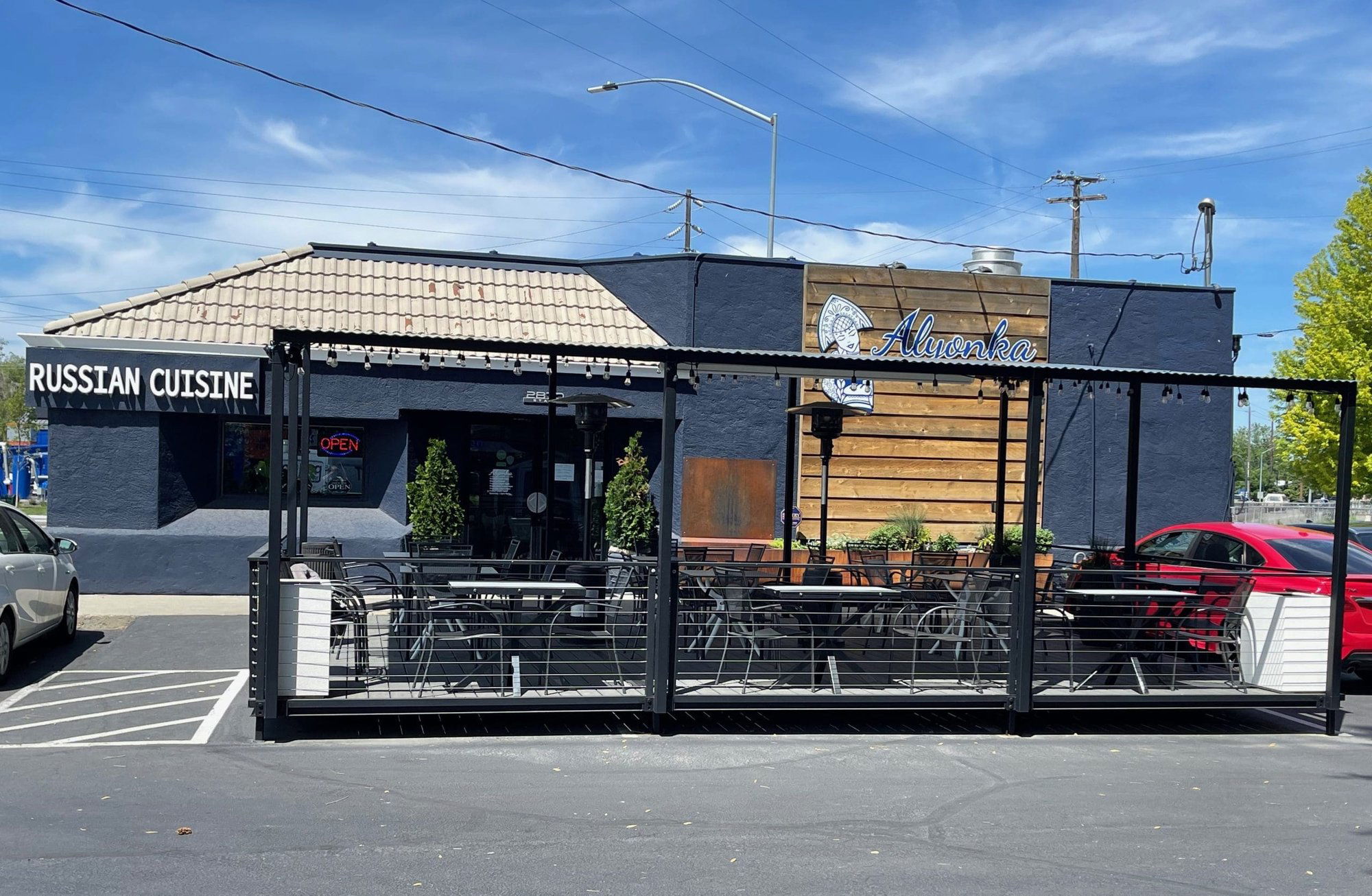
About Alyonka Russian Cuisine
Boise's Russian dining options are narrow enough that Alyonka Russian Cuisine on West State Street occupies an unusual position in the city's restaurant map. The kitchen draws on the ingredient-forward traditions of Eastern European home cooking at a time when Boise's dining scene is expanding well beyond its comfort-food origins. For anyone curious about the flavors that define Russian table culture, this address is worth knowing.
Where Russian Table Traditions Land in Boise
West State Street runs through one of Boise's older commercial corridors, a stretch that has historically housed the kind of independent operators that don't fit neatly into the city's downtown dining cluster. That context matters when you encounter Alyonka Russian Cuisine at 2870 W State St, because the restaurant's position tells you something before you've tasted anything: this is not a venue calibrated to the weekend brunch crowd or the farm-to-table festival circuit. It exists because a specific culinary tradition demanded a home, and it found one here.
Russian cuisine is among the most misunderstood of European food traditions in the American market. Where French and Italian cooking long ago built their institutions in U.S. cities, the Eastern European pantry has largely survived in immigrant households, community halls, and a scattered handful of restaurants that serve a diaspora clientele as much as a curious one. In a mid-sized Western city like Boise, finding even one dedicated practitioner of this cooking is notable. The question the kitchen has to answer is not whether the cuisine is interesting — it is — but whether the sourcing and technique can carry the weight of a tradition built on patience, winter root vegetables, cured fish, fermented dairy, and slow-braised meat.
The Sourcing Logic Behind Russian Cooking
The ingredient framework of Russian cuisine is worth understanding on its own terms, because it shapes what any serious practitioner has to work with and work around. Traditional Russian cooking evolved under conditions of extreme seasonality in a cold continental climate, which drove an entire preservation culture: pickling, salting, fermenting, smoking, and drying were not culinary affectations but survival technologies. Beets, cabbage, potatoes, dill, sour cream, buckwheat, and cured proteins became the load-bearing elements of the kitchen. Those ingredients are accessible anywhere, but their quality varies widely, and quality here is the difference between a dish that communicates something and one that simply fills a plate.
Restaurants that take this tradition seriously tend to source dairy from producers willing to make full-fat cultured products, look for heritage-breed pork for cured preparations, and use whole fish rather than processed fillets for dishes like sel'd pod shuboi , layered herring under a blanket of beet, potato, and egg. The fermentation culture embedded in Russian cooking also means the kitchen has to commit to time: a proper kvass, a well-soured cabbage, a correctly set kefir are not shortcuts available. Whether Alyonka builds its sourcing around those standards is something a visit will answer more precisely than any listing.
What the address and context suggest is a kitchen oriented toward the community of diners who grew up with these flavors and will immediately register when something is off. That audience is an exacting one, and restaurants that survive in that niche tend to do so because the cooking is honest rather than because the room is polished.
Boise's Wider Dining Frame
Boise's restaurant scene has moved with purpose over the past decade, adding serious operators across multiple categories. Ansots brings a Basque reference point; Kin works a different register entirely; Barbacoa holds its own corner of the city's Latin cooking conversation; and the steakhouse tier is anchored by Chandlers Prime Steaks and Chandlers Prime Steaks and Fine Seafood. What that roster shares is a grounding in familiar Western and American reference points. Alyonka sits outside that frame entirely, which is precisely what makes it worth attention for anyone working through the city's full range. See our full Boise restaurants guide for the broader picture.
Nationally, the restaurants that have done the most to reframe ingredient sourcing as a central editorial argument include Blue Hill at Stone Barns in Tarrytown and Single Thread Farm in Healdsburg, both of which have made the provenance chain the primary story on the plate. At a different register, Smyth in Chicago and Lazy Bear in San Francisco have built fermentation and preservation into their technical identities in ways that echo the foundational logic of Eastern European home kitchens. None of those comparisons are direct, but they illustrate that the techniques Alyonka works with have serious culinary currency well beyond their ethnic origin context. Elsewhere, Le Bernardin in New York City, Providence in Los Angeles, Emeril's in New Orleans, The French Laundry in Napa, Addison in San Diego, Atomix in New York City, Atelier Moessmer Norbert Niederkofler in Brunico, and The Inn at Little Washington each demonstrate how deeply sourcing philosophy can shape a restaurant's identity when it is made structural rather than decorative.
Planning a Visit
Alyonka Russian Cuisine is located at 2870 W State St, Boise, ID 83702, on a corridor that rewards a slow approach on foot if you're coming from the nearby residential neighborhoods or by car if you're crossing from downtown. Current booking details, hours, and contact information are leading confirmed directly, as the restaurant's operational specifics are not listed through third-party platforms at the time of writing. For a kitchen operating in this niche, the practical advice is simple: go with an appetite for unfamiliar textures and a willingness to follow whatever the kitchen is running that day rather than arriving with a fixed order in mind. Russian cooking at its most honest is seasonal and variable, and that variability is the point.
Frequently Asked Questions
- What should I eat at Alyonka Russian Cuisine?
- Russian cooking is built around dishes that reward patience and layering: braised meats, pickled and fermented vegetables, hearty grain preparations, and cultured dairy. At any kitchen rooted in this tradition, the dishes that carry the most information about sourcing quality are the simplest ones , a borscht, a pelmeni, a herring preparation , because there is nowhere for weak ingredients to hide. Order from that end of the menu first and let the kitchen's fundamentals speak before moving to more complex preparations.
- Is Alyonka Russian Cuisine reservation-only?
- Reservation and booking details for Alyonka are not currently confirmed through available listings. In Boise's mid-tier independent dining market, smaller ethnic-focused restaurants often operate on a walk-in basis, but that can change with demand. The safest approach is to contact the restaurant directly before your first visit, particularly on weekend evenings when any kitchen with a loyal community following will fill quickly.
- How does Russian cuisine at a Boise restaurant compare to what you'd find in a larger U.S. city?
- In cities with large Eastern European diaspora populations, like New York, Chicago, or Los Angeles, Russian restaurants have the advantage of a deep local supply chain , specialty importers, dedicated dairy producers, and a customer base that enforces authenticity. In Boise, any kitchen working this tradition has to source more creatively and rely more heavily on what the broader Idaho agricultural region can supply. That constraint is not necessarily a disadvantage: Idaho's potato and dairy production is genuinely strong, and a kitchen willing to adapt the tradition to local sourcing can produce cooking that is honest without being imitative.
Related editorial
- Best Fine Dining Restaurants in ParisFrom three-Michelin-star icons to the next generation of Parisian chefs pushing boundaries, these are the restaurants that define fine dining in the world's culinary capital.
- Best Luxury Hotels in RomeFrom rooftop terraces overlooking ancient ruins to Michelin-starred hotel dining, these are the luxury hotels that make Rome unforgettable.
- Best Cocktail Bars in KyotoFrom sleek lounges to hidden speakeasies, Kyoto's cocktail scene blends Japanese precision with global influence in ways you won't find anywhere else.
Save or rate Alyonka Russian Cuisine on Pearl
Keep this venue in your Pearl passport, rate it after you visit, and track it alongside every other place you collect.