
Restaurant in Trieste, Italy
Al Civicosei
100ptsHabsburg-Adriatic Table
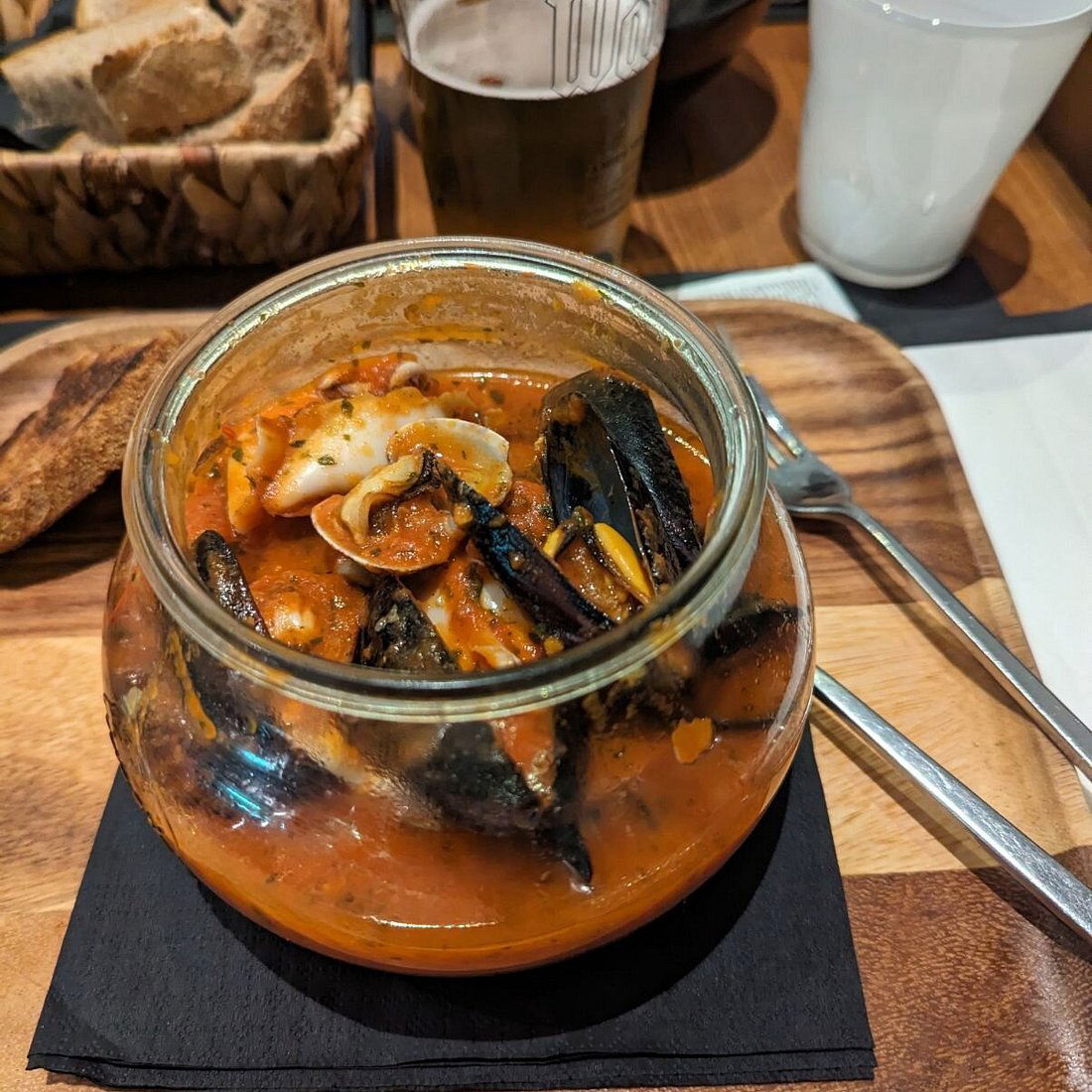
About Al Civicosei
Al Civicosei occupies a quietly loaded address on Via del Toro in central Trieste, a city whose dining identity sits at the intersection of Italian, Austro-Hungarian, and Adriatic influences. The restaurant fits within a local tradition that prizes understated rooms and precise, ingredient-led cooking. For visitors working through Trieste's restaurant options, it represents a considered mid-tier stop in a city with a distinctive culinary character all its own.
Eating in Trieste: Why the Ritual Matters More Than the Room
Trieste occupies a peculiar position in Italian dining — geographically pressed against Slovenia, historically shaped by Habsburg administration, and culinarily distinct from both Venice to the west and the broader Adriatic coast to the south. The result is a food culture that absorbs influences without advertising them. A meal in central Trieste tends to move at a deliberate pace, following protocols that owe as much to the Central European café tradition as to anything recognisably Italian. Dishes arrive in sequence. Wine is chosen with care. The conversation fills the gaps. Al Civicosei, at Via del Toro, 6, sits within this framework, occupying a central Trieste address that places it within easy reach of the city's historic core.
The address itself carries meaning. Via del Toro runs through a part of central Trieste where the urban fabric is dense and largely unchanged — 19th-century buildings, narrow pavements, a certain opacity to street-level facades that makes the interiors feel deliberate rather than accidental. In cities shaped by tourism, restaurants tend to signal loudly. In Trieste, the expectation is different, and a venue on this kind of street is expected to earn attention through the quality of the experience rather than the scale of the shopfront.
The Dining Ritual in a City Built for Slow Meals
Trieste's relationship with the seated meal is longer and more layered than most Italian cities of comparable size. The Habsburg period left behind an appetite for structured service and multiple courses. The Adriatic proximity means seafood appears frequently and with confidence. The local wine tradition draws heavily on the Carso plateau , just inland , where indigenous varieties like Vitovska and Terrano produce wines with a mineral austerity that suits the style of cooking you find in Trieste's better rooms.
At Al Civicosei, the dining ritual follows the logic of the city rather than any imported template. The expectation, consistent with Trieste's better neighbourhood restaurants, is that the meal occupies the better part of an evening. This is not a city where the table is expected to turn quickly. That pacing shapes everything: the order in which dishes are presented, the rhythm of service, the way the wine list is deployed across the meal. Restaurants in this tier in Trieste tend to treat the structure of the meal as a given rather than a selling point , the assumption being that guests have come to eat properly, not to eat quickly.
This contrasts with the compressed formats found at venues further up the Italian dining hierarchy. At the Michelin-decorated level , think Osteria Francescana in Modena, or Piazza Duomo in Alba , the tasting menu imposes its own structure, and the pacing is dictated by a predetermined sequence. At the neighbourhood level in Trieste, the ritual is more elastic: courses are negotiated between guest and kitchen, and the meal takes the shape the evening demands. That elasticity is, in its own way, a form of sophistication.
Where Al Civicosei Fits in Trieste's Restaurant Spread
Trieste's restaurant options fall into a few recognisable tiers. At the leading sits Harry's Piccolo, operating at the Modern Italian and Italian Contemporary level with a price point and formality that places it in a different peer set. Seafood specialists like Al Bagatto hold their own lane with a focused Adriatic offer. Neighbourhood trattorie and osterie , places like Ai 3 Magnoni, Ai Fiori, and Al Nuovo Antico Pavone , occupy the more casual end, where the cooking is often honest and price-conscious.
Al Civicosei sits in the middle of this spread, in a position that Trieste supports well: somewhere between the ease of a trattoria and the structure of a dedicated dining room, with enough ambition in the kitchen to reward attention without requiring the full apparatus of a formal meal. This tier is where most interesting Italian provincial dining happens , not at the tasting-menu extreme, and not at the house-wine-and-pasta end, but in the disciplined middle where a kitchen can demonstrate range without the pressure of a Michelin inspection framing every plate.
For a broader picture of where the city's dining scene sits and how its restaurants compare, the EP Club full Trieste restaurants guide maps the options by tier and neighbourhood.
Adriatic Cooking and the Trieste Approach to Ingredients
The Adriatic provides a clear north-south current through northern Italian coastal cooking. At the most decorated end, Uliassi in Senigallia and Quattro Passi in Marina del Cantone treat seafood as a vehicle for technical precision. Further north, in Trieste's neighbourhood restaurants, the approach is less theatrical and more grounded: the fish arrives because it was caught locally that morning, and the kitchen's job is restraint rather than transformation.
This is consistent with the Trieste cooking tradition more broadly. The city's Habsburg inheritance inclines the kitchen toward precision and correctness rather than improvisation. The Slovenian and Central European thread adds a tolerance for bitter flavours, preserved ingredients, and structured accompaniments. The Adriatic supplies the protein. The result is a cooking style that is specific to this geography and difficult to replicate convincingly in any other Italian city.
Italy's most technically ambitious restaurants , from Le Calandre in Rubano to Reale in Castel di Sangro and Atelier Moessmer Norbert Niederkofler in Brunico , derive much of their identity from deep regional rootedness. Trieste's neighbourhood restaurants operate on the same logic at a different scale: the regionality is the point, and the cooking derives its authority from specificity rather than from technique for its own sake.
Planning a Meal at Al Civicosei
Al Civicosei is located at Via del Toro, 6, in central Trieste, within the city's historic core and accessible on foot from the main piazzas. For visitors approaching from the waterfront or the Piazza Unità d'Italia, the walk through the older street grid takes under ten minutes. Trieste's central neighbourhoods are compact, and most of the city's better restaurants sit within a navigable radius of each other.
Current booking details and hours are not confirmed in EP Club's database; contacting the restaurant directly or checking current platforms before visiting is advisable. Given the size typical of central Trieste neighbourhood restaurants, walk-in availability on busier evenings, particularly weekends, may be limited. As with most Italian provincial dining at this level, arriving with a reservation and without a fixed time constraint will produce the leading version of the meal.
Frequently Asked Questions
What is Al Civicosei known for?
Al Civicosei is a neighbourhood restaurant in central Trieste, operating within a city dining tradition that reflects the area's layered identity: Adriatic seafood, Central European structural influence, and local Carso wines. Its address on Via del Toro places it in the historic core, and its register sits between the city's more formal dining rooms and its casual trattorie , a position that Trieste's dining culture supports particularly well.
What's the must-try dish at Al Civicosei?
EP Club does not currently hold verified menu data for Al Civicosei, and publishing specific dish recommendations without a confirmed source would be misleading. What the Trieste dining context suggests is that Adriatic seafood and locally influenced preparations represent the strongest thread in this part of Italy. Asking the kitchen directly about market-driven dishes on the day of your visit will produce a more reliable answer than any fixed recommendation.
Should I book Al Civicosei in advance?
For weekend evenings in particular, booking ahead is a sensible approach. Trieste's better neighbourhood restaurants , operating at a scale typical of the city's historic centre , fill quickly, especially as the city receives growing attention from Italian regional food travel. The restaurant sits in a price and ambition tier where demand tends to exceed casual walk-in capacity on busy nights. Checking current booking channels directly is recommended, as EP Club's database does not currently hold confirmed reservation details for this venue.
Is Al Civicosei a good choice for someone exploring Trieste's distinctive culinary identity?
Trieste's cooking draws on an unusual combination of Adriatic produce, Habsburg structural tradition, and Slovenian influence that makes it one of Italy's more distinct regional food cultures. A neighbourhood restaurant at the level of Al Civicosei, positioned centrally on Via del Toro, offers access to that tradition in a format closer to how locals eat than either the city's formal dining rooms or its tourist-facing seafront options. For readers working through Italy's broader fine dining tier, context from venues like Enoteca Pinchiorri in Florence, Enrico Bartolini in Milan, or Dal Pescatore in Runate helps place Trieste's neighbourhood offer in the wider Italian picture , and Le Bernardin in New York City and Lazy Bear in San Francisco offer useful international benchmarks for how regional specificity can anchor a dining identity at any scale.
Related editorial
- Best Fine Dining Restaurants in ParisFrom three-Michelin-star icons to the next generation of Parisian chefs pushing boundaries, these are the restaurants that define fine dining in the world's culinary capital.
- Best Luxury Hotels in RomeFrom rooftop terraces overlooking ancient ruins to Michelin-starred hotel dining, these are the luxury hotels that make Rome unforgettable.
- Best Cocktail Bars in KyotoFrom sleek lounges to hidden speakeasies, Kyoto's cocktail scene blends Japanese precision with global influence in ways you won't find anywhere else.
Save or rate Al Civicosei on Pearl
Keep this venue in your Pearl passport, rate it after you visit, and track it alongside every other place you collect.