
Restaurant in Hoi An, Vietnam
115 Đ. Trần Cao Vân
100ptsMinh An Street Dining
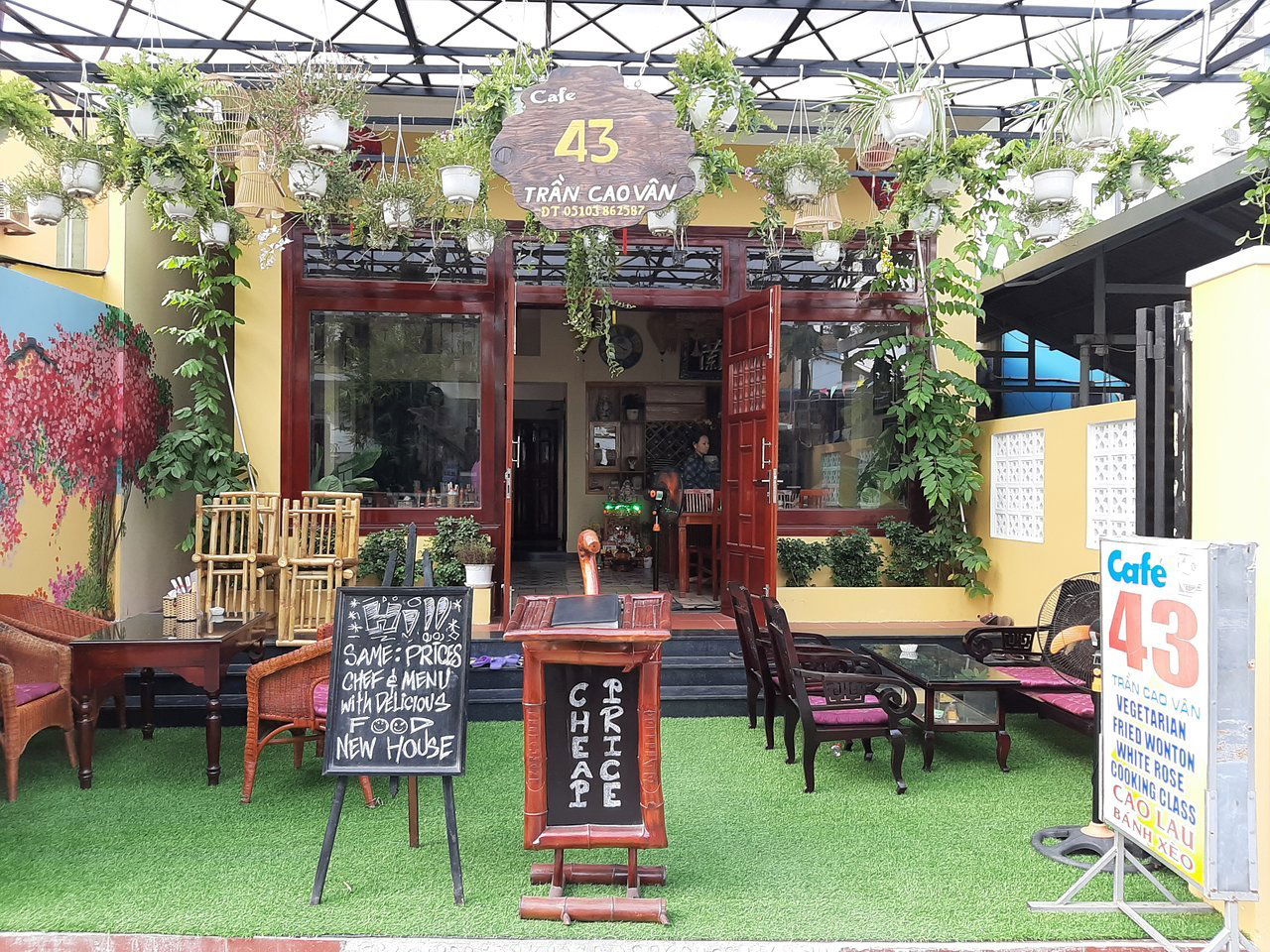
About 115 Đ. Trần Cao Vân
On a quiet stretch of Trần Cao Vân in Hoi An's Minh An ward, this address sits within one of central Vietnam's most food-dense neighbourhoods, where the gap between street stall and sit-down restaurant is narrower than anywhere else in the country. The surrounding blocks define the template for Hoi An cooking — cao lầu, white rose dumplings, and river-sourced seafood served with minimal fuss and deep local continuity.
Trần Cao Vân and the Grammar of Hoi An Eating
Central Vietnam's dining identity is unusually concentrated. In most cities, the food that defines a place is spread across districts, price tiers, and generations of restaurant. In Hoi An, it compresses into a few streets in Minh An ward, where the same dishes that appeared on tables a century ago still set the standard against which every newer opening is measured. The address at 115 Đ. Trần Cao Vân sits within that compression, on a street that feeds into the Old Town's core without sitting inside its most tourist-heavy corridors.
That positioning matters for understanding how Hoi An restaurants self-organise. The Ancient Town's most-photographed blocks attract venues built partly around visual appeal and international foot traffic. Streets slightly removed from that centre — including portions of Trần Cao Vân — tend to draw a more deliberate crowd, the kind of visitor who has already eaten the famous bánh mì and is now looking for what comes next. For a broader survey of where each Hoi An street sits in that hierarchy, our full Hoi An restaurants guide maps the city's dining geography in detail.
Menu Architecture in a City That Already Knows What It Is
The editorial angle that matters most in Hoi An is not which restaurant is doing something novel. The city's culinary authority rests on the opposite: a small, codified set of dishes that have resisted modification for decades. Cao lầu , thick rice noodles with pork, herbs, and a broth that depends on ash-leeched water drawn from specific wells , is the defining example. It cannot be authentically replicated outside the city because the water chemistry is not replicable. White rose dumplings, known locally as bánh bao vạc, are still made by a single family whose production supplies much of the Old Town. These are not origin stories used for marketing; they are structural facts about how Hoi An's food system operates.
A restaurant on Trần Cao Vân that serves this canon is not simply offering regional Vietnamese cuisine. It is participating in a supply chain and a culinary discipline that constrains its menu in precise ways. The structure of that menu , what appears, what doesn't, and in what proportion , tells you more about a venue's positioning than any single dish description. Venues that lead with cao lầu and white rose are signalling local alignment. Venues that bury those dishes beneath a longer international section are signalling something else entirely.
Across the street-level dining tier in Hoi An, this distinction plays out consistently. Before and Now represents one approach to the local-international balance, while Cargo Club Cafe & Restaurant has built a format that explicitly bridges both audiences. At the street-food end of the spectrum, Banh Mi Phuong (Hoi An) and Bánh Mì Phượng demonstrate how a single product, executed with sufficient consistency over decades, can define a city's food identity globally. The address at 42 Đường Phan Bội Châu offers another reference point within the same neighbourhood system.
How Hoi An Positions Against Vietnam's Wider Dining Scene
Vietnam's fine-dining conversation is currently anchored in Hanoi and Ho Chi Minh City. Gia in Hanoi works within a contemporary Vietnamese framework that draws on the north's ingredient traditions. Akuna in Ho Chi Minh City represents the southern city's more internationally oriented tier. Central Vietnam, by contrast, has largely resisted that fine-dining trajectory. La Maison 1888 in Da Nang is the most prominent exception in the region, but it operates in a different price tier and format from anything in Hoi An's Old Town adjacency.
What Hoi An has instead is density and discipline at the mid-level. The city's best-regarded tables are not expensive by any regional standard. They are precise. The restaurants that hold their reputation across years tend to be the ones that resist menu expansion and maintain consistent sourcing for the ingredients , specific herbs, locally milled rice flour, river fish , that give central Vietnamese cooking its character. That precision is harder to sustain than it sounds. It requires supply relationships and kitchen consistency that larger, more varied menus do not demand.
For comparison, Vietnam's chain and casual-format venues across the country operate on an entirely different axis. Operations like GoGi House in Bac Lieu, King BBQ in Rach Gia, or Dookki in Minh Xuan represent the national casual-dining infrastructure. The Hoi An street-level tier sits between that national chain format and the capital-city fine-dining tier , independent, place-specific, and defined by local culinary logic rather than scalable format. Even buffet-format venues elsewhere in the country, such as Bien 14 Seafood Buffet in Ha Long, operate on volume principles that have no equivalent in the Hoi An Old Town system.
Planning a Visit to Trần Cao Vân
Hoi An's Old Town and its immediate surrounds are walkable, and Trần Cao Vân is accessible on foot from the main Ancient Town entry points. The street is active across lunch and dinner, with the lighter foot traffic of mid-afternoon offering the most relaxed conditions for slower meals. February through April represents the driest window for central Vietnam, with lower humidity and the leading conditions for eating outdoors or in open-fronted rooms. The October-November rainy season brings flooding risk to the lower Old Town streets, which can affect access and affect which venues are operating at full capacity on any given day.
For visitors whose Vietnam itinerary extends beyond Hoi An, context from other cities is useful. The food-court and international format options available in coastal resort areas , including venues like BIG CHILL in Phan Thiet or Big Bowl in Cam Ranh , represent a different end of the Vietnamese dining spectrum entirely. Even a reference point as globally familiar as Jollibee in Kon Tum illustrates how the fast-food infrastructure extends across the country's smaller cities, making the Hoi An mid-tier independent model look more specific and more deliberate by contrast. For reference points at the opposite end of international fine dining, Le Bernardin in New York City and Atomix in New York City share nothing with Hoi An's format but demonstrate the global range against which any serious dining scene is eventually measured.
Frequently Asked Questions
What should I expect atmosphere-wise at 115 Đ. Trần Cao Vân?
Trần Cao Vân sits in Hoi An's Minh An ward, slightly removed from the most heavily trafficked Ancient Town blocks. The street carries the character common to Hoi An's secondary dining corridors: lower ambient noise than the riverfront, a mix of local and visiting diners, and the physical texture of the Old Town's low-rise shophouse architecture. Hoi An's dining prices across the mid-level tier remain among the most accessible in Southeast Asia, and the atmosphere at addresses in this ward reflects that accessibility , focused on the food rather than on setting a particular social stage.
What's the leading thing to order at 115 Đ. Trần Cao Vân?
Without confirmed menu data, the practical answer is to let Hoi An's established canon guide the order. On any table in the city's mid-tier, cao lầu and white rose dumplings are the dishes against which a kitchen's local credentials are most legibly tested. Both are Hoi An-specific preparations with constrained ingredient sources, which means the gap between a well-executed version and a careless one is immediately apparent to anyone who has eaten both. Ordering around those two dishes first is the most direct way to assess what a central Vietnamese kitchen in this neighbourhood is actually doing.
Is 115 Đ. Trần Cao Vân suitable for visitors who want to eat like locals rather than tourists?
Addresses on Trần Cao Vân, positioned outside the Ancient Town's highest-traffic zone, attract a different mix than the riverfront venues. Hoi An's culinary reputation rests on a small set of hyper-local dishes , cao lầu, white rose, and com ga (chicken rice) , that are deeply embedded in local eating habits and served consistently across the city's mid-tier independent restaurants. A street-level address in Minh An ward, away from the most curated tourist corridors, is typically where that local-dining character is most intact.
Related editorial
- Best Fine Dining Restaurants in ParisFrom three-Michelin-star icons to the next generation of Parisian chefs pushing boundaries, these are the restaurants that define fine dining in the world's culinary capital.
- Best Luxury Hotels in RomeFrom rooftop terraces overlooking ancient ruins to Michelin-starred hotel dining, these are the luxury hotels that make Rome unforgettable.
- Best Cocktail Bars in KyotoFrom sleek lounges to hidden speakeasies, Kyoto's cocktail scene blends Japanese precision with global influence in ways you won't find anywhere else.
Save or rate 115 Đ. Trần Cao Vân on Pearl
Keep this venue in your Pearl passport, rate it after you visit, and track it alongside every other place you collect.