
Restaurant in Urban Honolulu, United States
1050 Ala Moana Blvd
100ptsKaka'ako Corridor Address
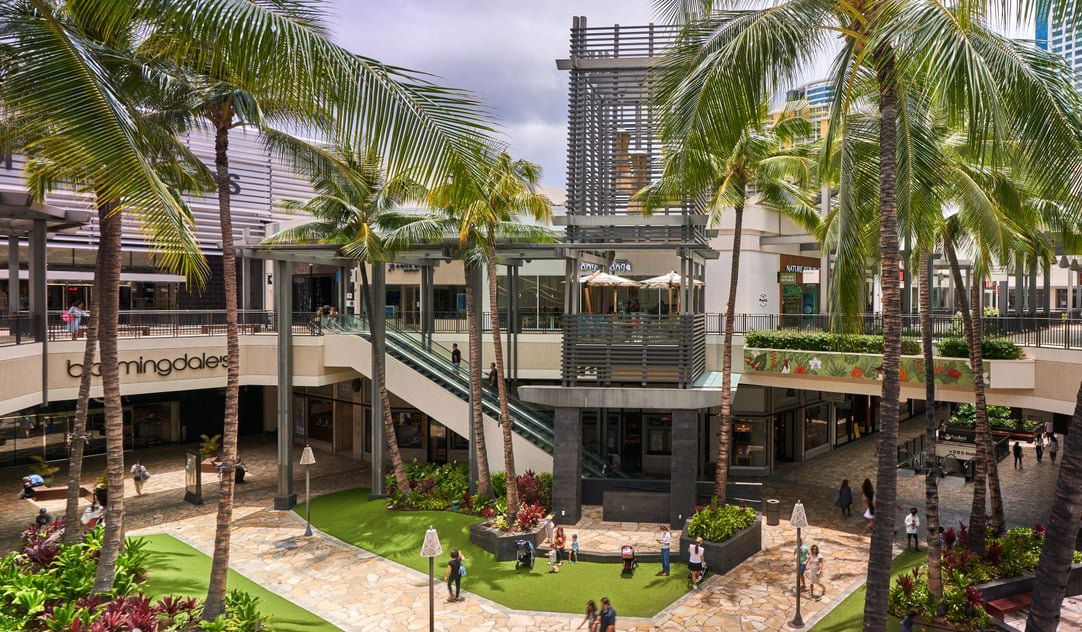
About 1050 Ala Moana Blvd
At 1050 Ala Moana Blvd, the Kaka'ako district's evolution from light industrial corridor to considered dining destination is most legible. The address sits within a neighborhood that has developed a dining identity distinct from both Waikiki's resort economy and Honolulu's older plate-lunch institutions, drawing on the islands' Pacific seafood supply and proximity to local produce markets.
Where Ala Moana Meets the Water: Reading Honolulu's Mid-City Dining Corridor
The stretch of Ala Moana Boulevard between downtown Honolulu and the shopping center has long operated as a transitional zone, neither the sun-bleached tourist economy of Waikiki nor the residential quietude of the neighborhoods inland. At 1050 Ala Moana Blvd, that in-between quality is the defining characteristic. The address sits within the Kaka'ako district, a part of Honolulu that has been reshaping its dining identity over the past decade as warehouse conversions and mixed-use developments brought new foot traffic and, with it, a broader range of restaurant formats than the strip historically supported.
Kaka'ako's evolution mirrors a pattern visible in other American port-adjacent neighborhoods: light industrial infrastructure converted into food-and-beverage anchors, drawing a local clientele distinct from the beach corridor crowds. The result, in Honolulu's case, is a dining corridor that now runs from casual plate-lunch counters through to more considered, ingredient-focused operations. The 1050 address sits within that corridor, and understanding the block means understanding the tension between what Honolulu's food scene has been and what it is becoming.
Sourcing in a Pacific Island Context
Any serious conversation about food in Honolulu begins with geography. Hawaii's position in the central Pacific creates both a distinct sourcing opportunity and a logistical reality that shapes every kitchen on the islands. The state's agricultural output, while significant in categories like taro, tropical fruit, macadamia nut, and certain aquaculture products, does not cover the full spectrum of ingredients that contemporary restaurant menus require. The result is a kitchen culture that has learned to be selective: source locally where the product is genuinely superior, import where it isn't, and be honest about both.
That philosophy is most visible in the treatment of seafood. Hawaii's fishing grounds, particularly for ahi, opakapaka, monchong, and mahi-mahi, produce fish that arrive at waterfront and mid-city restaurants with a freshness that continental American markets rarely match. Proximity to the source compresses the time between catch and plate in ways that no distribution network can fully replicate. It is a structural advantage that Honolulu's better kitchens do not take for granted, and it helps explain why fish-forward preparations consistently outperform the more protein-heavy mainland imports on island menus.
The same logic applies to produce. Honolulu farmers markets, including those at KCC and Kaka'ako Waterfront Park, stock varieties of banana, papaya, and leafy greens that don't travel well and therefore rarely appear in mainland contexts. Restaurants that build relationships with those growers gain access to ingredients that simply don't exist in the broader American supply chain. In the Kaka'ako corridor specifically, proximity to the waterfront market infrastructure gives kitchens an operational advantage worth noting when assessing what ends up on a plate.
The Kaka'ako Context: Peer Set and Price Positioning
Honolulu's dining scene has split, broadly, into three tiers. The first is the Waikiki resort economy, where properties like Beachhouse at the Moana and Duke's Waikiki price against the hotel guest's expectations and the tourist calendar. The second is the neighborhood institution tier, where places like Ethel's Grill and Highway Inn Kaka'ako operate on local loyalty and long-standing community roots. The third is an emerging mid-city tier, occupying the space between those two extremes, where format, sourcing, and ambiance compete on more continental terms without fully abandoning local character.
The 1050 Ala Moana address falls within that third category's geography, if not necessarily its price point. Operations along this section of the boulevard increasingly find themselves compared to restaurants like Bread & Butter, which has carved out a position in the casual-to-mid-range bracket that the neighborhood's growing residential density now supports. That comparison set matters because it defines the reader's expectations around format, sourcing transparency, and service register before they walk in the door.
For broader context on where this address sits in the full Honolulu dining picture, the EP Club Urban Honolulu guide maps the city's restaurant categories by neighborhood with more granularity than any single address can provide.
What Ingredient-Sourcing Ambition Looks Like at This Scale
Across American fine dining, the sourcing conversation has become more sophisticated over the past fifteen years. Restaurants like Single Thread Farm in Healdsburg and Blue Hill at Stone Barns in Tarrytown have built their entire operating models around agricultural relationships, to the point where the sourcing is the menu. At a different register, operations like Lazy Bear in San Francisco and Providence in Los Angeles bring sourcing rigour to formats that don't require a working farm on the premises. The relevant question for any Honolulu kitchen is where on that spectrum it positions itself, and whether the island's agricultural infrastructure can support that ambition at scale.
Hawaii's geography, paradoxically, makes high-end sourcing both easier and harder than on the mainland. Easier, because certain categories of product are genuinely superior and geographically close. Harder, because the range of available product is narrower, and the cost of importing specialty items from the mainland or Japan is substantially higher than in a coastal city with direct freight access. Kitchens in Honolulu that claim a sourcing-led identity are therefore making a more constrained argument than, say, The French Laundry in Napa or Addison in San Diego, both of which operate within driving distance of some of America's most productive agricultural regions.
That constraint, handled honestly, produces its own kind of discipline. Menus built around what the islands actually grow and catch tend to be more coherent than those that attempt to replicate continental fine dining with imported components. The leading Honolulu kitchens have internalized this. The worst have not.
Planning a Visit to This Address
Ala Moana Boulevard is accessible by TheBus, Honolulu's public transit network, with stops serving the Kaka'ako section directly. Street parking along the boulevard is available but varies by time of day, and the Ala Moana Center parking structure to the north provides overflow capacity for the surrounding blocks. The neighborhood is walkable from the Ala Moana end of Waikiki for visitors staying in that corridor, a distance of roughly fifteen to twenty minutes on foot along the waterfront path. Visitors planning around specific dining priorities are advised to cross-reference the Urban Honolulu guide for current hours and reservation windows, which shift seasonally as the local market absorbs or releases tourist volume.
Frequently Asked Questions
- Is 1050 Ala Moana Blvd a family-friendly restaurant?
- Without confirmed details on format, price range, or service style, a firm answer isn't possible, but the Kaka'ako corridor in Honolulu generally skews toward a mixed local and visitor clientele, and most mid-range operations in the neighborhood accommodate families without difficulty.
- What's the vibe at 1050 Ala Moana Blvd?
- Kaka'ako's dining identity is less resort-polished than Waikiki and less neighborhood-worn than the city's older plate-lunch counters. Restaurants in this part of Honolulu tend to sit in a considered mid-register, more casual than the beachfront hotel dining rooms but more deliberate in format than a quick-service counter. Without confirmed awards or pricing data on file, direct comparisons to specific Honolulu peers are limited.
- What do people recommend at 1050 Ala Moana Blvd?
- Specific dish recommendations require confirmed menu data, which is not currently on file for this address. In a general Honolulu context, kitchens along the Ala Moana corridor with access to the city's fishing supply tend to produce their strongest plates around local Pacific species. Cross-referencing recent visitor accounts alongside the EP Club editorial record will give the most current picture.
- How far ahead should I plan for 1050 Ala Moana Blvd?
- Reservation lead times in Honolulu's mid-city dining corridor vary significantly by venue format and season. If this address operates as a popular dinner-only counter or prix-fixe format, lead times of two to four weeks are common during peak visitor months (December through February and June through August). If it runs as a more open walk-in format, same-week availability is more typical. Confirming directly with the venue before arrival is advisable.
- How does 1050 Ala Moana Blvd fit into Honolulu's broader dining scene compared to the city's more established addresses?
- The Kaka'ako section of Ala Moana Boulevard represents a newer chapter in Honolulu's restaurant geography, one that developed largely in parallel with the neighborhood's residential and mixed-use growth rather than around a pre-existing tourist or institution anchor. In that sense, it occupies a different position from the legacy dining addresses in Waikiki or the long-standing neighborhood spots elsewhere in the city. For readers comparing across the full Honolulu spectrum, the EP Club Urban Honolulu guide provides the most complete category and neighborhood mapping currently available.
For readers building a broader Pacific itinerary, the EP Club editorial record covers reference-point restaurants across the US and Asia, including Le Bernardin in New York City, Emeril's in New Orleans, Alinea in Chicago, Atomix in New York City, The Inn at Little Washington, and 8 1/2 Otto e Mezzo Bombana in Hong Kong, each of which provides a useful frame for calibrating expectations around format, sourcing ambition, and price tier before approaching a less-documented address.
Related editorial
- Best Fine Dining Restaurants in ParisFrom three-Michelin-star icons to the next generation of Parisian chefs pushing boundaries, these are the restaurants that define fine dining in the world's culinary capital.
- Best Luxury Hotels in RomeFrom rooftop terraces overlooking ancient ruins to Michelin-starred hotel dining, these are the luxury hotels that make Rome unforgettable.
- Best Cocktail Bars in KyotoFrom sleek lounges to hidden speakeasies, Kyoto's cocktail scene blends Japanese precision with global influence in ways you won't find anywhere else.
Save or rate 1050 Ala Moana Blvd on Pearl
Keep this venue in your Pearl passport, rate it after you visit, and track it alongside every other place you collect.