Globally prestigious annual ranking recognizing the world's leading dining establishments for culinary excellence.
How many of these have you visited?
Discover on Pearl
Copenhagen, Denmark
Noma holds three Michelin stars and a multi-year record atop the World's 50 Best Restaurants list, making it the restaurant most associated with the global rise of New Nordic cooking. René Redzepi's kitchen on Refshalevej organises the year into three seasonal programmes built around foraged and local ingredients. Booking windows run months ahead, and dinner service runs Tuesday through Friday only.

Girona, Spain
El Celler de Can Roca has held three Michelin stars since 2009 and twice claimed the top position on the World's 50 Best Restaurants list. Run by the three Roca brothers from a converted house on the edge of Girona, it sits at the intersection of Catalan terroir and avant-garde technique, with Joan leading the kitchen, Josep directing the cellar, and Jordi reshaping what dessert can mean.

Errenteria, Spain
Mugaritz occupies a singular position in the Basque Country's dining hierarchy: two Michelin stars, a sustained presence inside the World's 50 Best (reaching as high as third place), and a format that dispenses with the conventions of a restaurant meal entirely. Located in Errenteria, a short drive from San Sebastián, it operates a single tasting menu built around conceptual provocation and hands-on eating, closing for four months each year to redesign itself from scratch.

Modena, Italy
Three Michelin stars, a La Liste score of 97 points, and two World's 50 Best number-one rankings make Osteria Francescana the reference point for progressive Italian cooking. Located on Via Stella in central Modena, the restaurant translates Emilian pantry staples into conceptually charged tasting menus. The dining room is spare and art-hung, the cooking anything but predictable.

Bray, United Kingdom
Three Michelin stars, a number-one World's 50 Best ranking in 2005, and approaching three decades of multi-sensory theatre: The Fat Duck in Bray occupies a singular position in British fine dining. Heston Blumenthal's High Street address operates at the ££££ tier, with tasting menus running from £275 to £350, alongside a reintroduced three-course à la carte at £255 per person.

Chicago, United States
Alinea holds three Michelin stars and a consistent place in the World's 50 Best Restaurants, operating from a 65-seat Lincoln Park dining room where tasting menus run three to four hours. Grant Achatz's approach treats each course as a sequence of choreographed moments rather than a succession of plates, drawing on French technique, American ingredients, and modernist methods in equal measure.

São Paulo, Brazil
D.O.M. holds two Michelin stars and a sustained presence in the World's 50 Best Restaurants list, positioning it at the top of São Paulo's fine dining tier. Chef Alex Atala's kitchen treats the Amazon as a pantry, bringing native ingredients like jambu, tucupi, and priprioca into a tasting format that has redefined how Brazilian cuisine is read internationally. Reservations are essential, and the Jardins address has anchored the city's premium dining scene since 1999.

San Sebastián, Spain
Among Spain's longest-standing three-Michelin-star restaurants, Arzak has held its stars continuously since 1974 and appeared in the World's 50 Best every year from 2003 to 2018, peaking at number eight. Chef Elena Arzak leads the kitchen inside a century-old family mansion in Alto de Miracruz, producing Modern Basque cuisine informed by an in-house ingredient laboratory of more than 1,000 components. La Liste scored it 99 points in 2026.

Paris, France
Le Chateaubriand helped define the bistronomy movement that reshaped Paris dining in the 2000s, and Avenue Parmentier remains its spiritual home. Chef Iñaki Aizpitarte runs a single set menu of original flavour pairings, sourced from independent producers, inside a 1930s-era interior that has changed very little since the restaurant's rise to the World's 50 Best top ten. A Michelin Plate holder with an international following, it rewards advance planning.

New York City, United States
Open since 2004 and holding three Michelin stars continuously, Per Se occupies the upper tier of New York fine dining alongside [Le Bernardin](https://www.enprimeurclub.com/restaurants/le-bernardin) and Eleven Madison Park. Thomas Keller's French-American tasting format runs nine courses across two daily-changing menus at $425 per person, served from a two-tiered dining room with direct views over Central Park.

New York City, United States
Daniel has anchored Upper East Side fine dining for over three decades, serving classical French cuisine in a room of coffered ceilings, Bernardaud porcelain chandeliers, and James Rosenquist art. Executive Chef Eddy Leroux's multicourse menus rotate seasonally, supported by a 10,000-bottle cellar weighted toward Burgundy, Bordeaux, and Champagne. La Liste awarded it 98 points in 2026; a Forbes Travel Guide Five-Star rating and AAA 5 Diamond underscore its position in New York's top French tier.

Tokyo, Japan
Two decades after opening in Minami-Aoyama, Narisawa remains the reference point for what Japan's innovative dining tier looks like when French technique meets satoyama philosophy. With two Michelin stars, a 4.25 Tabelog score, and a re-entry to the World's 50 Best in 2025, the 15-seat room prices at JPY 80,000–99,999 per head — a figure that positions it squarely against the most demanding tables in Asia.

Paris, France
L'Astrance occupies a storied address on Rue de Longchamp in the 16th arrondissement, where Pascal Barbot's contemporary French kitchen draws on Asian influences and a deep commitment to produce. The glass wine cellar, curated by maître d' Christophe Rohat, has become as much a reason to book as the food itself. Ranked in the World's 50 Best Restaurants every year from 2006 to 2017, this is one of Paris's most credentialled creative tables.

Paris, France
Few Paris addresses carry the sustained peer recognition of L'Atelier Saint Germain De Joël Robuchon, which appeared on the World's 50 Best Restaurants list every year from 2004 to 2014, reaching as high as fourth place globally. Under Chef Axel Manes, the Saint-Germain-des-Prés counter format continues the structured, multi-course approach that defined the Robuchon atelier model across a dozen cities worldwide.

Kruishoutem, Belgium
In the rolling countryside of the Flemish Ardennes, Hof van Cleve represents one of Belgium's most decorated dining addresses, holding two Michelin stars and a consistent presence in the World's 50 Best Restaurants over more than a decade. Under Chef Floris Van Der Veken, the kitchen has pivoted toward a plant-forward direction, earning five Radishes with high distinction from We're Smart and a La Liste score of 96.5 points in 2025.

Paris, France
Pierre Gagnaire at 6 Rue Balzac has held three Michelin stars for decades and scored 98 points on La Liste 2026, placing it among the most critically recognised creative French restaurants in Paris. The kitchen builds menus around ingredient-driven composition rather than classical structure, with recent programming signalling a serious engagement with vegetable-focused cooking. Booking windows are narrow and demand consistent.

Sluis, Netherlands
Oud Sluis occupied a remarkable position in European fine dining across the 2000s and early 2010s, appearing continuously on the World's 50 Best Restaurants list from 2006 through 2013 and reaching as high as 17th in the world. Located in the small Zeelandic border town of Sluis, the restaurant drew serious diners from across northern Europe to a setting far removed from any capital-city dining circuit.
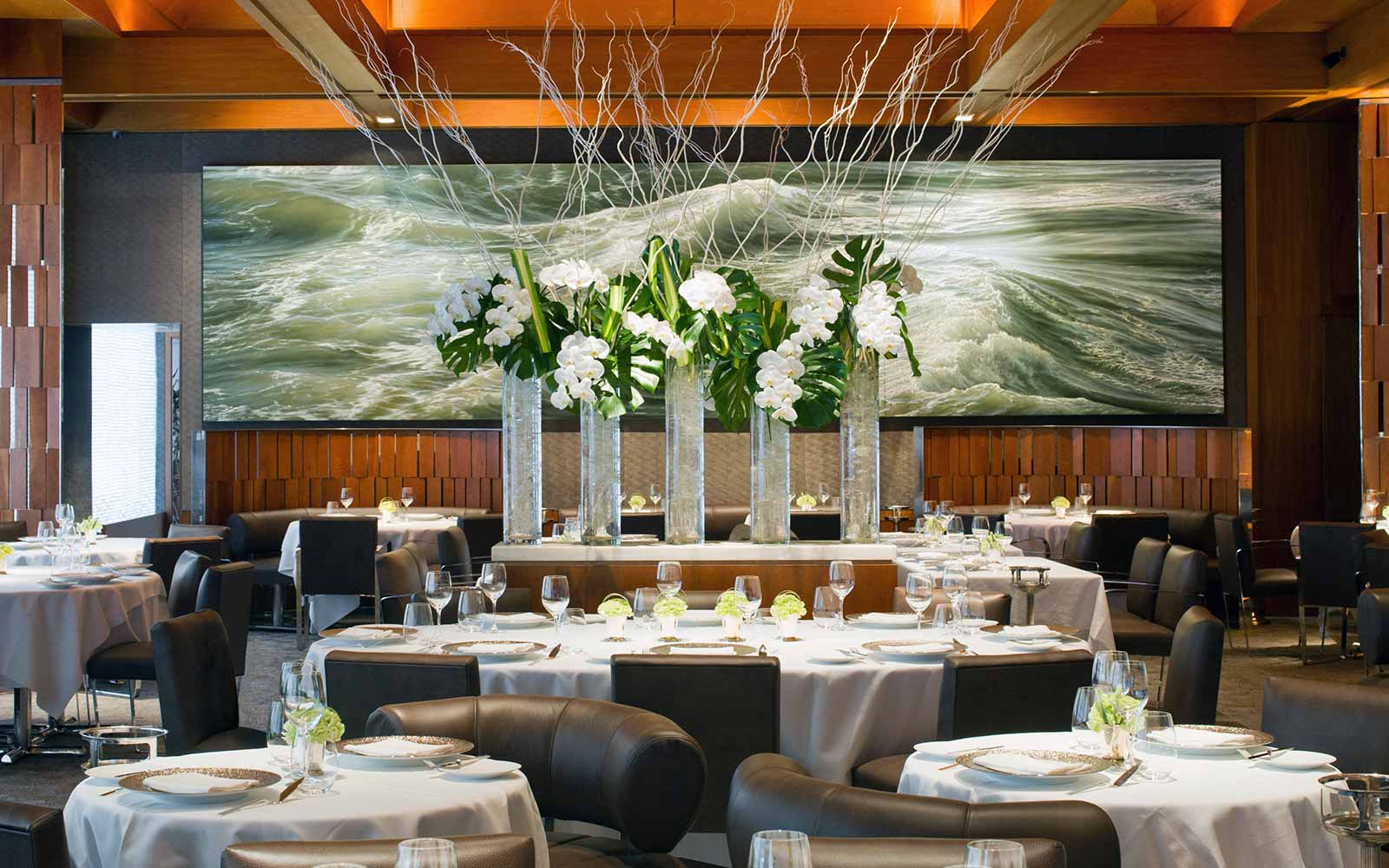
New York City, United States
Le Bernardin New York reigns as the city's premier seafood destination, where Chef Eric Ripert's three-Michelin-starred artistry transforms ocean treasures into transcendent cuisine. This legendary Midtown institution has maintained The New York Times' four-star rating for over two decades, offering an unmatched fine dining experience centered on the philosophy that "the fish is the star."

Paris, France
In Paris's 7th arrondissement, Arpège holds three Michelin stars and a decades-long position inside the World's 50 Best — currently ranked 45th globally. Alain Passard's decision to remove red meat from a grand Parisian kitchen in 2001 reshaped how the city's haute cuisine thought about vegetables. Produce arrives daily from three biodynamic farms outside Paris, and the menu follows nature's calendar more closely than any printed card.

Stockholm, Sweden
Stockholm's only three-Michelin-star restaurant, Frantzén operates across three floors of a 19th-century Norrmalm townhouse, delivering a single tasting menu that merges Nordic technique with Asian reference points. Ranked #2 in Europe by Opinionated About Dining (2025) and 99 points by La Liste (2026), it holds a position among the most decorated tables in Scandinavia. Booking demand is high; plan well in advance.

Bergisch Gladbach, Germany
Vendôme at Althoff Grandhotel Schloss Bensberg has held a place in the World's 50 Best Restaurants for over a decade and carries two Michelin stars under chef Joachim Wissler. The restaurant's Modern European tasting format runs Wednesday through Sunday evenings in a grand hotel setting outside Cologne, ranking 54th in Europe on Opinionated About Dining's 2025 list. For serious diners in the region, it represents the apex of the local fine dining tier.

Vienna, Austria
Inside a 1904 pavilion in Vienna's Stadtpark, Steirereck im Stadtpark operates at the intersection of architectural drama and Austrian culinary research. Three Michelin stars and consistent placement inside the World's 50 Best Restaurants top 25 position it as the reference point for serious dining in the city. The menu is built around rare breeds, near-extinct produce varieties, and ingredients grown on the building's own rooftop.

Fürstenau, Switzerland
Schloss Schauenstein occupies a medieval castle in the village of Fürstenau, deep in the Swiss canton of Graubünden. The kitchen, guided by Andreas Caminada and Marcel Skibba, holds three Michelin stars and a sustained presence in the World's 50 Best since 2010. Vegetables sit at the centre of a creative European menu that draws on alpine produce and precision technique.

New York City, United States
Operating from 11 Madison Avenue since 1998 and holding three Michelin stars continuously, Eleven Madison Park runs a fully plant-based tasting menu of eight to ten courses under chef Daniel Humm. Reservations open on the first of each month for the following month and fill within hours. The wine program spans 4,700 selections across 22,000 bottles, with particular depth in Burgundy, Rhône, and Champagne.

Wolfsburg, Germany
Aqua Wolfsburg stands as Germany's culinary crown jewel, where Chef Sven Elverfeld's three-Michelin-starred artistry transforms modern German cuisine into emotional storytelling. Nestled within The Ritz-Carlton's elegant setting, this intimate 40-seat sanctuary delivers nine-course tasting menus featuring bold combinations like Saibling char with caviar and miso, establishing it as Europe's most sophisticated dining destination.

Sydney, Australia
Quay Sydney elevates contemporary Australian cuisine to artistic heights through Executive Chef Peter Gilmore's nature-inspired tasting menus, served within a crystal-like dining room overlooking Sydney Harbour's iconic Opera House and Bridge, earning Three Chef Hats for 22 consecutive years.
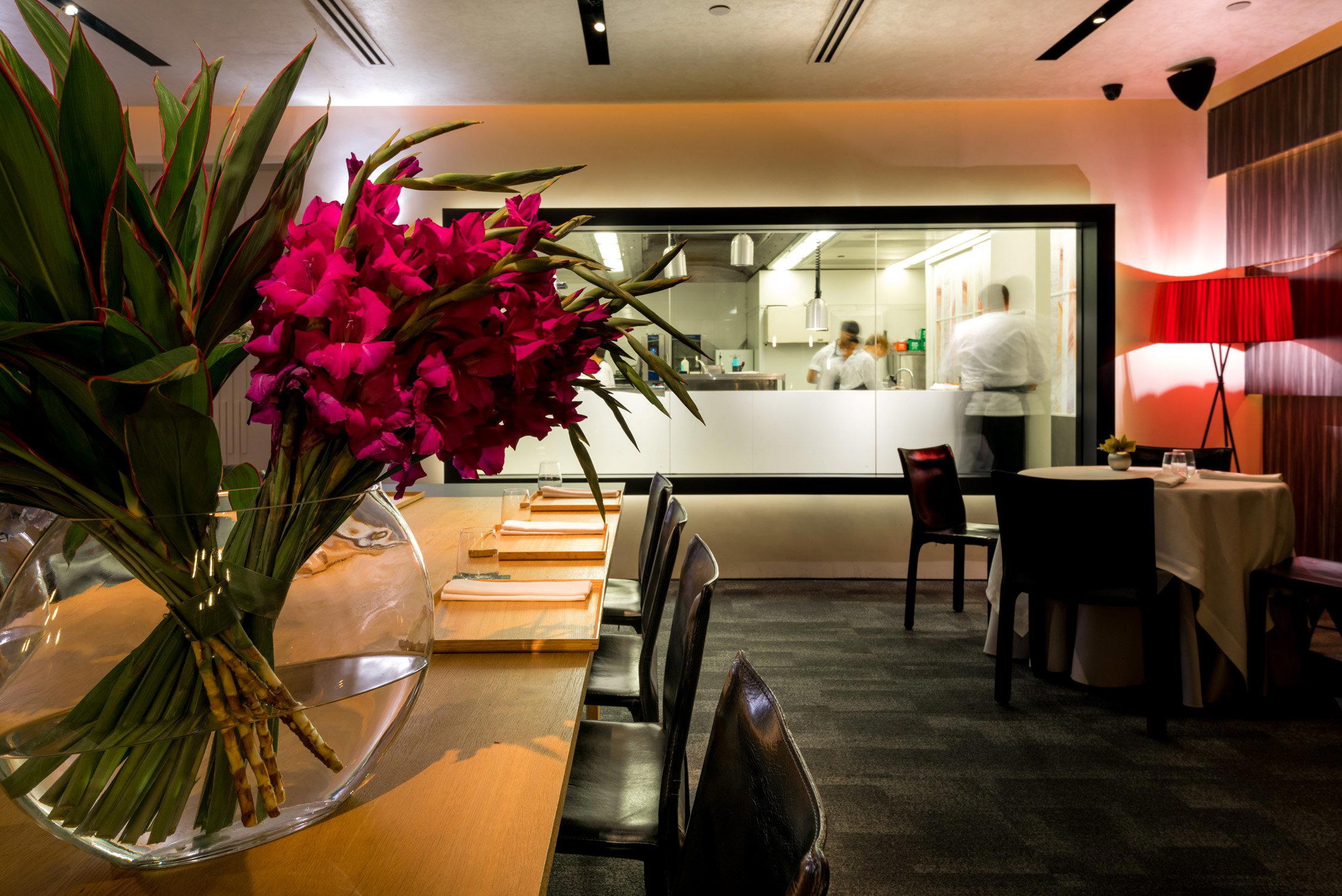
Singapore, Singapore
Iggy's has held its position among Singapore's serious fine-dining addresses for two decades, earning a Michelin star and consecutive appearances in the World's 50 Best Restaurants. Set on the third floor of voco Orchard Singapore, the Modern European kitchen draws on produce from Japan and France, served across set menus of two to nine courses, with a Burgundy-weighted wine list that rewards anyone willing to spend time with it.

Rivoli, Italy
Combal Zero sits inside the Castello di Rivoli, Piedmont's contemporary art museum, positioning it as one of Italy's most architecturally charged dining addresses. Chef Davide Scabin held a place in the World's 50 Best Restaurants for over a decade, reaching number 28 in 2011. The kitchen trades in progressive Italian technique, with a 4.6 Google rating across verified reviews.

Lasarte - Oria, Spain
Seven kilometres from San Sebastián, in the village of Lasarte-Oria, Martín Berasategui's three-Michelin-star flagship sits at the upper tier of Spain's creative dining scene. Ranked 99 points by La Liste in both 2025 and 2026, and a consistent presence in the World's 50 Best through the 2000s and 2010s, the restaurant pairs signature dishes with seasonal new creations in a setting that opens onto the Basque countryside.
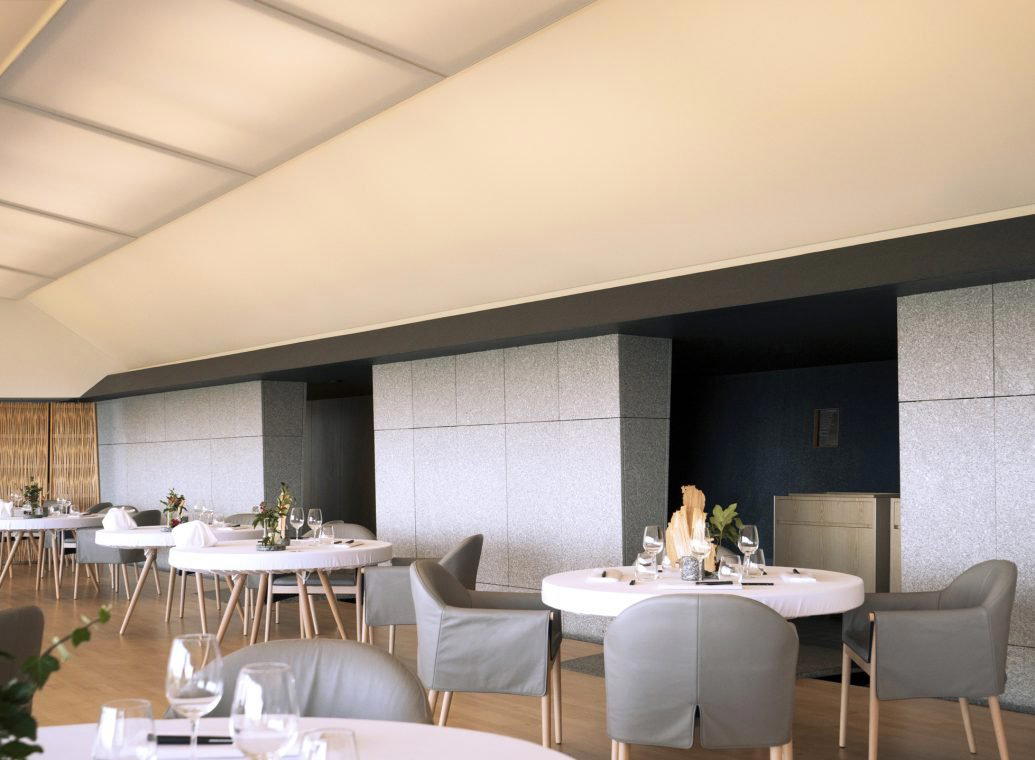
Laguiole, France
On the high plateau of the Aubrac in southern France, Bras holds two Michelin stars and a 94-point La Liste score, with a vegetable-forward menu that has shaped contemporary French cooking for decades. Sébastien Bras now leads the kitchen his father Michel made famous, maintaining the same commitment to the land and wild herbs of the surrounding plateau. For serious diners willing to make the journey, few addresses in France carry this depth of culinary heritage.

Mexico City, Mexico
Biko Mexico City elevates molecular gastronomy to emotional artistry, where Basque chefs Bruno Oteiza and Mikel Alonso create avant-garde Basque-Mexican fusion through their revolutionary "techno-emotional cuisine." This World's 50 Best Restaurants honoree transforms ingredients like burnt corn and foie gras into sensory spectacles within Polanco's most innovative dining laboratory.

Rubano, Italy
Three Michelin stars since 2002, a 99-point La Liste ranking in 2026, and a permanent position in the World's 50 Best since 2006: Le Calandre in Rubano operates at the upper tier of Italian fine dining. Chef Massimiliano Alajmo runs three tasting menus from a minimalist dining room where tables are carved from a single 300-year-old ash tree, forty minutes from Venice.

Milan, Italy
Inside the Galleria Vittorio Emanuele II, one of Milan's most recognisable 19th-century arcades, Cracco in Galleria holds a Michelin star and an OAD Top 100 Europe ranking. Chef Luca Sacchi leads a tasting menu and à la carte that reference contemporary Italian technique while keeping classic Milanese touchstones — notably vitello alla Milanese — in frame. The wine programme, spanning 2,500 selections and 18,000 bottles, is among the most comprehensive French-leaning lists in Italy.

London, United Kingdom
Three Michelin stars and a La Liste ranking of 81 points in 2026 place The Ledbury among London's most decorated fine-dining addresses. Brett Graham's eight-course evening menu, priced at £285 per person in Notting Hill's Ledbury Road, draws on produce from his own farm and in-house mushroom cultivation. The wine list holds the Star Wine List number-one ranking for three consecutive years.

Helsinki, Finland
Chez Dominique placed on the World's 50 Best Restaurants list six consecutive years between 2006 and 2011, reaching as high as #21 in 2009, making it one of the most decorated Nordic restaurants of its era. Located on Rikhardinkatu in central Helsinki, it operates under chef Brian Tondryk with a Danish cuisine framework that sits outside the dominant Finnish-forward narrative of the city's fine dining scene.

Franschhoek, South Africa
Le Quartier Français placed Franschhoek on the global dining map, appearing in the World's 50 Best Restaurants list every year from 2002 to 2011 under chef Margot Janse. Rooted in French classical technique and reshaped by the produce and seasons of the Western Cape, it remains a reference point for understanding how South African fine dining developed its own identity.

Hong Kong, Hong Kong
Amber has held three Michelin stars continuously and ranked as high as #20 on the World's 50 Best Restaurants list, making it a fixed reference point for French Contemporary dining in Hong Kong. Chef Richard Ekkebus frames each structured meal around dairy-free technique, Japanese sourcing, and a sustainability program that now extends from rooftop herb cultivation to fermentation-led flavour building. The wine list runs to 11,000 bottles, with Wine Director Dirk Chen steering a Burgundy-weighted program.

Runate, Italy
Dal Pescatore has held three Michelin stars continuously since 1996, an Italian record, and sits in the upper tier of classical European dining as ranked by both La Liste (98 points in 2026) and Opinionated About Dining. Located in the hamlet of Runate in the Mantuan countryside, this multi-generational family restaurant draws a destination-dining clientele willing to travel for cuisine rooted in the Po Valley's distinct culinary traditions.

Siena, Italy
Il Canto earned consecutive placements in the World's 50 Best Restaurants between 2010 and 2012, peaking at number 39, which positions it among the small cohort of Sienese kitchens to achieve international recognition of that scale. The cooking draws from Tuscan tradition with a discipline rooted in restraint: fewer ingredients, more precisely handled. A Google rating of 4.7 across 528 reviews signals sustained performance over time.

New York City, United States
Momofuku Ssäm Bar distills the pulse of New York into a refined, irresistibly bold Korean-American experience. In a space that hums with sleek urban energy, the kitchen balances precision and personality—smoky, charred aromas rising from expertly grilled meats, bright pickled notes shimmering against velvety sauces, and seafood treated with meticulous care. Expect playful irreverence elevated by impeccable sourcing: bracingly fresh crudos, luxuriant pork, seasonal vegetables coaxed into unexpected depth. Service is crisp yet warm, guiding you through a menu that rewards curiosity and encourages sharing. For the discerning traveler, this is where culinary heritage and modern swagger converge, each plate a vivid conversation between memory and innovation.

London, United Kingdom
Open since 1994 in a converted Smithfield smokehouse, St John holds a Michelin star and spent a decade inside the World's 50 Best Restaurants. Fergus Henderson's nose-to-tail approach helped redirect British cooking away from continental imitation and toward its own larder. At £££, it sits well below London's formal tasting-menu tier while commanding equivalent critical authority.

Lima, Peru
Set inside the 17th-century Casa Moreyra hacienda in San Isidro, Astrid & Gastón has held a place in the World's 50 Best Restaurants every year from 2011 to 2018, peaking at #14 in 2013 and 2015. Under chef Jorge Muñoz Castro, the restaurant runs a tasting format built around Peruvian biodiversity, with vegetables as a recurring editorial thread. Ranked #9 in South America by Opinionated About Dining in 2025.

London, United Kingdom
Hibiscus placed twice in the World's 50 Best Restaurants list (2010 and 2011) and represents a strand of British fine dining that briefly rivalled London's dominant French-influenced tier. Now operating from a heritage setting at Delapre Abbey in Northampton, it occupies an interesting position: a decorated name with national competition credentials, set away from the capital's dense restaurant cluster. Rated 4.6 on Google across 83 reviews.

Ouches, France
Troisgros - Le Bois sans Feuilles holds three Michelin stars and a Green Star at its contemporary estate in Ouches, where the fourth generation of France's most decorated culinary family continues a tradition of bright, acid-driven cuisine. Rated 98 points by La Liste in both 2025 and 2026, and ranked in the top ten of Opinionated About Dining's Classical Europe list, it occupies a peer set defined by multigenerational ambition rather than single-generation stardom.

Paris, France
Alain Ducasse au Plaza Athénée on Avenue Montaigne has ranked inside the World's 50 Best Restaurants nine times between 2005 and 2019, reaching as high as number 13. Chef Romain Meder leads a contemporary French programme inside one of Paris's most formally composed dining rooms, where the front-of-house and kitchen operate as a single coordinated system. Booking well in advance is strongly advised.

Zwolle, Netherlands
De Librije has held three Michelin stars since 2004, making it the most consistently decorated restaurant in the Netherlands over the past quarter-century. Housed in a converted women's prison in Zwolle, it operates Thursday through Saturday evenings under chef and co-owner Nelson Tanate, with a programme built on regional produce, fermentation, and a vegetable-led approach that shaped modern Dutch cooking.

Crissier, Switzerland
Hotel de Ville Crissier represents Switzerland's culinary pinnacle, where chef Franck Giovannini continues a 70-year legacy of three-Michelin-starred excellence through classical French cuisine refined by five generations of master chefs in this legendary Crissier institution.

Moscow, Russia
Varvary arrived on the international stage in 2011 when it placed 48th on the World's 50 Best Restaurants list, a rare signal from Moscow at a moment when Russian fine dining was still defining itself for a global audience. The restaurant built its reputation on a serious approach to native Russian cuisine, drawing from the country's larder with the kind of rigour typically associated with Nordic or Japanese traditions. It holds a 4.5 Google rating across 455 reviews.

Mexico City, Mexico
Two Michelin stars, a decade-long presence on the World's 50 Best list, and a mole aged for over a thousand days: Pujol in Polanco has done more to define contemporary Mexican fine dining on the global stage than any other single address. Chef Enrique Olvera's tasting menu moves between pre-Hispanic technique and modern precision, placing ancient ingredients inside a rigorous, architecturally considered format.

Atxondo, Spain
In a mountain village between Bilbao and San Sebastián, Asador Etxebarri has ranked among the World's 50 Best Restaurants continuously since 2008 and holds the title of Best Restaurant in Europe 2025. Victor Arguinzoniz cooks everything over live fire using custom-built grills and a pulley system of his own design, producing a tasting menu that runs to 14 courses and books out months in advance.
Find out on Pearl and keep score across every place in 2011 World's 50 Best Restaurants.
Overview
The 2011 World's 50 Best Restaurants list crowned Noma in Copenhagen as the world's top restaurant, marking a shift toward Nordic cuisine. The rankings included 51 venues across 22 countries and 38 cities, with Spain placing three restaurants in the top ten. This edition represented a complete overhaul from the previous year's list, with no venues retained from 2010.
The 2011 edition recognized restaurants across 22 countries spanning five continents, with concentration in Europe and North America. Spain dominated the top rankings with three spots in the top ten: El Celler de Can Roca at #2, Mugaritz at #3, and Arzak at #8. The United States placed two restaurants in the top tier—Alinea in Chicago (#6) and Per Se in New York (#10). Copenhagen, Girona, Errenteria, Modena, Bray, Chicago, São Paulo, San Sebastián, Paris, and New York rounded out the top ten cities. The list saw complete turnover from 2010, with all 51 positions going to new entrants while 46 previous venues dropped out entirely. This represents either a fundamental restructuring of the awards methodology or a shift in judging priorities.
Noma's win in 2011 put Copenhagen on the global dining map and signaled the rise of New Nordic cuisine as a major movement. The Danish restaurant topped a list that included 51 venues across 22 countries, with Spain claiming three of the top eight positions. Every single restaurant on this list was new compared to 2010—a complete reset that suggests the awards either changed their voting system or shifted categories. El Celler de Can Roca and Mugaritz took silver and bronze, while U.S. restaurants Alinea and Per Se both cracked the top ten.
The 2011 World's 50 Best Restaurants list represents a watershed moment, with Noma's victory accelerating global interest in foraged ingredients and Nordic culinary techniques. The complete absence of overlap with 2010 is notable—zero venues retained from the previous edition, while 46 restaurants dropped out and 51 new ones appeared. This suggests a fundamental change in how the list was compiled or what it was recognizing.
Geographically, the rankings favored Europe, particularly Spain with multiple top-ten placements. The U.S. secured two spots in the top tier with Alinea (#6) and Per Se (#10), while South America gained representation through D.O.M. in São Paulo at #7. France placed Le Chateaubriand at #9, and the UK contributed The Fat Duck at #5. Italy's Osteria Francescana landed at #4.
The 38 cities and 22 countries represented show geographic diversity, though access to these restaurants varied widely—from Copenhagen and Paris to more challenging destinations. The list's complete turnover from 2010 makes year-over-year tracking impossible, but it established the template for future editions that would track restaurant rankings over time.