
Hotel in Featherston, New Zealand
Wharekauhau Country Estate
1,100ptsWorking-Station Lodge Seclusion


About Wharekauhau Country Estate
A 5,550-acre working sheep station above the cliffs of Palliser Bay, Wharekauhau Country Estate is a Relais & Châteaux member rated 94.5 points by La Liste (2026) and 4.8/5 by EP Club guests. Seventeen freestanding cottage suites combine open fireplaces, native New Zealand wool and clay-tile interiors with wide ocean views, while the Hauora Spa draws on Māori healing traditions. Rates begin from US$1,548 per night.
Where the Land Does the Work
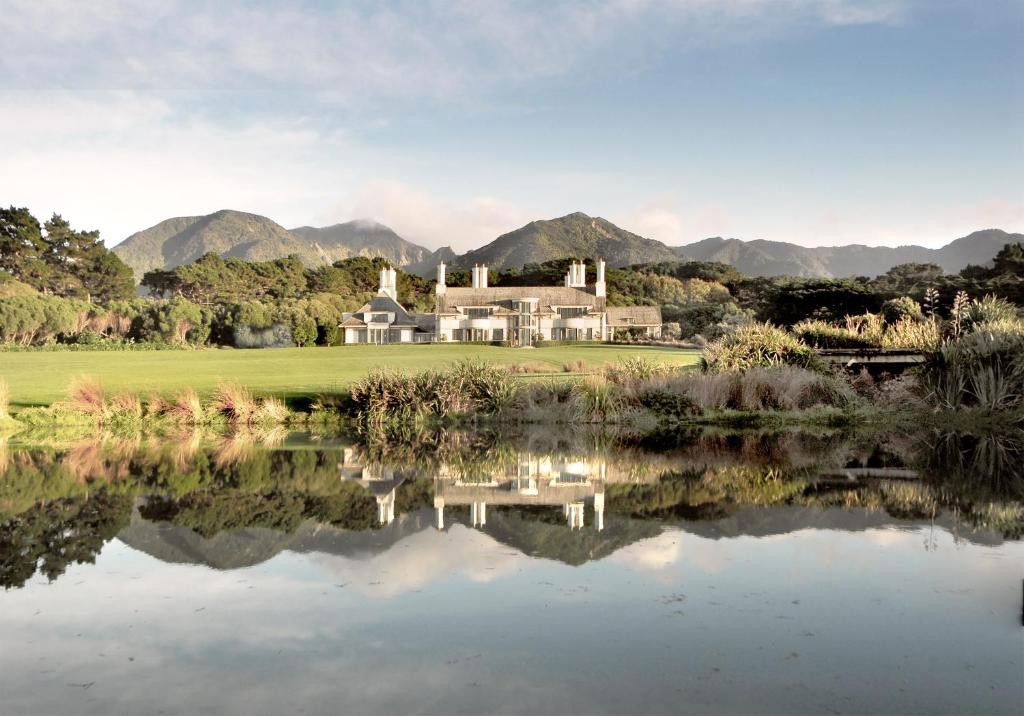
Arriving at Palliser Bay by road, the Remutaka Ranges cut a hard western line before the land opens suddenly toward the sea. The estate's working paddocks and native forest occupy the transition between those two landscapes, with the cottage suites set high enough above the cliffs that the Pacific fills the view from nearly every window. Architecturally, the main lodge draws on the Edwardian country mansion — broad eaves, covered verandas, rooms scaled for gathering rather than passing through. It is a design language that communicates permanence, which is the point: this is a property built to feel inhabited rather than constructed.
Among New Zealand's high-country lodges, the split is between those that perform their remoteness and those that actually deliver it. Wharekauhau sits in the second group. The estate covers 5,550 acres, the nearest town is Featherston, and Wellington — the closest city , is ten minutes by air or ninety by road. That gap is not incidental; it determines how the whole experience is structured. Guests are not dropping in for a night between flights. The estate is the destination.
The Architecture of Seclusion
New Zealand's premium lodge segment has developed two distinct design approaches over the past two decades. The first borrows from international luxury hospitality: clean lines, imported materials, a legible relationship to global hotel aesthetics. The second works inward, drawing on local materials and vernacular forms to produce spaces that read as specific to place. Wharekauhau belongs firmly to the second category, and the cottage suites are where that design logic is clearest.
Each suite is freestanding, positioned across the estate for maximum separation. The material palette runs through clay tiles, pebble mosaics, plastered walls, New Zealand wool carpet, cotton bed linen, and hemp curtains , a list that is almost entirely sourced from the land or the country's agricultural tradition. The result is textural in a way that imported materials rarely achieve: surfaces that register differently underfoot and overhead, that age in ways you can track. A super-king four-poster bed, open fireplace, and underfloor heating make the thermal logic clear: this is a cold-coast property that takes seriously what it means to be warm inside while wind comes off Palliser Bay. Ocean views are standard across the suites. Privacy is structural, not managed through screening or planting.
The main lodge operates on a different scale. Its 20-metre indoor pool is heated to 28°C, and the gymnasium and all-weather tennis court complete a recreation brief that removes the need to leave the property for anything active. The Edwardian mansion framing gives the lodge a deliberate social gravity: a place guests return to in the evening, not just pass through at breakfast. Comparable properties in the New Zealand lodge market , Huka Lodge, Blanket Bay, Otahuna Lodge , each manage this balance differently; Wharekauhau's version leans toward the feel of a large private house, which is a harder register to achieve than resort-scale formality.
The Estate as Activity Programme
The activity offering at high-end rural lodges in New Zealand tends to follow a recognisable template: walks, water, wine. Wharekauhau extends that template significantly by anchoring activities to the working farm itself. ATV quad biking, farm tours, archery, and clay target shooting are all on-estate, which means guests interact with the station's operational reality rather than a curated version of it. Horses along the coast, the estate's trails, the pasture and sea views , these are not staged.
Surrounding region adds depth. The Martinborough wine region sits within reach, offering Wairarapa Pinot Noir at a quality tier that has drawn serious attention over the past decade. Cape Palliser's seal colony and lighthouse provide a specific coastal excursion that few properties in New Zealand can match for proximity. Wellington, as a city destination, rounds out the short-trip logic for guests arriving from overseas who want to combine capital-city engagement with estate seclusion. Properties like Eagles Nest in Russell or Hapuku Lodge in Kaikoura operate on a similar principle of estate-as-base with strong regional excursion options.
The Hauora Spa and the Māori Healing Tradition
New Zealand luxury properties have increasingly incorporated Māori cultural frameworks into their wellness programming, though the depth and authenticity of that integration varies significantly. Wharekauhau's Hauora Spa operates around a specific orientation: treatments grounded in historical Māori practices, native plant-based products, and the restorative logic of the surrounding environment. This is a different proposition from a spa that adds a single Māori-named treatment to an otherwise conventional menu. The focus on surroundings as a healing element connects directly to the estate's physical character , the bay, the forest, the open sky , and gives the spa programme a geographic specificity that internationally standardised spa formats cannot replicate.
Dinner Drawn from the Land
The dining orientation at Wharekauhau follows the same sourcing logic as the design. The kitchen draws heavily from the estate's own production, with the Wairarapa wine region's cellar as the primary reference for the wine list. This is a coherent position: a working sheep station that feeds its guests from its own land is making an editorial statement about provenance that aligns with how the whole property is positioned. The main lodge is where dinner happens, which reinforces its social function , the evening meal is a communal event in the Edwardian-house sense, not a room-service option.
Recognition and Peer Positioning
Wharekauhau holds Relais & Châteaux membership and was rated 94.5 points by La Liste in 2026, placing it within the recognised tier of globally cited rural retreat properties. EP Club guests rate it 4.8 out of 5 across 113 reviews. Among New Zealand's premium lodge set, it occupies a specific niche: large-estate working farm with design-led accommodation, rather than the smaller-footprint boutique model of properties like Annandale Villas in Pigeon Bay or the alpine-drama approach of Minaret Station Alpine Lodge. Internationally, the working-estate lodge model has proven durable in the premium market , Rosewood Cape Kidnappers operates on a comparable logic in Hawke's Bay, and Rosewood Kauri Cliffs anchors a similar coastal-rural format further north.
Seventeen rooms across freestanding cottages keeps the guest count low enough to maintain the private-house atmosphere the lodge format depends on. Rate entry is from US$1,548 per night. The property closes annually: the 2025 closure runs from 7 July to 4 September, covering the southern hemisphere winter. Guests planning a visit should note that window when booking. Wellington-based access via a ten-minute helicopter or charter flight is the most direct route, which makes Wharekauhau a viable add-on to a New Zealand itinerary that includes the capital.
For those assembling a broader New Zealand itinerary, other properties worth considering alongside Wharekauhau include Fiordland Lodge in Te Anau, Helena Bay Lodge, Solitaire Lodge in Rotorua, Lakestone Lodge in Twizel, Poronui Lodge, Omana on Waiheke Island, and Bay of Many Coves. For more on the region, see our full Featherston restaurants guide.
Frequently Asked Questions
How would you describe the overall feel of Wharekauhau Country Estate?
The property functions like a large Edwardian country house that happens to be set on a 5,550-acre working sheep station above the Pacific. The tone is informal in the way that genuinely private spaces tend to be: guests gather in the main lodge for meals and evenings, while the freestanding cottages provide separation during the day. It has earned 94.5 points from La Liste (2026) and holds Relais & Châteaux membership, which places it in a specific tier of rural retreat , recognised internationally but deliberately resistant to resort-scale formality. Rates begin at US$1,548 per night for 17 rooms across the estate.
What's the signature room at Wharekauhau Country Estate?
The freestanding cottage suites are the defining accommodation format , each is self-contained, set apart from its neighbours for privacy, and finished in New Zealand natural materials: clay tiles, pebble mosaics, wool carpet, hemp curtains. Every suite has an open fireplace, underfloor heating, and a super-king four-poster bed, with ocean views as standard. The material approach is coherent enough that no single suite type reads as the obvious upgrade; the format is the product, and the distinction from international luxury hotel style is the point.
What should I know about Wharekauhau Country Estate before I go?
Estate closes annually during the southern hemisphere winter; the 2025 closure runs from 7 July through 4 September, covering hotel and restaurant. Access from Wellington is ten minutes by air or ninety minutes by road , the air option makes sense for guests arriving from overseas who want to minimise ground travel. La Liste's 2026 rating of 94.5 points and EP Club's 4.8/5 guest score (113 reviews) indicate consistent delivery, but the property's appeal is specific: it suits guests who want large-scale outdoor access and estate immersion rather than urban proximity. Rates start at US$1,548 per night.
How far ahead should I plan for Wharekauhau Country Estate?
With only 17 rooms across a property that draws Relais & Châteaux-level recognition and La Liste's 94.5-point rating for 2026, availability in peak season narrows quickly. The annual winter closure (July through early September) compresses the bookable calendar further, making summer and shoulder-season dates the primary target. Enquiring three to six months out for high-demand periods is a reasonable working assumption, particularly for guests building a broader New Zealand itinerary that requires coordinated lodge dates. No direct booking contact details are listed in our current records; check the estate's website or use a specialist travel consultant.
What makes Wharekauhau a good base for exploring the Wairarapa wine region?
The estate sits within reach of Martinborough, the Wairarapa's primary wine village and home to a cluster of Pinot Noir producers that have gained consistent international recognition over the past two decades. The lodge's own cellar focuses on Wairarapa wines, meaning guests encounter the region through the dining programme before they go anywhere. Cape Palliser is also accessible from the estate, adding a coastal excursion that few wine-country properties can offer alongside vineyard visits. Wellington, ten minutes by air, functions as a transit and cultural hub for guests extending their stay.
Recognized By


Related editorial
- Best Fine Dining Restaurants in ParisFrom three-Michelin-star icons to the next generation of Parisian chefs pushing boundaries, these are the restaurants that define fine dining in the world's culinary capital.
- Best Luxury Hotels in RomeFrom rooftop terraces overlooking ancient ruins to Michelin-starred hotel dining, these are the luxury hotels that make Rome unforgettable.
- Best Cocktail Bars in KyotoFrom sleek lounges to hidden speakeasies, Kyoto's cocktail scene blends Japanese precision with global influence in ways you won't find anywhere else.
Save or rate Wharekauhau Country Estate on Pearl
Keep this venue in your Pearl passport, rate it after you visit, and track it alongside every other place you collect.