
Hotel in Nagoya, Japan
The Tower Hotel Nagoya
1,050ptsBroadcast Tower Conversion


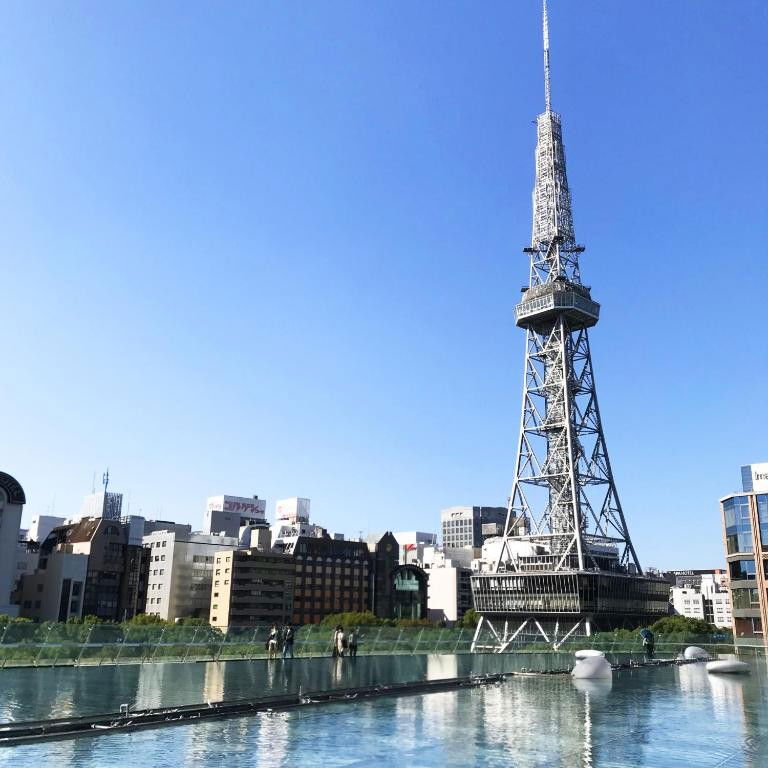
About The Tower Hotel Nagoya
Built inside and around Nagoya's decommissioned 1954 television tower, this 14-room boutique hotel turns a city landmark into an intimate retreat. Iron support beams cut through the rooms themselves, and unobstructed views over Central Park come as standard. A Michelin Key recipient in 2024, it houses both an upscale French restaurant and a fine-dining Tokai regional option, with rates from $328 per night.
A Landmark Repurposed, Not Renovated
Across Japan, a specific category of hospitality has emerged over the past decade: properties that treat architecture not as backdrop but as the experience itself. Benesse House in Naoshima fuses museum and hotel so completely that the distinction dissolves. HOTEL THE MITSUI KYOTO in Kyoto occupies a former mitsui clan estate. The Tower Hotel Nagoya belongs to that same lineage, though its starting point is more industrial: a decommissioned broadcasting tower, built in 1954, that stood for decades as one of the city's most recognisable silhouettes above Central Park in Naka Ward.
When the Nagoya TV Tower ceased broadcasting operations, it didn't disappear. Instead, it was reimagined as a 14-room boutique hotel, and the conversion takes the structure's physical reality seriously. The iron support beams that held the tower upright for sixty-plus years now cut diagonally through walls, floors, and ceilings of the guest rooms themselves. This is not a renovation in which heritage details are preserved behind glass. The industrial skeleton of the building is the interior design, and every room is arranged around it.
What the Tower's Structure Does to a Room
The structural honesty of the conversion places the Tower Hotel in a specific conversation about how Japan handles its 20th-century built heritage. Where many properties in this price tier opt for clean minimalism, here the geometry is imposed by the tower's original engineering. The diagonal beams create asymmetric volumes, and no two rooms read identically as a result. Views from the tower's refined position over Nagoya's Central Park arrive unobstructed, a consequence of the broadcasting tower's original siting rather than any deliberate framing by the hotel's designers.
The gallery-like interiors layer contemporary Japanese art and locally sourced materials from Tokai-region makers over this industrial base. The Tokai region, which encompasses Aichi, Gifu, Shizuoka, and Mie prefectures, has a long manufacturing and craft tradition — ceramics from Seto, lacquerware from Owari — and that material culture informs the interior choices here. At 14 rooms, the property sits at the small end of what Michelin's hospitality framework considers, and its 2024 Michelin Key recognition places it among a cohort of Japanese hotels where curation and specificity carry more weight than scale.
The Retreat Dimension: Stillness Above the City
Japan's most considered ryokan and boutique hotel experiences share a structural quality: they create a controlled remove from the noise outside. Gora Kadan in Hakone uses mountain topography to achieve this. Zaborin in Kutchan uses forest density. The Tower Hotel Nagoya uses elevation and enclosure , the tower's position at the heart of Central Park, surrounded by green space, separates the property from the denser commercial rhythms of Nishiki and Sakae just blocks away.
The 14-room count is itself a retreat mechanism. Properties of this size cannot run the programming of larger hotels, which forces a different kind of quietness. Guests at Asaba in Izu or Nishimuraya Honkan in Kinosaki-cho understand this trade: you surrender convenience and anonymity for proportionality. The tower delivers something similar , a property where the guest count stays low enough that the space never feels like a lobby.
For travellers whose preference runs toward cities rather than mountain or coastal resorts, the Tower Hotel represents a viable urban retreat format. It does not offer a spa in the conventional sense, and the database does not confirm dedicated wellness programming. What it offers instead is what well-designed small hotels often provide more reliably: quietness, physical distinctiveness, and meals worth staying in for.
Two Kitchens, One Building
The dining component at the Tower Hotel operates across two distinct registers. The upscale French restaurant and the fine-dining Tokai regional option occupy the same building but address different frameworks of what a significant meal means in central Japan. The French kitchen represents a culinary tradition that has been deeply embedded in Japan's fine-dining culture since the postwar period, and Nagoya has its own long-standing French dining scene to position against. The Tokai regional restaurant takes a different approach, grounding the menu in the food culture of the surrounding prefectures , a cuisine defined by distinctive fermented soybean paste, richly seasoned proteins, and Nagoya's famous breed of cochin chicken.
Within Japan's broader hospitality pattern, the dual-restaurant format at this scale is notable. Properties like Amanemu in Mie or Fufu Kawaguchiko in Fujikawaguchiko typically anchor their dining to a single culinary direction. Running two distinct fine-dining kitchens inside a 14-room hotel suggests that the food program carries significant weight in how the property positions itself , not as an amenity, but as a reason to be there. Those seeking a deeper read on Nagoya's wider food scene can consult our full Nagoya restaurants guide.
Where It Sits in Nagoya's Accommodation Tier
Nagoya's hotel options at the upper end cover a wide range of formats. The Hilton Nagoya and Nagoya Tokyu Hotel represent the full-service international standard, with the room counts and facilities that support large-scale business and leisure travel. TIAD, Autograph Collection sits in a design-forward mid-scale position, while Espacio Nagoya Castle and Nagoya Kanko Hotel ESPACIO occupy different corners of the upper-mid tier. The Tower Hotel does not compete directly with any of these. Its 14-room inventory, Michelin Key recognition, and structural identity place it in the specialist boutique category , a narrower peer set that includes properties selected for architectural or cultural distinction rather than operational breadth.
At rates from $328, the property sits at a price point that is accessible relative to Japan's premium ryokan tier , where Araya Totoan in Kaga or ENOWA Yufu in Yufu run considerably higher , while still positioning clearly above standard business hotel rates in the city. Internationally, the structural-conversion boutique format at this price point has parallels: The Fifth Avenue Hotel in New York City and Aman New York occupy different ends of a comparable specialist-urban spectrum, while Aman Venice demonstrates how landmark architecture can anchor a hotel's identity as decisively as any service program.
Planning a Stay
The Tower Hotel Nagoya occupies the original Nagoya TV Tower at 3-6-15 Nishiki, Naka Ward, in the heart of the city's Central Park axis. Nagoya Station, one of Japan's major Shinkansen hubs, sits roughly 15 minutes by subway, making the property genuinely accessible from Tokyo, Kyoto, and Osaka without requiring long transfers. For Japan itineraries that combine city stays with retreats, the Tower Hotel pairs logically with properties in nearby prefectures: Jusandi in Ishigaki and Halekulani Okinawa serve the southern island direction, while Sekitei in Hatsukaichi-shi and Fufu Nikko in Nikko extend the trip in a different register. At 14 rooms, availability is limited and the property is likely to book tightly around major Nagoya events and national holidays; early reservation is the practical advice.
Frequently Asked Questions
What room category do guests prefer at The Tower Hotel Nagoya?
With only 14 rooms total and a 4.7 Google rating across 326 reviews, the property's inventory is small enough that the distinction between room categories matters less than at larger hotels. The structural feature that draws the most attention, based on the property's positioning, is the diagonal iron support beams passing through the guest rooms themselves , the rooms where this element is most pronounced are likely to be the most requested. The Michelin Key designation and the refined Central Park views support the case for booking whatever room offers the most unobstructed sightlines, as the tower's position was always its primary asset.
Why do people go to The Tower Hotel Nagoya?
Nagoya is Japan's fourth-largest city and a significant manufacturing and cultural centre, but it draws fewer international leisure travellers than Tokyo, Kyoto, or Osaka. The Tower Hotel addresses that gap by offering a reason to be in the city that extends beyond transit convenience. The combination of a 1954 landmark structure, gallery-calibre interiors drawing on Tokai craft traditions, two distinct fine-dining kitchens, and a 2024 Michelin Key places it among a small number of Japanese hotels that justify a destination stay rather than a stopover. At $328 per night, it represents one of the more accessible entry points into Michelin-recognised boutique hospitality in Japan's major cities.
Recognized By


Related editorial
- Best Fine Dining Restaurants in ParisFrom three-Michelin-star icons to the next generation of Parisian chefs pushing boundaries, these are the restaurants that define fine dining in the world's culinary capital.
- Best Luxury Hotels in RomeFrom rooftop terraces overlooking ancient ruins to Michelin-starred hotel dining, these are the luxury hotels that make Rome unforgettable.
- Best Cocktail Bars in KyotoFrom sleek lounges to hidden speakeasies, Kyoto's cocktail scene blends Japanese precision with global influence in ways you won't find anywhere else.
Save or rate The Tower Hotel Nagoya on Pearl
Keep this venue in your Pearl passport, rate it after you visit, and track it alongside every other place you collect.