
Hotel in Hyderabad, India
Taj Falaknuma Palace
1,220ptsNizami Palace Hospitality


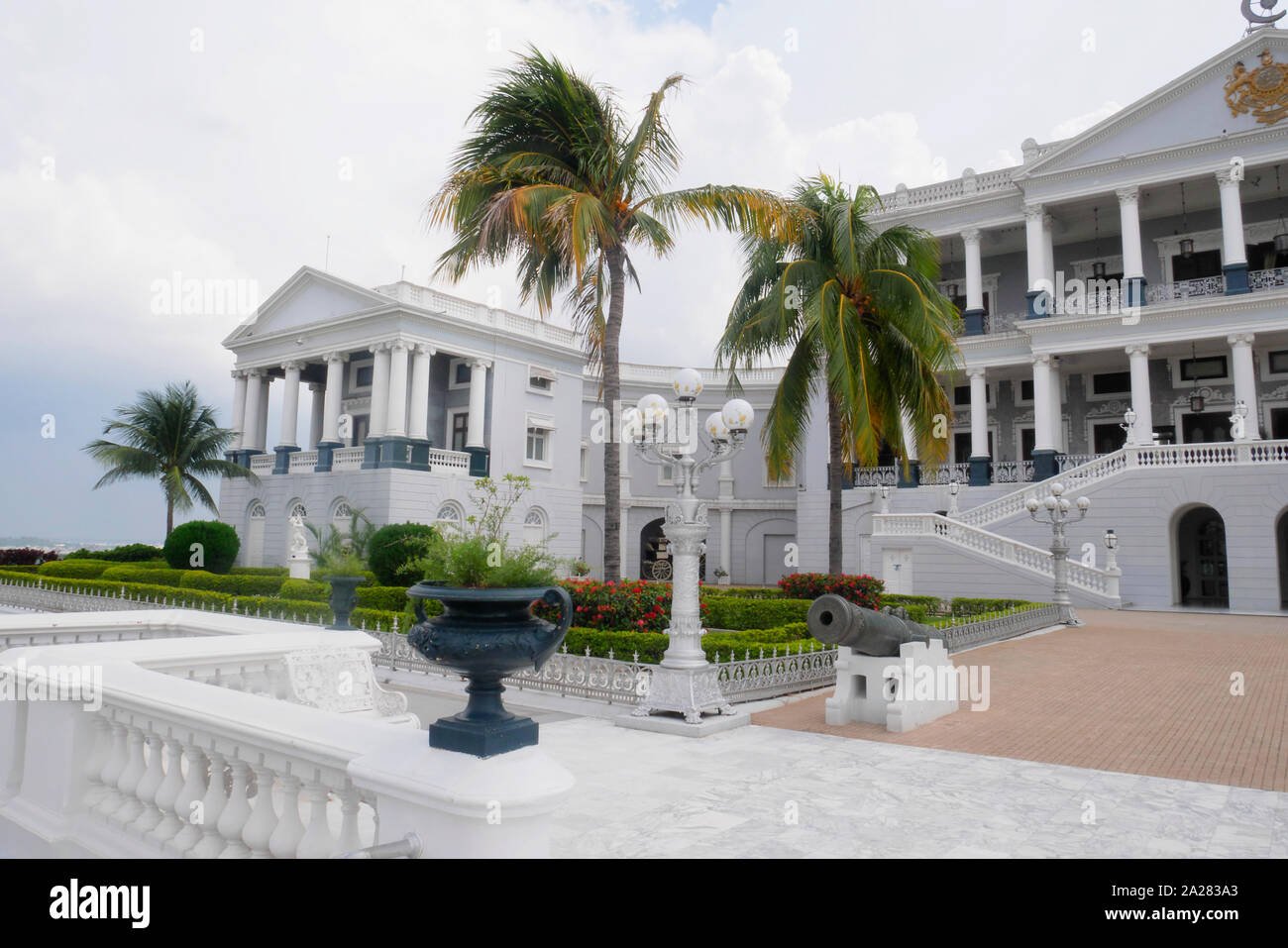
About Taj Falaknuma Palace
A restored 19th-century palace on Hyderabad's Falaknuma hill, the Taj Falaknuma Palace offers 60 rooms across a structure built in Italian marble and Tudor-Baroque style, once the private guest house of the Nizams. Rated 98 points by La Liste Top Hotels 2026, it sits at the upper tier of India's palace hotel category, with rates from $620 per night.
A Palace Restored to Purpose
Approaching Falaknuma from the streets of old Hyderabad, the palace announces itself from a distance. Positioned on a hilltop above the city's southern edge, its silhouette reads as something between an English country house and an Italian villa — which is precisely what it is. The structure combines Tudor and Baroque architectural languages under a single roof, clad entirely in Italian marble, its Corinthian columns and stained-glass dome catching the light in ways that feel deliberate rather than incidental. The name translates from Urdu as 'Mirror of the Sky', and the elevation makes that legible: from the upper terraces, the spread of Hyderabad below functions less as a view and more as context for the palace's original purpose as a seat of Nizami power.
Hyderabad's history as a city shaped by the Nizams — among the wealthiest rulers in colonial-era India, with one famously depicted on a 1937 Time magazine cover as the 'Richest Man in the World' , is inseparable from understanding what Falaknuma represents architecturally. The palace was the royal guest house of Nizam Mehboob Ali Khan, receiving figures including King George V and Tsar Nicholas II. After decades of disuse and disrepair, Taj Hotels undertook a decade-long restoration process to bring the structure back to habitable condition, and the result sits in a distinct bracket within India's palace hotel category. For context on India's broader palace conversion landscape, properties like The Leela Palace Jaipur, Alila Fort Bishangarh, and Amanbagh each approach the challenge of historical adaptation differently. Falaknuma's approach is the most literal: restore the original fabric as closely as possible and let the building's existing identity do the work.
The Architecture of Accumulated Wealth
Inside, the palace is a catalogue of procurement from across the 19th-century world. Inlaid furniture sourced from Kashmir sits alongside French brocade tapestries and Venetian chandeliers. The frescoes carry both English and Indian visual references, producing an interior that reads as Baroque in aggregate even as no single room is consistent in its influences. The Jade Room, used for afternoon tea service, and the dining rooms operate on a scale that reflects original palatial function rather than hospitality convention. The ballrooms in particular carry an air that contemporary event spaces rarely reproduce , not because of their decoration, but because of their proportions.
Taj Hotels' house style, which tends toward the conservative in its contemporary properties like The Taj Mahal Palace, Mumbai, works in Falaknuma's favour. The restraint applied to guest room interiors allows the palace's common spaces to carry the architectural weight without the whole property feeling overwrought. The standard rooms are sized generously enough that they don't feel like afterthoughts, while the suite categories expand considerably in both scale and historical character.
Sixty Rooms Across a Hierarchy of History
The 60-room count across 32 acres gives the property a density closer to a private estate than a hotel. The room hierarchy moves from 32 Luxury Rooms facing the central courtyard upward through 14 Palace Rooms, 3 Historical Suites (also called Pincer Suites), 7 Royal Suites in the Zenana section, 3 Grand Royal Suites, and a Grand Presidential Suite. Each tier carries distinct architectural character: the Historical Suites feature wooden floors, Edwardian-era artwork, and antique furniture selected by Princess Ezra; the Royal Suites in the Zenana wing carry Hyderabadi motifs, mirror work, and Bidri metalwork accents; the Grand Presidential Suite is a duplex with a private pool and dedicated access to the Jiva Grande Spa.
The suite categories are where the property's restored fabric reads most clearly as a record of the Nizam's procurement networks and aesthetic preferences. At rates from $620 per night, the property positions itself against India's upper tier of heritage hotel offerings. La Liste's 2026 ranking awarded it 98 points, placing it firmly in that tier internationally. For travellers calibrating against comparable heritage conversions elsewhere in the subcontinent, Aman-i-Khas, Suján Jawai in Pali, and Ananda in the Himalayas represent different points on the spectrum between architectural preservation and contemporary comfort integration.
The City Below and What the Palace Frames
Hyderabad's dual identity , a 400-year-old city built around Nizami patronage of architecture, cuisine, and craft, now operating as one of India's primary technology hubs , makes it an unusual destination context for a palace hotel. The old city around Charminar, the pearl and bangle markets of Laad Bazaar, and the monuments of the Qutb Shahi era exist in a different register from the glass towers of Hitech City. Falaknuma sits geographically and historically closer to the former: the palace's hilltop position above Falaknuma neighbourhood places guests within the gravity of the old city rather than the new one. For a broader orientation to what the city offers at table and beyond, our full Hyderabad restaurants guide maps the dining context.
The palace's programming reflects this historical orientation. Afternoon tea in the Jade Room, qawwali concerts in the gardens at sunset, and access to the Jiva Grande Spa are the anchors of the on-property experience alongside the two restaurants. The spa, which receives more considered integration here than is typical in Indian luxury hotel conversions, operates with access from the Presidential Suite as a dedicated amenity in addition to serving the broader guest roster.
Planning a Stay
The property sits in the Falaknuma area of southern Hyderabad, roughly a 45-minute drive from Rajiv Gandhi International Airport depending on traffic conditions. With 60 rooms and a room hierarchy that encourages multiple categories, booking windows for the suite tiers during peak travel months , typically October through February, when Hyderabad's climate is most manageable , should be treated as lead-time sensitive. The Taj group's reservation infrastructure handles booking. Comparable palace-category properties operated by the Taj group elsewhere in India, including Vivanta Vrindavan, provide a useful point of comparison for the group's broader approach to heritage properties, though Falaknuma operates in a different category of architectural ambition. Travellers compiling a broader India itinerary might also consider The Leela Palace New Delhi, The Oberoi Amarvilas in Agra, or Haveli Dharampura in Delhi as complementary stays across the subcontinent's heritage accommodation spectrum.
Frequently Asked Questions
- What's the general vibe of Taj Falaknuma Palace?
- The property operates as a working restoration of a Nizami royal guest house rather than as a hotel that borrows palace aesthetics. Common spaces are palatial in scale and material , Italian marble, Venetian chandeliers, French tapestries, Baroque frescoes , while guest rooms are finished with more restraint. The hilltop position above Hyderabad reinforces the sense of separation from the city's contemporary rhythms. La Liste awarded it 98 points in its 2026 Leading Hotels ranking, and rates begin at $620 per night.
- What's the leading room type at Taj Falaknuma Palace?
- The answer depends on what you want from the architectural record. The Historical Suites carry specific provenance: Edwardian artwork, wooden floors, and antique furniture selected by Princess Ezra, with one suite having housed Sir Vicar-ul-Umra for nearly two years. The Royal Suites in the Zenana wing carry the most distinctively Hyderabadi decorative vocabulary, with mirror work and Bidri accents. The Grand Presidential Suite adds a private pool and dedicated spa access if scale is the priority. All carry the Taj group's La Liste 98-point-rated restoration as their baseline.
- What is Taj Falaknuma Palace known for?
- It is the restored private guest house of Nizam Mehboob Ali Khan, historically used to receive visiting royalty including King George V and Tsar Nicholas II, and set on a hilltop above Hyderabad with panoramic city views. Architecturally, it combines Tudor and Baroque styles in a structure built entirely from Italian marble, with interiors that catalogue the Nizam's acquisitions from Kashmir, France, Venice, and England. Its La Liste 2026 score of 98 points places it among the most recognised heritage hotels in India, with 60 rooms across 32 acres from $620 per night.
Recognized By


Related editorial
- Best Fine Dining Restaurants in ParisFrom three-Michelin-star icons to the next generation of Parisian chefs pushing boundaries, these are the restaurants that define fine dining in the world's culinary capital.
- Best Luxury Hotels in RomeFrom rooftop terraces overlooking ancient ruins to Michelin-starred hotel dining, these are the luxury hotels that make Rome unforgettable.
- Best Cocktail Bars in KyotoFrom sleek lounges to hidden speakeasies, Kyoto's cocktail scene blends Japanese precision with global influence in ways you won't find anywhere else.
Save or rate Taj Falaknuma Palace on Pearl
Keep this venue in your Pearl passport, rate it after you visit, and track it alongside every other place you collect.