
Hotel in Koh Rong Archipelago, Cambodia
Song Saa Private Island
150ptsReef-Anchored Island Seclusion

About Song Saa Private Island
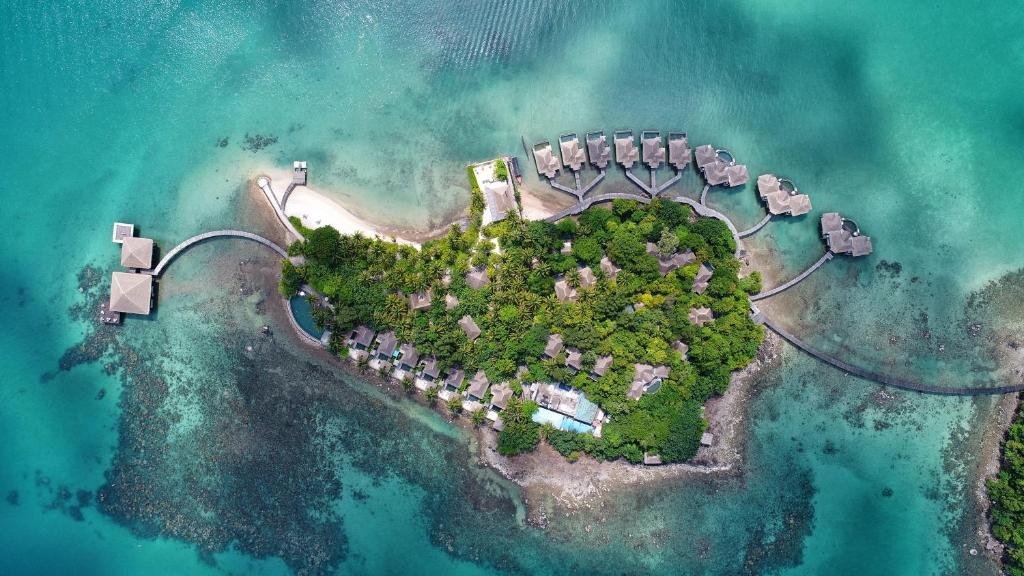
Song Saa Private Island occupies a protected corner of Cambodia's Koh Rong Archipelago, where overwater and jungle villas constructed from salvaged timber and local materials sit above a preserved coral reef. The property's culinary program draws on Kampot pepper, Ibis rice from northern Cambodian farmers, and coastal produce sourced from nearby villages. For those seeking a deliberate withdrawal from connectivity, it remains one of Southeast Asia's more considered private island formats.
Where the Architecture Earns Its Setting
The Koh Rong Archipelago sits roughly two hours by speedboat from Sihanoukville, a stretch of Cambodian coastline that spent most of the twentieth century inaccessible to international travel. That isolation shaped what's possible here: no concrete towers, no imported design references imposed on a reluctant landscape. When private island development finally arrived in this part of the Gulf of Thailand, the leading of it responded to the environment rather than overriding it. Song Saa Private Island belongs to that category. The villas are built from salvaged timber, driftwood, and materials sourced locally, and the structures read as extensions of the coastline rather than insertions into it. You approach by boat, and the first impression is less of a resort arriving into view than of a treeline that happens to contain architecture.
This approach to construction reflects a wider pattern in Southeast Asian luxury development. The regional market has split between large international-branded footprints with uniform aesthetics and smaller, materials-led properties whose design logic is inseparable from their geography. Song Saa sits firmly in the second category. The villas are positioned across both islands of the property, connected by a wooden bridge, with some units overhanging the water and others set within the rainforest canopy. For travelers who've moved through properties like Amangiri in Canyon Point or Castello di Reschio in Lisciano Niccone, where the built environment is conceived as inseparable from its natural context, Song Saa operates within a recognizable design philosophy, just translated into tropical Cambodian terms.
The Coral Reef as Design Constraint
Private island resorts in Southeast Asia vary considerably in how seriously they treat their marine environments. Song Saa is built around a preserved coral reef, and that reef functions as more than a marketing point: it shapes what the property can do architecturally and operationally. Villa placement, boat access, and activity programming are all structured around maintaining that ecosystem. Scuba diving is available directly from the island, which positions the reef as a central feature rather than an incidental amenity. Snorkeling and water-based activities are organized within the same framework.
This is worth noting for travelers comparing the property against other Cambodian coastal options such as PEARL BEACH RESORT & SPA in Sihanoukville or The Last Point in Prey Nob. The decision to build a resort around reef preservation, rather than despite it, distinguishes the property's environmental position from most competitors in the region. For those curious about how it compares to The Secret Garden at Otres beach in Preah Sihanouk, Song Saa operates at a different scale and price point, with a much smaller guest count and correspondingly more controlled experience.
The Supply Chain Behind the Kitchen
Cambodia's premium hospitality sector has gradually developed a more coherent local sourcing practice over the past decade, and Song Saa's kitchen reflects that shift. The culinary program is structured around seasonal fruits and vegetables, coconuts and cashew nuts from nearby villages, and Ibis rice from farmers in northern Cambodia. That last ingredient carries particular weight: Ibis rice is grown by farming communities in Cambodian bird sanctuary buffer zones, and purchasing it creates a direct economic link between the resort and conservation-aligned agriculture in the country's interior.
Kampot pepper, widely regarded as one of Southeast Asia's most distinctive spice products, features throughout the cooking. Kampot's peppercorns carry a protected geographical indication and are grown in the coastal hills south of Phnom Penh. Their presence in the kitchen isn't incidental branding; it's a flavour argument with a geographic foundation. The property also maintains vegan and vegetarian menus as a substantive part of the offering, not an afterthought. For context on how this compares to Cambodia's inland luxury dining scene, properties like Amansara in Siem Reap, Heritage Suites Hotel in Siem Reab, and Jaya House River Park Hotel in Krong Siem Reap each take different approaches to sourcing and local culinary identity. Song Saa's coastal and island context gives it a distinct ingredient set that its landlocked counterparts can't replicate.
Pace, Programming, and the Deliberate Absence of Urgency
Private island formats in this region generally organize around one of two modes: high-activity adventure programming or structured relaxation with spa infrastructure at the center. Song Saa occupies both ends without forcing a choice. Guests can take sunset cruises, follow rainforest trails through native flora, or pursue more demanding water sports; the property equally supports extended periods of doing very little. That flexibility is architecturally supported by villa terraces designed for evening use, with sightlines toward open water and enough privacy between units to make outdoor time feel genuinely secluded rather than communal.
The spa offering operates as a separate sanctuary within the property. For travelers who benchmark spa programming, the equivalent function at properties like Hotel Du Cap-Eden-Roc in Cap d'Antibes or Hotel Esencia in Tulum provides useful reference points for how dedicated wellness architecture functions within a broader resort context. At Song Saa, the spa's integration into the rainforest setting distinguishes it from hotel-adjacent spa annexes that feel disconnected from their environment.
Planning the Stay
Access to Song Saa begins in Sihanoukville, the nearest mainland point, from which the property arranges boat transfers. The Koh Rong Archipelago's location in the Gulf of Thailand means that the dry season, roughly November through April, brings the most reliable conditions for reef activities and open-water excursions. Cambodia's monsoon season, May through October, reduces visibility for diving and can limit boat-based programming, though the island itself remains accessible and the green-season light and emptier property can appeal to a different traveler. For those building a broader Cambodia itinerary, Raffles Hotel Le Royal in Phnom Penh and Shinta Mani Wild in Prey Praseth Village represent complementary anchors for a multi-destination trip through the country. Our full Koh Rong Archipelago restaurants guide covers additional context for the broader island area.
Frequently Asked Questions
Is Song Saa Private Island more low-key or high-energy?
The property supports both orientations without prescribing either. Activity programming includes scuba diving, sunset cruises, and rainforest trails, but the architecture and scheduling are built around guests who want unstructured time. The coral reef directly offshore means that water-based activities are genuinely accessible rather than logistically complicated, but there is no pressure to fill the day. Compared to mainland Cambodian properties, Song Saa's island format enforces a natural separation from outside demands, which tends to determine the pace more than any curated programming does.
Which room category should I book at Song Saa Private Island?
The property offers both overwater villas and jungle-set villas, each with a distinct spatial experience. Overwater units provide direct water access and open sightlines, making them the more obvious choice for reef-focused stays or for guests prioritizing the visual relationship with the sea. Jungle villas offer greater enclosure, more connection to the rainforest canopy, and a different kind of privacy. Without specific pricing available, the decision should be guided by whether you're traveling primarily for the marine environment or for a more terrestrial, forested retreat. Both categories share the property's salvaged-timber construction logic and villa terrace format.
What's the standout thing about Song Saa Private Island?
Combination of a preserved coral reef, genuinely local construction materials, and a kitchen built around traceable Cambodian producers is difficult to find in the same package anywhere else in the archipelago. Most private island resorts in Southeast Asia deliver on design or on environmental credentials or on culinary sourcing; fewer manage all three with consistency. The Ibis rice and Kampot pepper sourcing, in particular, connect the dining program to specific Cambodian geographies and agricultural communities in a way that reads as considered rather than decorative.
Recognized By

Related editorial
- Best Fine Dining Restaurants in ParisFrom three-Michelin-star icons to the next generation of Parisian chefs pushing boundaries, these are the restaurants that define fine dining in the world's culinary capital.
- Best Luxury Hotels in RomeFrom rooftop terraces overlooking ancient ruins to Michelin-starred hotel dining, these are the luxury hotels that make Rome unforgettable.
- Best Cocktail Bars in KyotoFrom sleek lounges to hidden speakeasies, Kyoto's cocktail scene blends Japanese precision with global influence in ways you won't find anywhere else.
Save or rate Song Saa Private Island on Pearl
Keep this venue in your Pearl passport, rate it after you visit, and track it alongside every other place you collect.