
Hotel in Kandy, Sri Lanka
Santani Wellness Resort & Spa
500ptsArchitecture-Led Wellness

About Santani Wellness Resort & Spa
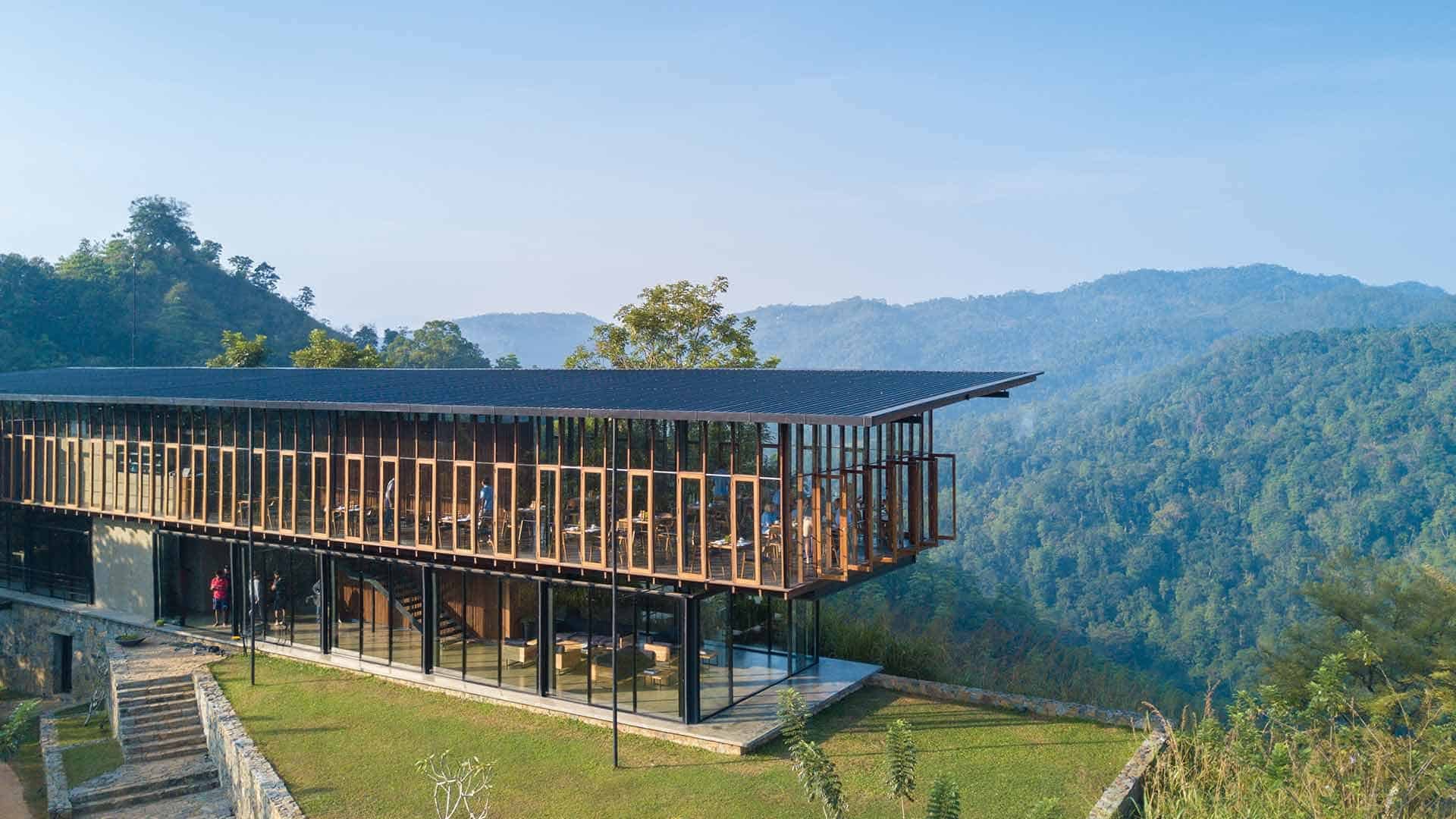
Santani Wellness Resort and Spa occupies 20 rooms across the Arantenna Estate outside Kandy, where tropical-modernist concrete architecture and floor-to-ceiling valley views form the physical basis for one of Sri Lanka's most architecturally committed wellness programs. Dietary tracks — ketogenic, cleansing, and Ayurvedic vegetarian — run alongside spa treatments and yoga in a setting designed less for spectacle than for sustained stillness.
Architecture as Therapy: How Santani Positions Itself in Sri Lanka's Wellness Market
Sri Lanka's interior hill country has long attracted a certain kind of traveller: one who comes for the tea plantations and the Buddhist temples and leaves having discovered that the landscape itself has a sedative quality that no urban spa can replicate. In this context, the island's premium wellness resorts operate differently from beach properties. Properties like Ceylon Tea Trails in the Interior or Heritance Tea Factory in Kandapola have built identities around the hill-country elevation and its particular atmospheric weight. Santani Wellness Resort and Spa, on Arantenna Estate outside Kandy, belongs to this cohort but has taken a more deliberate architectural stance: its concrete modernism is not decorative, it is functional, designed to orient every sensory input towards calm.
The distinction matters because the Sri Lankan luxury market has split in two directions. The larger, amenity-stacked resort format competes on facilities count. A smaller group of properties competes on coherence of concept, where architecture, food program, and wellness methodology form a single integrated argument. Santani falls firmly in the second category, with 20 rooms, each positioned as a standalone pavilion capturing its specific share of the valley panorama. For a comparative sense of the peer group in Kandy itself, Taru Villas Levita and W15 Hanthana Estate Kandy both operate in the boutique segment, though with different emphases. See our full Kandy guide for a wider view of the city's accommodation range.
The Physical Argument: What the Architecture Is Actually Doing
Tropical-modernist concrete architecture has a long history in Sri Lanka, traceable through the work of Geoffrey Bawa and his contemporaries, who understood that in a climate of intense humidity and light, heavy material could function as a cooling, quieting force. Santani works within that tradition. The rooms are oriented like cinema screens: one primary view, framed by floor-to-ceiling glass, directed at the valley that falls away below the estate. The logic is that visual complexity is the enemy of rest, and that a single, consistent, immense view replaces the need for interior decoration as a form of stimulation.
The spa continues this spatial thinking. Rather than enclosing treatments in windowless rooms, it opens onto slices of jungle and mountainside through deliberate cuts in the concrete. This approach places Santani in conversation with a global category of architecture-led wellness properties, where the building itself is considered part of the therapeutic program. For Sri Lanka specifically, the combination of that architectural tradition with the island's own Ayurvedic heritage produces something with genuine specificity to place.
The Dining Programme: Three Tracks, One Coherent Philosophy
Wellness resort dining has historically ranged from punishing restriction to the opposite failure: abundant buffets that undercut whatever physical discipline the spa programme demands. Santani takes the position that the food programme must be as deliberate as the architecture, offering three distinct dietary tracks rather than a single standard menu.
The ketogenic programme targets metabolic recalibration, reducing carbohydrates and shifting the diet toward fats and proteins in a format that has gained significant clinical backing over the past decade. The cleansing programme takes a different approach, reducing digestive load through lighter preparations while supporting the body's own regulatory processes. The Ayurvedic vegetarian programme is the most rooted in local tradition: Sri Lankan Ayurveda predates and informs much of what has been absorbed into contemporary wellness culture, and a programme grounded in that methodology at a property in the hill country above Kandy has obvious geographic logic.
What differentiates Santani's food approach from the kind of token wellness menu common in hotel spas is integration: guests choose a track on arrival, and the kitchen programs meals accordingly rather than offering modifications to a standard menu. This is a structural commitment, not an add-on. The cuisine functions as an extension of the wellness methodology rather than as a separate hospitality feature. For a comparison with how Sri Lanka's coastal properties handle their dining identity, Cape Weligama in Weligama and Kumu Beach in Balapitiya represent the beach-resort end of the spectrum, where food is less programmatic and more oriented toward variety and leisure.
Sri Lanka's Interior: The Case for Hill Country Over Coast
Most international visitors default to Sri Lanka's southern coast, where properties like Amangalla in Galle and Amanwella in Tangalle have established the island's premium reputation at the global level. The hill country operates on a different register entirely. Kandy, as Sri Lanka's second city and the seat of the Temple of the Tooth, functions as a cultural and spiritual hub, while the surrounding estates and valleys produce the conditions — cooler temperatures, mist, dense vegetation, relative quiet — that make sustained wellness programming credible in a way that a beach setting rarely can.
For travellers building a longer Sri Lanka itinerary, the interior circuit is increasingly coherent. Properties like Nine Skies in Demodara, Gal Oya Lodge in Gal Oya National Park, and Water Garden Sigiriya form a network of distinctive inland properties that reward slower travel. Santani fits naturally into that circuit as the wellness-centred anchor, particularly for travellers who want the hill country's landscape as the frame for physical and mental reset rather than simply as scenery.
Wellness as Architecture, Not Add-On: Planning a Stay
Santani's 20-room scale means it operates at a different pace from larger resort destinations. The property's Arantenna Estate address, outside Werapitiya in the Kandy district, places it in the hill-country landscape rather than in the city itself, which is consistent with the retreat logic: arrival requires intention, and that separation from urban infrastructure is part of what makes a genuine switch in mode possible.
For those for whom Santani's intensive wellness orientation is the primary draw, it is worth noting that the property's program is designed for stays of several nights at minimum to allow the dietary and treatment track to take effect. Day visitors looking for a spa session will find the experience less coherent than those who commit to the full stay format. The combination of architecture, landscape, Ayurvedic practice, yoga, and structured dining makes most sense as a package rather than as individual components sampled in isolation.
Travellers comparing Sri Lanka's premium interior options should weigh Santani against the Ceylon Tea Trails Norwood Bungalow in Hatton, which offers a different form of immersive hill-country experience rooted in plantation heritage rather than wellness architecture, and Heritance Ahungalla for a Geoffrey Bawa-designed coastal alternative that shows how the same architectural lineage operates at the beach. For wildlife-oriented travel in a similarly architecture-conscious format, Wild Coast Tented Lodge in Yala and Karpaha Sands in Kalkudah Beach extend the itinerary eastward.
Frequently Asked Questions
- What is the defining thing about Santani Wellness Resort and Spa?
- Santani's defining characteristic is the degree to which architecture, setting, and wellness methodology function as a single designed system rather than separate offerings bolted together. The 20-room layout, the valley-oriented room format, and the structured dietary tracks all serve the same therapeutic argument. Among hill-country properties near Kandy, this level of programmatic coherence is uncommon.
- What is the leading room type at Santani Wellness Resort and Spa?
- All rooms across the 20-room property share the same orientation principle: positioned as standalone pavilions, each using floor-to-ceiling windows to capture an individual slice of the valley below. The differentiation between room types is a matter of elevation and the precise angle of that view rather than a fundamental difference in layout or concept. Higher-elevation rooms will typically frame more of the surrounding hill-country panorama.
- How hard is it to get a reservation at Santani Wellness Resort and Spa?
- With only 20 rooms, availability is constrained relative to larger resort properties, and the property's reputation in the premium Sri Lanka wellness segment means that peak-season timing , typically December through March on the island's southwestern calendar , will require advance planning. The property does not list a booking phone number in available records; direct outreach via the website is the standard route, and coordinating through a specialist Sri Lanka travel operator may improve access during high-demand periods.
- What kind of traveller is Santani Wellness Resort and Spa a strong choice for?
- Santani is well suited to travellers who want a wellness experience that goes beyond a hotel spa and extends across architecture, food, and daily programming. If you are coming to Sri Lanka primarily for the southern coast or wildlife safari, this is a different kind of stop: the hill-country setting above Kandy is the context, and the retreat structure requires a commitment of several nights to make sense. Properties like Amanwella in Tangalle or Cape Weligama serve the beach-luxury brief more directly; Santani is for the traveller who wants the landscape as a condition for recovery rather than as backdrop for leisure.
- How does Santani's Ayurvedic dining programme differ from a standard hotel spa menu?
- Rather than offering optional healthy substitutions alongside a standard menu, Santani builds its food programme around three distinct dietary tracks , ketogenic, cleansing, and Ayurvedic vegetarian , that guests select on arrival and follow throughout their stay. The Ayurvedic vegetarian track draws on Sri Lanka's indigenous medical tradition, which predates and informs much of modern wellness cuisine, and is particularly coherent given the property's hill-country location near Kandy, a centre of Sri Lankan cultural and Ayurvedic heritage. This structural commitment to food as part of the therapeutic programme, rather than as a hospitality amenity, is what separates Santani's dining approach from the token wellness menu found in most hotel spas.
Recognized By

Related editorial
- Best Fine Dining Restaurants in ParisFrom three-Michelin-star icons to the next generation of Parisian chefs pushing boundaries, these are the restaurants that define fine dining in the world's culinary capital.
- Best Luxury Hotels in RomeFrom rooftop terraces overlooking ancient ruins to Michelin-starred hotel dining, these are the luxury hotels that make Rome unforgettable.
- Best Cocktail Bars in KyotoFrom sleek lounges to hidden speakeasies, Kyoto's cocktail scene blends Japanese precision with global influence in ways you won't find anywhere else.
Save or rate Santani Wellness Resort & Spa on Pearl
Keep this venue in your Pearl passport, rate it after you visit, and track it alongside every other place you collect.