
Hotel in Urubamba, Peru
Rio Sagrado, A Belmond Hotel
850ptsAndean Riverbank Retreat


About Rio Sagrado, A Belmond Hotel
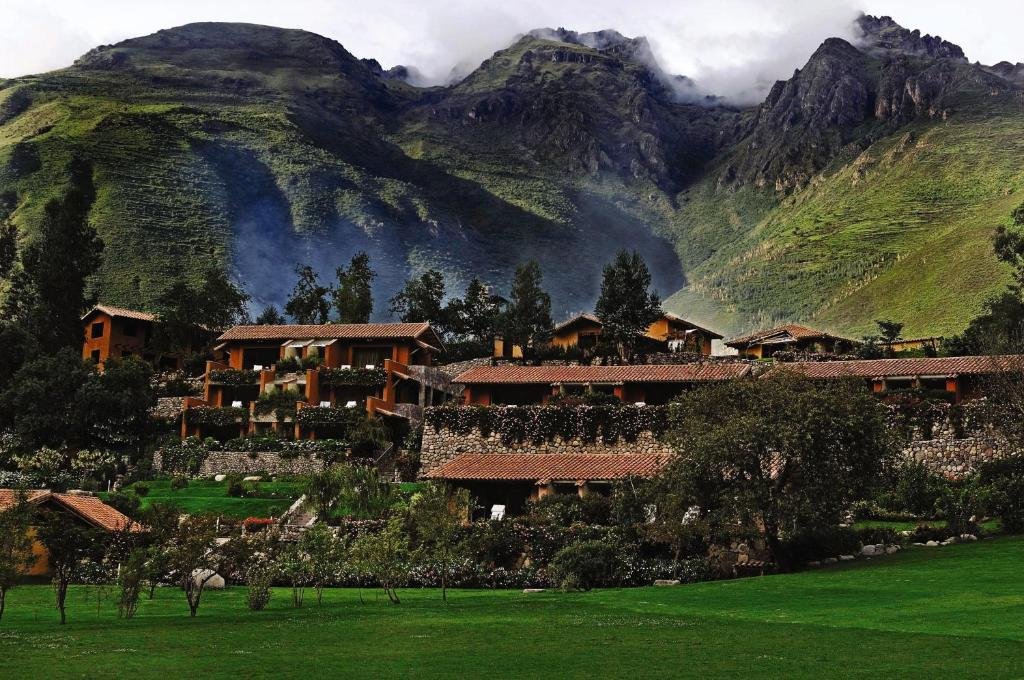
On the banks of the Urubamba River in Peru's Sacred Valley, Rio Sagrado, A Belmond Hotel offers 23 rooms and suites designed after traditional Andean village architecture, with no televisions and expansive river-facing windows in their place. Rated 93 points by La Liste Top Hotels 2026, the property sits at a lower altitude than Cusco, making it a practical acclimatisation base with its own train station for the Hiram Bingham service to Machu Picchu.
Where the Sacred Valley Does the Work
Luxury retreats in the Peruvian highlands have multiplied in the past two decades, splitting broadly into two categories: properties that treat the Sacred Valley as a backdrop and those that treat it as the entire point. Rio Sagrado, A Belmond Hotel, positioned at kilometre 75.8 on the Urubamba-Ollantaytambo road, belongs firmly to the second group. The Urubamba River runs directly alongside the property, the Andean peaks frame every sightline, and the deliberate absence of televisions in rooms signals, from check-in, what the hotel expects you to pay attention to instead.
The property earned 93 points in the La Liste Leading Hotels ranking for 2026, placing it in the tier of Sacred Valley hotels where the experience is the product, not merely the setting. Rates begin at $780 per night, a price point that positions it above most valley competitors while remaining grounded in what the physical location delivers rather than grand-lobby spectacle. The 23 rooms and suites, plus two multi-bedroom villas accommodating up to six guests, are arranged to read like a traditional Andean village when seen from above, with shapes and materials calibrated to merge with the riverbank rather than announce themselves against it.
The Retreat Framework: What Mayu Willka Offers
Wellness programming in Sacred Valley hotels has developed its own distinct grammar, one that draws on both international spa convention and specifically Andean ritual tradition. At Rio Sagrado, that framework centres on Mayu Willka Spa, a wood, stone, and glass complex positioned to use the natural environment as infrastructure. The heated pool and hammock areas serve as transition spaces between treatments and exploration, while private holistic fitness sessions combine jogging, yoga, and meditation into single daily programmes rather than presenting them as separate menu options.
What separates higher-performing retreat properties from those that simply list spa services is integration: the degree to which wellness activities connect to the specific geography rather than replicating a generic resort formula. The spiritual ceremonies conducted with an Andean shaman, which give formal thanks to Pachamama (Mother Earth), represent that integration directly. These are not theatrical additions for visitors; the practice sits inside a living ceremonial tradition tied to the valley's agricultural and religious calendar. For guests arriving from Cusco, the altitude differential matters practically as well: Urubamba sits at a lower elevation than the city, and the property explicitly frames this as an acclimatisation advantage for those planning onward Andean travel.
The Food Programme: On-Site and River-Side
Peruvian cuisine's international reputation has risen sharply since the early 2010s, driven by Lima-based fine dining, but the valley's food culture operates on different logic: shorter supply chains, Andean grain varieties, high-altitude vegetable cultivation, and river trout sourced locally. El Huerto, the property's main restaurant, positions itself inside that tradition, with local trout, Andean grains, and valley vegetables forming the foundation of a Peruvian-fusion menu. The daily pisco tastings staged in the bar function as both social ritual and education in Peru's most culturally specific spirit.
El Jardin operates as a secondary, more casual dining format: lunches served at sun-dappled tables beside the river, using organic produce from the hotel's own gardens. The separation of the two dining spaces by formality and daylight hours gives guests a rhythm to the day that most standalone retreat properties cannot replicate. The recipe for the hotel's Pisco Sour is, reportedly, available on request at departure.
Rooms and the Engineering of View
Andean luxury hotels have developed a consistent approach to room design: local textiles, natural materials, and views calibrated to function as the room's primary feature. At Rio Sagrado, rooms sit on raised terraces with expansive windows facing the river, and the decision to remove televisions is the structural expression of that priority. Andean charm here is delivered through handwoven textiles and alpaca wool rather than decorative pastiche, and suites extend the offer with private garden terraces. The interiors occupy recognisable luxury territory without performing excess.
The two villas, capable of sleeping up to six, serve the family or small-group market that Sacred Valley properties compete for with increasing intensity. Animal encounters with the hotel's resident baby alpacas and outdoor movie nights round out a programme that keeps children engaged without defaulting to resort-style facilities that would compromise the property's architectural coherence.
Getting There and Reaching Machu Picchu
The logistics of this part of Peru are worth understanding before arrival. Cusco's Alejandro Velasco Astete Airport serves as the main international entry point, and the hotel is a 48-mile drive from there, approximately 90 minutes by road. Transfer by van can be arranged for up to two guests at $132. For larger parties or those preferring not to negotiate private transfers, independent options exist but the valley road warrants advance planning, particularly in wet season.
Property's own train station, served by the Hiram Bingham, a Belmond Train, handles the Machu Picchu access question with unusual elegance. The Hiram Bingham is the premium rail service to Aguas Calientes, the gateway town for the site, and boarding from the hotel's station removes the Cusco logistics that complicate most Sacred Valley itineraries. Machu Picchu functions as a day trip from the property rather than requiring an overnight elsewhere, which is a structural advantage over competitors without direct rail access. Travellers considering the full scope of Peruvian highland accommodation might also look at Inkaterra Machu Picchu Pueblo Hotel for a base closer to the site itself, or Sumaq Machu Picchu Hotel in Aguas Calientes for those prioritising proximity over valley immersion.
Where It Sits in the Sacred Valley Field
Sacred Valley now hosts a competitive set of serious retreat properties, each with a distinct proposition. Sol y Luna and Inkaterra Hacienda Urubamba operate in the same premium register, with Inkaterra's ecological programme offering a different kind of depth for nature-focused travellers. Aranwa Sacred Valley Hotel and Wellness skews larger and more spa-forward, while Willka T'ika Essential Wellness represents the most concentrated wellness-only format in the valley. Explora Valle Sagrado pitches its offering primarily around guided exploration. Roca Fuerte occupies a smaller-scale position. Rio Sagrado's differentiation within that field comes from the combination of Belmond operational infrastructure, direct rail access to Machu Picchu, and a property scale (23 rooms) that preserves intimacy at a recognised international brand level.
For those exploring Peru's wider accommodation options, Palacio Nazarenas in Cusco offers the city counterpart to the valley retreat format, and Titilaka in Puno extends the high-altitude, nature-immersion logic to the Lake Titicaca shoreline. Delfin Amazon Cruises and Refugio Amazonas Lodge serve the jungle side of a multi-region Peruvian itinerary. A broader view of Peru's hotel offering is available in our full Urubamba guide.
Among Belmond's global portfolio, the Sacred Valley property occupies a specific ecological and cultural niche that differs substantially from the brand's urban and European offerings. Travellers comparing experiences across the collection might consider how Rio Sagrado's valley immersion logic contrasts with the city-heritage approach of Palacio Nazarenas or, at greater remove, how the design-led retreat format compares with properties like Amangiri in Canyon Point or Castello di Reschio in Lisciano Niccone, which operate inside the same small-count, landscape-first category from different continents.
Planning Your Stay
The wet season in the Sacred Valley runs roughly November through March, with January and February bringing the heaviest rainfall. The dry season, May through October, offers clearer skies and more predictable conditions for valley exploration and the horse-riding, white-water rafting, and trekking activities the property facilitates. Booking directly through Belmond's reservation system is the standard route; the hotel's own train station connection to the Hiram Bingham service should be confirmed at the time of reservation, as train bookings are separate from room reservations and availability on the premium service is limited.
Frequently Asked Questions
What is the signature room type at Rio Sagrado, A Belmond Hotel?
The suites, which come with private garden terraces overlooking the Urubamba River, represent the most complete expression of the property's design logic. All rooms sit on raised terraces with expansive river-facing windows and no televisions. The two multi-bedroom villas, sleeping up to six, serve groups and families requiring more space. The property has 23 rooms and suites in total. Rates begin at $780 per night, with the property holding 93 points in the La Liste Leading Hotels 2026 ranking.
What is the main draw of Rio Sagrado, A Belmond Hotel?
Combination of direct riverbank positioning on the Urubamba in Peru's Sacred Valley, the Mayu Willka Spa's wellness and shaman ceremony programming, and the hotel's own train station connected to the Hiram Bingham service for Machu Picchu access sets it apart from most valley competitors. At 93 points in La Liste 2026, starting at $780 per night, and with only 23 rooms, it delivers the scale of a small retreat with Belmond's operational depth. The lower altitude relative to Cusco also makes it a practical first stop for high-altitude acclimatisation.
Do they take walk-ins at Rio Sagrado, A Belmond Hotel?
Rio Sagrado is a residential retreat hotel rather than a day-use facility, and walk-in access is not a practical option given its location at kilometre 75.8 on the Urubamba-Ollantaytambo road, 48 miles from Cusco. Reservations should be made in advance through Belmond's booking channels. Given the property's 23-room scale and recognition in the La Liste 2026 ranking at 93 points, availability during peak dry-season months (May through October) should be treated as limited and confirmed well before travel dates.
Recognized By


Related editorial
- Best Fine Dining Restaurants in ParisFrom three-Michelin-star icons to the next generation of Parisian chefs pushing boundaries, these are the restaurants that define fine dining in the world's culinary capital.
- Best Luxury Hotels in RomeFrom rooftop terraces overlooking ancient ruins to Michelin-starred hotel dining, these are the luxury hotels that make Rome unforgettable.
- Best Cocktail Bars in KyotoFrom sleek lounges to hidden speakeasies, Kyoto's cocktail scene blends Japanese precision with global influence in ways you won't find anywhere else.
Save or rate Rio Sagrado, A Belmond Hotel on Pearl
Keep this venue in your Pearl passport, rate it after you visit, and track it alongside every other place you collect.