
Hotel in Qila Mubarak, India
Ran Baas The Palace
650ptsPrincely Guesthouse Restored


About Ran Baas The Palace
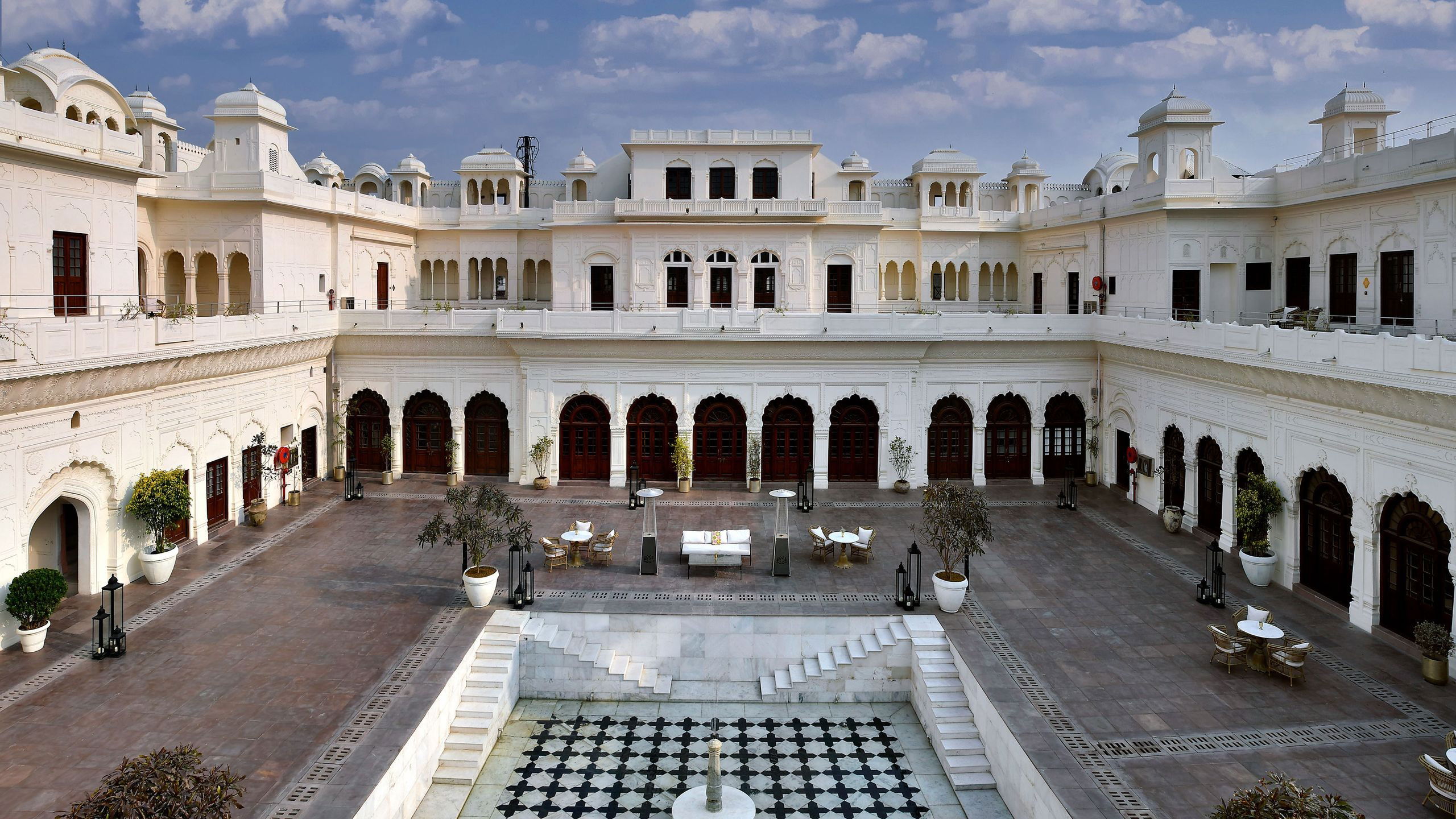
A former royal guesthouse within Patiala's Qila Mubarak complex, Ran Baas The Palace occupies a tier of heritage accommodation where the architecture does most of the talking. Rare frescoes, Rajasthani inlaid marble, and an 18th-century domed fortress as backdrop place it firmly in India's small category of palace stays where the building itself is the primary draw. Rates from $541 per night across 25 rooms.
Where a Royal Guesthouse Becomes the Argument for Punjab Heritage Travel
Approach Ran Baas The Palace through Adalat Bazar and the compressed streetscape of Patiala's old city gives little warning of what waits inside Quila Androon. The Qila Mubarak complex, a fortified royal seat built across several centuries of Sikh rule, contains multitudes: administrative wings, ceremonial spaces, and — less expected — a property that now functions as a working hotel within its precincts. Ran Baas was the original guesthouse of the maharajas, built for visiting dignitaries and members of the royal household. That provenance matters architecturally, because guesthouses in princely-era Punjab were not modest affairs. They were demonstrations of power and taste calibrated for an audience that would know the difference.
India's heritage hotel category has grown considerably since the government's palace tourism initiatives of the 1980s and 1990s, and it now spans everything from converted Rajasthani havelis to larger palace complexes with hundreds of rooms and resort infrastructure bolted on. Ran Baas sits at a different point in that spectrum: 25 rooms, a setting inside a functioning historic complex, and a renovation approach guided by conservation architect Abha Narain Lambah, whose practice is associated with some of India's most demanding heritage restoration projects. That credential positions the property outside the more commercial strand of palace hotel conversions, where period aesthetics are often approximated rather than preserved. Properties like Amanbagh in Ajabgarh and Alila Fort Bishangarh in Manoharpur operate in adjacent territory , historic fabric, considered restoration , but each occupies a distinct regional idiom. Ran Baas speaks specifically in the language of Punjab's Sikh royal courts, which is less represented in premium heritage travel than the better-documented Rajput tradition.
The Architecture as Primary Text
The frescoes at Ran Baas are the detail that serious architecture travelers will register first. Painted wall decoration in this tradition was not ornamental afterthought; it was documentary, illustrating court life, mythology, and the political relationships of the ruling family. Survival rates for this kind of work are low , damp, neglect, and poorly managed renovations have destroyed significant examples across Punjab , which makes intact examples at Ran Baas a substantive draw rather than a talking point. The chandeliers and silk carpets that the property references in its own description belong to a later register of royal taste, one influenced by European luxury goods that flowed into princely courts through the 19th century. That layering of influences is legible in many of India's best-preserved palace interiors, and Ran Baas is no exception.
Room heights and footprints run generous by any contemporary standard, which reflects original construction rather than renovation choice , palatial entertaining spaces were not designed to the specifications of a modern hotel room. Inlaid marble sourced from Rajasthan lines the interiors, a detail that speaks to the trade relationships and material culture of the period as much as to aesthetic preference. Some rooms look across the palace gardens; others carry hand-painted murals that extend the decorative program of the public spaces into private ones. These are not identical units in a repeated format, which is characteristic of the heritage category at this level and distinguishes it from newer-build luxury properties across India, including the kind of polished consistency found at The Leela Palace New Delhi or The Taj Mahal Palace in Mumbai.
The courtyard pool, tiled in turquoise and framed by rose-pink archways, faces the estate's 18th-century domed fortress. That view functions as a kind of orientation device for the whole stay: it keeps the broader Qila Mubarak complex present even in a moment of leisure, and it situates Ran Baas physically within a royal precinct rather than as a standalone property that happens to have old walls. For travelers who have stayed at Aman-i-Khas in Ranthambore or Ananda in the Himalayas, the point of difference at Ran Baas is architectural density , there is more to read in the building than in most properties at this price tier.
Breakfast in the Art Gallery, and What That Signals
Breakfast at Ran Baas is served in the property's historic art gallery, a detail worth noting not for its novelty but for what it reveals about the property's priorities. In heritage hotel conversions where the original rooms have been subdivided or modernized to increase key count, the historic fabric ends up in corridors and lobbies , decorative framing for otherwise standard rooms. Here, the programming of the day starts inside a space that was built for display and cultural transmission. Whether the art gallery retains original works or functions as a repurposed architectural shell is not confirmed in the available record, but the choice of that space for the morning meal says something about how the property understands its own identity.
Punjab's hospitality tradition, particularly in the context of Sikh royal courts, was never understated. Langar , the tradition of communal feeding associated with Sikh culture more broadly , and the maharajas' own elaborate entertaining culture produced a region where the act of feeding guests carried specific cultural weight. Ran Baas, whatever its breakfast menu, sits inside that tradition by geography and provenance if not by direct institutional connection.
Getting There and Planning Considerations
Patiala sits roughly 65 kilometers south of Chandigarh, making Chandigarh International Airport (IXC) the standard arrival point by air. Chandigarh is well connected to Delhi and Mumbai on domestic routes, and the road transfer to Patiala takes under two hours in normal conditions. Patiala Railway Station (PTA) is the alternative for travelers coming from Delhi by rail, with several daily services on that corridor. The property address , Quila Androon, Adalat Bazar , places it inside the old city, where the street grid tightens considerably around the fort complex; arrival by car is manageable but benefits from advance coordination on the final approach.
Rates from $541 position Ran Baas in the upper tier of regional heritage accommodation, above the mid-market haveli category represented by properties like Haveli Dharampura in Delhi and broadly in line with the premium end of India's palace conversion segment. With 25 rooms, availability is finite, and the property's Google rating of 4.5 across 84 reviews suggests consistent guest satisfaction without the review volume of a large-format hotel. Advance booking is advisable, particularly around Punjabi festival seasons when Patiala draws domestic cultural tourism. Those planning a wider Punjab and North India circuit might also look at Chapslee in Shimla for a complementary hill-station heritage experience, or extend south into Rajasthan via Suján Jawai in Pali and The Leela Palace Jaipur. For the full picture of what Patiala offers beyond the palace walls, our full Qila Mubarak restaurants and travel guide covers the surrounding area in detail.
Frequently Asked Questions
- What is the general vibe at Ran Baas The Palace?
- Ran Baas occupies a register that most travelers associate with Rajasthan but rarely find in Punjab: a functioning historic palace with 25 rooms, conservation-led interiors, and frescoes from the Sikh royal period. At $541 per night, the positioning is premium heritage rather than resort luxury. The atmosphere is quiet and architecturally dense, oriented toward guests who want to read the building as much as use the facilities. Qila Mubarak as a setting adds layers that a standalone converted property cannot replicate.
- Which room category should I book at Ran Baas The Palace?
- The available record distinguishes between rooms with garden views and those featuring hand-painted murals , the latter represent the stronger architectural case, given that the frescoes and painted decoration are the property's primary heritage credentials. Rooms with mural work are typically fewer in number in properties of this type, and at 25 keys total, the range is limited. Specific categories and pricing beyond the base rate of $541 are not confirmed in current available data; direct contact with the property before booking is advisable for room-specific guidance.
- Why do people go to Ran Baas The Palace?
- Ran Baas draws travelers who have exhausted the standard Rajasthan palace circuit and want a heritage experience with a different regional idiom. Punjab's Sikh royal architecture is underrepresented in premium travel itineraries relative to its historic significance, and Qila Mubarak is one of the better-preserved royal complexes in the region. The Lambah restoration adds conservation credibility that separates the property from more commercially oriented palace conversions elsewhere in North India. The $541 rate and 4.5 Google rating (84 reviews) reflect a small, well-regarded property rather than a mass-market destination.
Recognized By


Related editorial
- Best Fine Dining Restaurants in ParisFrom three-Michelin-star icons to the next generation of Parisian chefs pushing boundaries, these are the restaurants that define fine dining in the world's culinary capital.
- Best Luxury Hotels in RomeFrom rooftop terraces overlooking ancient ruins to Michelin-starred hotel dining, these are the luxury hotels that make Rome unforgettable.
- Best Cocktail Bars in KyotoFrom sleek lounges to hidden speakeasies, Kyoto's cocktail scene blends Japanese precision with global influence in ways you won't find anywhere else.
Save or rate Ran Baas The Palace on Pearl
Keep this venue in your Pearl passport, rate it after you visit, and track it alongside every other place you collect.