
Hotel in Tokyo, Japan
Palace Hotel Tokyo
2,025ptsMoat-Side Omotenashi





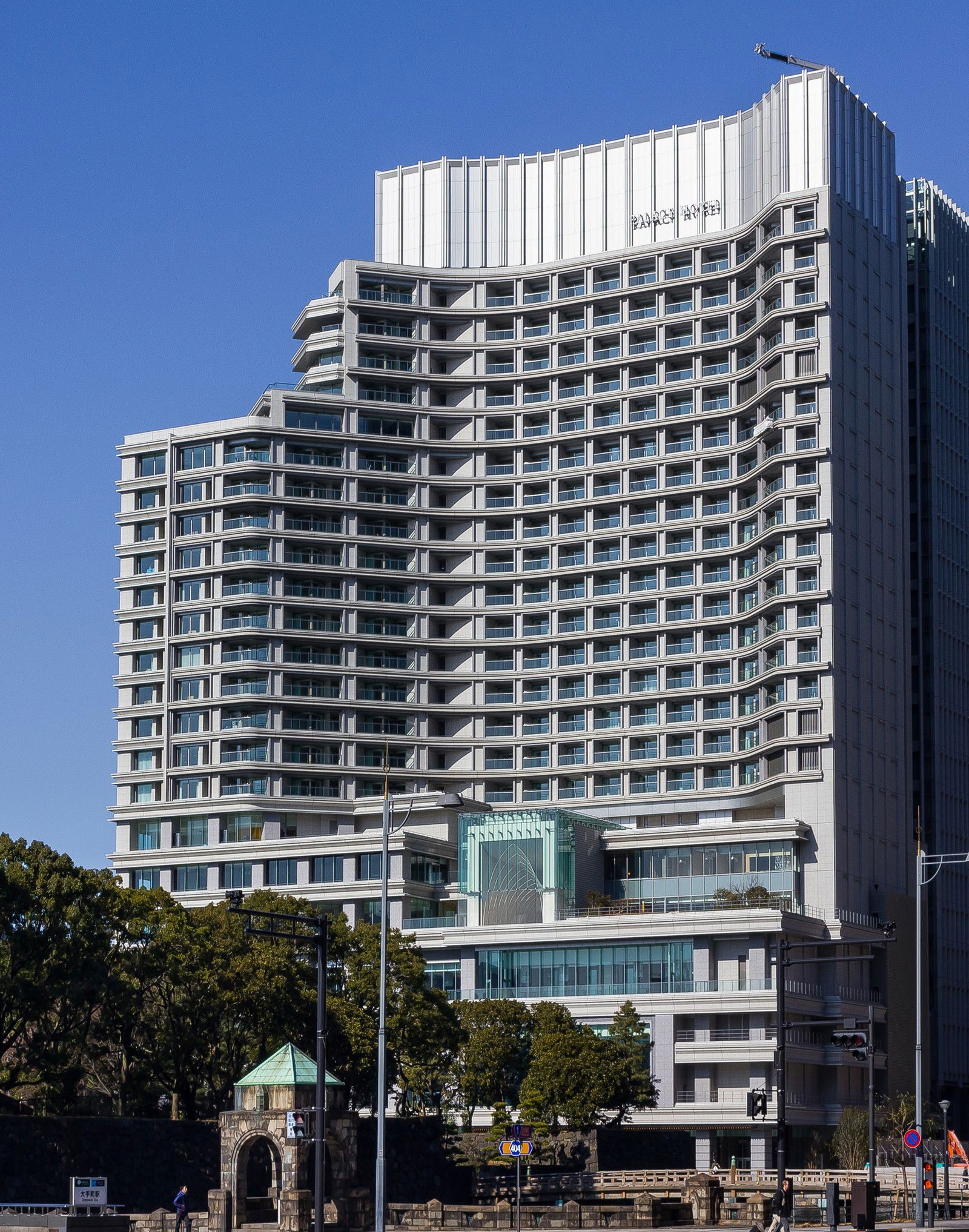
About Palace Hotel Tokyo
Positioned at the edge of the Imperial Palace moat in Marunouchi, Palace Hotel Tokyo holds a Forbes Travel Guide Five Star rating, 2024 Michelin 3 Keys, and a La Liste Top Hotels score of 98.5 points. Its 284 rooms combine contemporary Japanese design with views across the Imperial gardens, while the Royal Bar, Palace Lounge, and Evian Spa place it firmly in Tokyo's highest tier of urban luxury stays.
Where the Imperial Moat Sets the Terms
Approaching the entrance of Palace Hotel Tokyo from Marunouchi, the geometry of the city shifts. The relentless vertical density of central Tokyo gives way to horizontal calm: a still moat, a line of manicured trees, and the low stone walls of the Imperial Palace grounds across the water. This is one of the few addresses in Tokyo where the view from your window carries genuine civic weight, and the hotel has organised itself around that fact with considerable discipline. Inside the main lobby, double-height ceilings and walls of glass frame a perfectly shaped maple tree and the moat beyond it, a composition that reads less like hotel design and more like landscape curation. The ambience leans toward grand residence rather than trophy property, which at 284 rooms is not an easy register to sustain.
The Ritual Logic of Staying Here
Tokyo's luxury hotel tier has sorted itself into two broad camps over the past decade: international flagships that plant their global signatures on the skyline, and properties that have organised themselves around their specific Tokyo setting. Palace Hotel Tokyo belongs firmly to the second category. The hotel's rituals of service trace back to omotenashi, the Japanese concept of hospitality as anticipatory rather than reactive, and the practical expression of that principle runs throughout a stay in ways that accumulate quietly. Guests connect directly to Otemachi Station from the hotel's basement level, served by five metro lines, and Tokyo Station, the city's main Shinkansen hub, is a short walk from the front door. For a hotel at this price point, around USD 1,532 per night, the logistical intelligence embedded in the address is part of the proposition.
The 284 rooms and suites range from 45 square metres to 255 square metres. More than half carry private balconies, which in Tokyo's compressed real-estate context represents a meaningful planning decision by the architects rather than a standard amenity. South-facing rooms deliver views across the Imperial gardens and, on clear days, the roofline of the Imperial Palace itself, with a band of contemporary towers at the horizon. The room palette runs to whites, greens, and woods, and the bathrooms are fitted with Imabari towels, one of Japan's most recognised textile credentials, alongside Mashiko ceramics for the in-room tea service. Bamford bath amenities complete the wellness argument at the room level.
Ten Restaurants, One Michelin Star, and the Weight of Ducasse
The editorial angle on Tokyo dining is well established: no city on earth holds more Michelin stars in aggregate, and the competition for attention at the leading of the market is acute. Within that context, a hotel operating ten food and beverage outlets faces a structural credibility challenge. Palace Hotel Tokyo addresses it partly through Esterre by Alain Ducasse, which has held one Michelin star for six consecutive years. That consistency is notable. In Tokyo's dining scene, where starred restaurants open and close with some frequency, a six-year run at a hotel restaurant signals genuine kitchen stability rather than launch momentum.
Dining ritual across the hotel's outlets reflects a broader pattern in Japanese luxury hospitality, where the pace of a meal and the sequencing of courses are treated as serious editorial decisions rather than operational defaults. Afternoon tea in the Palace Lounge arrives in traditional tiered jyubako lacquer boxes, a format that carries cultural specificity rather than generic hotel-lounge presentation. The Royal Bar operates in a different register: dark woods, leather, velvet, and a martini program with a long-standing reputation among repeat guests. These are not interchangeable hotel bar offerings. Each outlet occupies a distinct atmospheric lane, which is how a ten-venue operation avoids the diffuse identity problem that afflicts many large hotel food programs.
The evian SPA and the European-in-Japan Paradox
Tokyo has a documented capacity to execute European concepts with a precision and consistency that the originating cultures often fail to match at home. The evian SPA TOKYO is a coherent example of this. It opened in 2012 as the first evian SPA in Japan, organised around an Alpine-inspired design with a white aesthetic and panoramic views of the Imperial Palace gardens. The facility includes five private treatment rooms, heated baths, a marble sauna with LED light therapy calibrated to mimic the French Alpine light cycle, a cold plunge pool, and separate relaxation lounges for men and women. The combination of French wellness philosophy with Japanese therapeutic discipline produces a spa environment that sits in a distinct peer tier, separate from both the purely Japanese onsen tradition and the generic international hotel spa format.
The fifth-floor fitness centre supplements the wellness offer, with Under Armour gym clothing available on loan and direct sightlines to the Palace gardens, which resolves one of the standard objections to hotel gym time.
Awards, Peer Position, and What the Numbers Mean
Forbes Travel Guide has awarded Palace Hotel Tokyo its Five-Star rating for ten consecutive years, from 2016 through 2025. MICHELIN designated it Three Keys for two consecutive years, 2024 and 2025, which places it in the top tier of the Guide's hotel assessments globally. La Liste's 2026 Leading Hotels ranking placed it at 98.5 points. The hotel is also a Leading Hotels of the World member. Taken together, these credentials position Palace Hotel Tokyo within a small peer set of Tokyo addresses that carry sustained multi-source validation, alongside properties such as Aman Tokyo, Four Seasons Hotel Tokyo at Otemachi, and Bvlgari Hotel Tokyo.
Where Palace Hotel Tokyo separates itself from peers like Andaz Tokyo and Four Seasons Hotel Tokyo at Marunouchi is the specificity of its setting. Those properties offer strong city-view arguments and design credentials. Palace Hotel Tokyo offers something harder to manufacture: a moat-side position directly opposite the Imperial Palace that has anchored the hotel's identity across more than half a century of operation. The current building dates from 2012 following a ground-up reconstruction, but the institutional continuity runs longer, visible in details like the original white grand piano retained in the Lobby Lounge and the aji stone walls at the entrance that echo the Imperial Palace stonemasonry.
Getting There and Planning Your Stay
The hotel's direct basement connection to Otemachi Station, served by five Tokyo Metro lines, makes movement around the city direct. Tokyo Station, the departure point for Shinkansen services to Kyoto, Osaka, and beyond, is a short walk. Both Narita and Haneda airports connect to the area via dedicated train services and limousine bus routes. For guests arriving from abroad and planning regional travel, the location is a functional base for Japan as a whole, not only Tokyo.
Those extending a Japan itinerary beyond the capital might consider HOTEL THE MITSUI KYOTO for a Kansai counterpart at a comparable standard, or Amanemu in Mie for a resort register. Properties organised around Japan's ryokan tradition, including Gora Kadan in Hakone, Asaba in Izu, and Nishimuraya Honkan in Kinosaki-cho, offer a different but complementary hospitality grammar for those wanting contrast across a longer trip. Further afield, Benesse House in Naoshima, Zaborin in Kutchan, ENOWA Yufu in Yufu, Fufu Kawaguchiko in Fujikawaguchiko, Fufu Nikko in Nikko, Halekulani Okinawa, Jusandi in Ishigaki, and Sekitei in Hatsukaichi-shi each represent the regional depth that makes Japan one of the more rewarding countries to move through slowly. For Tokyo dining context beyond the hotel, see our full Tokyo restaurants guide.
Internationally, guests who travel the circuit of leading urban hotels will find reference-point properties in Aman New York, The Fifth Avenue Hotel in New York City, and Aman Venice. Tokyo-based guests wanting alternatives within the city also have strong options in JANU Tokyo, The Capitol Hotel Tokyu, and Bellustar Tokyo, A Pan Pacific Hotel.
FAQ
- What room should I choose at Palace Hotel Tokyo?
- South-facing rooms deliver direct sightlines to the Imperial Palace gardens and the city skyline beyond. Given that balconies are present in more than half the rooms, requesting a south-facing room with a balcony places you in the property's strongest position. Suites scale to 255 square metres. The Forbes Five-Star and MICHELIN Three Keys designations apply to the hotel as a whole, but the room hierarchy is meaningfully structured around view quality and outdoor access. At rates from around USD 1,532 per night, the view differential between room categories warrants specific attention at booking.
- What is the standout thing about Palace Hotel Tokyo?
- The moat-side setting opposite the Imperial Palace gardens is the answer that holds up across ten consecutive Forbes Five-Star years and two MICHELIN Three Keys designations. In a city as densely built as Tokyo, that specific configuration of greenery, open water, and civic history at the window is not reproducible at another address. The service standard, consistent across multiple credentialed review sources, reinforces a stay that sits at the leading of what Tokyo's urban luxury hotels currently offer.
- What is the leading way to book Palace Hotel Tokyo?
- Phone and website details are not listed in our current data. The hotel's address is 1-1-1 Marunouchi, Chiyoda City, Tokyo 100-0005, and it operates as a Leading Hotels of the World member, which means LHW's central reservations platform is a reliable booking channel with potential rate and amenity advantages. At rates from around USD 1,532 per night and with Forbes Five-Star and MICHELIN Three Keys recognition for consecutive years, advance planning is advisable, particularly for south-facing rooms and suites, which carry the property's strongest views.
Recognized By


More hotels in Tokyo
- Apartment Hotel ShinjukuApartment Hotel Shinjuku offers an accessible, apartment-style base in one of Tokyo's most connected neighbourhoods. Easy to book with no waitlist pressure, it suits longer stays or travellers who want more space than a standard hotel room provides. Best timed for spring or autumn — avoid Golden Week when Tokyo-wide rates spike.
- ASAKUSA KOKONO CLUB HOTELA compact, independently run hotel in Tokyo's Asakusa district, suited to travellers who want immediate access to one of the city's most walkable historic neighbourhoods. Amenity provision is limited compared to larger luxury properties, but the location in Taito City is the core value proposition. Easy to book, with peak availability tightening in cherry blossom and autumn foliage seasons.
- Azabudai HillsAzabudai Hills is Tokyo's most ambitious mixed-use development, opening in late 2023 across 8.1 hectares in Minato. For business travellers, the location near Roppongi-itchome and Kamiyacho stations makes it a practical base for central Tokyo meetings. Weekday visits are far more manageable than weekends. Browse our full Tokyo hotels guide for accommodation options within the complex and nearby.
Related editorial
- Best Fine Dining Restaurants in ParisFrom three-Michelin-star icons to the next generation of Parisian chefs pushing boundaries, these are the restaurants that define fine dining in the world's culinary capital.
- Best Luxury Hotels in RomeFrom rooftop terraces overlooking ancient ruins to Michelin-starred hotel dining, these are the luxury hotels that make Rome unforgettable.
- Best Cocktail Bars in KyotoFrom sleek lounges to hidden speakeasies, Kyoto's cocktail scene blends Japanese precision with global influence in ways you won't find anywhere else.
Save or rate Palace Hotel Tokyo on Pearl
Keep this venue in your Pearl passport, rate it after you visit, and track it alongside every other place you collect.