
Hotel in Barcelona, Spain
Mercer Hotel Barcelona
625ptsArchaeological Modernism

About Mercer Hotel Barcelona
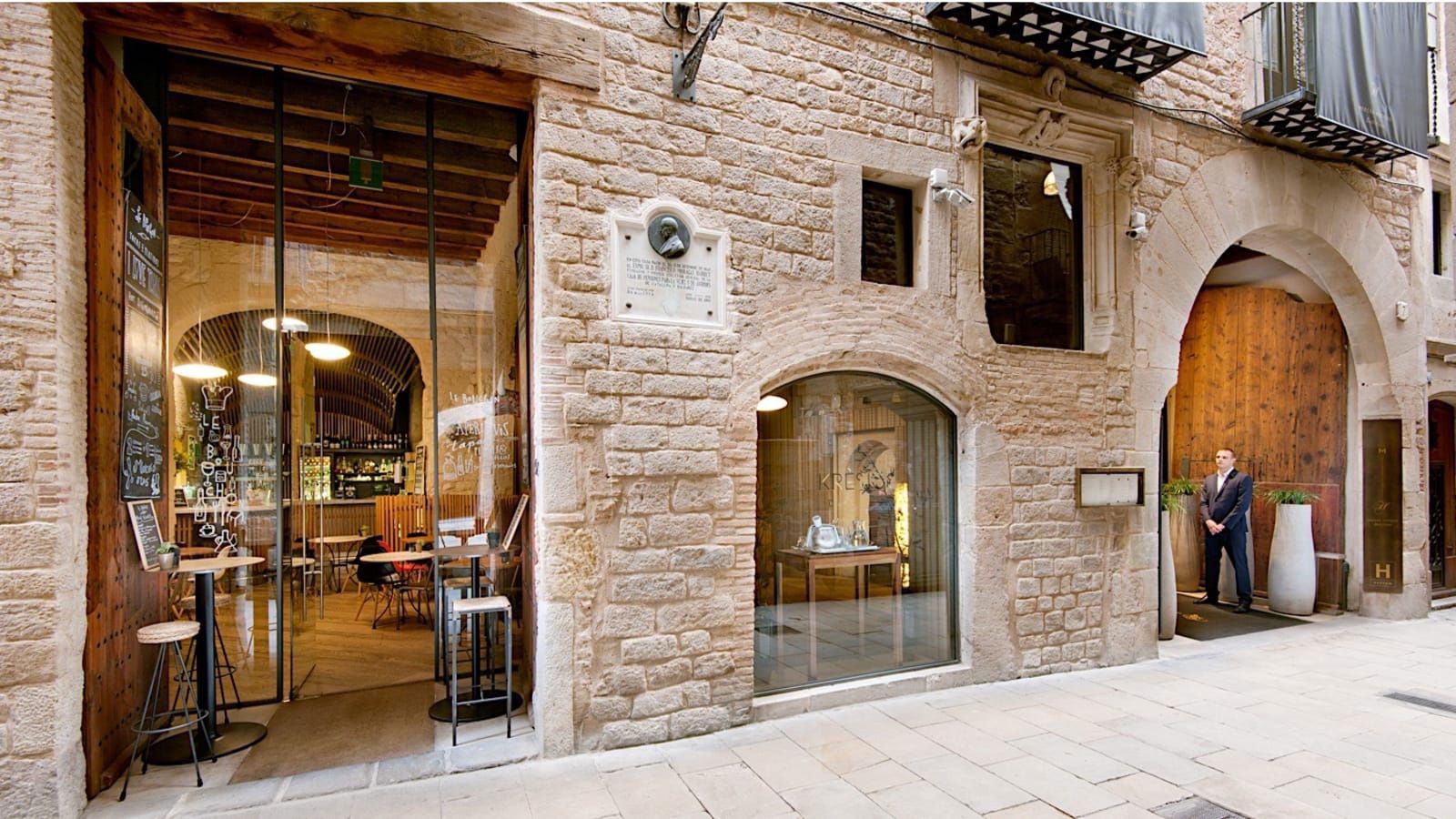
A 28-room hotel occupying a medieval defense tower in Barcelona's Gothic Quarter, Mercer Hotel Barcelona holds a Michelin 1 Key (2024) and prices from $496 per night. Modern design — cream palettes, exposed brickwork, glass partitions — sits against Roman-era stonework, while a rooftop pool and terrace frame direct views of the Gothic Cathedral.
History in the Walls, Modernism in the Rooms
Barcelona's Gothic Quarter resists easy categorization as a hotel address. Its streets are narrow enough that taxis sometimes decline the route, its stones carry Roman foundations, and the neighborhood's density of archaeological significance means any construction project risks becoming an excavation. That context matters when assessing what the Mercer Hotel Barcelona has managed to pull off: a 28-room property at Carrer dels Lledons, 7 that absorbs a medieval defense tower, Roman wall segments, and 17th-century columns into a coherent design language without defaulting to heritage pastiche or museum-case reverence.
In Barcelona's premium hotel market, the split between large international flagships and small-footprint design properties has sharpened considerably. Mandarin Oriental Barcelona occupies the Passeig de Gràcia corridor with full-service scale; Almanac Barcelona and Monument Hotel compete in the same Eixample register. Mercer operates in a different register entirely: intimate count, specific location, and a design program that would be impossible to replicate outside this particular building. Its 2024 Michelin 1 Key recognition places it inside the category of European small-luxury hotels where hospitality quality is assessed against accommodation standards rather than F&B; volume alone, a cohort that includes ABaC Restaurant & Hotel on the city's upper edge.
The Michelin Key and What It Actually Signals
Michelin's Key distinction, introduced in 2024 as the inspectors' formal hotel assessment framework, evaluates properties on architecture, interior design, service quality, and the overall quality of the guest experience rather than restaurant stars. Receiving a single Key in the inaugural year places a property in a defined tier of European hospitality — not at the peak, but clearly above the noise. For a 28-room property in the Gothic Quarter, the recognition functions as an external confirmation of what the design program implies: this is a considered operation, not a boutique property coasting on location.
At $496 per night from its entry rate, Mercer sits in the upper-middle bracket of Barcelona's premium market. That positions it below the nightly rates typical of the Mandarin Oriental's top-tier rooms and above the accessible-luxury tier represented by properties like Alma Barcelona. The price-to-room-count ratio — high rate, low inventory , is a deliberate compression that keeps the hotel functioning as a private-feeling address rather than a full-service resort.
What the Design Program Actually Does
Design in hotels that incorporate archaeological elements tends toward one of two failure modes: over-restoration that makes a space feel theatrical, or understatement so severe that guests wonder why they paid a premium for old stones. Mercer's approach across its 28 rooms sits between those poles in a way that reads as genuinely resolved rather than merely competent.
The dominant palette runs toward cream, which serves a functional purpose: it prevents the dark wood furniture from making rooms feel enclosed, and it allows exposed brickwork to register as texture rather than weight. Ceiling beams are painted to align with this scheme rather than stained dark in the manner of a converted farmhouse, which keeps the rooms from feeling as though the medieval elements are asserting dominance over the contemporary ones. Open-plan bathrooms with hanging lamps that reference rope ladders introduce a degree of irreverence that stops the overall effect from becoming too curated.
The third-floor grand suite operates at a different temperature: deep purple furniture, crimson carpeting, and windows that look directly onto the Gothic Quarter and the hotel's internal courtyard, where 17th-century columns stand against orange trees. For guests who find the restraint of the standard rooms too cool, the suite offers a counterargument without abandoning the property's coherence.
Comparable approaches to historic-building integration in the Spanish premium market appear at Atrio Restaurante Hotel in Cáceres and Hotel Can Cera in Palma, both of which work with heritage structures to different ends. Internationally, Aman Venice represents the apex of the format: a centuries-old palazzo reconfigured around contemporary luxury standards. Mercer operates at smaller scale with less inventory than any of those comparisons, which concentrates the design impact rather than diluting it.
The Restaurant and Upper Floors
The restaurant at Mercer takes a different approach from the rooms: full-on contemporary French-inspired cuisine, with no attempt to mirror the medieval-meets-modernist tension of the architecture. In Barcelona's current dining scene, French-inflected contemporary kitchens occupy a niche that sits outside the dominant Catalan and Mediterranean threads, and a hotel restaurant adopting that positioning signals a deliberate departure from the local-sourcing-forward programs that characterize many of the city's higher-profile dining rooms. For guests who want Catalan culinary depth, Barcelona's dining offer is accessible on foot from the Gothic Quarter, and our full Barcelona restaurants guide maps the options across the city's neighborhoods.
The hotel's fourth-floor terrace is the strongest practical argument for the address. From that elevation, views extend directly to the Gothic Cathedral, a prospect that is unavailable from most of the neighborhood's street-level positions and that the room pool reinforces as a singular amenity. Rooftop pools in Barcelona are common at the scale of Hotel Arts Barcelona, which operates on the beachfront with a very different relationship to sky and water. At Mercer, the terrace functions more as a compressed urban observation deck than a resort amenity.
Placing Mercer in Its Regional Context
Spain's premium small-hotel offer has developed a coherent identity in recent years, clustering around heritage properties with serious design programs. Abadía Retuerta LeDomaine, Terra Dominicata in Escaladei, and Mas de Torrent Hotel & Spa in the Empordà all represent variants of that tradition, each working with historic structures in wine-producing landscapes. Mercer's version of the same logic plays out in an urban register: the structure is Barcelona's medieval defensive infrastructure rather than a monastery or farmhouse, and the density of the Gothic Quarter replaces the spatial freedom of the countryside.
Other Barcelona boutique properties, including Antiga Casa Buenavista and Hotel Boutique Mirlo, compete in the small-footprint segment without Mercer's depth of archaeological integration or its Michelin Key credential. At the other end of the spectrum, Marbella Club Hotel, Akelarre in San Sebastián, and Mandarin Oriental Ritz Madrid represent what Spanish premium hospitality looks like when the brief is full-service scale rather than architectural intimacy.
Planning Your Stay
With only 28 rooms, Mercer operates on the kind of inventory that makes advance booking a practical necessity rather than a suggestion, particularly during Barcelona's high seasons in spring and autumn when the Gothic Quarter draws the densest visitor concentration. The address on Carrer dels Lledons places guests within walking distance of the Born district, the waterfront, and the central Eixample, which means the property functions as a usable base for the full city rather than a Gothic Quarter-specific stay. The $496 entry rate covers standard rooms; the third-floor grand suite commands a premium above that. The restaurant operates as an in-house option, though the neighborhood's proximity to Barcelona's wider dining scene makes it easy to use the hotel primarily as accommodation.
For travelers comparing Barcelona against Spain's broader premium offer, Cap Rocat in Cala Blava, La Residencia, A Belmond Hotel, Mallorca, and Pepe Vieira Restaurant & Hotel in Poio represent the range of what's available at similar price points across the country. Casa Beatnik Hotel in A Coruña and Torre del Marqués Hotel Spa & Winery offer further reference points for the heritage-meets-design format that Mercer represents at its most concentrated. Outside Spain, The Fifth Avenue Hotel in New York City and Aman New York occupy a similar niche of small-count luxury with strong architectural identity in dense urban settings.
Frequently Asked Questions
- What's the signature room at Mercer Hotel Barcelona?
- The third-floor grand suite is the property's most distinctive room, with deep purple furniture and crimson carpeting that contrast with the cream-and-dark-wood restraint of the standard rooms. Windows look out onto the Gothic Quarter and the hotel's internal courtyard, where 17th-century columns frame a garden of orange trees. At $496 as the hotel's entry price point, the suite carries a premium above standard rooms. The hotel holds a Michelin 1 Key (2024).
- What's Mercer Hotel Barcelona leading at?
- Mercer's clearest credential is the integration of a medieval defense tower and Roman wall segments into a functioning 28-room hotel with a resolved contemporary design program , a combination formally recognized by Michelin's 2024 Key distinction. The Gothic Quarter address in central Barcelona, combined with a fourth-floor terrace offering direct views of the Gothic Cathedral and a rooftop pool, gives the property a physical position that larger Barcelona hotels cannot replicate at any price point.
- Is Mercer Hotel Barcelona reservation-only?
- With just 28 rooms, Mercer operates on limited inventory that makes advance reservations a practical necessity, particularly during Barcelona's peak travel periods in spring and autumn. Room rates begin at $496 per night. Guests should book directly or through a trusted travel service well ahead of their travel dates; the hotel's Michelin 1 Key recognition and Gothic Quarter address drive sustained demand across the year.
- Does the Mercer Hotel Barcelona's restaurant reflect the Gothic Quarter's local culinary identity?
- The restaurant takes a deliberately distinct approach, offering contemporary French-inspired cuisine rather than Catalan or Mediterranean cooking more typical of the Gothic Quarter's surrounding neighborhood. This positions the in-house dining as a counterpoint to the local food scene rather than an expression of it, which suits guests who prefer to use the hotel restaurant as a baseline and explore Barcelona's wider dining offer independently. The restaurant operates within a Michelin 1 Key-recognized property, placing overall hospitality standards within a formally assessed framework.
Recognized By

More hotels in Barcelona
- abba Rambla Hotelabba Rambla Hotel is an easy-to-book mid-range option in Barcelona's Raval district, a short walk from the Gothic Quarter and El Born. It delivers on location and accessibility rather than design or service depth. Book direct through abba Hotels to access the best rates and any available upgrade benefits — OTA bookings at this price tier rarely pay off.
- bcnKITCHEN - Cursos y talleres de cocina en BarcelonabcnKITCHEN is a cooking class and workshop space in El Born, Barcelona — not a restaurant. Located on Carrer de la Fusina in Ciutat Vella, it suits returning visitors who want a hands-on food experience rather than another table booking. Booking is easy, but secure summer weekend slots two to three weeks out. Confirm pricing directly before reserving.
Related editorial
- Best Fine Dining Restaurants in ParisFrom three-Michelin-star icons to the next generation of Parisian chefs pushing boundaries, these are the restaurants that define fine dining in the world's culinary capital.
- Best Luxury Hotels in RomeFrom rooftop terraces overlooking ancient ruins to Michelin-starred hotel dining, these are the luxury hotels that make Rome unforgettable.
- Best Cocktail Bars in KyotoFrom sleek lounges to hidden speakeasies, Kyoto's cocktail scene blends Japanese precision with global influence in ways you won't find anywhere else.
Save or rate Mercer Hotel Barcelona on Pearl
Keep this venue in your Pearl passport, rate it after you visit, and track it alongside every other place you collect.