
Hotel in Seoul, South Korea
JW Marriott Hotel Seoul
250ptsGangnam-Linked Retreat

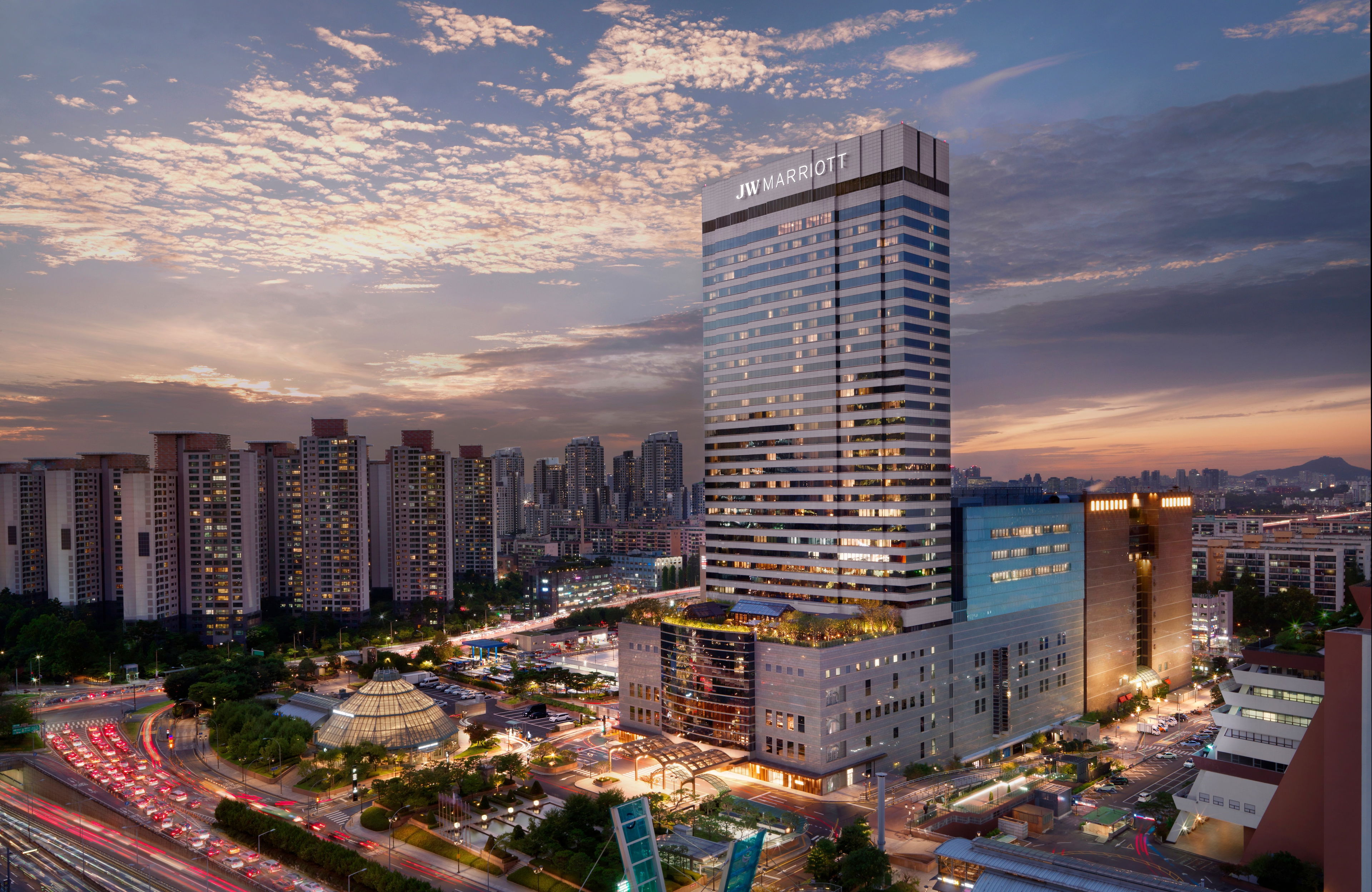
About JW Marriott Hotel Seoul
Positioned in Seoul's Seocho District with direct access to a department store and a subway terminal, the JW Marriott Hotel Seoul offers 379 rooms, a three-story fitness facility, and seven dining venues spanning kaiseki, a European-style grill, and international buffet. A Google rating of 4.4 across more than 6,000 reviews reflects consistent delivery at the upper end of Seoul's international hotel tier.
Seocho Quiet, Gangnam Convenience
The part of Seoul that surrounds Sinbanpo-ro operates at a different register from the pedestrian-dense stretches of Myeongdong or the retail corridors of Apgujeong. The Seocho District sits at the edge of the Gangnam zone, business-oriented and residential rather than tourist-facing, which means the street-level energy outside the JW Marriott Hotel Seoul is purposeful rather than frenetic. That character translates directly into the property: the lobby reads as a deliberate decompression chamber between the city's pace and the hotel's interior calm. For travellers arriving for corporate stays or extended visits, the trade-off of being slightly removed from Seoul's main sightseeing corridor is offset by a direct connection to a department store and access to both a subway and bus terminal from within the building. Getting across Seoul from here is, in practical terms, direct, and the Gangnam shopping axis is immediately accessible on foot.
Among the full-service international hotels operating in Seoul's Gangnam zone, this property competes in a tier that includes Conrad Seoul, Four Seasons Hotel Seoul, Grand Hyatt Seoul, and Fairmont Ambassador Seoul. What separates properties within that bracket tends to come down to dining format, room sizing, and the coherence of the wellness offer rather than any single differentiating feature. The JW Marriott Seoul's particular configuration, 379 rooms with a three-story gym and seven food-and-beverage venues, positions it toward the operational end of the full-service spectrum: a property built to handle volume and variety rather than intimate boutique atmosphere. For a contrasting approach in Seoul, Aman Seoul Cheongdam or Art Paradiso Boutique Hotel represent the smaller, design-led tier. The JW Marriott's 4.4 Google rating across more than 6,000 reviews suggests that what it promises, it consistently delivers.
Seven Dining Venues and What They Signal
The structure of a hotel's dining program tells you something about how it reads its own guest profile. A single flagship restaurant signals confidence in a particular culinary direction; seven venues signals a deliberate decision to handle range rather than depth. At the JW Marriott Seoul, the spread runs from a European-style grill to a Japanese multi-course counter to an all-day international buffet, with a patisserie and a cafe rounding out the daytime options. The reading: this hotel expects guests who need a different dining experience on Tuesday night than on Sunday morning, and it has structured its F&B; to absorb that variation internally rather than pushing guests out to the neighbourhood.
The Margaux Grill anchors the more formal end of the spectrum. Surrounded by wall-to-wall windows facing a European-style garden, it operates as the hotel's primary destination for flame-grilled proteins paired with a curated wine list. In a city where the steakhouse format has been adopted and refined across a wide range of hotel and standalone venues, the garden-facing room gives the space a visual anchor that most urban grill rooms lack. Tamayura occupies the opposite pole in terms of format and cultural register. The kaiseki multi-course structure, shoji wall enclosures, and classical Japanese tea service place it within a specific and demanding tradition: kaiseki as a disciplined, seasonal progression of courses rather than a loose collection of Japanese dishes. Whether the kitchen executes within that tradition at a level that competes with Seoul's dedicated Japanese fine dining options is not something the data confirms, but the format itself is clearly positioned toward the serious end of the Japanese dining spectrum available in Korean luxury hotels.
Flavors, the all-day buffet venue, handles the broadest brief: bountiful breakfast, lunch, and dinner service built around a raw bar, European meats and cheeses, and made-to-order ramen. In Seoul's hotel dining culture, the high-quality breakfast buffet carries particular weight, partly because the city's convenience breakfast alternatives are extensive and competitive. A buffet that earns repeat visits from both business travellers and leisure guests needs to do more than cover ground; it needs a few stations that justify the format over the alternatives. The presence of fresh seafood at the raw bar and live ramen preparation suggests the kitchen is working to clear that bar. Cafe One and the Patisserie serve the grab-and-go and afternoon function, covering morning espresso and picnic-lunch assembly for guests heading into Gangnam's streets.
Rooms, Wellness, and the Executive Tier
Seoul's upper-tier hotels have converged on certain room specifications: marble bathrooms, deep-soaking tubs, and city or district views as the primary differentiators between room categories. The 379 accommodations here follow that template, with hardwood floors and settees completing the fit-out. The recommendation to request a room on the fifteenth floor or above for views reflects a common dynamic in mid-rise Seoul hotel buildings, where lower floors read into surrounding structures rather than skyline. For guests prioritising light and orientation, this is a meaningful practical detail.
The wellness offer is the area where this property separates itself most clearly from similarly priced competitors. A three-story gym is unusual in a city where real estate costs compress vertical ambitions in hotel construction. The configuration includes cardio equipment, weight machines, and a jogging track that encircles the complex, alongside sauna access and an indoor pool. For business travellers maintaining training routines across long Seoul trips, or leisure guests who treat wellness infrastructure as a primary selection criterion, this facility operates at a scale that most comparable hotels in the district cannot match. The peer set for this level of gym provision in Seoul would be properties like Banyan Tree Club & Spa Seoul, which also targets the wellness-as-amenity segment.
The Executive Lounge occupies the ninth floor and functions as a semi-independent zone within the hotel: dedicated check-in and checkout, business services including computers and printers, a complimentary meeting room, light breakfast service, and evening hors d'oeuvres with cocktails, cordials, and desserts. In practice, Executive Lounge access converts a standard hotel stay into something closer to a serviced corporate arrangement, reducing the friction points that accumulate across multi-night business visits. Guests who access the lounge effectively have a separate, quieter arrival experience and an evening food-and-drink function that removes the need for a separate dinner reservation on low-key nights.
Planning a Stay
Hotel sits at 176 Sinbanpo-ro, Seocho-gu, and the integrated subway and bus terminal access means most of Seoul is reachable without a taxi or private transfer. The Gangnam shopping district is walkable. Given the scale of the property and its consistent demand from business travellers, rooms at the higher floors or in Executive Lounge-eligible categories benefit from advance reservation, particularly during South Korea's busier convention and trade calendar. For those considering the wider South Korean travel circuit, the same brand's JW Marriott Jeju Resort & Spa offers a contrasting resort configuration for those extending beyond Seoul. Other regional options worth mapping include Ananti at Busan Cove, Grand Hyatt Jeju, and Haevichi Hotel & Resort Jeju for the island's southern coast.
Travellers building a broader Seoul itinerary can consult our full Seoul restaurants guide for context on the city's dining scene beyond the hotel's own venues. For those arriving from or continuing to international destinations, it is worth noting how the JW Marriott Seoul's full-service format compares to comparable properties in other cities, including The Fifth Avenue Hotel in New York City or Aman New York, where the premium hotel format takes a markedly different approach to scale and intimacy.
Frequently Asked Questions
- What is the standout feature of JW Marriott Hotel Seoul?
- The three-story gym with an encircling jogging track is the facility that most directly separates this property from competitors in the same district and price tier. Combined with an indoor pool and sauna, it is a wellness offer that functions at a scale unusual for Seoul's mid-rise hotel stock. Seven dining venues, including The Margaux Grill and the kaiseki counter at Tamayura, handle the F&B range without requiring guests to leave the building for most occasions.
- What is the signature room at JW Marriott Hotel Seoul?
- All 379 accommodations share a consistent specification: marble bathrooms with deep-soaking tubs, hardwood floors, and settee seating. Rooms from the fifteenth floor upward carry the leading views across the district. The Executive Lounge rooms on the ninth floor add private check-in, business services, and evening food and drink service, making them the effective top tier for business travellers who want to reduce logistical friction across longer stays.
- Should I book JW Marriott Hotel Seoul in advance?
- The hotel's 379-room scale gives it more flexibility than Seoul's smaller luxury properties, but rooms at the higher floors and in Executive Lounge-eligible categories fill ahead of the city's main business events calendar. If your travel dates align with major trade or convention periods in South Korea, advance booking is the sensible approach. The integrated transport terminal access makes the location practical enough that the hotel draws consistent demand beyond peak leisure seasons.
Recognized By
Related editorial
- Best Fine Dining Restaurants in ParisFrom three-Michelin-star icons to the next generation of Parisian chefs pushing boundaries, these are the restaurants that define fine dining in the world's culinary capital.
- Best Luxury Hotels in RomeFrom rooftop terraces overlooking ancient ruins to Michelin-starred hotel dining, these are the luxury hotels that make Rome unforgettable.
- Best Cocktail Bars in KyotoFrom sleek lounges to hidden speakeasies, Kyoto's cocktail scene blends Japanese precision with global influence in ways you won't find anywhere else.
Save or rate JW Marriott Hotel Seoul on Pearl
Keep this venue in your Pearl passport, rate it after you visit, and track it alongside every other place you collect.