
Hotel in Madrid, Spain
JW Marriott Hotel Madrid
325ptsHistoric-Building Luxury Hotel

About JW Marriott Hotel Madrid
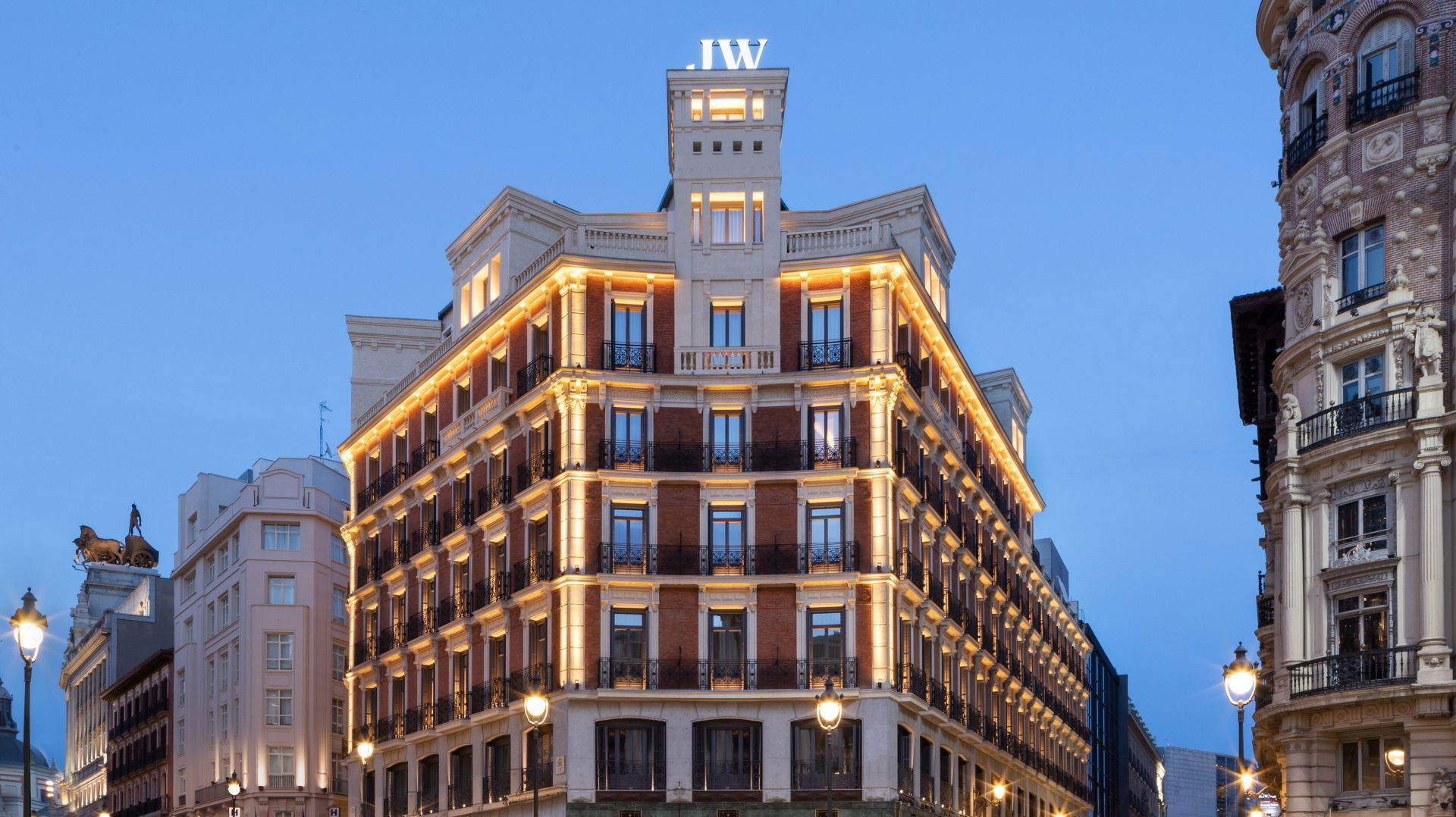
On Plaza de Canalejas in Madrid's Centro district, the JW Marriott occupies a restored 19th-century building where original ironwork and parquet staircases coexist with a considered modern interior. Dining at Qu, helmed by the Sandoval siblings, anchors the food program in serious Spanish cooking. The suite terraces face the Madrid skyline, and turndown service arrives with La Violeta sugar candies, a gesture rooted in early 20th-century city history.
A Historic Address in Central Madrid
Madrid's luxury hotel segment has reorganised itself around a handful of restored historic buildings in the city centre, each competing on the quality of their architectural conversion as much as on service and amenity. The JW Marriott on Calle de Sevilla sits at Plaza de Canalejas, a position that places it within easy reach of Puerta del Sol, the Prado corridor, and the dense concentration of dining and retail that defines this part of Centro. Within our full Madrid restaurants guide, this neighbourhood consistently draws visitors who want proximity to the city's historical core without sacrificing the kind of infrastructure that a full-service hotel provides. Among the capital's top-tier international properties, including the Mandarin Oriental Ritz, Madrid and the Four Seasons Hotel Madrid, the JW Marriott differentiates through its specific building character: a 19th-century structure that survived into luxury conversion with enough original detail intact to anchor the experience in something genuinely local.
What You Encounter on Arrival
The lobby reads as a lounge before it reads as a hotel reception. Gray, cream, and terracotta tones sit against wood-panelled walls lit from below, with a cocktail bar occupying part of the main level and a curated bookstore filling another corner. A skylight over the check-in desks prevents the space from tipping into dimness. The effect is closer to a well-edited members' club than to the grand-atrium format favoured by many international luxury brands. Guests who bypass the elevator find an embellished iron handrail spiralling up a parquet staircase, a detail that photographs cleanly from above and signals that the building's original craftsmanship was preserved rather than plasticised during the conversion. Original 19th-century elements appear elsewhere: exposed brick in the gym, adorned wooden doors in the restaurant, iron columns in the lobby itself.
Staff uniforms take a retro-inspired direction that reinforces the building's period character. The service approach is described in inspector notes as attentive without being intrusive, a balance that larger central-Madrid properties sometimes sacrifice in favour of visible efficiency. By comparison, design-led independents such as Gran Hotel Inglés or CoolRooms Palacio de Atocha occupy a similar conversation around historic-building hospitality in Madrid, though each arrives at a different conclusion about how much contemporary design to layer over the original fabric.
The Dining Program at Qu
Spain's most commercially serious restaurant families tend to operate across multiple formats simultaneously, anchoring one flagship in high-concept fine dining while extending into more accessible all-day expressions. The Sandoval siblings — Mario, Rafael, and Diego — represent one of the more visible examples of this model, and their signature dining room Qu at the JW Marriott functions as the hotel's principal food statement. The format runs from breakfast through dinner, which places it in the all-day category rather than in the tasting-menu tier occupied by their other projects. Morning service includes a spread described by inspectors as extensive, with churros as a baseline alongside a broader range of Spanish morning staples. The lunch and dinner menus orient around Spanish regional flavours, with the brothers' suckling pig receiving particular emphasis in inspector notes as a dish not to overlook. For a broader read on how Madrid's leading hotel dining rooms sit relative to the city's independent restaurant circuit, the EP Club Madrid guide maps the full picture.
Hotels operating restaurant programs in partnership with credentialed restaurateurs rather than relying on in-house culinary teams have become more common across Spain's urban luxury tier. Properties like Akelarre in San Sebastián and Atrio Restaurante Hotel in Cáceres built their identities around this integration; the JW Marriott follows a parallel logic at a different price and format point.
Suites, Views, and the City Above Street Level
Madrid's skyline is most legible from elevation, and several of the hotel's suite categories are specifically configured to take advantage of that. Junior Suites, the Suite Puerta del Sol, and the Suite Old Town View each include furnished terraces with black-and-white marble chevron floors, stone railings, and open views across the city's historic core. For guests choosing between large international properties in central Madrid, the terrace access offered by these suite categories represents a specific differentiator: the Rosewood Villa Magna and Gran Meliá Palacio de los Duques offer their own suite configurations, but neither shares the Plaza de Canalejas address or the direct sight lines toward Puerta del Sol and the old town that the JW Marriott's position makes possible.
The Spa and Wellness Format
The three-room Spa at JW Marriott Madrid operates on a smaller footprint than the destination wellness facilities found at resort-oriented properties elsewhere in Spain. At estate hotels like Abadía Retuerta LeDomaine in Teruel or Terra Dominicata in Escaladei, the spa functions as a destination in itself. In an urban context, the calculation is different: proximity, discretion, and product quality matter more than scale. The JW Marriott spa works with Alqvimia, a Spanish holistic skincare brand, which gives the treatment menu a local sourcing dimension that larger international spa programs often bypass in favour of global cosmetic partnerships. Stone walls and cool tones define the interior atmosphere. The gym, which occupies a space with exposed brick walls, sits closer to the industrial-heritage end of the fitness-room spectrum than to the mirrored-and-clinical format common in comparable city hotels.
A Local Ritual at Turndown
The La Violeta candy presented at turndown is a detail worth noting for what it signals about the hotel's relationship to neighbourhood history. The violeteras were early 20th-century street vendors who sold sugar-coated violets near the Puerta del Sol area, a product reportedly favoured by King Alfonso XIII. Reviving that specific confection as a turndown gesture is a modest but legible act of local acknowledgement, the kind of contextual detail that separates a hotel which has studied its address from one that simply occupies it. It sits within a broader pattern visible across Spanish luxury hospitality: properties that use local craft, food history, or material culture to embed themselves in place rather than importing a generic luxury template. Hotels like Hotel Can Cera in Palma or Mas de Torrent Hotel & Spa in Torrent apply equivalent logic at the boutique scale.
Amenities and Planning
Hotel operates 24-hour room service, a bar, gym, meeting rooms, restaurant, and spa. Babysitting and pet-friendly policies extend the property's reach toward family and longer-stay guests. The full amenity list aligns with what Marriott International properties at this tier typically carry, though the specific building character and Plaza de Canalejas location remain the variables that guests are effectively selecting when they book here rather than at a peer property. For guests comparing options across Madrid's central luxury tier, Hotel Unico Madrid and Mandarin Oriental Ritz, Madrid represent different points on the same competitive map. For those extending a Spain itinerary to other regions, the EP Club covers properties from Marbella Club Hotel in Marbella to Pepe Vieira Restaurant & Hotel in Poio and beyond. International guests arriving from properties like Aman New York or The Fifth Avenue Hotel in New York City will find the JW Marriott Madrid operating in a recognisably similar register of urban luxury, though the Plaza de Canalejas address gives it a European historical density that few comparable city-centre positions can match.
Frequently Asked Questions
What is the leading suite at JW Marriott Hotel Madrid?
Suite Old Town View and Suite Puerta del Sol both represent the hotel's highest suite tier with private terraces. All three suite categories with terrace access, including Junior Suites, feature black-and-white marble chevron floors, ornate stone railings, and open views across Madrid's historic centre. If the skyline outlook is the priority, the Suite Old Town View is the specific configuration to request at booking.
What is JW Marriott Hotel Madrid leading at?
Combination of a verified central address at Plaza de Canalejas, a building with intact 19th-century architectural detail, and a restaurant program run by the Sandoval siblings distinguishes this property within Madrid's international luxury tier. It is not the largest property in the city, nor the one with the most expansive spa, but the convergence of location, building character, and credentialed dining in a single address is harder to replicate than any individual element on its own. Inspector notes rate the service approach as particularly strong: attentive and present without tipping into formality. Google reviews reflect a 4.7 rating from 331 responses, a relatively small but consistently positive sample.
How far ahead should I plan for JW Marriott Hotel Madrid?
Madrid operates with a shorter advance booking curve than comparably positioned properties in cities with more constrained room supply. That said, suite categories with terrace access, particularly around the spring and autumn shoulder seasons when Madrid's climate is at its most comfortable, can move quickly. For stays during major Madrid events or Spanish national holidays, planning six to eight weeks ahead is advisable. Direct booking through Marriott International channels is standard for this property tier; specific rate and availability enquiries should go through those routes rather than third-party platforms where suite-category availability is sometimes less transparent.
Recognized By
Related editorial
- Best Fine Dining Restaurants in ParisFrom three-Michelin-star icons to the next generation of Parisian chefs pushing boundaries, these are the restaurants that define fine dining in the world's culinary capital.
- Best Luxury Hotels in RomeFrom rooftop terraces overlooking ancient ruins to Michelin-starred hotel dining, these are the luxury hotels that make Rome unforgettable.
- Best Cocktail Bars in KyotoFrom sleek lounges to hidden speakeasies, Kyoto's cocktail scene blends Japanese precision with global influence in ways you won't find anywhere else.
Save or rate JW Marriott Hotel Madrid on Pearl
Keep this venue in your Pearl passport, rate it after you visit, and track it alongside every other place you collect.