
Hotel in Urubamba, Peru
Inkaterra Hacienda Urubamba
725ptsZero-Carbon Hacienda Farming


About Inkaterra Hacienda Urubamba
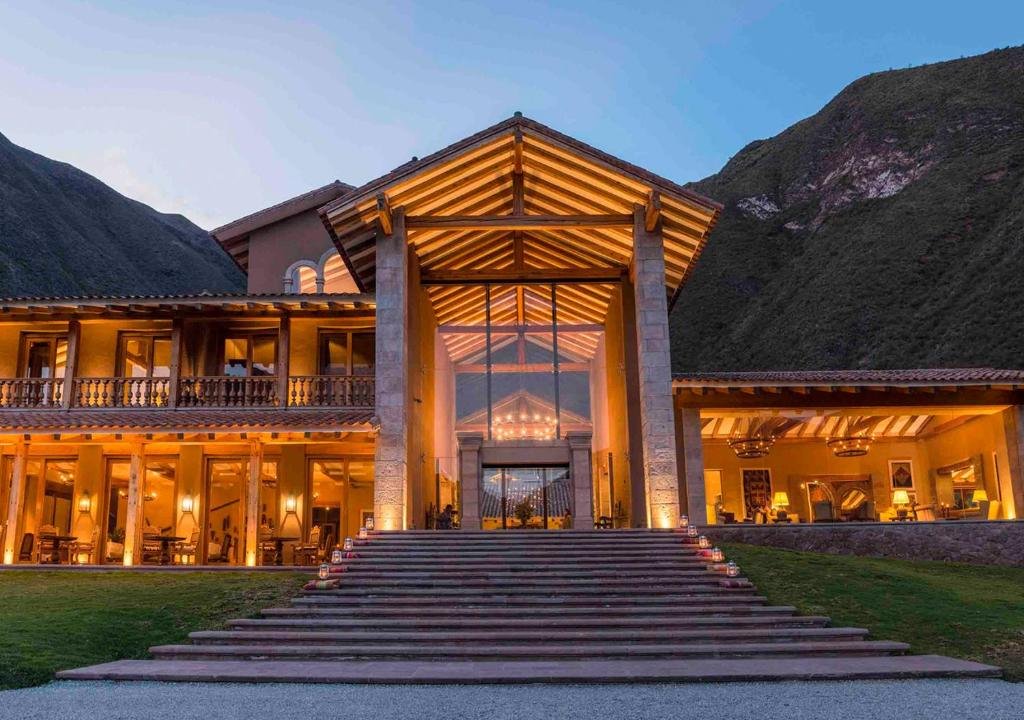
Positioned between Cusco and Machu Picchu along the Sacred Valley highway, Inkaterra Hacienda Urubamba occupies 100 acres of Andean hillside with 36 rooms and casitas, a 10-acre organic farm, and valley views from every private terrace. At $405 per night, it sits in the upper tier of Sacred Valley properties that trade large-resort scale for something more contained and agriculturally grounded.
Where the Valley Does the Work
The Sacred Valley corridor between Cusco and Machu Picchu has become one of South America's most competitive stretches of luxury hospitality. Properties here have multiplied in step with Peruvian tourism's sustained growth, and travelers arriving from Cusco now face a genuinely differentiated set of options: larger wellness-focused resorts such as Aranwa Sacred Valley Hotel & Wellness, activity-led programs at Explora Valle Sagrado, and river-adjacent intimacy at Rio Sagrado, A Belmond Hotel. Inkaterra Hacienda Urubamba sits within this competitive set as a property whose defining asset is not its programming or its spa but its physical address: 100 acres of hillside farmland at kilometre 63 of the Cusco-Urubamba-Pisac-Calca Highway, with the green flanks of the Andes rising on every side.
That address is not incidental. In a corridor where several properties have been built close to the valley floor or oriented toward the Urubamba River, Inkaterra's hillside positioning means the mountain backdrop is constant and the sense of spatial openness is difficult to replicate from lower ground. The farm itself occupies 10 of those 100 acres, which means the land around the buildings is working land — not ornamental gardens but planted rows of quinoa, Urubamba giant corn, medicinal herbs, and a variety of potatoes tended with traditional hand tools and oxen, as has been done in this region for centuries. That agricultural specificity is not a decorative claim. It shapes the texture of the property in a way that sets it apart from neighbours like Sol y Luna or Willka T'ika Essential Wellness, where the orientation is more explicitly wellness-programmatic.
Rooms and Casitas: Two Ways to Stay
The 36 keys divide between 12 rooms in the Casa Hacienda and 24 stand-alone luxury casitas distributed across the hillside. This distinction matters more than it might appear. The casita format — private structures set apart from the main building , is what allows the property to function as something closer to a small agricultural hamlet than a conventional hotel. Guests moving between casita and main house pass through open air, across the planted land, with valley views as a constant backdrop. The scale of 36 total rooms keeps the property from tipping into resort density; at this size, mornings on the hillside remain quiet enough that the Andes does not have to compete with lobby noise.
Interior design across both room categories draws on the area's colonial and pre-Columbian history: furniture in a colonial style, authentic Inca masks, and handcrafted woodwork that references local craft traditions without tipping into theme-park reproduction. Practical comforts are present and specific: heated floors, down duvets, and contemporary electronics. The private terraces are where the altitude and position earn their keep , Andean mornings at this elevation run cold even in the warmer months, making the heated-floor detail a functional asset rather than a marketing checkbox.
The Farm as Editorial Argument
The Earth to Table concept the property operates is one of the more substantive iterations of farm-to-restaurant dining in a Peruvian context, and context matters here. Peru's agricultural heritage in the Sacred Valley is not a backdrop but a living system: the valley's altitude and climate produced dozens of potato varieties, corn cultivars, and grain crops that predate the Inca Empire. Inkaterra's farm crops quinoa and Urubamba giant corn using zero-carbon methods, which means no mechanised tillage and no chemical inputs. Guests are invited to participate in harvesting, which positions the experience somewhere between passive luxury and agricultural engagement.
At the restaurant, that farm output becomes table ingredients in a direct chain that few properties in the valley can fully replicate. The pisco sour at the hotel bar , a baseline quality signal for any Peruvian property , is apparently well-executed, which in this part of the country is a given expectation rather than a differentiator. What the dining program offers beyond the bar is a menu grounded in what the 10-acre plantation produces, with seasonality dictated not by culinary fashion but by what the Andean growing cycle actually delivers.
The Hiking Access Argument
The surrounding terrain is, in purely practical terms, the strongest argument for this particular address over properties closer to Urubamba town or the valley floor. The Inca Trail draws thousands of trekkers annually to a specific, heavily managed route. The hillside land around the Hacienda Urubamba offers access to trails through equivalent landscape , high-altitude Andean terrain, agriculture in the traditional style, mountain views across the Sacred Valley , without the permit queues or group density of the main trail. For guests whose primary reason for being in the Sacred Valley is landscape and altitude rather than a checklist visit to a single site, this distinction is meaningful. Roca Fuerte - Sacred Valley Hotel and other smaller properties in the area also offer access to local trails, but the 100-acre footprint of Inkaterra's own land provides a buffer of open space that begins before guests leave the property.
Where This Fits in Peru's Wider Travel Arc
The Inkaterra group operates across several of Peru's most-visited sites. Inkaterra Machu Picchu Pueblo Hotel in Machu Picchu is the group's flagship and most-discussed property; the Hacienda Urubamba is the newest addition to the portfolio, which positions it as a complement to rather than replacement for the Machu Picchu property. For travelers building a multi-property itinerary through Peru's south, the logical sequence places the Hacienda in the Sacred Valley leg before or after the Machu Picchu visit, with Cusco as the transit hub in both directions.
Broader Peru itineraries connecting the highlands to the Amazon or the coast have strong options at every point. Delfin Amazon Cruises in Iquitos and Refugio Amazonas Lodge in Puerto Maldonado serve the jungle leg; Hotel Paracas, a Luxury Collection Resort handles the Pacific coast access point; Titilaka in Puno covers Lake Titicaca. For those using Lima as an entry point, Crowne Plaza Lima by IHG is a city reference. See our full Urubamba restaurants and hotels guide for broader Sacred Valley planning.
The nightly rate of $405 places Inkaterra Hacienda Urubamba in the mid-to-upper tier of Sacred Valley accommodation but below the ceiling set by some of the valley's most expensive properties. Given the 36-room count and the 100-acre footprint, availability at peak periods , particularly the May-to-October dry season when Andean conditions are most reliably clear , tends to compress quickly. Booking three to four months in advance for dry-season travel is a practical baseline, not an exaggeration.
Frequently Asked Questions
- Which room category should I book at Inkaterra Hacienda Urubamba?
- The 24 stand-alone casitas are the stronger choice for guests prioritising privacy and landscape immersion. Set apart from the main Casa Hacienda building, the casitas place you directly on the hillside, with open air and planted farmland between you and the central facilities. The 12 rooms in the Casa Hacienda are the more connected option , closer to the restaurant and common spaces, and better suited to travelers who prefer shorter distances between amenities. Both categories offer private terraces with valley views and include heated floors, which at this altitude and in the cooler months is a genuine consideration. At $405 per night as the published rate, the pricing applies across the 36-key property; the casitas represent the format that most clearly reflects what Inkaterra has built here.
- What is Inkaterra Hacienda Urubamba known for?
- The property's strongest reputation rests on three things: its 100-acre hillside setting in the Sacred Valley between Cusco and Machu Picchu, its operating organic farm where quinoa, giant corn, medicinal herbs, and potato varieties are grown with traditional non-mechanised methods, and the access it provides to Andean terrain and hiking without the crowd density of the main Inca Trail route. As the most recent addition to the Inkaterra portfolio , a group with a longer track record at Inkaterra Machu Picchu Pueblo Hotel , the Hacienda Urubamba draws guests who want the Sacred Valley experience anchored in agricultural and landscape specificity rather than spa or wellness programming as the primary offering.
Recognized By


Related editorial
- Best Fine Dining Restaurants in ParisFrom three-Michelin-star icons to the next generation of Parisian chefs pushing boundaries, these are the restaurants that define fine dining in the world's culinary capital.
- Best Luxury Hotels in RomeFrom rooftop terraces overlooking ancient ruins to Michelin-starred hotel dining, these are the luxury hotels that make Rome unforgettable.
- Best Cocktail Bars in KyotoFrom sleek lounges to hidden speakeasies, Kyoto's cocktail scene blends Japanese precision with global influence in ways you won't find anywhere else.
Save or rate Inkaterra Hacienda Urubamba on Pearl
Keep this venue in your Pearl passport, rate it after you visit, and track it alongside every other place you collect.