
Hotel in San Diego, United States
Granger Hotel Gaslamp Quarter
150ptsHistoric District Adaptive Hospitality

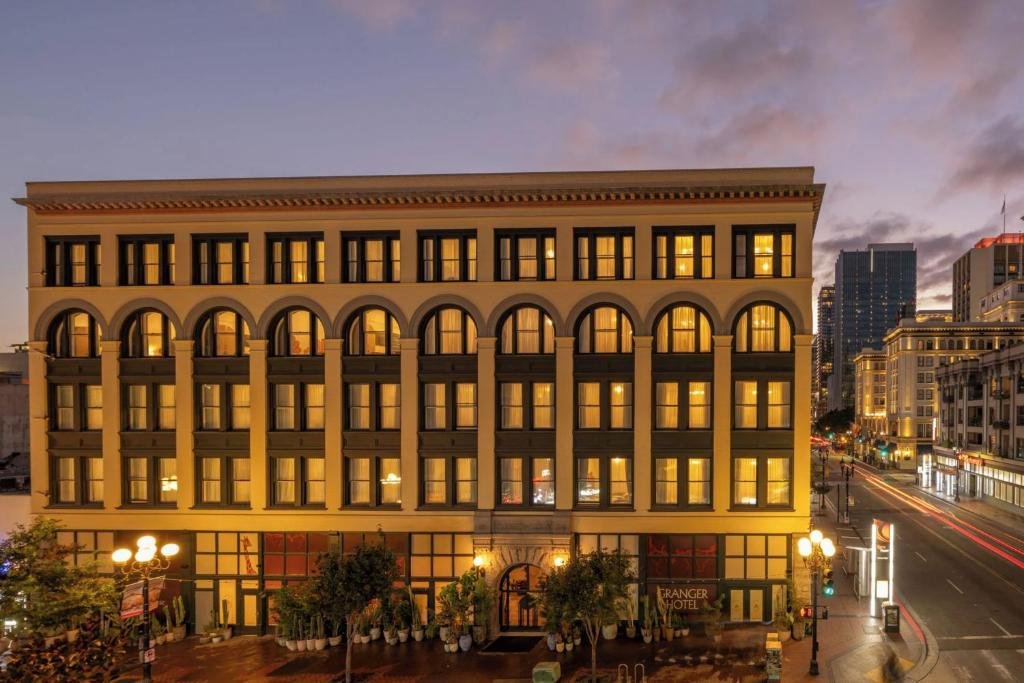
About Granger Hotel Gaslamp Quarter
Occupying a preserved 1904 landmark on 5th Avenue, Granger Hotel Gaslamp Quarter situates itself at the intersection of San Diego's architectural past and its contemporary hospitality ambitions. The building's century-old bones give the property a contextual weight that newer Gaslamp openings simply cannot replicate. For travelers who read a hotel's physical fabric as carefully as its service record, this address makes a credible case.
A 1904 Landmark in the Heart of San Diego's Gaslamp Quarter
Fifth Avenue in the Gaslamp Quarter delivers one of San Diego's more layered street experiences: Victorian commercial facades pressing close to craft cocktail bars, the faint percussion of live music from nearby venues, and the particular urban density that comes when a historic district has been genuinely inhabited rather than merely preserved. The Granger Hotel occupies 964 5th Avenue, a building that dates to 1904 and sits at the center of this accumulated character. In a neighborhood where the tension between heritage and hospitality is ongoing, a property anchored in a structure more than a century old carries a different kind of weight than a purpose-built hotel ever could.
San Diego's hotel market has split into two broad camps over the past decade: large-footprint convention properties that dominate the waterfront and downtown core, and smaller, design-conscious hotels that trade on neighborhood identity and architectural specificity. The Granger belongs to the second group, where the building itself functions as the primary credential. Properties in this tier, including Hotel Indigo San Diego-Gaslamp Quarter by IHG and Andaz San Diego, by Hyatt, compete less on amenity stack and more on how well they translate neighborhood context into the guest experience. The Granger's 1904 provenance places it toward the older end of that cohort, which either reads as an asset or a constraint depending entirely on execution.
The Gaslamp Quarter as Context for the Stay
To understand the Granger, it helps to understand the Gaslamp. The sixteen-block National Historic District was designated in 1980, but most of the significant commercial buildings predate that by seventy to ninety years. The district's Victorian and Edwardian commercial architecture is the result of San Diego's early twentieth-century growth as a Pacific port city, and the Granger building is part of that original fabric, not a later addition styled to match. This is a meaningful distinction. Comparable historic hotel conversions across the United States, from The Fifth Avenue Hotel in New York City to Raffles Boston, demonstrate that the depth of a property's historical grounding tends to shape everything downstream: the guest ritual of arrival, the sensory register of materials underfoot, the specific quality of light through windows sized for a different era.
The Gaslamp Quarter itself operates as a self-contained district after dark, with a concentration of restaurants, bars, and live music venues dense enough that guests rarely need to leave on foot. This is operationally convenient but also culturally distinctive: the neighborhood's energy is visible from street level, and a hotel at this address participates in it whether or not the property makes any deliberate gesture toward it. For travelers comparing San Diego's downtown options, the Gaslamp position trades the waterfront calm of the Embarcadero corridor for proximity to the city's most active entertainment grid. That is a real trade-off, not a deficiency, and the right guest profile will read it as an advantage.
Heritage Hospitality and the Architecture of the Stay
Within California's premium hotel set, there is an established grammar for historic property conversions. The Cosmopolitan Hotel and Restaurant in Old Town San Diego demonstrates one approach, leaning into the Victorian character with period-appropriate furnishings and a restaurant program that references local culinary tradition. At the other end of the spectrum, properties like Auberge du Soleil in Napa or Post Ranch Inn in Big Sur achieve their identity through landscape and material language rather than urban historical context. The Granger's positioning, anchored in the award citation's language about cultural nuances and heritage of the surrounding district, suggests an approach closer to the Cosmopolitan model: the neighborhood's history is the argument, and the property's job is to make that argument legible to guests who have one night or three to spend in it.
The ritual of staying in a building this age tends to organize itself differently than a stay in a purpose-built property. Corridors have proportions set by pre-elevator construction logic. Ceilings carry decorative registers that require different lighting solutions than a poured-concrete contemporary build. These are not complaints; they are the texture of the experience. Travelers who have stayed in comparable landmark conversions, say Troutbeck in Amenia or Badrutt's Palace Hotel in St. Moritz, arrive with calibrated expectations: they are choosing a specific kind of historical encounter over the smooth interchangeability of a modern tower.
Where the Granger Sits in the San Diego Hotel Conversation
San Diego's wider hotel market includes properties that compete on very different axes. Fairmont Grand Del Mar and Beach Village at The Del represent the resort end of the spectrum, where the physical separation from urban density is itself the offering. Estancia La Jolla Hotel and Spa sits in a different suburban register entirely. The Granger's peer set is properly the downtown and Gaslamp cluster, where it competes alongside Alma San Diego Downtown, a Tribute Portfolio Hotel for guests whose preference is urban immersion over resort retreat. For a broader overview of where the Granger sits in the city's hospitality conversation, our full San Diego restaurants guide maps the downtown dining and hotel scene in more detail.
Nationally, the category of urban landmark hotel conversion has produced some of the more memorable stays in American travel. Aman New York, which occupies the Crown Building on Fifth Avenue, and Hotel del Coronado in San Diego itself, represent opposite ends of the investment spectrum within that category. The Granger operates at a different scale and price point than either, but the underlying logic is shared: the building's age and the neighborhood's history do work that a new-build property simply cannot replicate with design alone.
Planning Your Stay
The Granger Hotel Gaslamp Quarter is located at 964 5th Avenue, San Diego, California 92101, within walking distance of the Gaslamp Quarter's primary dining and entertainment corridor. Arrival by rideshare from San Diego International Airport typically takes ten to fifteen minutes depending on traffic, making this one of the more accessible downtown addresses for air travelers. Because phone and website details were not available at the time of publication, prospective guests should search the property directly by name through major booking platforms to confirm current availability, pricing, and reservation process. The Gaslamp Quarter's peak periods track San Diego's convention calendar, particularly Comic-Con in July and various Comic-Con adjacent events, so booking lead times during those windows extend considerably relative to standard travel periods.
Frequently Asked Questions
Which room offers the leading experience at Granger Hotel Gaslamp Quarter?
Specific room categories and configurations were not available in our current data. However, in historic landmark conversions of this type, rooms on upper floors of the original 1904 structure tend to carry the most architectural character, with period proportions and natural light that differs from standard hotel room geometry. Request a room in the original building fabric rather than any later addition, and specify a preference for Fifth Avenue orientation to place you directly in the Gaslamp street context the property is built around.
What should I know about Granger Hotel Gaslamp Quarter before I go?
The hotel occupies a building from 1904, which means the spatial experience is shaped by pre-modern construction standards. Guests who travel with expectations calibrated to a recent-build property may find the proportions and material texture unexpected. The Gaslamp Quarter is an active entertainment district, particularly on weekends, so ambient street noise is part of the address. Plan your arrival with that in mind, and treat the neighborhood's energy as the feature rather than the background.
How hard is it to get in to Granger Hotel Gaslamp Quarter?
San Diego's Gaslamp Quarter hotels experience significant demand compression during convention periods, most notably Comic-Con in mid-July and the various citywide conferences that cluster around the San Diego Convention Center. Outside those windows, the downtown hotel market has enough supply that availability is generally more accessible. Because direct booking contact details were not confirmed at time of publication, check major booking platforms for current room availability and rate structure.
What's the leading use case for Granger Hotel Gaslamp Quarter?
The Granger is leading suited to travelers who want downtown San Diego walkability and a property with genuine historical fabric, rather than resort amenities or waterfront positioning. It addresses the guest who finds the Gaslamp Quarter's density of dining, bars, and live music preferable to the quieter register of properties like Kona Village, A Rosewood Resort or Little Palm Island Resort and Spa. It is a less obvious fit for guests prioritizing resort facilities, spa programming, or beach proximity.
What makes the Granger Hotel historically significant compared to other Gaslamp Quarter hotels?
The Granger building dates to 1904, placing it among the original commercial structures of the Gaslamp Quarter's development as a Pacific port district, rather than a later infill or adaptive reuse of a mid-century building. This makes it directly part of the neighborhood's National Historic District designation story, not simply adjacent to it. For travelers interested in the specific architectural and cultural layers of San Diego's early twentieth-century urban fabric, the building's age functions as a primary credential, in the same way that the Hotel del Coronado's 1888 origins give it a different register than any contemporary property in the city could claim.
Recognized By

More hotels in San Diego
- Alma San Diego Downtown, a Tribute Portfolio HotelAlma San Diego Downtown is a practical, well-located Tribute Portfolio hotel on Fifth Avenue in the heart of Downtown. It is the right pick for first-timers who want walkable access to the Gaslamp Quarter and city attractions without resort pricing. Families needing pool and resort amenities should look elsewhere, but for an urban base it is easy to book and genuinely convenient.
- Andaz San Diego, by HyattAndaz San Diego delivers a design-forward stay in the heart of the Gaslamp Quarter at 600 F St — a strong pick for business travelers and couples who want walkable access to downtown dining and nightlife. The rooftop pool is the standout amenity. Book here when location and contemporary atmosphere matter more than resort-scale facilities.
Related editorial
- Best Fine Dining Restaurants in ParisFrom three-Michelin-star icons to the next generation of Parisian chefs pushing boundaries, these are the restaurants that define fine dining in the world's culinary capital.
- Best Luxury Hotels in RomeFrom rooftop terraces overlooking ancient ruins to Michelin-starred hotel dining, these are the luxury hotels that make Rome unforgettable.
- Best Cocktail Bars in KyotoFrom sleek lounges to hidden speakeasies, Kyoto's cocktail scene blends Japanese precision with global influence in ways you won't find anywhere else.
Save or rate Granger Hotel Gaslamp Quarter on Pearl
Keep this venue in your Pearl passport, rate it after you visit, and track it alongside every other place you collect.