
Hotel in Stockholm, Sweden
Grand Hôtel Stockholm
1,800ptsNobel-Era Waterfront Grandeur




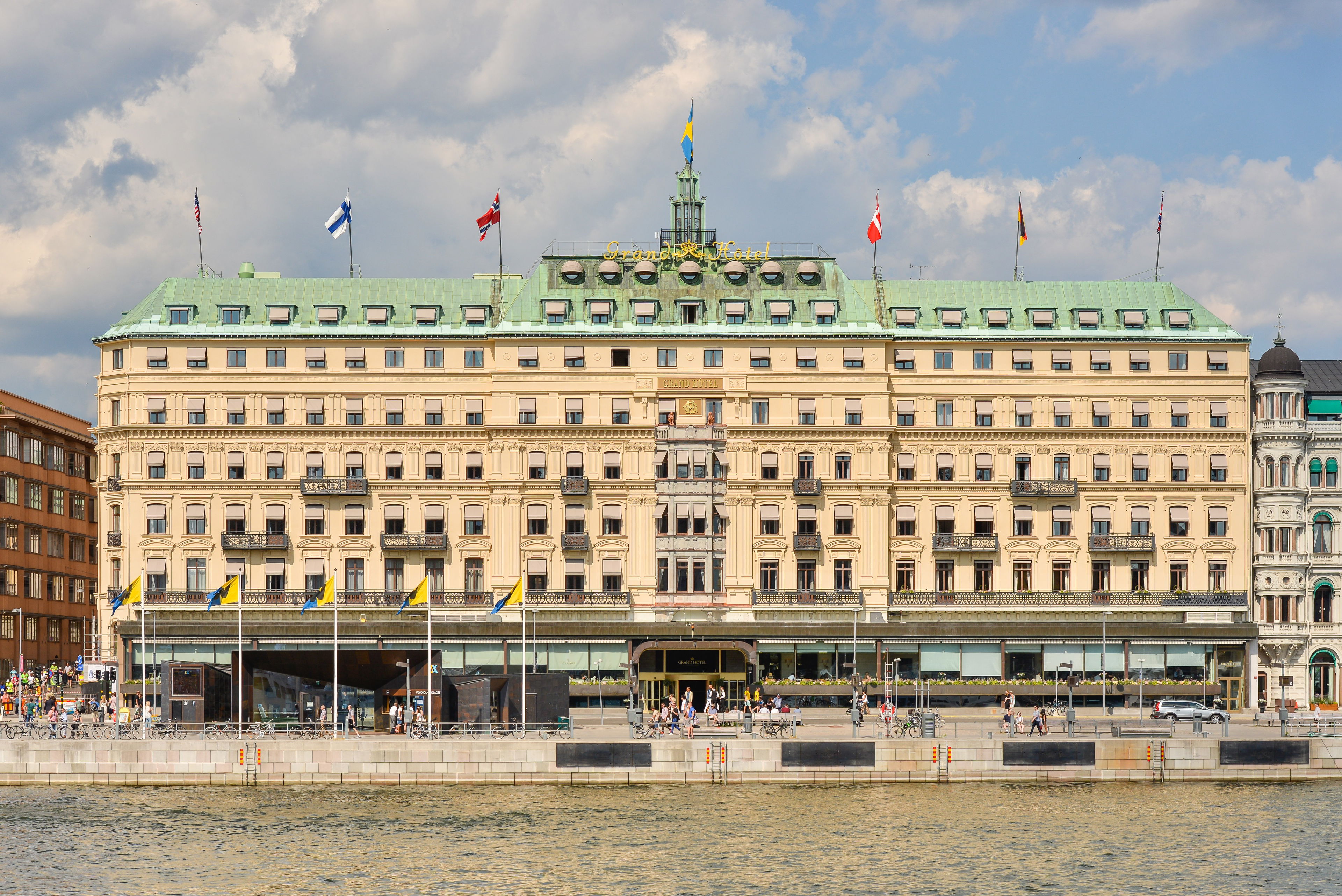
About Grand Hôtel Stockholm
Operating from the same waterfront address since 1874, Grand Hôtel Stockholm faces the Royal Palace across the water and has housed Nobel Prize banquets, foreign dignitaries, and everyday travellers seeking a specifically Swedish kind of grandeur. With 279 rooms, multiple awarded restaurants including Mathias Dahlgren's Matbaren and Rutabaga, and consecutive Star Wine List recognition from 2019 through 2026, the property occupies the top tier of Stockholm's hotel scene.
Where Gamla Stan Begins and Grand Hotels End
Approach Grand Hôtel Stockholm from Södra Blasieholmshamnen and the building announces itself before you reach the door: turrets and towers rise above the waterfront, the Royal Palace fills the view across the water, and Gamla Stan's roofline curves behind it. This is not an accidental location. The hotel has occupied this position since 1874, and the address has shaped its identity more than any renovation or rebrand ever could. Stockholm is a city where water defines orientation, and the Grand sits at the point where the harbour, the old town, and the modern city converge. Arriving here, particularly in the long-light hours of a Swedish summer evening, makes the geography of the city immediately legible.
Inside, the property does not chase contemporary minimalism. There is no blonde wood, no platform furniture, no gesture toward the stripped-back Scandinavian aesthetic that defines a generation of newer Stockholm hotels. The interiors are classical in the full sense: stately pillars, fishbone flooring, high ceilings, Italian marble baths. The hotel ballroom replicates the Hall of Mirrors at Versailles with an earnestness that is, depending on your disposition, either magnificent or absurd. Either way, it is deliberate. The Grand has 279 rooms across its main building and the adjoining Burmanska Palatset, acquired in 2004 and renovated by 2006. Guests wanting the more contemporary wing should book a deluxe room or executive suite to ensure placement there. In the main building, room scale varies but the decorative grammar remains consistent: classic furnishings, silk robes, marble bathrooms, and suites that expand into salons and drawing rooms of near-comedic scale.
The Culinary Programme and Its Swedish Roots
Grand-hotel dining in Europe has followed a familiar arc: flagship restaurants that once defined the category gradually soften into ambient fare for a captive audience. The Grand Hôtel Stockholm has resisted that pattern through the sustained involvement of Mathias Dahlgren, one of Sweden's most recognised chefs, who directs two distinct restaurants within the property. Matbaren operates as a modern bistro, informal by the hotel's standards, while Rutabaga positions itself as a serious vegetarian restaurant at a time when plant-forward fine dining has moved from fringe to mainstream across the Nordic capitals. These are not hotel restaurants in the passive sense; they compete within Stockholm's broader dining scene on their own terms.
The ingredient logic that runs through Nordic cooking more broadly applies here. Swedish culinary tradition has long been built around what the season and the landscape provide: foraged herbs, cured and preserved fish, root vegetables that survive the winter, dairy from small producers. The smörgåsbord format served at the Grand Veranda is perhaps the most direct expression of this, a tradition that organises a meal around sourcing and preservation rather than around individual dishes. The Veranda's smörgåsbord is identified as a classic of its kind, a reference point for the format in the city. Breakfast in the Cadier Bar or the Veranda arrives against panoramic windows looking out over the water and the palace, which is, in practical terms, one of the better breakfast views in Northern Europe.
The wine programme across the property has earned Star Wine List recognition in every year from 2019 through 2026, a sustained run that places the Grand among the more consistently recognised hotel wine programmes in Scandinavia. The Champagne Bar and Wine Cellar serve particular purposes within the building, but the Cadier Bar functions as the hotel's social anchor: a full food and drink menu, a design that reads mid-century without being a costume, and a position in Stockholm's after-work and late-evening culture that extends well beyond hotel guests.
The Nobel Connection and What It Signals
Until the late 1920s, every Nobel Prize banquet was held at the Grand Hôtel Stockholm. The ceremony eventually outgrew the property, but laureates and their families have continued to use the hotel around the annual December gathering. This is a detail worth sitting with, not as prestige decoration but as a signal about the property's operating register. A hotel that functions as the preferred base for Nobel week is one that has earned sustained trust from a particularly demanding category of traveller: people for whom discretion, logistical precision, and a certain quality of service are prerequisites rather than amenities.
That service register extends to transport. The hotel operates a chauffeured fleet that includes Mercedes S-Class and Bentley Mulsanne vehicles for private transfers and airport runs. For a property at this price point (rooms from approximately $305), this is an expected feature rather than a differentiator, but it reflects the operational completeness that separates a Leading Hotels of the World member from properties that price similarly without the infrastructure. The Grand has held Leading Hotels of the World membership continuously through at least 2025.
The Spa, and What Nordic Wellness Actually Means Here
The Nordic Spa and Fitness club operates across eight rooms and offers a set of treatments calibrated to Scandinavian context rather than generic luxury spa programming. The Nordic Beauty treatment combines a cranberry scrub, steam bath, harmony massage, and organic facial across 90 minutes. Hot saunas and cool dipping pools follow the traditional Nordic heat-and-cold cycle that has become internationally fashionable, though here the practice predates the trend by a significant margin. The spa is positioned as a complement to the hotel's sense of place rather than a standalone draw, which is the appropriate framing for a property where the room, the view, and the restaurant programme already carry substantial weight.
Stockholm's Hotel Tier and Where the Grand Sits
Stockholm's upper hotel market has fragmented over the past decade. Smaller, design-led properties like Ett Hem and At Six have built strong followings among travellers who prefer limited-key environments and contemporary programming. Bank Hotel, Berns Hotel, and Blique by Nobis occupy different positions across the design-forward and lifestyle segments. Haymarket by Scandic, Backstage Hotel Stockholm, and Freys Hotel serve the upper-mid tier. The Grand sits apart from all of these, not because it outperforms them on any single axis, but because its combination of scale (279 rooms), location (the single most prominent waterfront address in the city), culinary depth, and institutional history creates a profile without a direct peer in Stockholm. The comparison set is more accurately drawn from European grand hotels than from local competitors: properties like Hôtel de Paris Monte-Carlo or Badrutt's Palace Hotel in St. Moritz, which share the same operating logic of location, longevity, and a sustained culinary programme within a historically significant building.
For those exploring Sweden beyond Stockholm, the country's hotel range extends considerably: Arctic Bath in Harads, Vyn Restaurant in Östra Nöbbelöv, Fjällbacka, Görvälns Slott in Järfälla, Marstrands Kurhotell in Marstrand, and Dorsia Hotel and Restaurant in Gothenburg each represent different expressions of Swedish hospitality. For a wider view of dining and drinking in the capital, see our full Stockholm guide.
Planning Your Stay
The hotel sits at Södra Blasieholmshamnen 8, centrally placed for Östermalm's retail and museum strip, the Nationalmuseum immediately adjacent, and walking access to Gamla Stan across the bridge. Rooms start from around $305 per night. The property's 24-hour room service, spa, gym, meeting rooms, and multiple restaurant and bar options make it function as a largely self-contained environment, though the location puts some of Stockholm's strongest cultural and dining addresses within easy reach on foot. For airport transfers, the chauffeured vehicle fleet can be arranged directly through the hotel. Advance booking is advised for the Mathias Dahlgren restaurants, particularly Rutabaga, which draws from Stockholm's restaurant-going public as well as hotel guests.
Frequently Asked Questions
- What's the most popular room type at Grand Hôtel Stockholm?
- The property's 279 rooms span the main 1874 building and the Burmanska Palatset wing, which was renovated in 2006 and tends to appeal to guests who prefer a more contemporary feel within the broader classical property. Deluxe rooms and executive suites are the designated categories for the Burmanska building. In the main building, suites can extend across five rooms including salons and drawing rooms, and the better-positioned rooms look directly over the harbour toward the Royal Palace and Gamla Stan. The Star Wine List recognition (2019 through 2026) and Leading Hotels of the World membership signal the consistent standard maintained across room categories.
- What's the defining thing about Grand Hôtel Stockholm?
- The combination of the waterfront address opposite the Royal Palace, the hotel's operational continuity since 1874, and a culinary programme anchored by Mathias Dahlgren's two restaurants and a multi-year Star Wine List track record is without a direct equivalent in Stockholm. The Nobel Prize banquets were held here until the late 1920s, and that institutional relationship with the annual ceremony has continued informally through the laureates and their families who use the property each December. At a starting rate of around $305 per night as a Leading Hotels of the World member, the Grand prices within the upper tier of the Stockholm market and delivers a scale and historical depth that newer competitors do not replicate.
- Do they take walk-ins at Grand Hôtel Stockholm?
- As a 279-room hotel, the Grand Hôtel Stockholm operates with standard advance reservation protocols rather than a walk-in model, and availability at short notice is limited particularly around December when Nobel week concentratesdemand. The Cadier Bar, which serves as the hotel's primary social venue with a full food and drink menu, is more accessible without a reservation, though popular periods fill quickly. For the Mathias Dahlgren restaurants, advance booking is strongly advised. Contact and booking details are available through the hotel's own channels at Södra Blasieholmshamnen 8, Stockholm.
Recognized By


Related editorial
- Best Fine Dining Restaurants in ParisFrom three-Michelin-star icons to the next generation of Parisian chefs pushing boundaries, these are the restaurants that define fine dining in the world's culinary capital.
- Best Luxury Hotels in RomeFrom rooftop terraces overlooking ancient ruins to Michelin-starred hotel dining, these are the luxury hotels that make Rome unforgettable.
- Best Cocktail Bars in KyotoFrom sleek lounges to hidden speakeasies, Kyoto's cocktail scene blends Japanese precision with global influence in ways you won't find anywhere else.
Save or rate Grand Hôtel Stockholm on Pearl
Keep this venue in your Pearl passport, rate it after you visit, and track it alongside every other place you collect.