
Hotel in Havana, Cuba
Gran Hotel Manzana Kempinski La Habana
225ptsColonial Arcade Reinvention

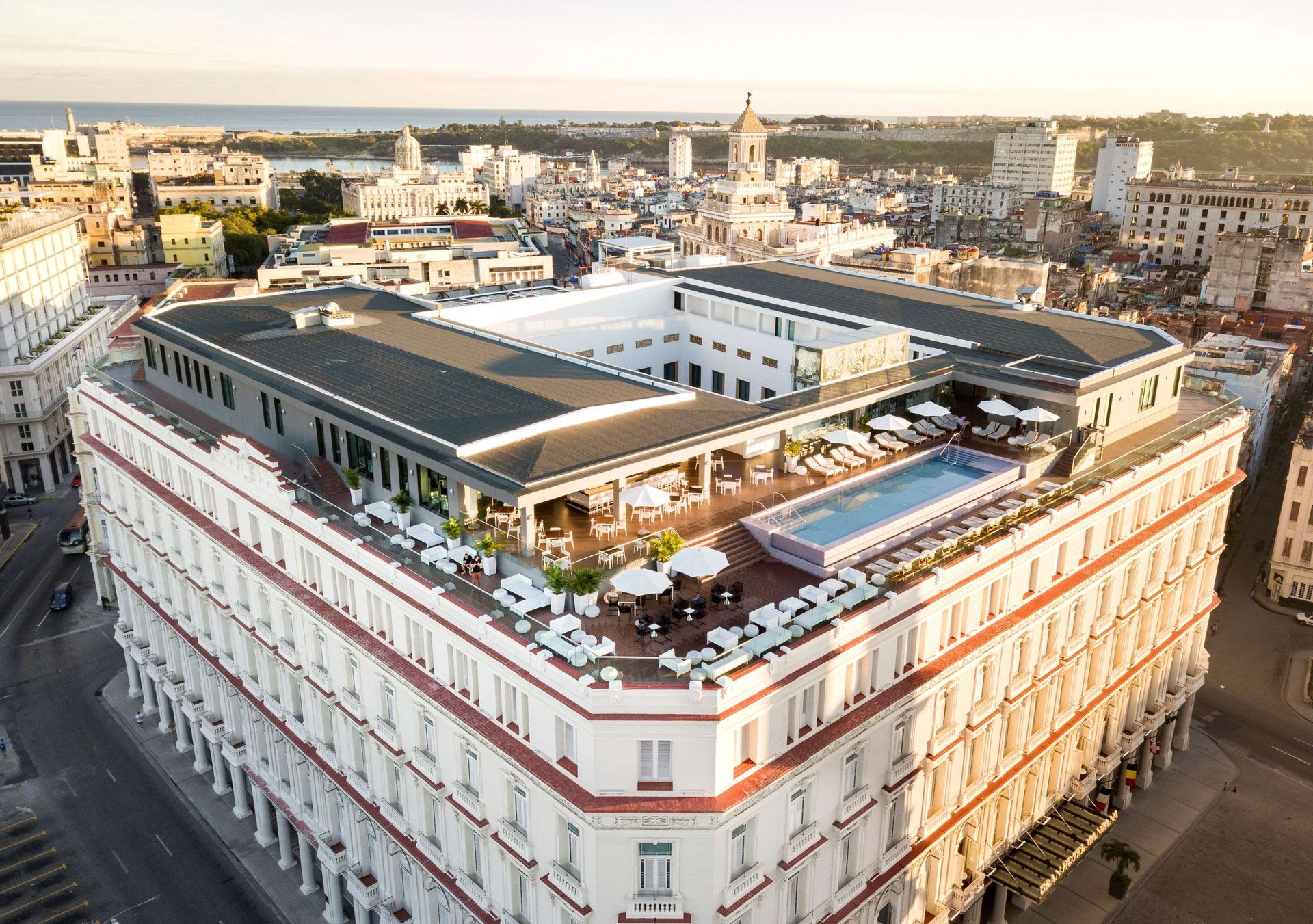
About Gran Hotel Manzana Kempinski La Habana
Occupying a restored early-20th-century block on Calle San Rafael in Old Havana, Gran Hotel Manzana Kempinski La Habana earned a 93.5-point score from La Liste's 2026 Top Hotels ranking, placing it among the continent's most recognised addresses. Its position at the intersection of the Prado and the colonial core gives guests immediate access to the city's densest concentration of landmarks, on foot.
Where the Address Does the Work
Old Havana's street grid does not yield its leading moments to taxis. The neighbourhood rewards walking: the Capitolio dome appears between buildings, the Prado's marble benches fill with chess players in the afternoon, and the Malecón seafront is never more than ten minutes on foot from the colonial core. Gran Hotel Manzana Kempinski La Habana sits at Calle San Rafael, at the corner where the historic centre concentrates most of what draws visitors to this city in the first place. That address is not incidental to the hotel's proposition — it is the proposition, more than any room category or amenity list could be.
In cities with mature luxury hotel markets, a strong address is taken for granted. Havana's market is different. International-grade accommodation is thin across the city, and the few properties that combine physical scale, restoration quality, and location in the colonial core form a very short list. La Liste's 2026 Leading Hotels ranking awarded the hotel 93.5 points, placing it in a global cohort that includes properties such as Cheval Blanc Paris, Le Bristol Paris, and Hotel Plaza Athénée in Paris. The score speaks to a standard of physical restoration and service delivery that the Cuban market has historically found difficult to sustain.
The Building and the Block
The hotel occupies what was once the Manzana de Gómez, a late-19th to early-20th-century commercial arcade considered the first shopping centre in Latin America. The arcade's galleried perimeter, high ceilings, and layered ironwork are characteristic of Havana's particular strain of Spanish colonial architecture augmented by French neoclassical influence — a combination found in concentrated form in very few other Caribbean cities. A restoration that had to honour that existing fabric while installing contemporary infrastructure faced constraints that new-build luxury hotels never encounter. The result is a building where period detail and operational modernity coexist without the seams that often show when heritage structures are converted at speed.
For guests arriving from cities where grand historic hotels are commonplace , Hotel Sacher Wien in Vienna, Badrutt's Palace Hotel in St. Moritz, or Hôtel de Paris Monte-Carlo , the Manzana's architectural context will be legible immediately. For travellers more accustomed to contemporary luxury formats, the building itself is the first lesson in what distinguishes Cuban urbanism from every other market in the region.
Havana's Hotel Tier and Where This Property Sits
Havana's accommodation options divide roughly into three categories: state-managed legacy hotels of uneven quality, smaller private casa particulares and boutique guesthouses, and a narrow tier of internationally operated properties with consistent standards. The hotel sits firmly in that third category, which contains very few addresses in total. Hotel Nacional de Cuba is the city's other landmark of comparable scale, carrying significant historical associations but operating under different management and physical condition. Meliá Cohiba occupies a later-20th-century building in Vedado and targets a different traveller profile with a more corporate orientation. For guests whose frame of reference is the kind of heritage luxury delivered in properties like Mandarin Oriental Ritz, Madrid or Hotel Du Cap-Eden-Roc, the Manzana Kempinski is the closest functional equivalent this city currently provides.
Smaller private options , Casa Lilly and Hostal Silvia VEDADO , occupy a different part of the market entirely, offering a more embedded local experience with less operational infrastructure. The decision between a casa particular and the Manzana is not really a comparison of like with like; it is a question of what kind of access to the city a traveller wants, and how much operational reliability they require.
The Neighbourhood Beyond the Door
The specific block on Calle San Rafael places the hotel within walking distance of the Museo Nacional de Bellas Artes, the Gran Teatro de La Habana, and the Capitolio , the cluster of civic institutions that defines the western edge of the colonial centre. The Prado, Havana's answer to Las Ramblas or the Paseo del Prado in Madrid, runs nearby and connects the colonial core to the Malecón waterfront in a single pedestrian axis. This is the city's most concentrated stretch of daily life: bookstalls, musicians rehearsing under colonnades, and the kind of unscripted street activity that makes Havana photographically and experientially distinct from nearly every other city in the Caribbean basin.
For guests who want to reach Vedado's mid-century residential streets, the art deco neighbourhood around the Necrópolis de Colón, or the paladares (private restaurants) that have expanded significantly since the early 2010s, the hotel's position allows day trips in multiple directions without requiring a dedicated driver for every movement. Havana's taxi and bicitaxi infrastructure is functional but unpredictable; the ability to walk to the primary destinations and negotiate transportation from a central point rather than a peripheral one is a practical advantage that rewards the Old Havana address over options further out. Consult our full Havana restaurants guide for current paladar recommendations and neighbourhood-by-neighbourhood dining context.
Planning Your Stay
Cuba's tourism infrastructure requires more advance planning than most comparable Caribbean destinations. International payment systems function differently on the island, and logistics that travellers take for granted elsewhere , mobile data roaming, card transactions, booking confirmations , require preparation before arrival rather than improvisation on the ground. The Kempinski affiliation provides a degree of booking reliability and international payment processing that independent or state-managed properties often cannot match; for first-time visitors to Cuba in particular, that operational layer removes a meaningful category of friction.
The hotel's La Liste recognition (93.5 points, 2026) makes it the most externally validated address in the city by that measure, and its booking should be treated accordingly: demand from an international visitor base with limited alternatives in the same tier means availability at peak periods is constrained. Travellers arriving during the November to April high season, when Havana's climate is at its most settled and international visitor numbers peak, should expect the most competitive booking conditions. For comparison, properties of similar standing in other Latin American cities , Hotel Esencia in Tulum or Playa Luxury Cayo Guillermo further along Cuba's northern coast , operate in markets with more alternatives; the Manzana Kempinski has no direct substitute in Havana's colonial core.
Frequently Asked Questions
- What is the main draw of Gran Hotel Manzana Kempinski La Habana?
- The combination of address and La Liste recognition (93.5 points, 2026 Leading Hotels) makes this the most externally validated international-standard property in Havana's colonial centre. The building's historical significance and its proximity to the city's primary civic and cultural landmarks on foot are the practical benefits that flow directly from that position.
- What is the leading room type at Gran Hotel Manzana Kempinski La Habana?
- Specific room category details are not available in our current database. As a La Liste Leading Hotels property with a 93.5-point score, the hotel sits in a tier where suite-level accommodation typically provides the most direct engagement with the building's original architectural fabric. Confirming which room configurations face the Prado or overlook the colonial street grid is worth doing directly at the booking stage.
- What is the leading way to book Gran Hotel Manzana Kempinski La Habana?
- Given Cuba's payment infrastructure, booking through the Kempinski international reservations system or a travel specialist with Cuba experience is advisable over local booking channels. Phone and website details are not available in our current database; use the Kempinski global reservations platform or contact a Cuba-specialist travel agent who can confirm real-time availability and advise on payment logistics before arrival.
Recognized By

Related editorial
- Best Fine Dining Restaurants in ParisFrom three-Michelin-star icons to the next generation of Parisian chefs pushing boundaries, these are the restaurants that define fine dining in the world's culinary capital.
- Best Luxury Hotels in RomeFrom rooftop terraces overlooking ancient ruins to Michelin-starred hotel dining, these are the luxury hotels that make Rome unforgettable.
- Best Cocktail Bars in KyotoFrom sleek lounges to hidden speakeasies, Kyoto's cocktail scene blends Japanese precision with global influence in ways you won't find anywhere else.
Save or rate Gran Hotel Manzana Kempinski La Habana on Pearl
Keep this venue in your Pearl passport, rate it after you visit, and track it alongside every other place you collect.