
Hotel in Fujikawaguchiko, Japan
Fufu Kawaguchiko
625ptsFuji-View Private Onsen Ryokan

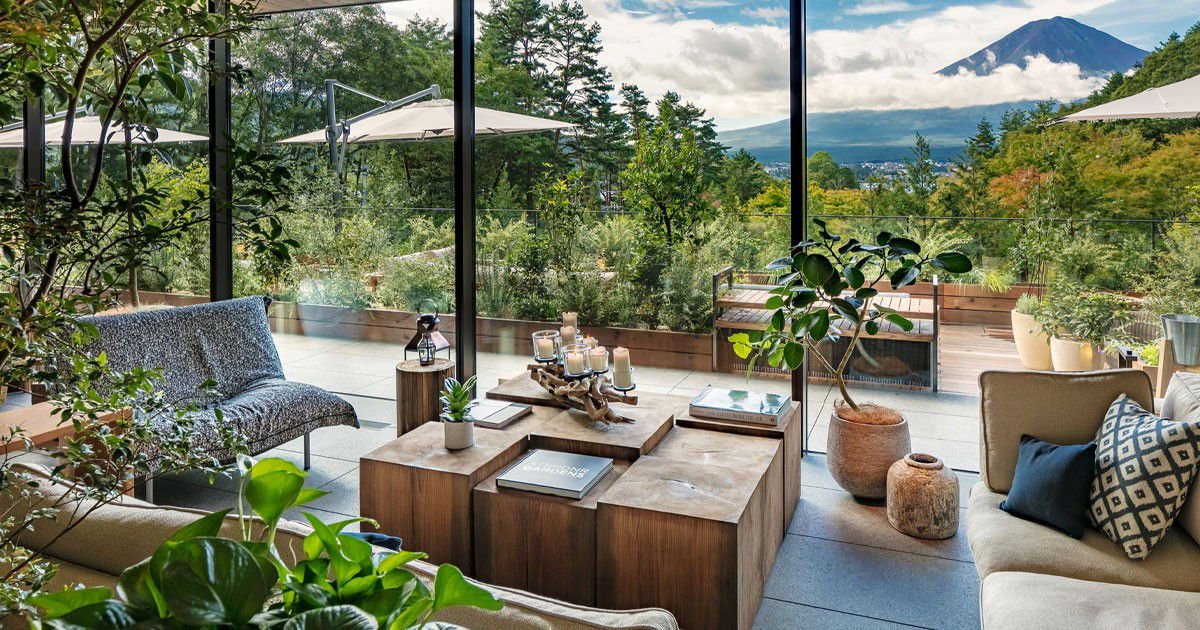
About Fufu Kawaguchiko
A 32-room modern ryokan in Fujikawaguchiko awarded Michelin 2 Keys (2024), Fufu Kawaguchiko delivers unobstructed Mt. Fuji views from every room alongside private onsen baths and kaiseki dining anchored in Yamanashi regional ingredients. The property sits within the smaller, design-disciplined tier of Japanese luxury lodging, where quietude and material restraint define the guest experience as much as the view.
Mt. Fuji and the Modern Ryokan Tradition
Lake Kawaguchi sits on the northwestern flank of Mt. Fuji, close enough that the mountain occupies not just the horizon but the psychological centre of any stay in the area. The hotels that perform leading here are the ones that treat that proximity as a compositional responsibility, not merely a selling point. Fufu Kawaguchiko belongs to this more considered group: its 32 rooms are arranged so that every one of them faces the mountain directly, placing the guest in an unmediated relationship with the view from the moment they wake.
The modern ryokan format that Fufu Kawaguchiko occupies has grown considerably more precise as a category in the last decade. It is distinct from both the grand traditional inn, with its hundreds of rooms and banquet-scale operations, and from the boutique Western-format hotel that has simply added a Japanese bath. The modern ryokan works at lower capacity, uses natural and organic materials throughout, integrates private onsen bathing as a structural feature rather than an amenity, and grounds its food programme in hyper-local sourcing. Michelin's 2024 recognition of Fufu Kawaguchiko with 2 Keys positions it firmly within the upper tier of this format nationally, placing it alongside properties that have made the same set of commitments across Japan.
The Dining Programme: Kaiseki as Regional Document
The editorial angle worth holding onto at a property like this is not the view — that is a given — but the food. Kaiseki is the culinary tradition through which Japan's luxury ryokan sector most clearly expresses its sense of place, and at Fufu Kawaguchiko the programme is built around Yamanashi regional ingredients and the seasonal logic that defines classic kaiseki structure.
Yamanashi is a landlocked prefecture, which shapes the ingredient vocabulary in ways that differ sharply from coastal ryokan destinations like Ito or Kinosaki. The prefecture's rivers, forests, and agricultural plains produce the primary materials: freshwater fish, mountain vegetables, fungi, and the fruit for which the region is particularly noted. A kaiseki sequence here does not follow the same coastal paradigm as, say, Amanemu in Mie, where Ise-wan seafood defines the programme, or Nishimuraya Honkan in Kinosaki, where the San'in coastline supplies the defining ingredients. At Fufu Kawaguchiko, the kaiseki reads as a document of mountain-prefecture produce, which is a rarer and more specific culinary position than the more commonly encountered coastal ryokan format.
Kaiseki's formal structure, typically moving through soup, sashimi where available, grilled, simmered, and steamed courses before arriving at rice, pickles, and dessert, provides the container; the regional ingredient selection provides the content. Both are necessary. Properties that execute the structure competently but fill it with generic luxury ingredients (Wagyu beef imported from Hyogo, Pacific seafood regardless of proximity) produce a less coherent result than those that submit the structure to local supply. The Fufu Kawaguchiko programme's commitment to showcasing regional ingredients is, in this context, a serious culinary position, not a marketing note.
Compared to kaiseki operations at properties in Hakone, which functions as the more internationally well-known ryokan corridor closer to Tokyo, the Fujikawaguchiko setting delivers a different ingredient logic. Gora Kadan in Hakone operates within a tradition shaped by Kanagawa's volcanic terrain and its proximity to Sagami Bay; Fufu Kawaguchiko's Yamanashi context produces a distinctly different seasonal vocabulary despite both properties occupying the modern ryokan tier with comparable Michelin recognition.
Property Architecture: What 32 Rooms Actually Means
The capacity figure matters operationally. At 32 rooms, Fufu Kawaguchiko sits in a scale range where the kitchen can serve every guest a genuine kaiseki sequence without the production compromises that become unavoidable at larger properties. The onsen facilities, whether indoor or outdoor, do not require the crowd management that larger establishments need. The staff-to-guest ratio can be maintained at the level that makes ryokan hospitality function as intended.
Eco-friendly operations and natural, organic materials are architectural commitments at this scale rather than policy statements. The modern ryokan design idiom draws on a specific Japanese material vocabulary: timber, stone, washi paper, ceramic, linen and cotton textiles, with natural light as a structural element. In the Kawaguchi context, that material approach aligns with the mountain environment outside rather than competing with it. Properties that introduce heavy international luxury finishes in this setting typically create a visual dissonance that works against the coherence of the ryokan experience.
Private onsen baths at room level are now a baseline expectation in the upper tier of this format. At properties like Zaborin in Hokkaido, Asaba in Izu, and ENOWA Yufu in Yufu, private bathing is embedded in the room design rather than offered as an upgrade. Fufu Kawaguchiko follows the same logic, positioning private onsen access as part of the room category structure rather than a supplementary charge.
Where Fufu Kawaguchiko Sits in the National Picture
Japan's Michelin 2 Keys designation, introduced in 2024 as part of the guide's expanded hotel recognition programme, signals a specific standard of hospitality craft and environmental integration. In the ryokan segment, the 2 Keys tier includes properties with serious food programmes, material integrity, and service that reads as genuinely Japanese in character rather than internationally standardised. Fufu Nikko in Nikko represents the same brand's approach applied to a different historical and natural setting, which offers a useful comparison for those assessing the Fufu group's consistency across properties.
The broader competitive set for Fufu Kawaguchiko includes properties across Japan's premium ryokan tier: Araya Totoan in Kaga, Beniya Kofuyuden in Awara, Bettei Otozure in Nagato, and Atami Izusan Karaku in Atami. Each of these properties occupies a distinct regional position with its own ingredient story and onsen chemistry. The Kawaguchi entry point offers the Mt. Fuji visual dimension, which none of those properties can replicate, alongside a Yamanashi food programme that has its own regional specificity. HOSHINOYA Fuji, operating in the same geographic area, occupies a different format position: it targets a more outdoor-activity-oriented guest rather than the quietude-first ryokan traveller.
For guests arriving from Tokyo and comparing across premium Japanese accommodation formats before committing, properties like HOTEL THE MITSUI KYOTO and Bvlgari Hotel Tokyo occupy an entirely different register: urban, internationally luxury-coded, and operating outside the ryokan tradition. They are not competitors for the same type of stay. Fufu Kawaguchiko is for guests who are specifically choosing the ryokan format, the mountain setting, and the kaiseki dining experience as a complete programme.
The property holds a Google rating of 4.5 across 639 reviews, a volume that provides meaningful signal at this price tier, where guests tend to leave detailed and considered feedback rather than brief ratings. See our full Fujikawaguchiko restaurants guide for additional context on the area's dining and accommodation options.
Planning a Stay
Fujikawaguchiko sits roughly 100 kilometres west of central Tokyo, accessible by direct highway bus from Shinjuku in approximately two hours, or by a combination of the Fujikyu Railway from Otsuki. The mountain's visibility is weather-dependent: autumn and winter typically deliver the clearest views, with the surrounding foliage adding a second compositional layer in late October and early November. Spring cherry blossom season brings peak demand across the Fuji Five Lakes area, which means booking windows extend considerably further ahead than the off-peak norm. Given that room inventory totals 32 units, availability at Fufu Kawaguchiko tightens faster than at larger properties during high-demand periods. Enquiries and bookings are managed directly through the property. Current room availability should be confirmed in advance, as pricing and allocation shift seasonally.
Frequently Asked Questions
What is the defining thing about Fufu Kawaguchiko?
The combination of unobstructed Mt. Fuji views from all 32 rooms and a Michelin 2 Keys (2024)-recognised format built around private onsen bathing and kaiseki dining rooted in Yamanashi regional ingredients. No other element operates in isolation: the view, the food, and the bathing are designed as an integrated experience within the modern ryokan tradition rather than as separate amenities stacked together.
Which room category should I book at Fufu Kawaguchiko?
All rooms carry direct Mt. Fuji views and private onsen access, which means the structural features of the experience do not require an upgrade to access. The meaningful differentiation between categories at a 32-room property of this type typically comes down to floor height, room size, and whether the onsen is positioned to allow views while bathing. Contact the property directly to confirm current room category specifics, as configuration details are not publicly listed. The Michelin 2 Keys designation applies to the property as a whole, not to a specific tier within it.
Do I need a reservation for Fufu Kawaguchiko?
Yes, and at 32 rooms, advance booking is not optional during peak periods. Autumn foliage season (late October to mid-November) and the cherry blossom window (late March to mid-April) see the Fuji Five Lakes area at its most congested, and a property of this size sells out weeks or months ahead. The Michelin 2 Keys designation has raised the property's profile nationally, which has shortened available booking windows relative to pre-recognition periods. Book directly through the property; no website or phone number is currently listed in public directories, so approach via travel concierge or specialist Japan booking services if direct contact is difficult to establish.
Recognized By

Related editorial
- Best Fine Dining Restaurants in ParisFrom three-Michelin-star icons to the next generation of Parisian chefs pushing boundaries, these are the restaurants that define fine dining in the world's culinary capital.
- Best Luxury Hotels in RomeFrom rooftop terraces overlooking ancient ruins to Michelin-starred hotel dining, these are the luxury hotels that make Rome unforgettable.
- Best Cocktail Bars in KyotoFrom sleek lounges to hidden speakeasies, Kyoto's cocktail scene blends Japanese precision with global influence in ways you won't find anywhere else.
Save or rate Fufu Kawaguchiko on Pearl
Keep this venue in your Pearl passport, rate it after you visit, and track it alongside every other place you collect.