
Hotel in Minneapolis, United States
Four Seasons Hotel Minneapolis
625ptsSkyway-Connected High-Rise

About Four Seasons Hotel Minneapolis
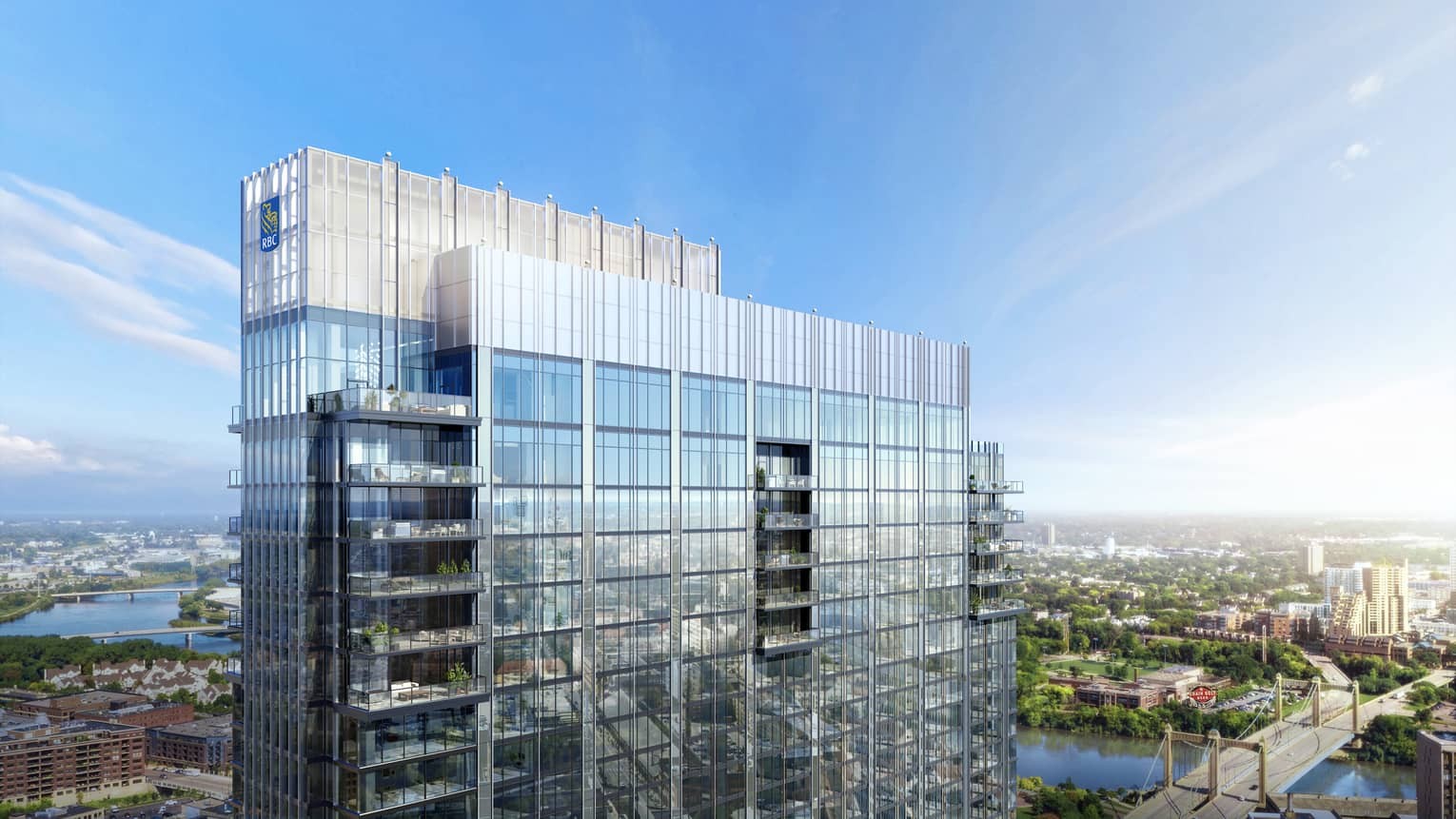
A skyline-defining high-rise at 245 Hennepin Ave, Four Seasons Hotel Minneapolis holds a 2024 Michelin One Key and 222 rooms positioned to capture Mississippi River views or downtown sunsets through floor-to-ceiling glass. Its lobby connects directly to the Skyway network, making it as much a social anchor for the city as it is a place to sleep. Rates from $396 per night.
A Midwestern Skyline Redrawn in Glass and Light
Standing at the corner of Hennepin Avenue on a winter morning, with the Minneapolis Skyway system humming at street level and the upper floors catching the first pale light off the Mississippi, the Four Seasons Hotel Minneapolis reads as something the city has been building toward for decades. The skyscraper tradition that gave American downtowns their vertical ambition finds an updated expression here: 222 rooms rising above a city that has, in the past fifteen years, remade its hospitality identity with some seriousness. This is not a property that arrives as a gentle addition to the Minneapolis hotel scene. It arrives as a structural argument about where the city sits in the American luxury tier.
The building's design carries a deliberate debt to Art Deco, the movement that defined the golden age of the high-rise and gave cities like Minneapolis their first taste of architectural bravado. Floor-to-ceiling windows and an absence of hard interior angles create rooms that feel open rather than boxed in, and the effect is most pronounced in the early morning and late at night, when natural light or the city's ambient glow moves through the glass in ways that a lower-profile property simply cannot replicate. Height, in this context, is not an amenity — it is the organizing principle of the guest experience.
Minneapolis's High-Rise Hotel Tradition and Where This Property Sits
The Minneapolis luxury hotel market has historically split between adaptive-reuse properties that trade on neighbourhood character and newer builds that compete on infrastructure and brand reach. The Hewing Hotel and Alma sit firmly in the former camp, drawing their identity from the North Loop's warehouse fabric. Nicollet Island Inn works a different register entirely, its Victorian-era bones setting a pace that is closer to retreat than urban hotel. The Four Seasons Hotel Minneapolis enters from the opposite direction: a new tower on Hennepin Avenue whose competitive peer set is defined less by neighbourhood texture than by brand infrastructure and room count.
At 222 rooms and a published rate starting around $396, the property prices into the upper bracket of the Minneapolis market, sitting above mid-tier options like Aloft Minneapolis and positioning itself closer to Hotel Ivy, A Luxury Collection Hotel, Minneapolis and The Chambers Hotel on the prestige scale, though it operates at a different scale of ambition than either. The Michelin Key recognition awarded in 2024 confirms what the room rate implies: this is a property operating to a standard that the broader Minneapolis market does not routinely achieve.
The Michelin Key program, introduced to evaluate hotels with the same rigour applied to restaurants, uses a framework that weighs architecture, service consistency, and the quality of the overall guest experience. A single Key designation in 2024 places the Four Seasons Minneapolis in the first tier of that system, a recognition that carries more evidentiary weight than most hospitality awards because it comes from evaluators with no commercial relationship to the property. For context, the Key program operates across a small number of American cities, and Minneapolis is not a city where the designation was expected to cluster heavily. That it landed here says something about the property's execution and something about the city's trajectory.
The Skyway Factor and the Urban Lobby
What sets this property apart from Four Seasons hotels in more conventional luxury markets is the Skyway connection. Minneapolis's Skyway system, a network of enclosed pedestrian bridges linking downtown buildings across roughly eighty blocks, is one of the more unusual urban infrastructures in any American city. It developed as a practical response to winters that regularly send temperatures below zero Fahrenheit, and over decades it has become a social and commercial artery in its own right. The Four Seasons lobby opens onto this system, which means the property draws not just hotel guests but a stream of locals moving through the building as part of their daily urban navigation.
The result is a lobby culture that operates differently from the sealed-off quiet of a resort property or the studied discretion of a smaller boutique hotel. The energy here has a civic quality. Locals arrive not as visitors to a hotel but as participants in a building that is part of their city's infrastructure. That dynamic does not suit every traveller — those seeking the hermetic calm of, say, Amangiri in Canyon Point or the residential remove of Troutbeck in Amenia will find the Four Seasons Minneapolis's public energy a different proposition. But for guests who want their hotel to function as a window into the city rather than a retreat from it, the Skyway connection is a genuine asset.
Rooms, Orientation, and the Mississippi Question
The 222 rooms are distributed across a tower whose upper floors command views in two meaningfully different directions. Mississippi-facing rooms capture the river's industrial-to-natural transition as it moves through the downtown core, a view that gains particular weight in winter, when the contrast between frozen water and lit skyline has a certain graphic clarity. Rooms oriented toward the downtown grid catch what could be described as a cosmopolitan sunset: the glass towers of Hennepin Avenue and the Nicollet Mall corridor catching light in a way that makes the city's scale legible from above.
Open room layouts, with soft curves replacing sharp corners, reflect a design sensibility that borrows from Art Deco's humanism as much as its ornament. The period that gave cities their first skyscrapers also insisted that the interiors of those buildings feel inhabitable rather than institutional, and the Four Seasons Minneapolis has applied that principle to a contemporary program. For travellers calibrating this against other American Four Seasons properties, the contrast with coastal flagships like Four Seasons at The Surf Club in Surfside is instructive: where the Surf Club operates in a heritage architectural shell with resort programming, the Minneapolis property is a purpose-built urban tower whose identity is defined by elevation and city connection.
Planning a Stay: Timing, Rates, and Alternatives
Minneapolis hotel rates follow a pattern shaped by the city's event calendar and its climate. Summer brings the highest demand: the city's outdoor festival season, the Stone Arch Bridge Festival, and a convention calendar that fills the downtown core draw visitors from mid-June through August. The Four Seasons Minneapolis, at $396 as a baseline rate, will price higher during peak event weekends, making shoulder-season visits in May or September the more calculated choice for cost-conscious travellers who still want access to comfortable weather. Winter stays carry their own logic: rates soften, the Skyway becomes functionally essential, and the upper-floor views of a snow-covered city have a quality that the summer version does not.
For travellers comparing the Minneapolis luxury market at a wider angle, the city's options include the design-forward The Marquette Hotel, Curio Collection by Hilton and the boutique scale of W Minneapolis - The Foshay, whose Foshay Tower address carries its own Art Deco history. Both sit at lower price points and different scales of service infrastructure. The Four Seasons rate premium reflects its brand system, room count, and the 2024 Michelin Key validation. Whether that premium is appropriate depends on what the traveller is optimising for: those who want neighbourhood immersion and lower overhead have genuine alternatives; those who want the full-service infrastructure of a major international brand in a downtown tower with Skyway access will find the field thin.
Our full Minneapolis restaurants guide covers the dining options adjacent to the property and across the city's eating neighbourhoods in depth. For reference across the broader American luxury hotel market, the The Fifth Avenue Hotel in New York City, Raffles Boston in Boston, and Hotel Bel-Air in Los Angeles each represent different regional expressions of the same tier. Properties like Aman New York in New York City, Aman Venice in Venice, and Badrutt's Palace Hotel in St. Moritz show how the international luxury tier handles heritage and setting as primary identity markers, which remains the key variable separating those properties from the Four Seasons Minneapolis's approach. Further domestic comparisons include Auberge du Soleil in Napa, Canyon Ranch Tucson in Tucson, Kona Village, A Rosewood Resort in Kailua Kona, Little Palm Island Resort & Spa in Little Torch Key, Post Ranch Inn in Big Sur, Sage Lodge in Pray, and SingleThread Farm Inn in Healdsburg.
Frequently Asked Questions
- What's the leading room type at Four Seasons Hotel Minneapolis?
- Rooms oriented toward the Mississippi offer a view that is distinctive to Minneapolis's geography, with the river's industrial-to-natural transition visible from the upper floors. For guests who want to read the city's skyline rather than its waterway, west-facing rooms catch the Hennepin Avenue corridor at sunset in a way that makes the most of the floor-to-ceiling windows. The hotel carries a Michelin Key (2024), and the room program across all 222 rooms reflects the open-layout design philosophy that the designation partly recognises. Rates begin at approximately $396, with higher-floor rooms commanding a premium above that baseline.
- What's the standout thing about Four Seasons Hotel Minneapolis?
- The combination of Skyway connectivity and upper-floor elevation is the most specific thing about this property within the Minneapolis market. Most cities of comparable size do not have a pedestrian bridge network that integrates hotels into the daily movement of the downtown population, and the Four Seasons Minneapolis sits at one of the Skyway's more active nodes on Hennepin Avenue. The 2024 Michelin Key confirms the service and design execution. At $396 as a starting rate, it occupies the leading bracket of the Minneapolis hotel market by a measurable margin.
- Do I need a reservation for Four Seasons Hotel Minneapolis?
- For the hotel itself, advance booking is advisable, particularly during summer festival season (June through August) and major convention weekends, when downtown Minneapolis room inventory tightens across all price tiers. The Four Seasons brand operates a direct booking system, and given the property's 222-room count and Michelin Key profile, last-minute availability at peak periods is not reliable. Rates begin around $396 and will move higher during high-demand dates. Booking two to four weeks ahead for shoulder-season visits and six to eight weeks ahead for summer stays is a reasonable planning framework.
- Is the Four Seasons Minneapolis suitable for a winter visit, and what does the Skyway access mean in practice?
- Winter is arguably the season where the property's Skyway connection delivers the most functional value. Minneapolis winters regularly push temperatures well below freezing, and the enclosed pedestrian bridge network allows guests to move between the hotel, downtown restaurants, the convention centre, and retail blocks without exposure to outdoor conditions. The upper-floor rooms also offer a different visual register in winter: a snow-covered downtown with the Mississippi frozen below has a graphic clarity that summer's green canopy obscures. The Michelin Key recognition applies year-round, and the $396 baseline rate tends to soften modestly in the winter months, making the season a reasonable choice for travellers who can work with the climate.
Recognized By

More hotels in Minneapolis
- AlmaAlma on University Ave SE is a neighborhood-rooted independent restaurant in Minneapolis that draws locals rather than tourists — a reliable signal of quality-to-price ratio. Booking is easy, transit access via the Green Line is straightforward, and it suits food-focused travelers who want to eat where Minneapolis actually eats rather than where hotels point you.
- Aloft MinneapolisAloft Minneapolis at 900 Washington Ave S is a practical, design-conscious mid-range hotel in the Mill District, within walking distance of the Stone Arch Bridge and Guthrie Theater. It costs less than Hewing Hotel or Hotel Ivy while delivering a more considered aesthetic than a standard chain. Book it if location and price matter more than full-service amenities.
Related editorial
- Best Fine Dining Restaurants in ParisFrom three-Michelin-star icons to the next generation of Parisian chefs pushing boundaries, these are the restaurants that define fine dining in the world's culinary capital.
- Best Luxury Hotels in RomeFrom rooftop terraces overlooking ancient ruins to Michelin-starred hotel dining, these are the luxury hotels that make Rome unforgettable.
- Best Cocktail Bars in KyotoFrom sleek lounges to hidden speakeasies, Kyoto's cocktail scene blends Japanese precision with global influence in ways you won't find anywhere else.
Save or rate Four Seasons Hotel Minneapolis on Pearl
Keep this venue in your Pearl passport, rate it after you visit, and track it alongside every other place you collect.