
Hotel in Shanghai, China
Fairmont Peace Hotel
675pts1929 Bund Continuity



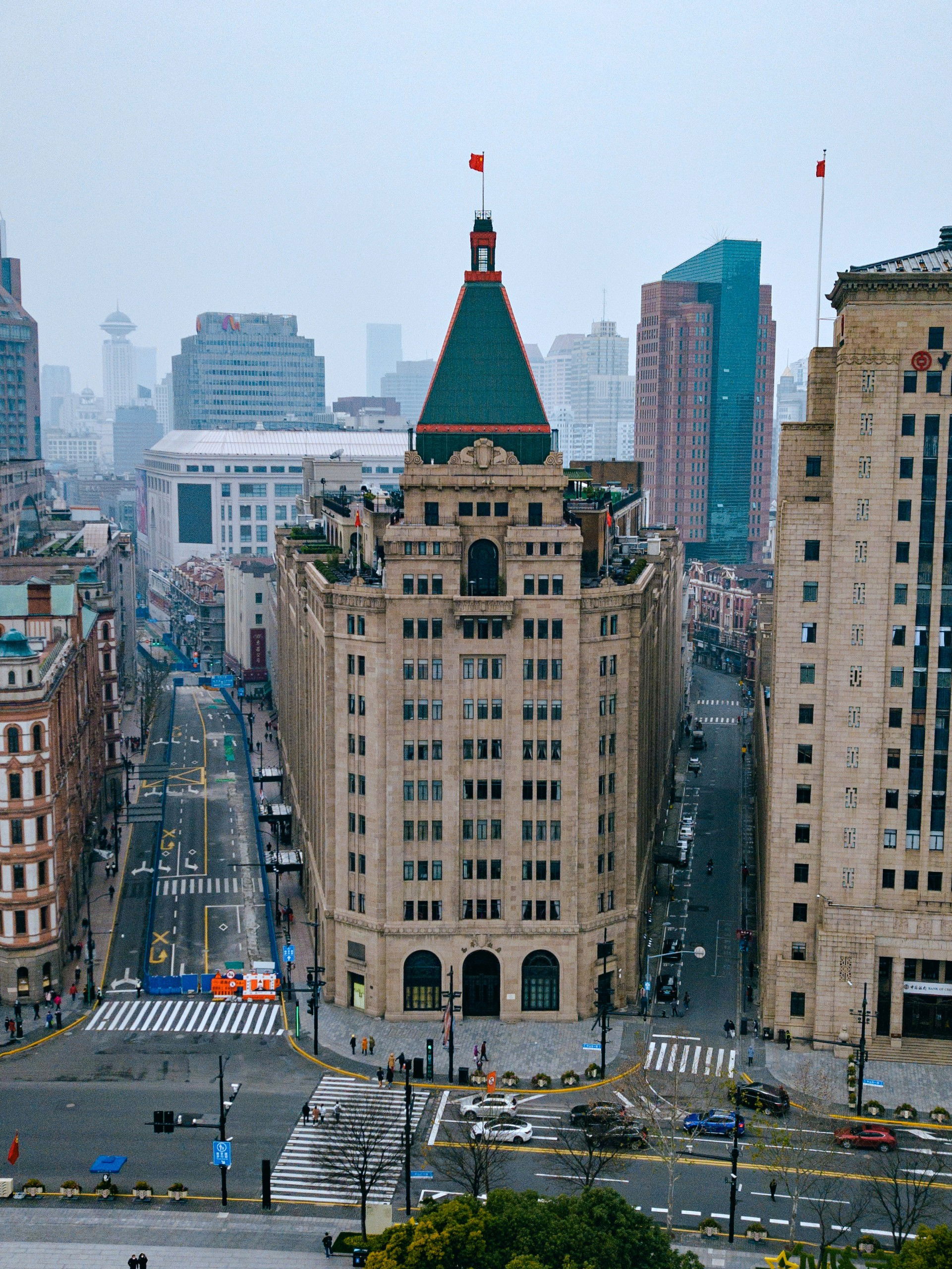
About Fairmont Peace Hotel
Open since 1929, the Fairmont Peace Hotel occupies one of the Bund's most prominent addresses, combining Art Deco architecture with a storied guest history that includes Charlie Chaplin and Noël Coward. Rated 94 points by La Liste Top Hotels 2026 and part of the Accor portfolio, it sits at the upper tier of Shanghai's historic luxury properties, with the Jazz Bar and Bund-facing suites as its clearest differentiators.
Where the Bund's Architecture Meets Its Own History
The Bund is Shanghai's most theatrically loaded address, a promenade where colonial-era stone facades face the Pudong skyline across the Huangpu River in a permanent architectural argument between the city's past and its present. At 20 Nanjing Road East, the Fairmont Peace Hotel has occupied that tension since 1929, when it opened as the Cathay Hotel under the ownership of Sir Victor Sassoon. The building's Art Deco detailing, cast-iron moldings, dark wood paneling, and green copper pyramid roofline have remained intact through decades of political upheaval, economic reinvention, and multiple waves of luxury competition. Few properties in Asia can make that claim with a straight face.
Shanghai's luxury hotel market has expanded aggressively over the past fifteen years, with properties like Bvlgari Hotel Shanghai and Capella Shanghai, Jian Ye Li establishing design-led alternatives in the new luxury tier. The Peace Hotel operates in a different register: it is not selling minimalism or contemporary curation, but rather the physical weight of a building that has outlasted empires. La Liste ranked it at 94 points in its 2026 Leading Hotels ranking, placing it squarely in the upper bracket of Shanghai's heritage addresses. Google reviewers, 830 of them, average 4.6 stars, a consistent signal across a large sample.
Entering the Art Deco Interior
The sensory argument for staying here begins at the lobby, where a Steinway baby grand piano sits as both object and historical footnote: Charlie Chaplin reportedly composed "Smile" on the instrument during one of his stays. The cast-iron moldings and antique artworks visible from the entrance read not as decoration but as structural evidence of how the building was originally conceived. The dark wood furnishings and warm lighting create an interior atmosphere that resists the cold-minimalism trend that has dominated Shanghai's newer openings. Checking in here is a different proposition to arriving at Alila Shanghai or Andaz Xintiandi, Shanghai, both of which address a contemporary design sensibility. The Peace Hotel addresses an earlier idea of what grandeur should feel like.
The Jazz Bar: A Time Signature of Its Own
Across Shanghai's bar landscape, the shift over the past decade has run toward technical cocktail programs, precise fermentation menus, and chef-driven beverage concepts. The Peace Hotel's Jazz Bar sits deliberately outside that movement. The house band performs every night of the week, playing the kind of swing and jazz standards that defined Shanghai's 1930s international moment, when the city was one of the most cosmopolitan addresses in Asia. The bar's interior, sustained in period decor, functions as both drinking room and atmospheric environment. The hotel also brings in visiting musicians from around the world and hosts regular cultural programming: book readings, calligraphy lessons, and talks, making the Jazz Bar a recurring reason to return rather than a single-visit attraction. For guests of properties like Bellagio Shanghai or Artyzen NEW BUND 31 Shanghai, the Jazz Bar represents one of the few evening destinations in the city that is genuinely hard to replicate.
Afternoon Tea at the Jasmine Lounge
Afternoon tea as a hotel ritual occupies a specific niche in Shanghai, where European traditions get interpreted through local architectural and culinary contexts. At the Peace Hotel, the Jasmine Lounge serves the format daily: tea selections drawn from producing regions across the world, buttermilk scones alongside homemade fruit preserves and clotted cream, and tea sandwiches and pastries arranged on silver tea stands. The format is classical rather than reinvented, which positions it differently from properties experimenting with fusion-inflected interpretations. For a property with a 1929 opening date, the decision to maintain a traditional presentation is consistent with the broader editorial stance of the building. Guests exploring Shanghai's hotel scene in properties like Amanyangyun will encounter a quieter, more retreat-oriented register; the Peace Hotel's afternoon tea is a more overtly social, Bund-facing proposition.
The Rooms: Period Detail With Contemporary Infrastructure
Room design at the Peace Hotel holds to an aesthetic philosophy that treats contemporary amenities as interruptions to be managed rather than features to display. LCD screens and espresso machines are present but positioned to avoid disrupting the Old World visual logic of each room. Dark wood headboards and frames, Egyptian cotton sheets, and goose-down pillows set the tone. Bathrooms are executed in white-and-black marble with rainforest showerheads and claw-foot soaking tubs, materials and fixtures that read as period-appropriate without requiring the guest to sacrifice comfort. The suite tier draws a clear line: all suites offer Bund or river views or both, but only the Sassoon Presidential Suite on the 10th floor and the nine Nations Suites immediately below it deliver clear panoramic views of Shanghai's full skyline. The Sassoon Suite occupies what were originally Sir Victor Sassoon's personal quarters, a biographical footnote that functions as a spatial credential rather than mere marketing copy. For travellers comparing this against alternative suite experiences across China, properties like Mandarin Oriental Qianmen in Beijing offer a comparable heritage-in-luxury register but in an entirely different urban context.
What the Building Has Witnessed
The guest list at the Peace Hotel is one of the more thoroughly documented in Asia. Charlie Chaplin visited with his then-unmarried companion, generating a scandal proportionate to the social codes of the era. Noël Coward wrote Private Lives within the hotel's walls. These are not invented associations; they sit in the public historical record and reinforce the property's claim to being something more than an address with good architecture. Hotel founder Sir Victor Sassoon lived on the property himself, and his 10th-floor suite has been maintained and named in his honour. Shanghai has a number of design-led newer entrants worth examining, including Cachet Boutique Shanghai for smaller-scale contemporary accommodation, but the biographical density of the Peace Hotel's history is not a category that newer properties can enter through design alone.
Location and Practical Orientation
The Bund address places the hotel within walking distance of the Bund's restaurant corridor, the luxury retail of Nanjing Road East, and the ferry and tunnel access points that connect to Pudong. For travellers who prefer to anchor their Shanghai stay on the historic west bank of the Huangpu, this is the most centralised position available at the heritage tier. The property sits within the Accor portfolio, which affects loyalty program access and booking infrastructure. Guests planning a broader China itinerary can use the Peace Hotel as a reference point against which to compare properties in other cities, including Amanfayun in Hangzhou, Amandayan in Lijiang, or 1 Hotel Haitang Bay, Sanya in Sanya, each of which takes a different position on the heritage-versus-contemporary axis. For a full picture of where the Peace Hotel sits relative to Shanghai's broader accommodation scene, see our full Shanghai restaurants and hotels guide.
Hotel maintains an indoor swimming pool for guests who want a defined physical counterpoint to long days walking the Bund. The property's cultural programming calendar, covering talks, calligraphy, and musical events beyond the Jazz Bar's nightly sets, makes extended stays more sustainable than single-night stopovers. Travellers comparing Shanghai to other major luxury hotel markets internationally should note that the Peace Hotel's peer set in terms of heritage positioning includes a small number of properties globally: places like Aman Venice in Venice or The Fifth Avenue Hotel in New York City that occupy historically significant structures and compete partly on architectural biography. Shanghai's own newer entrants, including Andaz Shenzhen Bay in Shenzhen and Altira Macau in Macau, occupy adjacent regional markets without the same claim to a single building's continuous narrative since 1929.
Frequently Asked Questions
What is the main draw of Fairmont Peace Hotel?
Combination of Bund address, Art Deco architecture intact since 1929, a nightly jazz program, and a guest history that runs from Charlie Chaplin to Noël Coward. La Liste rates it at 94 points in its 2026 Leading Hotels ranking, placing it in the upper tier of Shanghai's heritage properties. No other hotel on the Bund offers the same density of historical evidence in a single building.
What is the leading room type at the Fairmont Peace Hotel?
For panoramic views of the Pudong skyline and the Huangpu River, the Sassoon Presidential Suite on the 10th floor and the Nine Nations Suites just below it are the only room categories with clear, unobstructed sightlines. All other suites include Bund or river views, but not at the same scale. The Sassoon Suite carries the additional distinction of being the former personal quarters of hotel founder Sir Victor Sassoon, which adds a biographical dimension that the standard suite tier does not.
Should I book the Fairmont Peace Hotel in advance?
The Bund remains Shanghai's most consistently in-demand hotel address, and the Peace Hotel's position at 94 points on La Liste's 2026 ranking means it competes for the same guest pool as the city's other premier properties. Suite availability, particularly for the Sassoon Presidential Suite and the Nine Nations Suites with panoramic views, is limited by the building's historic floor plan. For peak travel periods, advance booking is advisable. The property sits within the Accor portfolio, so reservations can be managed through Accor's standard booking channels.
Recognized By


Related editorial
- Best Fine Dining Restaurants in ParisFrom three-Michelin-star icons to the next generation of Parisian chefs pushing boundaries, these are the restaurants that define fine dining in the world's culinary capital.
- Best Luxury Hotels in RomeFrom rooftop terraces overlooking ancient ruins to Michelin-starred hotel dining, these are the luxury hotels that make Rome unforgettable.
- Best Cocktail Bars in KyotoFrom sleek lounges to hidden speakeasies, Kyoto's cocktail scene blends Japanese precision with global influence in ways you won't find anywhere else.
Save or rate Fairmont Peace Hotel on Pearl
Keep this venue in your Pearl passport, rate it after you visit, and track it alongside every other place you collect.