
Hotel in Santiago de Chile, Chile
Debaines Hotel Santiago
400ptsArchitect-Framed Sustainable Luxury

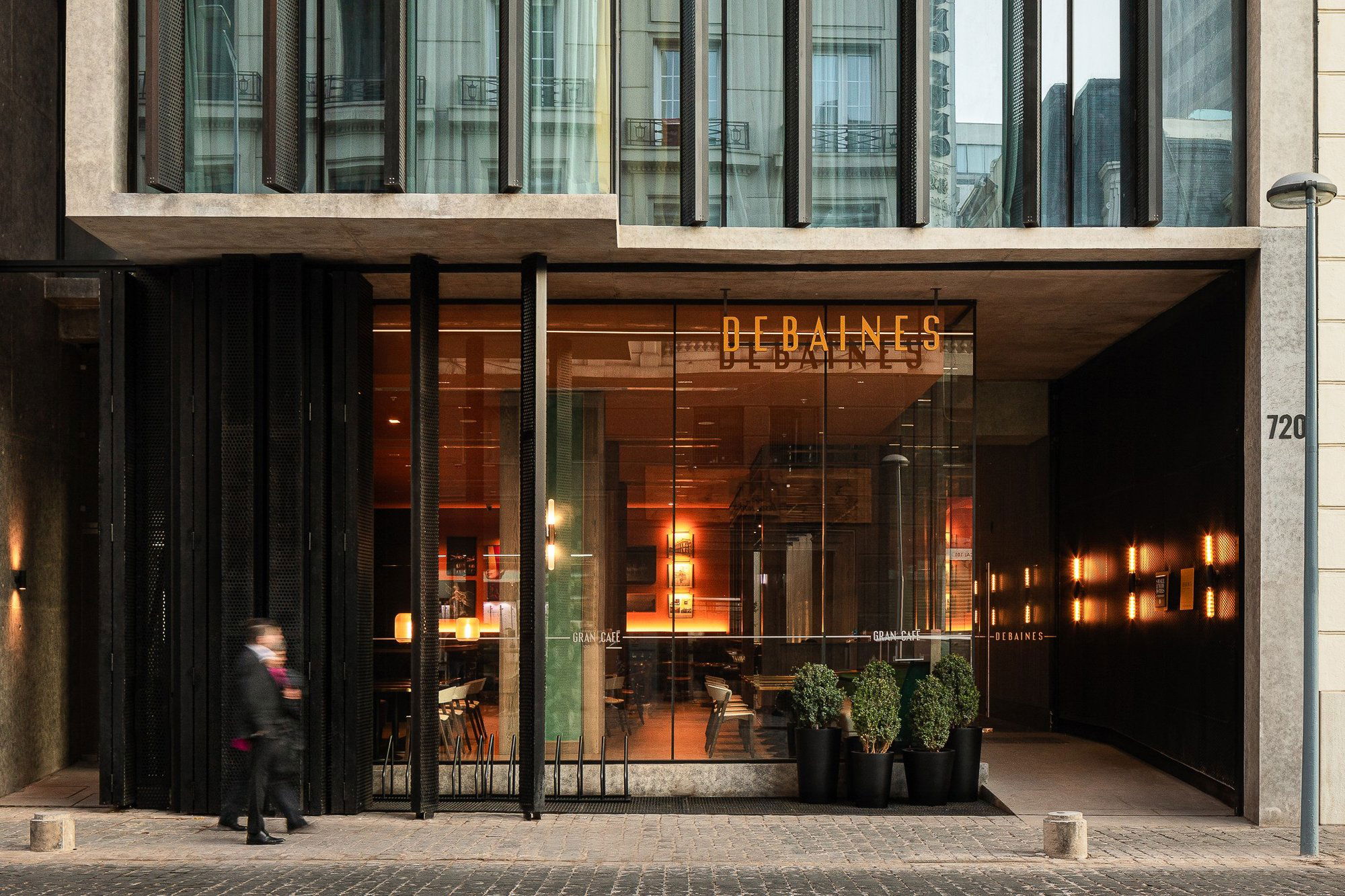
About Debaines Hotel Santiago
Positioned on Agustinas 720 in Santiago's historic centre, Debaines Hotel Santiago occupies a building shaped by one of Chile's most distinctive architectural signatures, directly beside the city's landmark Opera House. The hotel operates within a sustainable luxury framework that connects it to a growing cohort of design-led properties redefining what urban accommodation means in the Chilean capital.
A Building That Earns Its Address
Santiago's centro histórico contains some of Chile's most architecturally significant streetscapes, and the block along Agustinas is no exception. The city grew outward from this district in successive waves of European-influenced design — Beaux-Arts facades, neoclassical public buildings, and the kind of civic ambition that marks a capital trying to define itself through stone and detail. Debaines Hotel Santiago, at Agustinas 720, sits directly beside the city's Opera House, a proximity that is less a marketing convenience and more an architectural declaration: this building belongs to that same tradition of considered urban form.
In Santiago's hotel market, the split between large international-brand towers and smaller, design-conscious properties has widened over the past decade. The international operators, including properties like Santiago Marriott Hotel and W Santiago, tend to anchor themselves in the Providencia and Las Condes corridors, where corporate demand and glass-fronted towers set the tone. Debaines represents a different calculation: a property that has chosen the density and texture of the historic centre over the sanitised geometry of the financial district.
The Architect's Imprint
The hotel's identity draws explicitly from a master architect whose work left a specific mark on Santiago's built environment. This framing — a property defined by architectural lineage rather than brand affiliation , places Debaines within a recognisable international cohort. Think of how certain Milanese palazzo conversions carry their original designer's spatial logic into every corridor, or how Palacio Astoreca Hotel in Valparaiso derives its authority from a 19th-century merchant mansion rather than from any contemporary hospitality group. The architectural credential functions as the primary trust signal, and in the centro histórico context, it carries genuine weight.
What this means practically is that the physical space communicates through proportion and material rather than through the imported aesthetic vocabulary of international luxury chains. Santiago's historic centre rewards this kind of attentiveness: the surrounding streets offer the Palacio de La Moneda, the Municipal Theatre, and a density of pre-mid-century facades that make architectural coherence feel necessary rather than optional.
Sustainable Luxury in the Urban Frame
Debaines positions itself within the sustainable luxury category, a designation that carries more operational meaning in Chile than in many other markets. Chilean hospitality has developed a relatively strong tradition of sustainability-as-structure rather than sustainability-as-amenity, visible across properties as varied as Ecocamp Patagonia in Torres del Paine, Awasi Atacama in San Pedro de Atacama, and REMOTA in Puerto Natales. In wilderness settings, sustainability is often expressed through materials sourcing and energy systems. In an urban hotel, it tends to show up in building management, procurement, and how the property engages with its immediate neighbourhood economy.
For a property in the centro histórico, the sustainability framing also connects to the act of adaptive reuse itself: occupying and maintaining a historic building rather than contributing to the pressures that push development toward demolition and replacement. That is not a trivial claim in a city where significant architecture has been lost to earthquake damage and speculative redevelopment over the past several decades.
Santiago's Centro as a Base
Choosing to stay in the centre rather than in Providencia or Las Condes involves a deliberate trade-off. The centro offers walkable access to the city's civic and cultural infrastructure: La Moneda, the Mercado Central, Barrio Lastarria, and the axis of parks running through the Alameda. The neighbourhood rewards foot travel in a way that the financial districts do not, and for visitors whose Santiago itinerary includes cultural institutions rather than corporate meetings, the logic of a centro address is clear.
The city's nightlife, which runs late even by Latin American standards, is also more diffuse than many visitors expect. Barrio Italia and Barrio Bellavista both operate as distinct evening destinations, and proximity to either requires planning regardless of where you stay. From the centro, Bellavista is reachable by the Metro's Line 5, which keeps the after-dark geography manageable without demanding a taxi for every movement. For a broader orientation to what Santiago offers across all price points and neighbourhoods, our full Santiago de Chile guide maps the city by character rather than by convenience.
Where Debaines Sits in Chile's Wider Property Spectrum
Chile's hotel offer is unusually varied relative to its size. The country runs from the Atacama Desert to Patagonia across more than 4,000 kilometres, and the properties that have emerged across that geography reflect genuinely different design and operational approaches. At the adventure end, Explora Patagonia National Park and Explora Torres del Paine define their luxury through access and landscape. Wine-country properties like Clos Apalta Residence in Valle de Apalta and Vik Chile in San Vicente de Tagua Tagua tie their identity to terroir and contemporary art. Noi Puma Lodge in Cachapoal and andBeyond Vira Vira in Pucon occupy the mid-country lake and volcano corridor.
Debaines operates in none of those registers. It is a city hotel, and a historically grounded one, positioned for the traveller whose Santiago stay is substantive rather than transitional. That places it in a different conversation than wilderness lodges, but the underlying logic , architecture and place as the primary value proposition , connects it to the better Chilean properties regardless of geography.
For travellers extending their Chile itinerary beyond Santiago, properties like Futangue Hotel and Spa in Riñinahue, Refugia Chiloé, Puyuhuapi Lodge and Spa in Aisen, and Mari Mari Natural Reserve Experience in Los Muermos each represent the southern lake and fjord alternatives. At the northern end, CasaMolle in El Molle addresses the Elqui Valley wine and astronomy corridor. And for those planning an Easter Island extension, Explora Rapa Nui remains the reference property.
Planning Your Stay
Debaines Hotel Santiago is located at Agustinas 720, in Santiago's centro histórico, with the Opera House as an immediate neighbour and the city's major Metro lines within walking distance. The Alameda (Line 1) runs directly through the area, connecting the centre to Providencia, Las Condes, and the airport bus terminal at Pajaritos. For visitors arriving at Arturo Merino Benítez International Airport, the Centropuerto bus service to the Alameda terminal takes roughly 45 to 70 minutes depending on traffic, placing the hotel within a short walk or brief taxi ride of the drop-off point. Specific pricing, room categories, and availability should be confirmed directly with the property, as rates in this segment of the Santiago market shift with demand across the December-to-March southern summer peak and the April shoulder period.
Frequently Asked Questions
What's the signature room at Debaines Hotel Santiago?
Specific room categories and their features are not publicly catalogued in detail, but the hotel's architectural framing around a named master architect suggests that spatial character , proportion, natural light, and relationship to the building's historic fabric , is the consistent through-line across the property rather than any single room type. The address beside the Opera House makes the rooms facing Agustinas the natural reference point for understanding how the building reads within the street.
What should I know about Debaines Hotel Santiago before I go?
The hotel occupies a historic building in Santiago's centro histórico, directly adjacent to the city's Opera House. The neighbourhood is Santiago's civic and cultural core, which means excellent walkability to major sites but also the ambient rhythms of a working city centre. The sustainable luxury positioning suggests a set of operational values that differentiate it from the large international chains concentrated in Providencia and Las Condes. Confirm rates, booking channels, and any specific amenities directly with the property before arrival.
How hard is it to get in to Debaines Hotel Santiago?
Without confirmed room-count or real-time availability data, it is not possible to characterise demand precisely. As a design-led property in a specific historic location rather than a large-inventory city hotel, availability is likely more constrained during peak Santiago periods: the December-to-March summer, Fiestas Patrias in September, and around major events at the Opera House next door. Booking ahead of those windows is prudent. Direct contact with the property is the most reliable route given the absence of a publicly listed booking platform in current records.
Is Debaines Hotel Santiago better for first-timers or repeat visitors?
The centro histórico address serves both, but differently. First-time visitors benefit from the walkable proximity to Santiago's most recognisable civic landmarks. Repeat visitors who have already covered those circuits will find more value in the hotel's architectural specificity and neighbourhood texture: the ability to move through Lastarria, Barrio Italia, and the Mercado Central on foot, with a historically coherent building as the base. Either way, the property suits a traveller whose Santiago engagement is active rather than transient.
Does Debaines Hotel Santiago have a connection to Chilean architectural heritage worth understanding before you visit?
The hotel explicitly grounds its identity in the work of a master architect who shaped multiple buildings across Santiago's centro histórico, placing it within a tradition of adaptive reuse that treats historic structure as the primary asset rather than the constraint. This is a meaningful distinction in a city where mid-century and 19th-century architecture has faced sustained pressure from seismic damage and redevelopment. Guests with an interest in Chilean architectural history will find the surrounding streets along Agustinas and toward the Alameda offer a concentrated set of reference points that make the hotel's design context legible beyond the property itself.
Recognized By

Related editorial
- Best Fine Dining Restaurants in ParisFrom three-Michelin-star icons to the next generation of Parisian chefs pushing boundaries, these are the restaurants that define fine dining in the world's culinary capital.
- Best Luxury Hotels in RomeFrom rooftop terraces overlooking ancient ruins to Michelin-starred hotel dining, these are the luxury hotels that make Rome unforgettable.
- Best Cocktail Bars in KyotoFrom sleek lounges to hidden speakeasies, Kyoto's cocktail scene blends Japanese precision with global influence in ways you won't find anywhere else.
Save or rate Debaines Hotel Santiago on Pearl
Keep this venue in your Pearl passport, rate it after you visit, and track it alongside every other place you collect.