
Hotel in Amsterdam, Netherlands
Conservatorium
515ptsHeritage-Shell Precision



About Conservatorium
Occupying a landmark heritage building in Amsterdam's Museum Quarter, the Mandarin Oriental Conservatorium has held the number-one luxury hotel position in the Netherlands across multiple rankings, including 93 points on the La Liste Top Hotels 2026 list. With 129 rooms across eight floors, Piero Lissoni's restrained Italian design aesthetic, and the 1,000 sq m Akasha Holistic Wellbeing centre, it operates at the top tier of the city's luxury accommodation market.
Museum Quarter, Heritage Shell, Contemporary Interior
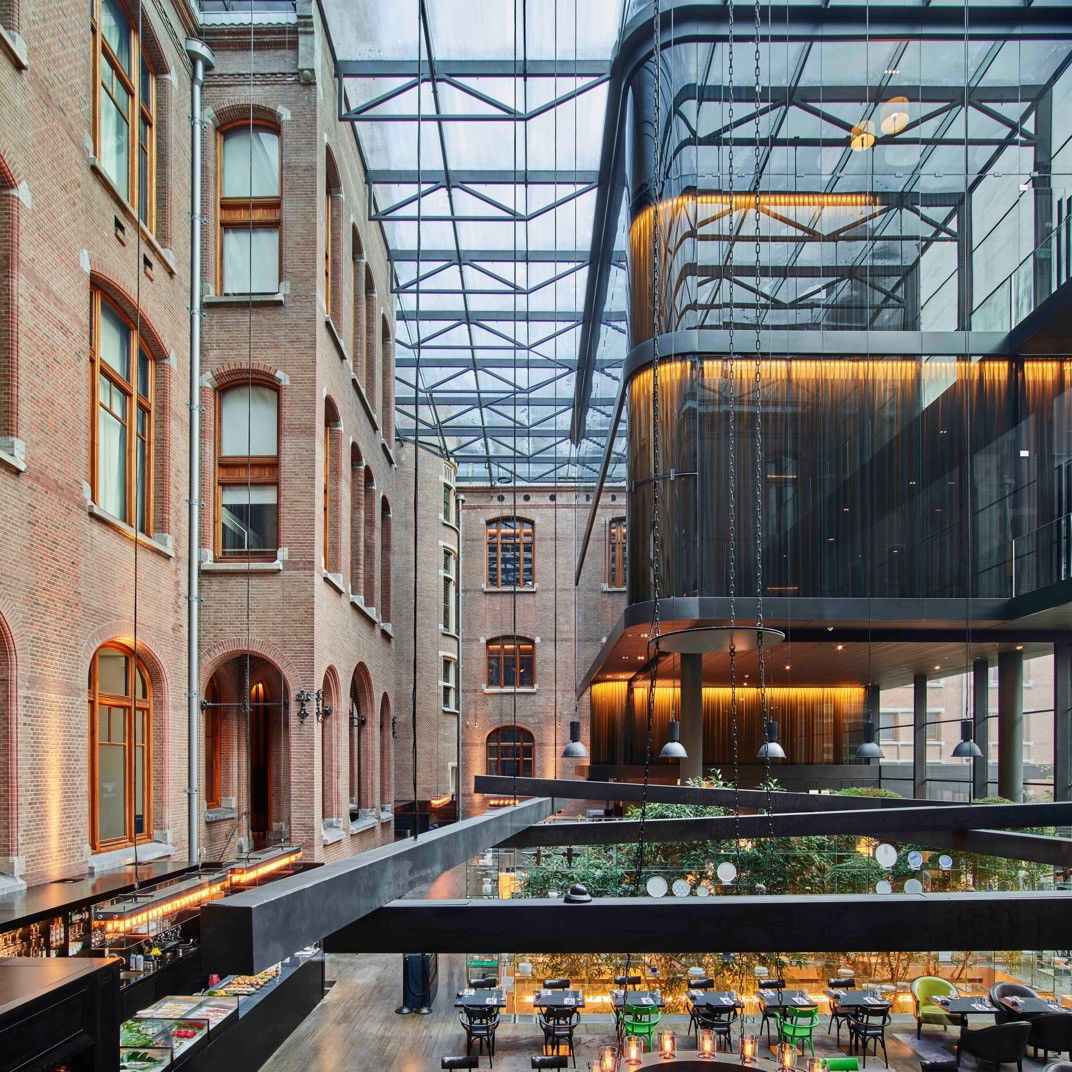
Amsterdam's luxury hotel market divides along a familiar axis: the canal belt properties trading on Golden Age grandeur, and the Museum Quarter addresses that pair institutional cultural weight with architectural ambition. The Mandarin Oriental Conservatorium sits firmly in the latter camp. The building's heritage shell, originally a conservatory of music, gives the hotel a structural character that most new-build luxury properties spend enormous effort trying to simulate. Almost half the 129 rooms have been configured as duplexes to honour the original lofty ceiling heights, with exposed structural beams and large windows that read as features rather than afterthoughts.
Interior design across the property was guided by Milan-based Piero Lissoni, whose approach here follows his signature palette: neutral greys anchored by occasional colour, furniture sourced from Italian manufacturers including Living Divani, Kartell, and Cassina. The result reads as disciplined rather than decorative, which places the hotel in a different register from the ornate canal-house aesthetic you find further west at properties like Canal House or Décor Canal House. Where those properties lean into Amsterdam's 17th-century domestic tradition, the Conservatorium treats the building as a framework for contemporary craft.
The Room Hierarchy and Where It Matters
The hotel operates across eight floors with room categories running from Duplex Guest Rooms at the entry level through to a 170 sq m Penthouse Suite. The floor range matters here: not all rooms face the street, and a number look inward over the hotel's atrium. For guests prioritising city views, the signature suites are the relevant bracket. The I Love Amsterdam Suite includes a rooftop terrace with a 360-degree city panorama. The Penthouse, at roughly 170 sq m with near floor-to-ceiling glazing, looks across both the atrium and the Rijksmuseum and comes with a separate entrance and private garage access, which is a meaningful operational detail in a city where ground-floor arrivals are frequently complicated by foot and cycle traffic.
Among the four signature suites — Concerto Suite, I Love Amsterdam Suite, Garden Suite, and Penthouse Suite — the distinction is less about square footage and more about orientation and light. The duplex configuration that defines so much of the hotel's room typology brings some limitations worth knowing in advance: guests with mobility considerations should flag the stair element at booking, as the duplex layout is intrinsic to the building's structure rather than optional.
Standard room amenities include complimentary Wi-Fi, 24-hour room service, a private bar, coffee machine, and complimentary access to the Akasha Holistic Wellbeing centre. Bathrooms feature flat-screen mirror televisions and rain showers; most rooms also include a bath. All windows are double-glazed, which matters in a city where street-level noise is a consistent issue across the accommodation tier.
The Guest Experience as a Coordinated System
What separates the top tier of luxury hotels from the layer below is rarely a single amenity and almost always the coordination between departments. At the Conservatorium, the structure that makes this visible is the personal host model: each arriving guest is assigned a host whose role spans concierge knowledge and guest relations, functioning as a single point of contact for the duration of the stay. This is not unusual at Mandarin Oriental properties globally, but it does mark a clear operational difference from Amsterdam hotels that maintain traditional departmental separation.
The food and beverage operation runs across several venues, described as destinations that draw both guests and the local Amsterdam community. The Taiko Bar programmes DJs on Thursday, Friday, and Saturday nights, which shifts the bar's register from in-house amenity to active social venue during those windows. For guests who prefer quieter evenings, the programme schedule is worth factoring into room selection and floor preference.
Compared to Amsterdam competitors in the upper bracket, including De L'Europe Amsterdam and the Waldorf Astoria, the Conservatorium's point of difference is the Lissoni-led design coherence and the Museum Quarter address rather than canal frontage or Dutch heritage interiors. The Andaz Amsterdam Prinsengracht offers a different kind of design-led positioning in the canal belt, but the cultural density of the Conservatorium's immediate neighbourhood is difficult to match: the Van Gogh Museum, Rijksmuseum, Stedelijk Museum, Concertgebouw, and Vondelpark are all within walking distance of the front door.
Akasha Holistic Wellbeing: Scope and Specifics
The spa and wellness operation at the Conservatorium runs to 1,000 sq m and has been recognised as the leading hotel spa in the Netherlands. The facility includes a lap pool measuring 18 metres by 5 metres, a private hammam, sauna, Jacuzzi, a dedicated Watsu pool, seven treatment rooms, and what the hotel describes as the most comprehensively equipped gym of any Amsterdam hotel. Watsu, a water-based bodywork practice that requires a dedicated pool environment, is relatively rare in urban hotel spas and gives the Akasha centre a specialist offering that extends beyond the standard treatment menu. All 129 rooms include complimentary access to the centre, which removes the incremental cost that typically structures spa engagement at this price tier.
Neighbourhood Position and Practical Logistics
The Museum Quarter address at Paulus Potterstraat 50 places the hotel at the centre of Amsterdam's densest cultural cluster. The practical implication for guests planning museum visits is worth stating directly: the Rijksmuseum and Van Gogh Museum both require advance ticket purchase to avoid significant queuing. The hotel's concierge and personal host service should be the first point of contact for this, particularly during peak summer months when same-day availability at either institution is limited.
Amsterdam's Museum Quarter sits to the south of the canal ring, which means the hotel's address is less immediately walkable to the historic city centre than a Prinsengracht or Keizersgracht property would be. Tram connections from the area are reliable, and for guests arriving from Schiphol Airport, the transit logistics are direct. Those travelling with a car should note the Penthouse Suite's private garage access as a relevant operational advantage.
For a comparison of design-led properties at a different price tier in Amsterdam, Breitner House and De Pijp Boutique Hotel represent the smaller boutique end of the market. Elsewhere in the Netherlands, Château Neercanne in Maastricht and Château St. Gerlach in Valkenburg aan de Geul offer heritage-property alternatives with a distinctly different southern Dutch character. For international Mandarin Oriental comparisons at the upper end of the group's portfolio, Aman New York and Aman Venice represent a peer competitive set in terms of design ambition and cultural positioning, though under a different brand architecture.
The Conservatorium's La Liste 2026 score of 93 points places it in a tracked, verifiable position within the global hotel ranking system rather than relying solely on regional reputation. For a full picture of Amsterdam's accommodation and dining options across all tiers, see our full Amsterdam guide.
FAQ
Which room offers the leading experience at Conservatorium?
For city views, the I Love Amsterdam Suite with its rooftop terrace and 360-degree panorama is the most spatially generous option among the signature suites. The Penthouse Suite at approximately 170 sq m offers floor-to-ceiling glazing with direct sightlines to the Rijksmuseum and comes with a separate entrance and private garage access, making it the most operationally self-contained room in the building. For guests who prioritise atrium-facing light over street views, the duplex rooms on upper floors offer exposed beam architecture and double-height space that reflects the building's original function. The award context here is relevant: the hotel has been ranked the number-one luxury property in the Netherlands across multiple assessments, and the signature suite tier is where that positioning is most fully expressed in terms of space and amenity.
What makes Conservatorium worth visiting?
The argument for the Conservatorium rests on three things that are difficult to replicate in combination: a Museum Quarter address that places the Van Gogh Museum, Rijksmuseum, and Concertgebouw within walking distance; a heritage building that has been converted with design coherence under Piero Lissoni rather than retrofitted with generic luxury finishes; and an Akasha spa operation of 1,000 sq m with specialist offerings including a Watsu pool and hammam, with complimentary guest access built into the room rate. The La Liste 2026 score of 93 points and the hotel's consistent positioning as the Netherlands' leading luxury property provide external validation for those calibrating against a peer set. Guests comparing Amsterdam options should also consider Conscious Hotel Amsterdam City and Generator Amsterdam for lower-tier alternatives, or Grand Hotel Huis ter Duin in Noordwijk aan Zee for a coastal Netherlands option in the same general luxury bracket.
Recognized By


Related editorial
- Best Fine Dining Restaurants in ParisFrom three-Michelin-star icons to the next generation of Parisian chefs pushing boundaries, these are the restaurants that define fine dining in the world's culinary capital.
- Best Luxury Hotels in RomeFrom rooftop terraces overlooking ancient ruins to Michelin-starred hotel dining, these are the luxury hotels that make Rome unforgettable.
- Best Cocktail Bars in KyotoFrom sleek lounges to hidden speakeasies, Kyoto's cocktail scene blends Japanese precision with global influence in ways you won't find anywhere else.
Save or rate Conservatorium on Pearl
Keep this venue in your Pearl passport, rate it after you visit, and track it alongside every other place you collect.