
Hotel in Shanghai, China
Capella Shanghai, Jian Ye Li
1,820ptsShikumen Lane Hospitality





About Capella Shanghai, Jian Ye Li
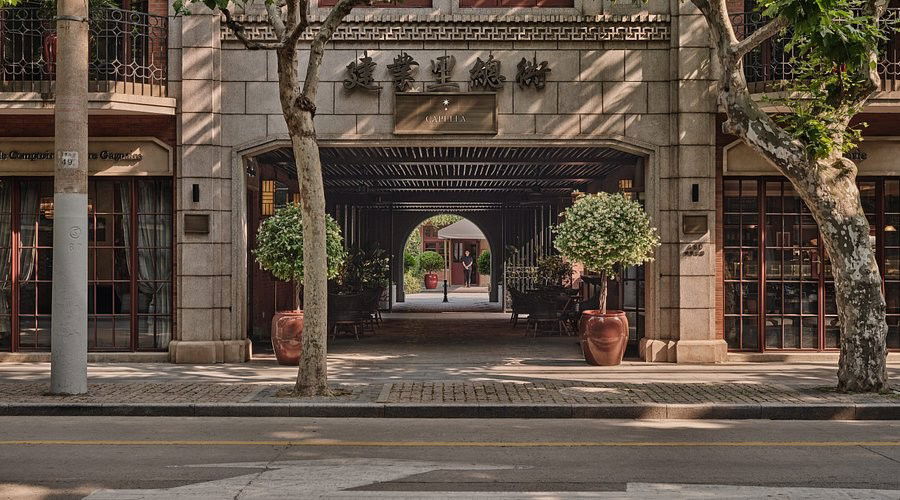
Set within Xuhui District's last intact cluster of shikumen townhouses, Capella Shanghai, Jian Ye Li converts original 1930s lane houses into 55 villa-style rooms where French colonial and Chinese courtyard architecture coexist in deliberate dialogue. Pierre Gagnaire's Le Comptoir de Pierre Gagnaire anchors the dining program, marking his first mainland China restaurant. La Liste ranked the property 93 points in 2026, and Capella Hotel Group has held the title of Best Hotel Brand in the World for three consecutive years.
A Lane House That Chose Depth Over Height
Shanghai's reflexive instinct has been to build upward. The Xuhui District's shikumen laneways represent the counter-argument: dense, horizontal, human-scaled streets of brick townhouses originally constructed in the late 19th and early 20th centuries as a hybridised response to both Chinese courtyard living and Parisian terrace housing. Most of them are gone. The Jian Ye Li compound at 480 West Jianguo Road is among the last intact clusters, and Capella's decision to place a luxury hotel within its original structure, rather than adjacent to it or inspired by it, is the sharpest editorial statement the property makes. You arrive not at a lobby but at a laneway, and the distinction matters more than it sounds.
Within the broader conversation about heritage preservation in Chinese luxury hospitality, properties tend to split into two camps: those that treat history as an aesthetic reference (a courtyard motif here, a classical gate there) and those that treat the physical fabric itself as the product. Capella Shanghai belongs firmly in the second camp, and that places it in a peer set that includes Amanyangyun, which similarly organised itself around rescued Ming and Qing dynasty architecture on the city's southern fringe. The ambition is comparable; the neighbourhood texture is entirely different.
Shikumen Architecture as a Living Brief
The 55 villas, each one an original house in the laneway, range from one-bedroom to three-bedroom configurations measuring between 1,195 and 3,283 square feet. These proportions alone separate the property from the standard luxury hotel room model. The floor plates are narrow — shikumen townhouses were built in rows on tight urban lots — which means circulation moves vertically, floor to floor via stairs, rather than along long corridors. Those comfortable with that arrangement reach the upper floors and, in most villas, a small balcony looking back into the lane. At night, the compound's former water tower, which once supplied the whole laneway's plumbing needs, runs a light display that becomes the focal point of those balcony views.
Designer Jaya Ibrahim (working under Jaya Design International) threaded the interiors with exactly the kind of detail that makes shikumen architecture legible rather than merely scenic: silk wallpapers, wood-framed windows, high ceilings, and a mezzanine-level tea room or TV room in each villa fitted with a kang, the traditional Chinese platform sofa-bed. Bathrooms sit at iron-framed windows, many of them looking directly out onto the lanes. Diptyque products, Bose sound systems, and free soft drinks from the minibar mark the modern service layer. The Chinese-style and European-style design elements are not held apart in separate zones but placed in direct contact with each other, which reflects the compound's original character: shikumen architecture was always a hybrid form, born from the intersection of French concession planning and Chinese domestic spatial logic.
For guests considering which configuration to book: the three-bedroom villas at over 3,000 square feet offer a spatial experience that is genuinely unusual within Shanghai's luxury hotel market, where most competitors operate on standard room-and-suite typologies. The Bvlgari Hotel Shanghai and Andaz Xintiandi are strong competitors in the premium Shanghai tier, but neither offers accommodation that functions architecturally as a private townhouse. Capella's pricing starts at $667 per night; the villa format justifies the rate in ways that a conventional room footprint would not.
Le Comptoir de Pierre Gagnaire: French Cuisine in a Shikumen Context
The editorial angle on Capella Shanghai's dining program begins not with Pierre Gagnaire's biography but with what his presence signals about the property's positioning. Three-Michelin-star chefs who expand into hotel dining in Asia typically do so in highly capitalised, internationally trafficked addresses: the Bund, Xintiandi, the Pudong financial towers. Le Comptoir de Pierre Gagnaire, Gagnaire's first restaurant in mainland China, operates inside a 50-seat room within a residential laneway in a mid-density heritage precinct. The scale is deliberately contained, and the setting deliberately residential. That calibration is consistent with the hotel's broader logic: intimacy over spectacle, depth over footprint.
Gagnaire's cooking across his career has been characterised by multi-component plates in which primary ingredients are accompanied by a sequence of satellite preparations, each one extending or complicating the central flavour. That architectural quality in the food, the sense of a dish organised around multiple simultaneous gestures rather than a single statement, sits in an interesting relationship with the compound's own hybrid spatial character. The restaurant's atmosphere is described as sophisticated without being formal, which at a 50-seat count is achievable in a way it would not be at larger formats. For a city accustomed to large-scale hotel dining rooms with high theatrics, the compressed setting of Le Comptoir operates as a contrast signal.
Guests planning to dine at Le Comptoir should note that at 50 seats, walk-in availability is limited. Reservations through the hotel's personal assistant team, the so-called Capella Culturists, are the practical route. Those same staff members coordinate food-adjacent experiences including dumpling cooking classes and tea ceremonies, which map the hotel's heritage brief onto the dining program from a different angle. See our full Shanghai restaurants guide for broader dining context across the city.
The Spa, the Culturists, and the Afternoon Cake
The Auriga Spa, named after the constellation whose alpha star is Capella, organises its wellness philosophy around lunar phases. Practically, its most requested treatments are traditional Chinese therapies, which functions as a consistent thread with the overall experience of staying in a shikumen compound: the distinctly local is treated as the primary value, with the Western luxury layer as secondary. That ordering is the inverse of how most international luxury brands operate in China, and it is what makes the property a consistent choice for Shanghai residents seeking a staycation rather than only for international visitors.
The property's Capella Culturists, available directly from the villa phones, handle bespoke requests from the logistical to the cultural: foot and cycling tours of the surrounding Xuhui laneways, dumpling classes, and spa bookings. The Living Room, the hotel's central gathering space, runs a Cake of the Day service each afternoon, a small but precise detail that marks the difference between a hotel property that treats F&B; as ancillary revenue and one that treats daily domestic ritual as part of the product.
Awards, Recognition, and Where It Sits in the Shanghai Market
La Liste, which aggregates hotel quality data from multiple critical sources, placed Capella Shanghai at 93 points in its 2026 Leading Hotels ranking. Capella Hotel Group has held the position of Leading Hotel Brand in the World for three consecutive years, and the Shanghai property is cited within the group's portfolio as an exemplar of what that recognition is based on. The hotel is also a member of Leading Hotels of the World as of 2025, a designation that positions it within a global peer set defined by independently owned or operated properties of a certain quality floor.
Within Shanghai specifically, the competitive comparison that clarifies the property's position involves the Fairmont Peace Hotel on the Bund (also heritage, also architecturally significant, but operating on a very different urban typology and guest profile) and newer-format boutique properties like Cachet Boutique Shanghai and Alila Shanghai. Capella Jian Ye Li occupies a particular niche: neither the Bund grand hotel nor the design-led boutique, but the heritage compound as total environment, a format that is effectively impossible to replicate at scale and therefore has no direct equivalent in the city. The Bellagio Shanghai and Artyzen NEW BUND 31 attract a broadly similar premium traveller, but their physical formats and neighbourhood contexts differ in ways that matter to different guest priorities.
For travellers exploring other heritage-led properties across China, comparable approaches to architectural preservation and cultural programming can be found at Mandarin Oriental Qianmen in Beijing, Amanfayun in Hangzhou, and Amandayan in Lijiang. The broader Capella portfolio, including properties in Bangkok, Singapore, and Beijing, offers further reference points for the group's approach to embedding luxury hospitality within historically dense environments. Internationally, Aman Venice and Aman New York represent the premium end of the heritage-adaptive format in their respective cities.
Planning a Stay
The property is at 480 West Jianguo Road, Xuhui District. The Google review score of 4.8 from 41 reviews indicates early but consistent positive reception. The villa rate from $667 per night covers accommodation in the compound; dining at Le Comptoir de Pierre Gagnaire is separately costed. Given the 50-seat dining room and the personalised service model, pre-arrival contact through the hotel to coordinate restaurant reservations and culturist-led itineraries is the practical approach rather than arriving without arrangements. The Xuhui neighbourhood, a largely residential and academic district with strong French concession-era character, rewards exploration on foot, which the culturist walking tour format specifically addresses.
Frequently Asked Questions
Which room category should I book at Capella Shanghai, Jian Ye Li?
For most travellers, the two-bedroom villa represents the point where the shikumen spatial experience becomes fully legible: enough floor area to absorb the mezzanine tea room, the balcony, and the lane-facing bathroom without feeling compressed. The three-bedroom option, at over 3,000 square feet, is the appropriate choice for families or those who want accommodation that functions as a private townhouse rather than a hotel room. Solo or couple travellers on shorter stays will find the one-bedroom villa sufficient and more cost-efficient, with the same design language and heritage character intact. The hotel holds La Liste's 93-point designation and Leading Hotels of the World membership, both of which attach to the property as a whole rather than to a specific room tier, so the quality floor is consistent regardless of villa size.
What is Capella Shanghai, Jian Ye Li known for?
The property is primarily known for converting an intact shikumen laneway compound in Xuhui District into a 55-villa hotel in which the original 1930s townhouses function as the guest rooms. That physical fact, in a city where most heritage architecture has been replaced or façade-only preserved, gives it a distinct profile in the Shanghai luxury market. The dining anchor is Le Comptoir de Pierre Gagnaire, a 50-seat French restaurant and Gagnaire's first in mainland China. The hotel sits within the Capella Hotel Group portfolio, which has held the Leading Hotel Brand in the World title for three consecutive years, and earned 93 points on La Liste's 2026 Leading Hotels ranking. It is a consistent choice for Shanghai-based guests seeking a staycation grounded in a way of domestic life, the shikumen laneway, that the city has largely built over.
Recognized By


Related editorial
- Best Fine Dining Restaurants in ParisFrom three-Michelin-star icons to the next generation of Parisian chefs pushing boundaries, these are the restaurants that define fine dining in the world's culinary capital.
- Best Luxury Hotels in RomeFrom rooftop terraces overlooking ancient ruins to Michelin-starred hotel dining, these are the luxury hotels that make Rome unforgettable.
- Best Cocktail Bars in KyotoFrom sleek lounges to hidden speakeasies, Kyoto's cocktail scene blends Japanese precision with global influence in ways you won't find anywhere else.
Save or rate Capella Shanghai, Jian Ye Li on Pearl
Keep this venue in your Pearl passport, rate it after you visit, and track it alongside every other place you collect.