
Hotel in Cusco, Peru
Belmond Hotel Monasterio
850ptsColonial Monastery Conversion




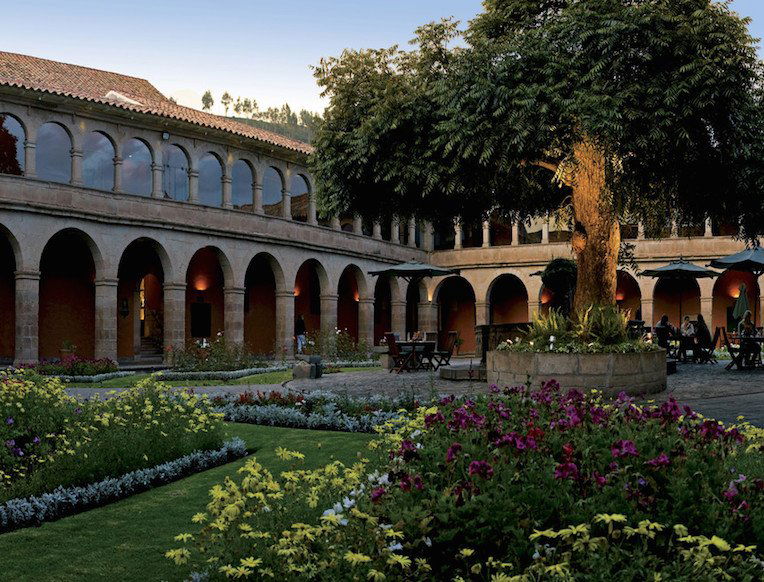
About Belmond Hotel Monasterio
A 16th-century monastery on Cusco's Plaza de las Nazarenas, converted by Belmond into a 126-room hotel that holds UNESCO World Heritage status and scored 97.5 points in La Liste's 2026 Top Hotels ranking. The 2025 World Travel Awards named it South America's Leading Heritage Hotel. Colonial architecture, original frescoes, and exclusive access to the Belmond Hiram Bingham train to Machu Picchu define the guest experience.
Where the Colonial City Lives Inside the Walls
Approach the Belmond Hotel Monasterio from Calle Nazarenas and the building gives almost nothing away. The stone facade, constructed in the mid-16th century as a seminary for Augustinian monks, reads as civic architecture rather than hospitality. That compression between exterior restraint and interior scale is the defining physical experience of staying here. Step through the entrance and the space reorganises entirely: a baroque courtyard opens around an ancient cedar tree, ringed by archway colonnades, the kind of architectural proportion that took generations of ecclesiastical patronage to achieve and cannot be reproduced from scratch.
Cusco operates at roughly 3,400 metres above sea level, and the altitude shapes every guest's first hours in the city regardless of which property they choose. The Monasterio addresses this through an option available in certain room categories: supplemental oxygen piped directly into the room at night, a practical accommodation that has become one of the more discussed features of high-altitude luxury hotels in the Andes. For travellers arriving directly from sea-level cities, the difference between the first night with and without that option is measurable rather than marginal.
A Heritage Property Inside a Living UNESCO Site
The property holds UNESCO World Heritage status as part of the Historic Centre of Cusco, a designation that governs what can be altered, added, or removed within its walls. That constraint is also an asset. The 126 rooms and suites retain original frescoes, colonial antiques, and the cellular proportions of the monks' quarters from which many of them were adapted. Where five-star properties in purpose-built structures create a period atmosphere through acquired objects and design choices, Monasterio works with primary material: the architecture is the historical document.
Among Cusco's heritage-converted hotels, Monasterio occupies a specific position. Properties like Palacio Nazarenas and Inkaterra La Casona operate within the same colonial-conversion tier, each with their own architectural period and character. The JW Marriott El Convento Cusco and Palacio del Inka, a Luxury Collection Hotel complete the upper tier of converted-colonial accommodation in the city centre. The Monasterio's 2025 World Travel Awards recognition as South America's Leading Heritage Hotel, combined with a 97.5-point score in La Liste's 2026 Leading Hotels ranking, places it at the front of that peer set on formal credential measures.
For travellers who want to compare options at a different price point or in a smaller format, Aranwa Cusco Boutique Hotel and Casa Andina Standard Cusco Catedral offer colonial-adjacent positioning with meaningfully different footprints and scale.
Service Architecture in a Monastery Setting
Belmond's position within the LVMH group situates the Monasterio in a particular service tradition: one that treats continuity of staff knowledge and anticipatory attention as a differentiator rather than a standard expectation. In practice, this means the property functions less like a hotel that happens to occupy a historic building and more like a managed house with institutional memory. Staff-to-guest ratios at this room count, within a property of this scale, allow for the kind of pre-emptive logistics that make travel in the Andes meaningfully less effortful: altitude acclimatisation guidance, Sacred Valley sourcing explanations at the dining venues, and coordination around the Belmond Hiram Bingham rail access to Machu Picchu that guests at non-Belmond properties cannot access on the same terms.
The Hiram Bingham train connection is the most concrete expression of what LVMH group ownership makes available to Monasterio guests. The luxury train runs from Poroy, near Cusco, to Aguas Calientes, with return service that includes a full dining experience on board. It is a distinct product from the standard Vistadome and Expedition rail services that serve Machu Picchu, and for guests who plan to build their Peru itinerary around Belmond properties, it functions as the connective tissue between the Cusco base and the site itself. Travellers continuing further into the country's geography might look at Inkaterra Machu Picchu Pueblo Hotel or Sumaq Machu Picchu Hotel in Aguas Calientes as the onward step after the Monasterio's Cusco chapter.
The Table as Cultural Evidence
Peruvian fine dining in the last fifteen years has shifted the country's culinary identity from a regional footnote to a globally discussed reference point, and Cusco's hotel dining has been drawn into that current. The Monasterio's dining venues draw from Sacred Valley producers and Amazonian ingredients, positioning the food program inside the broader New Andean movement that treats altitude-specific agriculture as the raw material for serious cooking. Maize varieties that don't exist below 3,000 metres, tuber diversity that predates the Inca empire, and herbal ingredients sourced from the cloud forest regions north of the city all feature in how Peruvian hotel kitchens at this level differentiate their menus from Lima's restaurant scene. The property's art collection, which includes both colonial-period paintings and contemporary work by Peruvian artists, extends that curatorial approach beyond the plate.
Planning Around the Altitude and the Calendar
Cusco's high season runs from May through October, when the dry season reduces the risk of rainfall on site visits and trek approaches. The Monasterio's 126-room capacity means availability across this window is finite and fills early, particularly for Hiram Bingham train dates which operate on a set weekly schedule. Guests who want specific dates in June or July — the peak of the dry season, and the period surrounding Inti Raymi, the Inca Festival of the Sun — should book several months ahead. The property's location on Calle Nazarenas, within walking distance of the Plaza de Armas, Qorikancha, and the market at San Blas, means that acclimatisation days can be spent on foot without requiring transport, which matters practically at this elevation.
For travellers extending their Peru itinerary beyond Cusco, the Belmond ecosystem offers a coherent routing: Monasterio as the Andean anchor, the Hiram Bingham as the Machu Picchu link, and further afield the network reaches properties well beyond Peru. Those building a wider South American circuit might compare the Monasterio's heritage-conversion model against Tambo del Inka, a Luxury Collection Resort and Spa in the Sacred Valley, which operates in a different architectural register altogether. Elsewhere in Peru, Titilaka in Puno, Willka T'ika in Urubamba, and Delfin Amazon Cruises in Iquitos represent the range of what serious Peru itineraries can look like beyond the Cusco-Machu Picchu corridor. Those assembling a multi-country trip with comparable hotel standards as the constant might reference properties like Aman Venice or Castello di Reschio in Umbria as benchmarks for what heritage conversion looks like at the same tier in other geographies. For the full picture of what Cusco's dining and accommodation options offer across categories, our full Cusco guide maps the city by neighbourhood and price tier.
Frequently Asked Questions
- What's the signature room at Belmond Hotel Monasterio?
- The suites adapted from original monks' cells with preserved frescoes are the rooms most associated with the property's heritage identity. These spaces retain colonial antiques and architectural details that the hotel's UNESCO World Heritage status requires to be maintained. La Liste's 2026 score of 97.5 points and the 2025 World Travel Awards heritage designation both reflect a property where the physical fabric of the rooms is itself the credential.
- What's Belmond Hotel Monasterio leading at?
- The Monasterio performs most distinctly on two measures: the architectural authenticity of its 16th-century monastery conversion, which UNESCO protection preserves from alteration, and its logistics for Machu Picchu access via the Belmond Hiram Bingham luxury train. Within Cusco's heritage-hotel tier, its La Liste 97.5-point ranking and South America's Leading Heritage Hotel award (World Travel Awards 2025) represent the strongest formal credential of any property in the city's colonial centre.
- How far ahead should I plan for Belmond Hotel Monasterio?
- For peak dry-season dates between May and October, particularly around Inti Raymi in late June, planning four to six months in advance is a practical minimum given the 126-room capacity and the fixed schedule of the Hiram Bingham train. If specific suite categories or train departure dates matter to your itinerary, earlier is more reliable. The Belmond booking infrastructure handles both the hotel and train coordination centrally, which simplifies the planning process but doesn't expand availability.
- Does Belmond Hotel Monasterio provide altitude sickness support?
- The property offers supplemental oxygen in certain room categories, piped directly to the room overnight, which addresses one of the most common challenges for travellers arriving at Cusco's elevation of approximately 3,400 metres. This is a feature specific to the high-altitude Belmond properties and is worth requesting at booking rather than on arrival, particularly for guests coming from sea-level origins. The dining program's use of Sacred Valley and Amazonian ingredients also reflects an awareness of the acclimatisation period, with menus calibrated for guests in their first days at altitude.
Recognized By


Related editorial
- Best Fine Dining Restaurants in ParisFrom three-Michelin-star icons to the next generation of Parisian chefs pushing boundaries, these are the restaurants that define fine dining in the world's culinary capital.
- Best Luxury Hotels in RomeFrom rooftop terraces overlooking ancient ruins to Michelin-starred hotel dining, these are the luxury hotels that make Rome unforgettable.
- Best Cocktail Bars in KyotoFrom sleek lounges to hidden speakeasies, Kyoto's cocktail scene blends Japanese precision with global influence in ways you won't find anywhere else.
Save or rate Belmond Hotel Monasterio on Pearl
Keep this venue in your Pearl passport, rate it after you visit, and track it alongside every other place you collect.