
Hotel in Doha, Qatar
Banyan Tree Doha At La Cigale Mushaireb
675ptsZen-Meets-Gulf Verticality



About Banyan Tree Doha At La Cigale Mushaireb
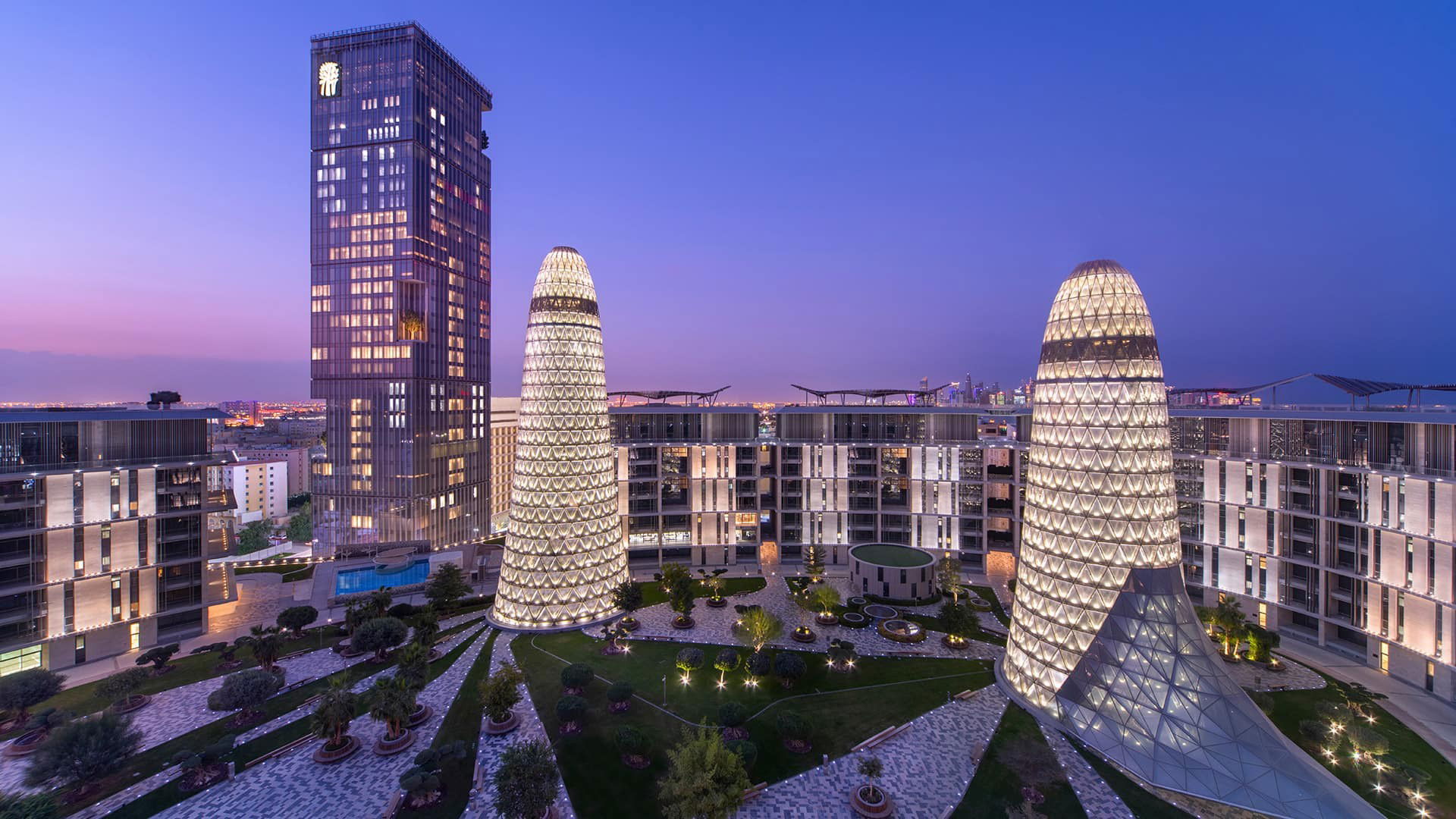
Inside the elliptical steel Doha Oasis complex in Mushaireb, Banyan Tree Doha At La Cigale Mushaireb earns 91 points in the La Liste Top Hotels 2026 rankings with interiors by Jacques Garcia and four destination restaurants spanning Thai, Indian, Italian, and rooftop Mediterranean-Asian formats. The 66-room property pairs restrained, garden-view accommodations with one of Doha's more theatrically designed lobbies, anchored by the silver-accented Trees of Life centrepiece.
Where Urban Density Meets Considered Restraint
Doha's luxury hotel sector has fractured into two legible camps: waterfront resort complexes oriented around the Corniche and West Bay, and a newer generation of urban properties embedded in mixed-use developments across Mushaireb and the city centre. Banyan Tree Doha At La Cigale Mushaireb belongs firmly to the second category, occupying a position inside the Doha Oasis complex on Al Khaleej Street that puts it closer to historic Msheireb Downtown than to the marina-adjacent properties like Four Seasons Hotel Doha or Fairmont Doha. That positioning is a deliberate editorial statement about where the city is heading architecturally and commercially, not merely a real estate coincidence.
The Doha Oasis complex is itself an argument. The distinctive elliptical steel structure, which became recognisable before the hotel even opened in May 2021, frames a vertical neighbourhood that includes a department store, an indoor experiential theme park featuring the EpiQ rollercoaster (documented as the world's tallest indoor rollercoaster), and a cinema multiplex. For guests whose preference runs toward self-contained urban environments rather than beach-and-pool isolation, this configuration is the primary draw. Properties like Banana Island Resort Doha by Anantara occupy a completely different register, built around seclusion and water access. Banyan Tree Doha trades that in favour of density and connectivity.
Jacques Garcia's Hand in Doha
Within Gulf luxury hospitality, the appointment of a named international designer carries significant weight as a market signal. French interior designer Jacques Garcia, whose portfolio includes La Réserve Paris and The Peninsula Paris, brought a layered visual language to the property that departs from the regional default of maximalist golden finishes. The lobby's centrepiece, a monumental silver-accented installation called the Trees of Life, anchors the arrival sequence in something closer to art installation than conventional hotel design. The tension between that theatrical public space and the relatively restrained guest rooms (which lean into warm textures and garden or city views) is one of the more interesting design negotiations in Doha's current hotel supply.
The smallest accommodation category, the Urban Retreat, runs to 646 square feet. At the upper end, the Harmony Club Suite measures 1,722 square feet across separate living, dining, and sleeping spaces. For context, that room hierarchy reflects a broader pattern across Gulf five-star hotels, where the gap between entry-level and suite-tier is often wider than in European or Asian equivalents. Guests who book into club suite categories gain access to the Altitude Club Lounge, which delivers VIP check-in and checkout procedures, complimentary buffet breakfast, and access to a boardroom, placing the overall value proposition closer to a business-travel luxury tier than a purely leisure orientation. Properties such as Aleph Doha Residences, Curio Collection by Hilton and Dusit Doha Hotel address similar business-traveller demographics, though through markedly different format and scale.
Four Restaurants, Four Distinct Arguments
Doha's food and beverage scene has matured to the point where hotel restaurants are frequently reviewed on their own terms rather than as ancillary amenities. The Banyan Tree's restaurant programme across four venues represents a more deliberate curation than many comparable properties in the city, and each concept carries enough specificity to attract non-resident diners.
Saffron, the hotel's signature venue, serves Royal Thai cuisine with sourcing oriented around authentic ingredient provenance. The tom yum soup with fresh seafood is the documented signature order. Thai restaurant programmes inside Gulf hotels often default to a generalised Southeast Asian register; Saffron's Royal Thai framing, consistent with Banyan Tree's wider brand positioning across its Asian properties, is a more specific editorial stance. On the 26th floor, Il Galante takes a less common approach to Italian hotel dining: its menu references the 1794 cookbook Il Cuoco Galante by Vincenzo Corrado, with dishes including a seafood and pasta soup (minestra de mare), gorgonzola gnocchi, and braised beef cheeks. That conceptual grounding in culinary history places it alongside a small group of Doha Italian restaurants that argue for specificity over breadth.
Qalamkarri addresses Indian regional cuisine at a level of geographic specificity that is still relatively rare across Doha's hotel dining stock. The menu pulls from India's regional variety rather than consolidating around north Indian convention, with Konkan dishes from the country's west coast representing the more distinctive end of the offer. For visitors comparing hotel-based Indian restaurants across the city, that regional ambition is the primary differentiator. Rooftop lounge Vertigo operates from the 28th floor, offering Mediterranean and Asian-fusion bar food with views across the coast. The format, sundowner-oriented with snack-scale plates and a panoramic window wall, follows a recognisable Gulf hospitality template, but the floor count gives it genuine sightline advantage over lower-positioned competitors. Our full Doha restaurants guide covers the broader dining context across the city.
Wellness Infrastructure and the Responsible Luxury Frame
Banyan Tree as a hotel group has built significant brand equity around wellness programming, and the spa offer at the Mushaireb property reflects that heritage. The Rainforest Hydrotherapy area operates as a sequence of hydrothermal stations, including a salt-infused steam room, designed around water's therapeutic properties rather than cosmetic treatment alone. Within Gulf luxury, wellness infrastructure tends to divide between performative (large spa floors with treatment menus) and genuinely programme-led. Banyan Tree's hydrotherapy format aligns it with the latter group, which globally includes properties like Zulal Wellness Resort by Chiva-Som in Al Ruwais, Qatar's dedicated wellness destination, though Banyan Tree Doha operates as an urban hotel with wellness as one component rather than the organising principle.
The property earned 91 points in the La Liste Leading Hotels 2026 rankings, placing it in the upper tier of that index's global coverage. La Liste's methodology draws from critical reviews, guest assessments, and editorial recognition, making a 91-point score a composite signal across multiple evaluation types rather than a single-source endorsement. Among Doha properties in that rankings band, the score positions Banyan Tree Doha alongside recognisable names while operating from a more compact room count (66 rooms, 60-plus suites) than larger competitors like Grand Hyatt Doha Hotel & Villas. Internationally, the group's approach to restrained luxury shares sensibility with properties such as Cheval Blanc Paris and Aman Venice, though Banyan Tree's Asian Zen-meets-Middle Eastern register is its own distinct idiom.
Planning Your Stay
The hotel sits on Al Khaleej Street in the Mushaireb district, within the Doha Oasis development. The complex's mixed-use format means that guests have direct access to retail, entertainment, and food options without leaving the building, which is a practical advantage during Qatar's summer months when outdoor movement is limited by heat. Amenities across the property include a gym, fitness classes, both indoor and outdoor pools, meeting rooms, a bar, and 24-hour room service, alongside babysitting services that extend the property's relevance for travelling families. For comparison across Doha's hotel supply at different price points and formats, see also 21 High Street Residence By The Torch, Doha Tower Hotel, and Hilton Salwa Beach Resort & Villas in Abu Samra. Beyond the Gulf, Banyan Tree's understated design philosophy invites comparison with urban luxury benchmarks including Bvlgari Hotel Tokyo, Hotel Bel-Air in Los Angeles, Aman New York, and The Fifth Avenue Hotel in New York City.
Frequently Asked Questions
- Which room category should I book at Banyan Tree Doha At La Cigale Mushaireb?
- The entry-level Urban Retreat at 646 square feet is a reasonable baseline for short stays, but the club suite tier delivers meaningfully more: the Altitude Club Lounge access, VIP check-in, complimentary breakfast, and boardroom use shift the value calculation for stays of two nights or more. The Harmony Club Suite at 1,722 square feet with separate living, dining, and sleeping areas represents the most complete version of the property's offer. The hotel's La Liste 91-point ranking applies across room categories, but the suite tier is where the full design and service programme is most legible.
- What makes Banyan Tree Doha At La Cigale Mushaireb worth visiting?
- The combination of a documented international design pedigree (Jacques Garcia), a La Liste Leading Hotels 2026 score of 91 points, four distinct restaurant concepts with credible culinary specificity, and an address inside one of Doha's most architecturally singular mixed-use developments gives the property a position that waterfront competitors do not replicate. For guests prioritising urban connectivity, design ambition, and a self-contained food and beverage programme over beach access, it addresses a specific preference set with more rigour than most Doha hotel-restaurant combinations.
- How far ahead should I plan for Banyan Tree Doha At La Cigale Mushaireb?
- Qatar's peak travel windows align with the cooler months between October and April, when outdoor Doha is fully accessible and major events, conferences, and sports fixtures concentrate demand. If your dates fall within that window, planning six to eight weeks ahead is advisable for the room category and restaurant reservations you want. The summer months (June through August) carry lower demand due to heat, which can open availability on shorter notice. The property does not publish its own booking channels in this listing, so approaching via the Banyan Tree Holdings central reservations system or a travel specialist familiar with the Doha market is the most direct route.
Recognized By


Related editorial
- Best Fine Dining Restaurants in ParisFrom three-Michelin-star icons to the next generation of Parisian chefs pushing boundaries, these are the restaurants that define fine dining in the world's culinary capital.
- Best Luxury Hotels in RomeFrom rooftop terraces overlooking ancient ruins to Michelin-starred hotel dining, these are the luxury hotels that make Rome unforgettable.
- Best Cocktail Bars in KyotoFrom sleek lounges to hidden speakeasies, Kyoto's cocktail scene blends Japanese precision with global influence in ways you won't find anywhere else.
Save or rate Banyan Tree Doha At La Cigale Mushaireb on Pearl
Keep this venue in your Pearl passport, rate it after you visit, and track it alongside every other place you collect.