
Hotel in Stockholm, Sweden
Backstage Hotel Stockholm
350ptsIsland-Sited Intimacy

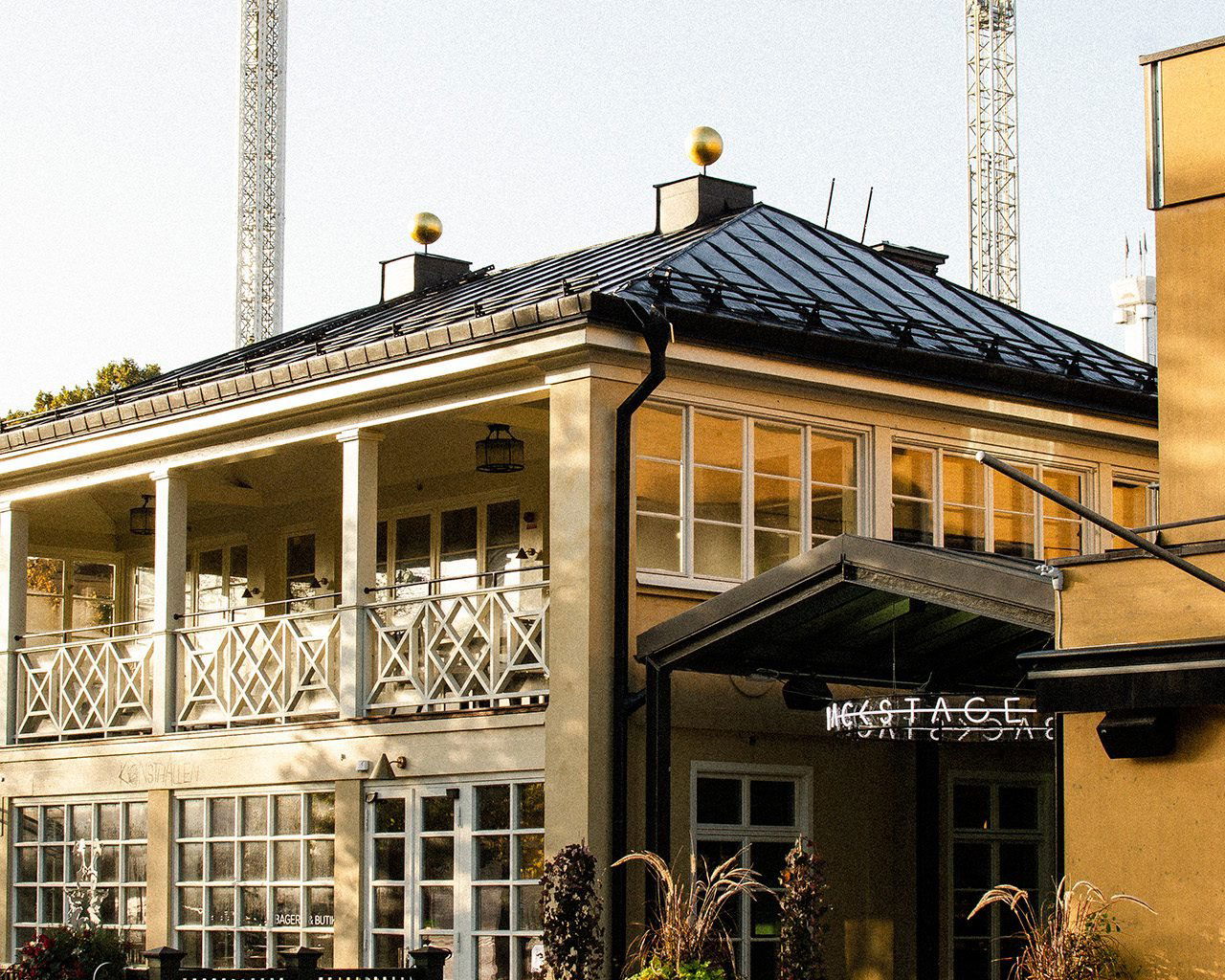
About Backstage Hotel Stockholm
Backstage Hotel Stockholm occupies a distinctive address on Djurgårdsvägen, the tree-lined avenue that connects the city to its museum island. With 57 rooms, the property sits in the smaller, more considered tier of Stockholm accommodation, a counterpoint to the grand boulevard hotels closer to the city centre. Its Djurgården position puts ferry crossings, Skansen, and the Vasa Museum within walking distance.
Djurgården and the Logic of Where Stockholm Chose to Build
The address at Djurgårdsvägen 68 says something before you even open the door. Djurgården is not a hotel district in any conventional sense. It is an island managed largely as parkland and cultural infrastructure, home to the Vasa Museum, Skansen open-air museum, the ABBA Museum, and Gröna Lund amusement park. The decision to build and maintain a 57-room hotel here rather than on Stureplan or along the waterfront near the Centralstation places Backstage Hotel Stockholm in a different conversation from properties like Grand Hôtel Stockholm or At Six. Those properties compete on proximity to business, fashion, and nightlife. A Djurgården address competes on something else: access to the quieter, greener, historically layered version of the Swedish capital.
Djurgårdsvägen itself is a particular kind of Stockholm street. It runs along the northern edge of the island, lined with mature trees and punctuated by the ochre and red facades of 19th-century pavilion buildings. The avenue was laid out as a royal promenade, and the built fabric along it reflects that origin, a mix of leisure architecture, institutional buildings, and the occasional private villa that survived the 20th century intact. Arriving here in any season carries a different register from arriving at a city-centre property. In winter, the bare trees and low Baltic light give the approach a tonal austerity that Stockholm does better than almost any European capital. In summer, the same avenue becomes dense with foliage and the ambient noise of cyclists and ferry passengers.
A Building in a District That Has Always Been About Performance and Spectacle
The heritage angle at any Djurgården property is not optional context. The island has been Stockholm's designated pleasure ground since at least the 17th century, when the Swedish crown maintained it as a hunting reserve before gradually opening it to public entertainment. The progression from royal hunting park to the site of Skansen, founded in 1891 as the world's first open-air museum, and eventually to the cluster of cultural institutions that define it today, is a long, unbroken line of public spectacle and performance. The name Backstage sits against that backdrop with a degree of self-awareness. The cultural institutions on Djurgården are all about front-of-house presentation. A hotel called Backstage suggests the other side of that arrangement, somewhere to withdraw after the performance rather than to participate in it.
Stockholm's hotel market has, over the past decade, split with increasing clarity between large internationally affiliated properties and smaller, independently inflected ones. Properties like Ett Hem and Blique by Nobis occupy the smaller-footprint, design-considered end of that spectrum. At 57 rooms, Backstage Hotel Stockholm falls into this smaller cohort by scale, which in practice means a different operational tempo from a 200-room flagship. Fewer rooms typically translates to tighter booking windows and a more consistent guest profile, the kind of property where repeat visitors and longer-stay guests set the ambient tone rather than passing conference traffic.
What the Location Gives You That Central Stockholm Cannot
The practical logic of a Djurgården hotel is worth stating directly. Ferry services connect the island to Slussen and to the Gamla Stan area, meaning central Stockholm is accessible without the friction of taxi queues or metro connections. The Djurgårdslinjen tram, one of Stockholm's heritage tram lines running vintage rolling stock, connects the island to Norrmalmstorg and the city centre in under 20 minutes. For travellers whose itinerary centres on the island's museums, particularly the Vasa Museum, which holds the near-intact 17th-century warship raised from Stockholm harbour in 1961, the proximity removes an entire logistical layer from the day.
That said, the neighbourhood is not self-contained in the way that, say, Bank Hotel or Berns Hotel are, surrounded by dining and nightlife within a short walk. Djurgården's restaurant and bar density is lower than central Stockholm's. The island's food and drink offer is anchored to its museum restaurants and a handful of seasonal establishments rather than a full-service neighbourhood hospitality scene. Guests staying here for more than two nights should factor in that evenings will likely involve the tram or ferry back toward Östermalm or Södermalm for dinner. For guests whose priority is access to the museums and the park rather than city nightlife, this is a fair trade. For those who want the full Stockholm dining rotation, properties closer to the centre such as Haymarket by Scandic or Freys Hotel sit more conveniently.
Sizing the Property Against Its Peer Set
Fifty-seven rooms is a specific number in Stockholm's hotel arithmetic. It places the property above the genuine boutique tier, which in this city runs to properties under 30 keys, but well below the mid-scale category where operational standardisation tends to flatten the guest experience. The comparable peer set by size and neighbourhood character would include properties that prioritise a coherent design or cultural identity over breadth of facilities. The hotel sits closer in spirit to the character-led end of the Stockholm market than to the amenity-stack end, even if the absence of published awards data or star rating makes direct peer comparison inexact.
Travellers comparing Stockholm options across different scales should note that the city's largest prestige properties, including Grand Hôtel Stockholm, operate at a different price and service tier entirely, with the full apparatus of concierge depth, multiple dining outlets, and spa infrastructure that a 57-room island property cannot replicate and presumably does not attempt to. The choice between them is not really a quality comparison. It is a question of what kind of Stockholm stay the traveller is constructing. For reference points beyond Sweden, the same logic of smaller-footprint, location-led stays applies to properties like Castello di Reschio in Umbria or Arctic Bath in Harads, where the surrounding environment is the primary amenity and the rooms are the retreat from it. See our full Stockholm restaurants and hotels guide for broader orientation across the city's neighbourhoods.
Planning Your Stay
Backstage Hotel Stockholm is located at Djurgårdsvägen 68, on the northern edge of Djurgården island. The Djurgårdslinjen heritage tram stops nearby and connects to the city centre; ferry services from Allmänna Gränd and Slussen provide an alternative water route in the warmer months. Summer weekends on Djurgården attract significant visitor volume to the island's museums and Gröna Lund, so booking ahead during June through August is advisable. The quieter shoulder seasons, late April to early June and September, give access to the island's full complement of institutions without the weekend crowds. For winter stays, the dark-season atmosphere along Djurgårdsvägen has its own specific character that guests oriented toward Nordic winter aesthetics tend to find more rewarding than the busier summer period.
Frequently Asked Questions
- What's the leading suite at Backstage Hotel Stockholm?
- The hotel's 57-room inventory is confirmed in the venue record, but specific suite categories, room grades, and pricing tiers are not available in current published data. For the most accurate picture of the upper room tier and current rates, contacting the property directly is the appropriate route. Context from comparable Stockholm boutique properties suggests that leading rooms at island addresses like this tend to trade on views toward the water or the parkland rather than size or amenity stack alone.
- What's the standout thing about Backstage Hotel Stockholm?
- The location on Djurgårdsvägen is the defining variable. Stockholm has no shortage of capable central hotels, but a 57-room property on a heritage avenue connecting the city's museum island is a narrow category. Guests who orient their Stockholm stay around Djurgården's cultural institutions gain genuine proximity that no city-centre property can replicate.
- Do they take walk-ins at Backstage Hotel Stockholm?
- Published booking policy is not available in current data. At 57 rooms, occupancy during peak summer and major cultural events on Djurgården can be tight, so advance booking is the prudent approach. Guests in Stockholm without a reservation should attempt to contact the property directly or check availability through standard booking channels before assuming walk-in access.
- What's the leading use case for Backstage Hotel Stockholm?
- If your Stockholm itinerary is built around Djurgården's museums, particularly the Vasa Museum and Skansen, this address removes the daily commute from the equation and lets you operate on the island's own tempo. If your priority is evening access to Östermalm dining or Södermalm nightlife, a central property would serve that itinerary better. The 57-room scale also suits travellers who find large-hotel operational patterns intrusive.
- Is Backstage Hotel Stockholm a good base for exploring wider Sweden?
- Djurgårdsvägen sits within reasonable reach of Stockholm Centralstation via the heritage tram and ferry connections, giving access to the rail network that reaches Gothenburg, Uppsala, and beyond. Travellers using Stockholm as a hub for wider Swedish travel should factor in the 15-to-20-minute transfer to the central station when planning early departures. For comparison, properties like Görvälns Slott in Järfälla or Vyn Restaurant in Östra Nöbbelöv offer alternative Swedish stays outside the capital entirely.
Recognized By

Related editorial
- Best Fine Dining Restaurants in ParisFrom three-Michelin-star icons to the next generation of Parisian chefs pushing boundaries, these are the restaurants that define fine dining in the world's culinary capital.
- Best Luxury Hotels in RomeFrom rooftop terraces overlooking ancient ruins to Michelin-starred hotel dining, these are the luxury hotels that make Rome unforgettable.
- Best Cocktail Bars in KyotoFrom sleek lounges to hidden speakeasies, Kyoto's cocktail scene blends Japanese precision with global influence in ways you won't find anywhere else.
Save or rate Backstage Hotel Stockholm on Pearl
Keep this venue in your Pearl passport, rate it after you visit, and track it alongside every other place you collect.