
Hotel in Tokyo, Japan
Andaz Tokyo
625ptsHigh-Altitude Urban Minimalism

About Andaz Tokyo
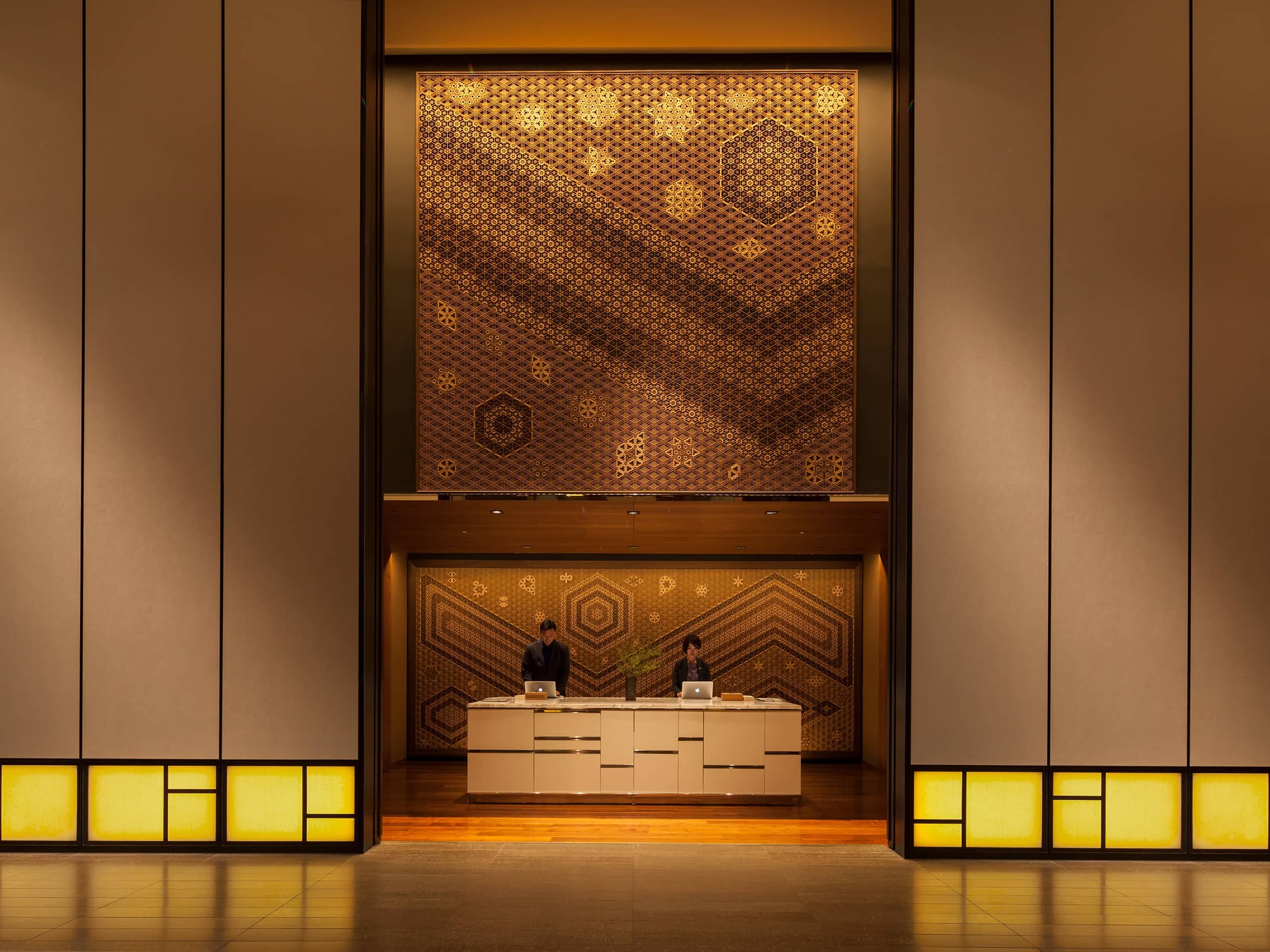
Andaz Tokyo occupies floors 51 and 52 of Toranomon Hills Mori Tower, one of Tokyo's tallest towers, with 164 rooms priced from $777 per night. The property earned a Michelin 1 Key in 2024 and positions itself at the intersection of international chain reliability and location-specific design, with interiors by Tony Chi and Shinichiro Ogata built around washi paper, wood, and sweeping city views.
Steel, Paper, and Sky: What Tokyo's High-Rise Hotel Tier Actually Delivers
The approach to Andaz Tokyo begins well before the lobby. Toranomon Hills Mori Tower, the second-tallest building in Tokyo at the time of the hotel's opening, rises above the Toranomon district in a way that makes its altitude feel architectural rather than incidental. The elevator ascent to floor 51 is itself a kind of orientation exercise: by the time the doors open, the city below has rearranged itself into something legible, its grid of grey and glass extending toward Tokyo Bay to the south and the green geometry of the Imperial Palace gardens to the north. That view is not decorative backdrop. It is the primary material the hotel works with, and almost every design decision inside the property orients the guest toward it.
Tokyo's high-rise luxury hotel segment has developed a clear internal logic. Properties at this altitude trade on two things: the quality of the panorama they command and the coherence of the design language they deploy to frame it. Aman Tokyo, which occupies the upper floors of Otemachi Tower, pitches at a more austere and architecturally severe register. Four Seasons Hotel Tokyo at Otemachi operates with a more conventional luxury-brand grammar. Andaz Tokyo, as Hyatt's boutique-inflected line, tries to hold a middle position: the operational backing of a major chain with an interior language that reads as site-specific rather than corporate.
The Design Logic: Washi, Wood, and the Absence of Marble
The interiors, credited to Tony Chi and Shinichiro Ogata, make an immediate argument against the marble-and-chandelier vocabulary that defines many hotels at this price level. Washi paper appears in wall treatments and light diffusers; wood runs through furniture and partition screens. The rooms use Japanese-style partitions to separate living and sleeping zones, a spatial approach that references the traditional ma concept of negative space and interval without tipping into theme-park Japonisme. Locally sourced linens complete a material palette that is deliberately porous to place.
This kind of design discipline is harder to execute than it appears. In Tokyo's premium hotel market, the temptation to layer references until they cancel each other out is real, and several properties at similar price points fall into that trap. The Ogata involvement here carries specific credibility: his practice, known for the Higashiya brand and a refined approach to Japanese material culture, brings the kind of cultural literacy that distinguishes considered localism from applied aesthetics.
The 164 rooms sit within a rate structure starting at $777 per night, placing Andaz Tokyo at the upper tier of the Tokyo market without reaching the rarefied pricing of Bvlgari Hotel Tokyo or the per-night costs associated with Aman's Tokyo property. That position in the rate hierarchy matters: it draws guests who want demonstrable craft and location-specificity but also expect the friction-free infrastructure of a globally experienced operator.
What Michelin's 1 Key Actually Signals
Michelin extended its hotel rating program to Tokyo in 2024, and Andaz Tokyo received 1 Key in that inaugural year. The Michelin Key system evaluates the hotel experience as a whole rather than singling out specific dining or spa components, which makes the designation a statement about overall delivery: service consistency, the quality of the physical environment, and how well the property connects guests to its setting. For a 164-room property inside a mixed-use tower, the recognition places Andaz Tokyo in a peer group that includes properties from Palace Hotel Tokyo and others competing in Tokyo's upper-mid luxury band.
The property's Google rating of 4.5 across more than 2,100 reviews provides a complementary data point. At that volume, a 4.5 average is a signal of consistent execution rather than occasional brilliance, which aligns with the structural advantage a Hyatt-operated property holds: the absence of the small operational problems that can undermine a newer independent boutique.
The 52nd Floor and the Logic of the Rooftop Bar
The open-air rooftop bar on the 52nd floor represents one of the most direct expressions of the hotel's central thesis. At that height, with Tokyo spreading in every direction, the bar becomes less a place to drink than a place to recalibrate one's sense of the city's scale. The Andaz Tavern, one floor below, extends that orientation with a traditional tea counter alongside dining with views across Tokyo Bay. The tea counter in particular signals something about the property's ambitions: it is the kind of detail that an internationally operated hotel either gets exactly right or deploys clumsily, and its presence here reflects the broader tonal care in the Ogata involvement.
For guests using the spa, the minimalist treatment spaces and a swimming pool oriented toward the Imperial Palace gardens add a sensory dimension that is rare in a city-center urban hotel. Looking across open green space from an indoor pool, with the palace gardens below and the city skyline beyond, is an experience that geography makes almost impossible to manufacture elsewhere in central Tokyo.
Toranomon and the City Around It
Toranomon as a district occupies a transitional position in Tokyo's hotel geography. It sits between the financial density of Shinjuku to the west and the heritage-laden precincts of Marunouchi and Ginza to the east, with strong subway access via the Ginza line making Tokyo's restaurant and cultural infrastructure accessible without the need for taxis. The Toranomon Hills development itself continues to evolve as a mixed-use precinct, which means the immediate street environment around the tower is functional rather than atmospheric, pushing the experiential weight back up to the hotel's own floors.
For those extending a Japan itinerary beyond the city, the Andaz's concierge-replacement model, a team of Andaz Hosts rather than a traditional concierge desk, is genuinely useful for navigating a city where restaurant reservation culture can be opaque to visitors. HOTEL THE MITSUI KYOTO, Gora Kadan in Hakone, and Amanemu in Mie each represent logical onward stops for guests who want to move from urban Tokyo into more traditional ryokan or resort formats. For those staying within the city's hotel ecosystem, JANU Tokyo, Bellustar Tokyo, and The Capitol Hotel Tokyu each occupy distinct positions in the competitive set worth comparing before booking.
Planning Your Stay
From Narita International Airport, the Ginza line connects to Toranomon Station in approximately 70 minutes, followed by a five-minute walk to the tower. From Haneda, the journey is closer to 30 minutes by train. Rates start at $777 per night for 164 rooms, and the property's consistent occupancy at that price point suggests booking several weeks in advance for preferred room types, longer for dates around cherry blossom season or Golden Week in late April and early May. The complimentary minibar stocking and in-room wi-fi are standard across Andaz properties and reduce the small daily friction that accumulates over longer stays. Beyond Japan, the Andaz operating model translates interestingly to properties in markets like New York and Venice, where the tension between chain infrastructure and location-specific identity plays out in similarly high-stakes real estate contexts.
Frequently Asked Questions
Which room offers the leading experience at Andaz Tokyo?
Rooms oriented toward the Imperial Palace gardens or Tokyo Bay deliver the most complete version of what the hotel is doing. The Michelin 1 Key designation and the $777-per-night entry rate signal that the property's upper room categories justify their premium through view access and the quality of the washi-and-wood material palette. Corner configurations on higher floors within the 51st-floor range will typically offer the widest sightlines. Book well in advance if specific orientation matters.
What makes Andaz Tokyo worth visiting?
The combination of the Michelin 1 Key (2024), a 4.5 Google rating across more than 2,100 reviews, and a location in one of Tokyo's tallest towers gives the property a specific kind of credibility: it is an internationally operated hotel that has earned recognition from Tokyo-specific evaluators. For guests who want chain-level operational reliability with a design program that engages seriously with Japanese material culture, the Andaz sits at a price point that leaves it below the most expensive options in the city while delivering on the core altitude-and-design promise. Those weighing alternatives in Tokyo's premium tier should compare it directly against Four Seasons Hotel Tokyo at Marunouchi and Palace Hotel Tokyo, which operate at comparable price points with different design and location priorities.
How far ahead should I plan for Andaz Tokyo?
Tokyo's hotel market tightens significantly around cherry blossom season (late March to early April) and Golden Week (late April to early May), when the city draws both domestic and international travelers at volume. For those periods, booking two to three months in advance is prudent. Outside peak windows, four to six weeks is generally sufficient for standard room types at the $777-per-night entry rate. For specific room orientations or multi-night stays, earlier is always safer. The property does not publish direct booking contact details through EP Club's database, so reservations are leading made through the Hyatt platform or a travel advisor with Hyatt World of Hyatt access.
Recognized By

More hotels in Tokyo
- Apartment Hotel ShinjukuApartment Hotel Shinjuku offers an accessible, apartment-style base in one of Tokyo's most connected neighbourhoods. Easy to book with no waitlist pressure, it suits longer stays or travellers who want more space than a standard hotel room provides. Best timed for spring or autumn — avoid Golden Week when Tokyo-wide rates spike.
- ASAKUSA KOKONO CLUB HOTELA compact, independently run hotel in Tokyo's Asakusa district, suited to travellers who want immediate access to one of the city's most walkable historic neighbourhoods. Amenity provision is limited compared to larger luxury properties, but the location in Taito City is the core value proposition. Easy to book, with peak availability tightening in cherry blossom and autumn foliage seasons.
- Azabudai HillsAzabudai Hills is Tokyo's most ambitious mixed-use development, opening in late 2023 across 8.1 hectares in Minato. For business travellers, the location near Roppongi-itchome and Kamiyacho stations makes it a practical base for central Tokyo meetings. Weekday visits are far more manageable than weekends. Browse our full Tokyo hotels guide for accommodation options within the complex and nearby.
Related editorial
- Best Fine Dining Restaurants in ParisFrom three-Michelin-star icons to the next generation of Parisian chefs pushing boundaries, these are the restaurants that define fine dining in the world's culinary capital.
- Best Luxury Hotels in RomeFrom rooftop terraces overlooking ancient ruins to Michelin-starred hotel dining, these are the luxury hotels that make Rome unforgettable.
- Best Cocktail Bars in KyotoFrom sleek lounges to hidden speakeasies, Kyoto's cocktail scene blends Japanese precision with global influence in ways you won't find anywhere else.
Save or rate Andaz Tokyo on Pearl
Keep this venue in your Pearl passport, rate it after you visit, and track it alongside every other place you collect.