
Hotel in New York City, United States
Ace Hotel Brooklyn
625ptsIndustrial-Romantic Affordability

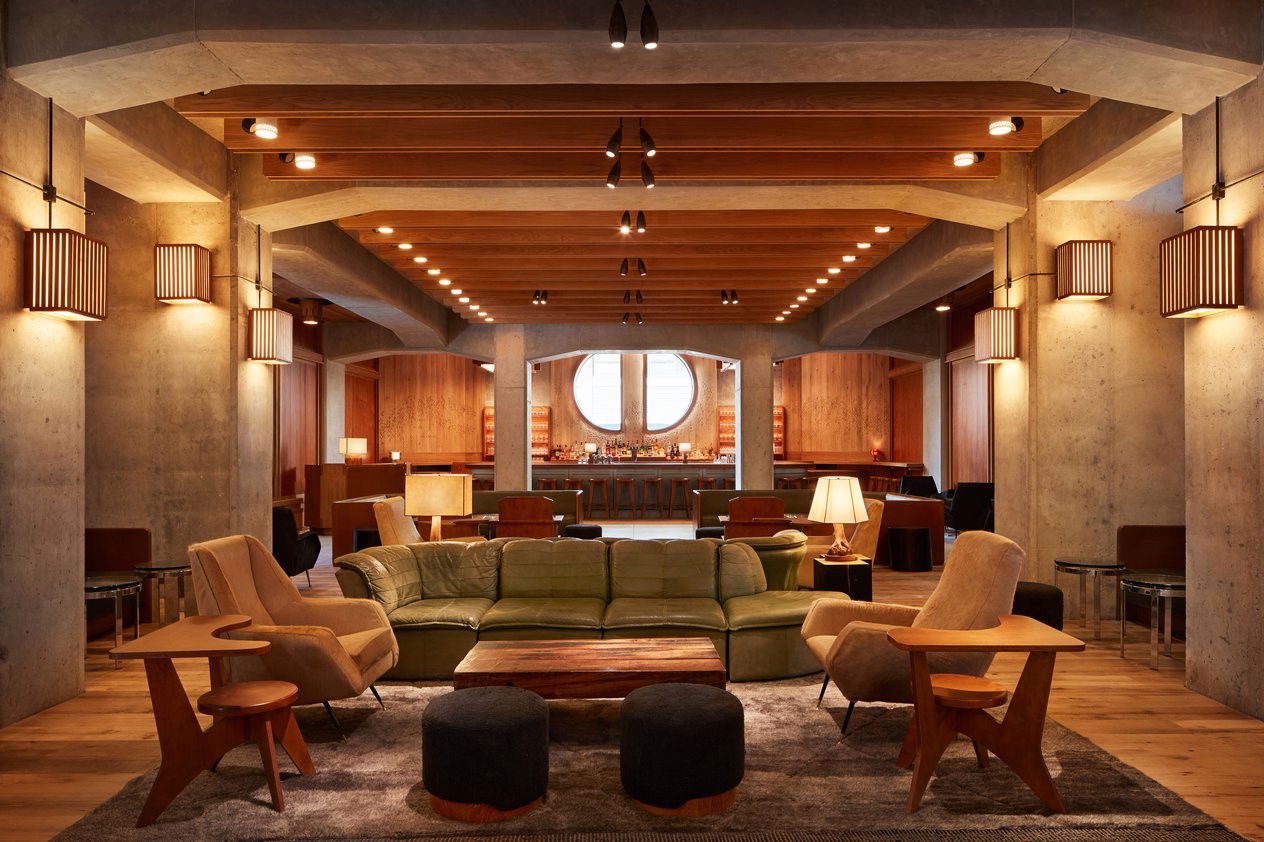
About Ace Hotel Brooklyn
Ace Hotel Brooklyn occupies a purpose-built Stonehill Taylor building in Boerum Hill, a neighborhood that sits between Downtown Brooklyn and the brownstone belt rather than in Williamsburg's well-trodden circuit. Roman and Williams interiors carry the chain's industrial-romantic signature across 276 rooms, with Smeg fridges, Tivoli radios, and D'Angelico guitars in select rooms. A Michelin Key (2024) signals the property's standing in New York's design-hotel conversation at rates from $448 per night.
Where the Building Is the Brief
Brooklyn's boutique hotel market has long clustered around Williamsburg, where the density of bars, restaurants, and cultural venues makes the case for itself. The more interesting question in recent years has been what happens when a hotel of serious design ambition plants itself somewhere less proven. Boerum Hill, at the fringe of Downtown Brooklyn, sits adjacent to the borough's civic and commercial core without carrying the tourist-circuit polish of neighborhoods to the north. Ace Hotel Brooklyn, at 252 Schermerhorn St, lands precisely there, and the location is not incidental. It is an editorial choice about where Brooklyn is heading rather than where it has already been.
The building itself, designed by Stonehill Taylor, is the opening argument. New York's boutique hotel sector has produced two broad design approaches: adaptive reuse of industrial or residential stock, and purpose-built structures that attempt to manufacture atmosphere from scratch. The latter is harder to pull off. Stonehill Taylor's commission here results in a structure that reads as contemporary without being anonymous, which is a less common outcome than it should be. The architecture frames the interiors before the interiors have a chance to frame themselves.
Roman and Williams and the Industrial-Romantic Register
Within the sector of boutique hotel design, Roman and Williams occupy a position that other firms have spent careers trying to approximate. Their approach, which draws on layered materiality, warm industrial detailing, and an almost theatrical sensitivity to mood, appears throughout the Ace portfolio and has become something close to a shorthand for the aesthetic that high-end independent hotels have been chasing since the mid-2000s. At Ace Hotel Brooklyn, their work lands in familiar territory without being merely repetitive.
The interiors operate in what the design world tends to call industrial-romantic: exposed structural elements balanced against warmer surfaces, lighting that does actual work rather than simply existing, and a material palette that suggests age without faking it. For guests who know the Roman and Williams body of work, the Brooklyn property will feel coherent with that lineage. For those arriving without context, the rooms function on their own terms, which is the test that matters.
All 276 rooms feature floor-to-ceiling windows, which at street level in this part of Boerum Hill means a particular relationship with the neighborhood outside rather than an aerial abstraction. Smeg fridges and Tivoli radios appear throughout, functioning as design objects as much as amenities, consistent with the Ace Hotels approach to in-room hardware as part of the visual language rather than a separate utilitarian layer. Select rooms carry this further: Music Hall turntables and acoustic guitars by D'Angelico, the New York luthier whose instruments have circulated among serious players for decades, make certain rooms into something closer to a curated environment than a standard hotel accommodation.
The Ace Model and Where Brooklyn Fits Within It
The Ace Hotels group has built its identity around a specific tension: affordability as a value, design as a non-negotiable. That tension is harder to sustain as construction and operating costs rise, and the Brooklyn property reflects where that balance currently sits. Rates from $448 per night place this property in a mid-to-upper bracket for Brooklyn, though it benchmarks differently against Manhattan comparables. Properties such as Aman New York or The Carlyle, A Rosewood Hotel operate in a different tier entirely, where the price is partly a statement about exclusivity. The Ace model is not that: it is design at a scale of 276 rooms, accessible enough to attract a wide guest profile, expensive enough to exclude the purely price-driven traveler.
That positioning has worked in cities where the Ace Hotels brand carries cultural weight, and New York is one of those cities. The original Ace Hotel New York in Midtown helped establish the lobby-as-neighborhood model that subsequently became a template across the industry. Brooklyn adds a second data point within the same metro, and it arrives with Michelin recognition: the property earned a Michelin Key in 2024, a signal that the hospitality establishment registers it as operating within the upper tier of the design-hotel category. Among New York's design-forward hotels, Crosby Street Hotel, The Whitby Hotel, and The Greenwich Hotel each occupy their own Manhattan niches; Ace Hotel Brooklyn makes the cross-borough case for a different kind of New York stay.
Social Spaces and the Ace Proposition
The Ace Hotels model has always treated social spaces as load-bearing elements of the guest experience rather than amenities in the conventional sense. Lobbies that function as public gathering points, restaurants and bars that draw neighborhood regulars alongside hotel guests, coffee programs designed to anchor morning routines: these are the mechanisms by which an Ace property inserts itself into its immediate urban environment. The Brooklyn location includes a restaurant and bar, a coffee shop, and an indoor garden with a double-sided fireplace, all of which position the property to operate as a neighborhood institution as much as a transit point for out-of-town visitors.
For a hotel at this address, that ambition is well calibrated. Boerum Hill's dining and drinking scene has developed steadily over the past decade, with Atlantic Avenue serving as one axis and Smith Street as another. A hotel that can hold its own as a destination within that context rather than simply directing guests outward will anchor itself differently in the neighborhood's social fabric.
Planning Your Stay
Ace Hotel Brooklyn is at 252 Schermerhorn St, Brooklyn, NY 11217, in Boerum Hill at the edge of Downtown Brooklyn. The neighborhood connects easily to Manhattan via multiple subway lines, and the property's proximity to Brooklyn's civic and cultural institutions, including BAM and the courts complex, makes it a practical base for both leisure and professional stays. Rates begin at $448 per night across 276 rooms. The full EP Club guide to New York City restaurants and hotels provides further context for building out an itinerary around the borough.
Travelers whose criteria lean toward architectural character over Manhattan adjacency will find the comparison set at this price point compelling. Those after Manhattan's Upper East Side register should look at The Mark or The Fifth Avenue Hotel. For waterfront or historic alternatives in the New York region, Casa Cipriani New York operates in Lower Manhattan with a very different character. Further afield, travelers planning multi-city American itineraries can reference the EP Club guides to properties including Raffles Boston, Hotel Bel-Air in Los Angeles, 1 Hotel San Francisco, and Auberge du Soleil in Napa. For those extending beyond North America, the EP Club covers design-forward properties including Aman Venice, Bvlgari Hotel Tokyo, and Badrutt's Palace Hotel in St. Moritz. Nature-focused alternatives within the US include Amangiri in Canyon Point, Post Ranch Inn in Big Sur, Troutbeck in Amenia, Sage Lodge in Pray, SingleThread Farm Inn in Healdsburg, Canyon Ranch Tucson, Little Palm Island Resort in Little Torch Key, Kona Village, A Rosewood Resort, and Four Seasons at The Surf Club in Surfside.
Frequently Asked Questions
- Which room offers the leading experience at Ace Hotel Brooklyn?
- The database record points to select rooms featuring both Music Hall turntables and D'Angelico acoustic guitars as the most fully realized version of the design program. All rooms carry floor-to-ceiling windows and the full Smeg and Tivoli hardware package; the instrument-equipped rooms add a layer of curation that distinguishes them within the 276-room inventory. The Michelin Key recognition (2024) and the starting rate of $448 per night apply across the property, so the premium for these rooms reflects access to a specific in-room environment rather than a separate tier of service.
- What is the standout characteristic of Ace Hotel Brooklyn?
- Within New York City's design-hotel category, the combination of Roman and Williams interiors, a purpose-built Stonehill Taylor building, and a Boerum Hill address rather than a predictable Williamsburg or Manhattan location gives the property a distinct position. The Michelin Key (2024) substantiates its standing in the upper tier of the city's boutique hotel conversation at rates from $448, while the 276-room scale means it operates at a different volume than the small-key properties that often dominate design-hotel shortlists.
Recognized By

More hotels in New York City
- 33 Hotel New York City Seaport33 Hotel sits at 33 Peck Slip in the New York Seaport District, offering a walkable position between the Financial District, Brooklyn Bridge, and Fulton Market. The address is the clearest selling point: waterfront proximity without Midtown pricing. Book if Lower Manhattan geography suits your trip; compare rates against nearby Casa Cipriani and The Greenwich Hotel before committing.
- Ace Hotel New YorkAce Hotel New York suits creative travelers and remote workers who want a NoMad address with genuine personality. The lobby-as-community-space model means approachable service and a lively ground floor, but expect casual rather than formal hospitality. Easy to book, well-located for midtown and downtown access, and better value than its design-forward peers at comparable price points.
- Arlo SoHoArlo SoHo offers compact, social-leaning rooms at accessible rates on Hudson St, one of lower Manhattan's most walkable addresses. The rooftop is the standout feature; rooms run small and there is no pool or spa. Book if location and price matter more to you than service depth or room size.
- Arlo WilliamsburgArlo Williamsburg is a strong pick if your priority is being close to North Williamsburg's restaurant and bar scene without paying Manhattan rates. Rooms are compact and communal spaces do the heavy lifting, so it works best for guests who treat the hotel as a base rather than a destination. Easy to book, and the Wythe Ave location earns its rate.
Related editorial
- Best Fine Dining Restaurants in ParisFrom three-Michelin-star icons to the next generation of Parisian chefs pushing boundaries, these are the restaurants that define fine dining in the world's culinary capital.
- Best Luxury Hotels in RomeFrom rooftop terraces overlooking ancient ruins to Michelin-starred hotel dining, these are the luxury hotels that make Rome unforgettable.
- Best Cocktail Bars in KyotoFrom sleek lounges to hidden speakeasies, Kyoto's cocktail scene blends Japanese precision with global influence in ways you won't find anywhere else.
Save or rate Ace Hotel Brooklyn on Pearl
Keep this venue in your Pearl passport, rate it after you visit, and track it alongside every other place you collect.