
Bar in Seoul, South Korea
Zest
1,590ptsZero-Waste Precision Mixology


About Zest
Ranked #2 in Asia and #9 globally by World's 50 Best Bars in 2024, Zest operates from a minimalist ground-floor space in Gangnam's Dosan-daero corridor, where a zero-waste cocktail programme draws on contract-farmed Korean ingredients, in-house urban beehives, and micro-distillery spirits. Co-founder Dohyung 'Demie' Kim won the Altos Bartenders' Bartender Award 2024. Weekday hours run from 18:30, with weekend service beginning at 15:00.
Empty Space, Full Intention: Inside Seoul's Most Awarded Bar
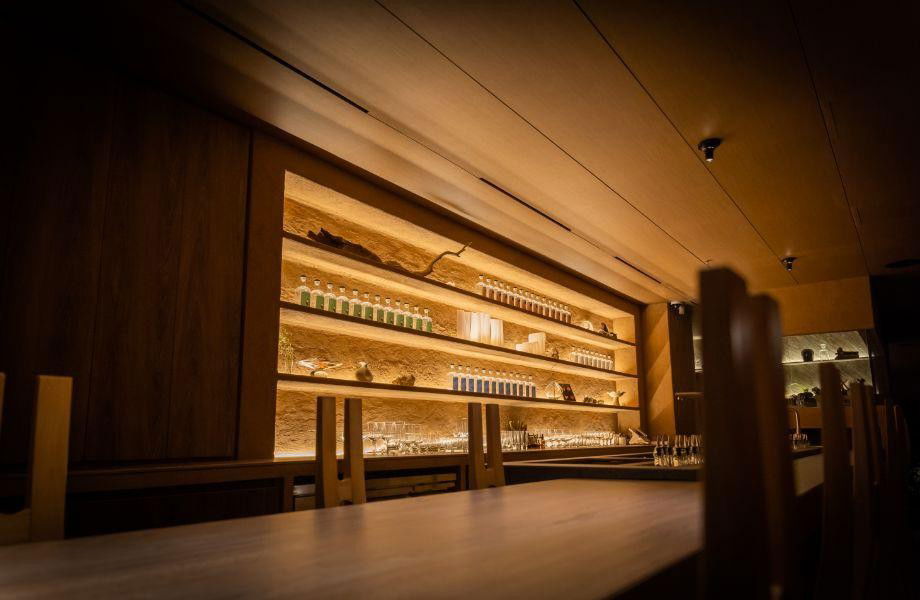
There is no back bar at Zest. Walk into the ground-floor space at 26 Dosan-daero 55-gil in Gangnam and the first thing you notice is what isn't there: no wall of bottles arranged for display, no theatrical prop, no visual noise. The room is composed around absence, which is precisely the point. The Korean aesthetic principle sometimes translated as 'beauty in emptiness' shapes every decision about how this bar looks and feels, from the minimalist surfaces to the deliberate restraint of garnish on the drinks themselves. In a neighbourhood known for polished interiors designed to be photographed, Zest's refusal to perform is its most distinctive design choice.
Dosan-daero in Gangnam has become one of Seoul's most concentrated corridors for serious cocktail bars, drawing a clientele that moves between fashion, food, and late-night culture with equal fluency. Within that scene, there is now a clear split between bars that dress the part and bars that have built reputations on programme discipline. Zest belongs firmly to the second group, with a credential stack that few competitors in Asia can match: ranked #2 in Asia's 50 Best Bars in both 2024 and 2025, #9 globally in 2024, and a recipient of the Tatler Leading Innovation award in 2024. Its 2025 Top 500 Bars ranking placed it at #25 worldwide. The trajectory from #48 in Asia in 2022 to #2 in 2024 is not the arc of a bar that got lucky with a zeitgeist moment — it reflects a programme that has deepened and sharpened over time.
The Logic Behind the Restraint
Seoul's bar scene has moved through several distinct phases in the last decade. The early wave of craft cocktail culture here borrowed heavily from Western template bars: Prohibition references, theatrical serves, spirit-led menus modelled on London and New York. A second wave brought Japanese influence: precision technique, seasonal Japanese botanicals, quietly serious service. What Zest represents is something closer to a third position, one that asks where Korean identity actually lives in a glass and answers that question through agriculture, fermentation, and provenance rather than through cultural signalling.
The programme sources vegetables and herbs through contract farming arrangements with Korean producers, harvests honey from beehives the bar maintains on-site in Seoul, and integrates spirits from Korean micro-distilleries and craft breweries alongside carefully selected international bottles. This is not local sourcing as a marketing layer — it shapes what the menu can contain and, more importantly, how ingredients are used. The bar's approach to waste demonstrates this most clearly. The Hallabong citrus , a hybrid mandarin cultivated primarily on Jeju Island , is used in its entirety: juice pressed for the Jeju Garibaldi, peels infused into house gin, and residual pulp converted into a cordial or fermented for use in the bar's Pulp Sauerkraut cocktail. Every part of the ingredient earns its place. This kind of whole-ingredient thinking requires more prep infrastructure and more planning than a conventional bar programme, and it produces a menu that cannot simply be replicated elsewhere.
Co-Founder Recognition and Programme Depth
Co-founder Dohyung 'Demie' Kim received the Altos Bartenders' Bartender Award at Asia's 50 Best Bars 2024, a peer-voted honour within the professional community that carries different weight from list placements or judging panels. Recognition from peers inside the industry tends to reflect a sustained quality of craft and generosity of professional contribution rather than a single high-profile moment. Kim leads Zest's programme alongside partners who share the bar's core commitments to minimal waste and sourced provenance. For context on how Seoul's bar community sits within the broader regional scene, bars such as Charles H, Alice Cheongdam, Bar Cham, and Bar D.Still occupy different positions across the city's range of formats and approaches. Zest operates in its own tier, defined less by format than by the depth of its sourcing infrastructure.
How the Physical Space Frames the Drinks
The absence of a back-bar display is not just aesthetic , it is a structural statement about what the bar wants you to pay attention to. When there is nothing to look at behind the bartender, the preparation becomes the spectacle. Technique, precision, and the quality of house-made elements carry the visual and intellectual weight that, in other bars, is carried by bottle selection or production design. Garnish appears only when it belongs to the drink's construction; decoration for its own sake is considered excess. The result is a service environment where attention stays on process and ingredient rather than on presentation theatre.
This approach places Zest in a peer set that includes some of the most technically disciplined bars in Asia, comparable in philosophy to operations in Tokyo and Singapore that have built reputations on programme depth over room drama. The minimalist interior works in part because it is consistent with what the drinks themselves communicate: nothing is there that doesn't need to be. For readers exploring Korea's wider bar scene, notable operations can also be found at Muyongdam in Jeju Si, Anjuga in Ansan Si, Climat in Busan, Regency Club in Incheon, and Seuwichi in Heungdeok, which together reflect the geographic spread of South Korea's bar programme development beyond Seoul.
For international context, the zero-waste programme philosophy Zest has built in Seoul runs parallel to what operations like Bar Leather Apron in Honolulu and Jewel of the South in New Orleans have pursued in their respective cities , a discipline around provenance and ingredient integrity that has become a differentiating quality among the bars now appearing consistently at the leading of global lists.
The Google Rating as a Signal
A Google rating of 4.8 across 361 reviews is a useful secondary data point here, not because aggregate scores are a reliable guide to programme quality, but because the volume and consistency suggest a guest experience that holds across a broad range of visitors, not just industry peers voting on lists. For a bar operating at this credential level, the gap between professional recognition and public reception is often larger than people expect. At Zest, the ratings align, which suggests the programme communicates its values effectively to drinkers who arrive without a framework for evaluating zero-waste cocktail philosophy. Guests explore the full Seoul drinking and dining scene further with our full Seoul restaurants guide.
Know Before You Go
| Address | 26 Dosan-daero 55-gil, Gangnam-gu, Seoul, South Korea (하늘빌딩 1층) |
|---|---|
| Hours | Monday to Friday: 18:30 until 02:00. Saturday and Sunday: 15:00 until 02:00. |
| Awards | World's 50 Best Bars #9 globally (2024); Asia's 50 Best Bars #2 (2024 & 2025); Top 500 Bars #25 (2025); Tatler Leading Innovation 2024; Altos Bartenders' Bartender Award 2024 |
| Google Rating | 4.8 / 5.0 (361 reviews) |
| @zest.seoul | |
| Neighbourhood | Gangnam District, Dosan-daero corridor |
Frequently Asked Questions
What's the must-try cocktail at Zest?
The Jeju Garibaldi is the clearest expression of what Zest's programme is built around. It uses fresh Hallabong juice , the Jeju-cultivated citrus pressed to order , alongside a house gin infused with the fruit's peels, while the remaining pulp is converted into a cordial or fermented for other applications in the bar. The drink is referenced in the bar's own programme documentation and cited in recognition sources including its Tatler Asia listing, making it the most verifiable entry point into understanding how Zest's whole-ingredient approach works in practice. The awards record reinforces why this specific programme , rather than the bar's design or location , is the reason to visit.
Hours
Mo-Fr 18:30-26:00; Sa-Su 15:00-26:00
Recognized By


More bars in Seoul
- 15 Samcheong-ro 9-gil15 Samcheong-ro 9-gil sits in one of Seoul's most atmospheric neighbourhoods, within easy walking distance of Gyeongbokgung Palace and Bukchon Hanok Village. Booking is easy — no advance reservation required — making it a low-friction addition to a Jongno evening. Confirmed details on the drinks program are limited, so treat this as a discovery stop rather than a destination anchor.
- 4 Dosan-daero 17-gil4 Dosan-daero 17-gil sits in Gangnam's gallery-and-boutique corridor, making it a practical choice for after-dinner drinks on a date night or low-key celebration. Booking is easy, the neighbourhood does the atmosphere work, and the address suits a two-to-three round stop rather than a full evening. Best visited Wednesday through Saturday; early arrival recommended on weekends.
- 53 Nonhyeon-ro 153-gil53 Nonhyeon-ro 153-gil is a Gangnam District address that drops you into one of Seoul's most competitive bar corridors. Easy to book and suited to small groups, it works best as part of a wider Nonhyeon-ro evening. Check the by-the-glass list on arrival — that is where the value case is made or lost in this neighbourhood.
- 684 Itaewon-dong684 Itaewon-dong sits in one of Seoul's most internationally mixed neighbourhoods, with the ambient energy and mid-tier pricing that makes Yongsan District a practical choice for a casual evening out. Booking is easy, the crowd skews international and laid-back, and Thursday nights offer the best balance of atmosphere and elbow room. A solid option if you're already in the area.
Related editorial
- Best Fine Dining Restaurants in ParisFrom three-Michelin-star icons to the next generation of Parisian chefs pushing boundaries, these are the restaurants that define fine dining in the world's culinary capital.
- Best Luxury Hotels in RomeFrom rooftop terraces overlooking ancient ruins to Michelin-starred hotel dining, these are the luxury hotels that make Rome unforgettable.
- Best Cocktail Bars in KyotoFrom sleek lounges to hidden speakeasies, Kyoto's cocktail scene blends Japanese precision with global influence in ways you won't find anywhere else.
Save or rate Zest on Pearl
Keep this venue in your Pearl passport, rate it after you visit, and track it alongside every other place you collect.