
Bar in Tokyo, Japan
The Bellwood
1,195ptsKaiseki-Sequenced Cocktails


About The Bellwood
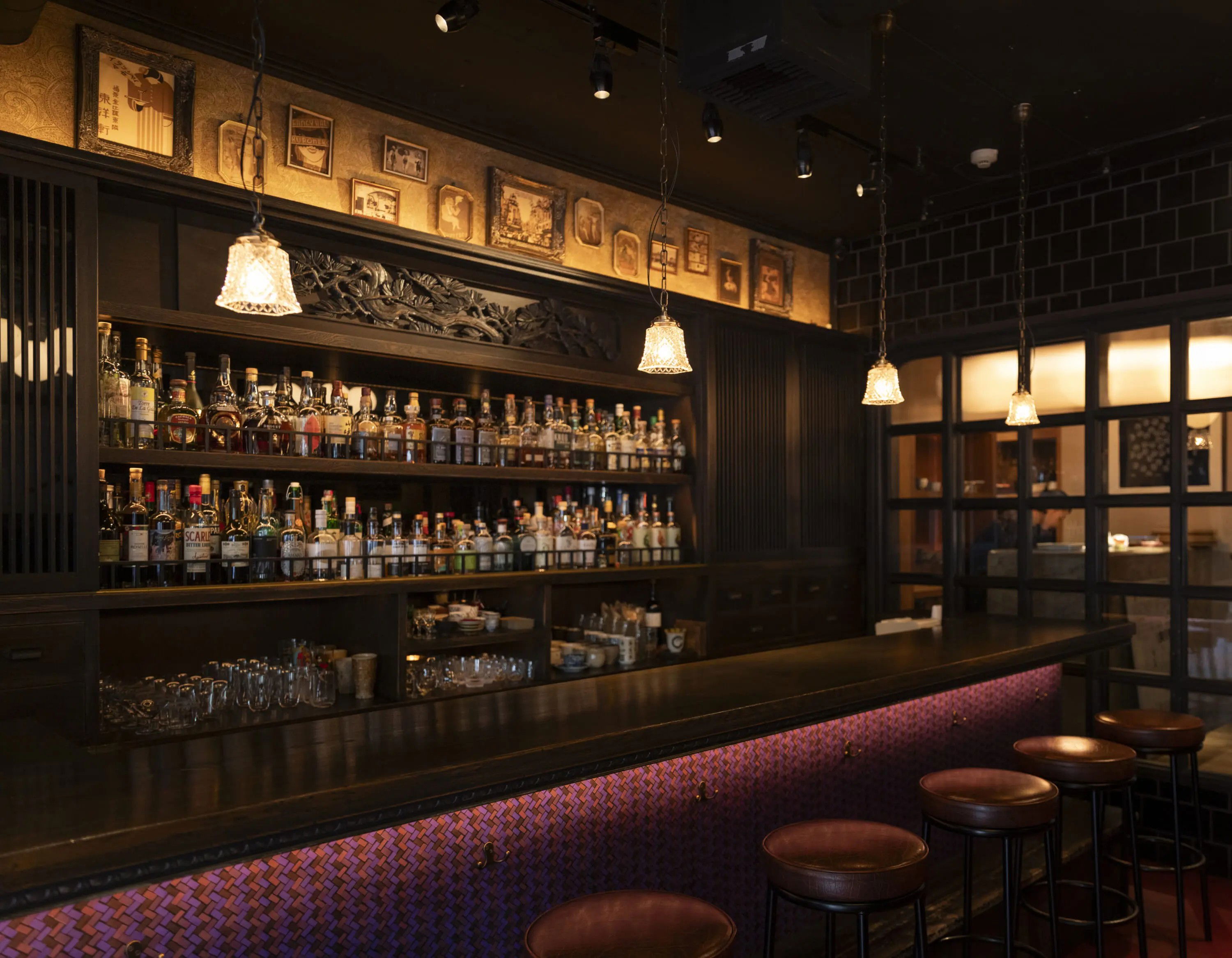
A Taisho-era-inspired bar in Shibuya's Udagawacho, The Bellwood translates the kaiseki meal structure into a sequential cocktail programme, drawing on both Japanese and Western spirits. Ranked #79 on Asia's Best Bars 2025 and #190 in the Top 500 Bars, it also conceals a 12-piece omakase counter at the back. Open Tuesday through Saturday, 11:30 to 20:00.
Shibuya's Cocktail Anchor
Udagawacho sits at a particular remove from the Shibuya you see on postcards. A few blocks west of the scramble, the neighbourhood collects record stores, vintage boutiques, and the kind of low-signage venues that reward people who already know what they're looking for. The Bellwood occupies that register precisely: a bar with no website, an address that takes some finding, and a concept dense enough that a single visit rarely exhausts it.
The broader Tokyo bar scene has moved in a specific direction over the past decade. Ginza's classical rooms, where bartenders like those at Bar High Five and Bar Orchard Ginza build technique-first menus around Japanese whisky, malt, and hard shakes, represent one pole. The opposite pole is the ingredient-driven naturalist bar, typified by Bar Benfiddich in Shinjuku, where foraged botanicals and farmhouse production run the show. The Bellwood sits across both, using a formal Japanese meal structure as the organising principle for its drinks without landing in either the classical or the forager camp.
The Kaiseki Framework
The conceptual architecture here is specific. The drinks programme is mapped to the kaiseki course sequence: sakizuke, the small palate-opener that begins the meal; yakimono, the grilled course centred on seasonal ingredients; gohan, the rice course that signals the meal is drawing to a close. Each position is reimagined as a cocktail, with Japanese and Western spirits selected to carry the function of that course rather than simply to taste good in isolation.
This is not the first time the kaiseki vocabulary has been borrowed for a drinks programme, but the execution matters. Rather than using kaiseki as a loose thematic gesture, The Bellwood applies the structural logic: drinks arrive in sequence, each prepared to perform a specific role in the progression. The result is a programme with internal coherence that most cocktail menus, however technically accomplished, do not attempt.
The historical frame reinforces the concept rather than decorating it. The late Meiji to Taisho period, roughly 1900 to 1926, was the moment when Western and Japanese aesthetics began genuinely merging in Japanese culture: architecture, fashion, literature, and food all absorbed Western elements without abandoning their Japanese foundations. The wayō-setchū spirit, the coexistence of Japanese and Western styles, gives the bar a reference point that is both historically specific and directly relevant to what ends up in the glass.
Bell Sushi: The Counter at the Back
The unmarked Bell Sushi counter at the rear of the venue operates as a separate experience within the same space. The format is a 12-piece nigiri omakase in which traditional sushi technique meets global flavour influence. For visitors searching for Bell Sushi Tokyo, this is the counter: unmarked, at the back of The Bellwood, and bookable through the bar itself.
Pairing structure this creates, kaiseki-structured cocktails alongside a nigiri omakase, places The Bellwood in a small group of Tokyo venues where the food and drink programmes have genuine conceptual parity. At most bars, food is an afterthought; at most sushi counters, the beverage pairing is secondary. Here the architecture is designed to run both simultaneously, which is unusual in Shibuya and unusual across the city.
Japan's cocktail bar scene more broadly has developed a particular sophistication around food pairings. Bar Libre in Tokyo represents one approach to that integration; the Bell Sushi counter at The Bellwood takes the idea further by building an entire omakase format around it.
The Recognition Trajectory
The Bellwood opened in 2020, a year that did not favour hospitality in most parts of the world. Its trajectory on the recognition lists has been steady rather than sudden. Asia's Leading Bars placed it at #49 in 2023, #34 in 2024, and #79 in 2025, reflecting both the competition intensifying in that tier and the bar's continued presence in the conversation. The global World's 50 Best ranking placed it at #53 in 2023 and #89 in 2024. The Top 500 Bars list for 2025 places it at #190. Tatler Asia's Leading Bars Asia-Pacific 2025 includes it as well.
A Google rating of 4.5 across 463 reviews is worth reading alongside the awards. Bars that score well on both international panel lists and public reviews tend to be operating with consistency rather than performing for a specific audience, which is the harder thing to sustain.
For context, Bar Nayuta in Osaka and Bee's Knees in Kyoto operate in Japan's broader ranked bar ecosystem; Lamp Bar in Nara and Yakoboku in Kumamoto extend the picture further into the regions. The Bellwood's position in Shibuya places it at the centre of the Tokyo bracket specifically, where competition from Ginza's classical rooms and Shinjuku's ingredient-driven bars is at its densest.
Shibuya as Context
The neighbourhood argument for The Bellwood matters. Shibuya's bar scene does not have the concentrated prestige of Ginza, where addresses carry institutional weight and dress codes are implied by the building lobby. What Shibuya has is range and a tolerance for format experimentation. Venues here tend to attract regulars from the creative industries and from the international community that has settled in the area, people who are comfortable with conceptual ambition and less interested in tradition-signalling for its own sake.
The Bellwood's Taisho-era reference is not nostalgia for a Japanese audience in the way that, say, a Showa-era aesthetic would be. The Taisho period is the moment when Tokyo became internationally minded, when the city developed a cosmopolitan identity. Using that as a frame gives the bar a local reference that also communicates internationally, which fits the Shibuya crowd more precisely than it would fit a Ginza or a Yanaka address.
For visitors building a Tokyo bar itinerary, the comparison set worth thinking about runs from the classical precision of Bar High Five and the forager-naturalist approach of Bar Benfiddich to the conceptual programme at The Bellwood. Each occupies a genuinely different position. See our full Tokyo restaurants and bars guide for broader orientation. Further afield, Bar Leather Apron in Honolulu and anchovy butter in Osaka each show how the Japanese-Western fusion logic plays out in different cities and formats. Kyoto Tower Sando takes the concept of layered hospitality formats in an entirely different direction.
Know Before You Go
| Detail | Information |
|---|---|
| Address | 41-31 Udagawachō, Shibuya, Tokyo 150-0042 |
| Hours | Monday to Saturday, 11:30 to 20:00 |
| Phone | +81 3-6452-5077 |
| Awards | Asia's Leading Bars #79 (2025); Top 500 Bars #190 (2025); World's 50 Best Asia's Leading Bars #34 (2024); World's 50 Best Leading Bars #89 (2024); Tatler Leading Bars Asia-Pacific 2025 |
| Google Rating | 4.5 / 5 (463 reviews) |
| @the_bellwood |
Frequently Asked Questions
Is The Bellwood more formal or casual?
The bar operates in Shibuya rather than Ginza, which sets the register. There is no posted dress code and the neighbourhood attracts a creative, international crowd. That said, the kaiseki-structured drinks programme and the omakase sushi counter are deliberately sequenced experiences, so the atmosphere is focused rather than loose. Tokyo's ranked bars, including peer venues in Ginza and Shinjuku, tend toward attentive service regardless of dress-code formality; The Bellwood sits in that bracket without the stiffness of the city's most classical rooms.
What's the leading thing to order at The Bellwood?
The drinks programme follows the kaiseki course structure, so ordering through the full sequence is the intended approach rather than selecting individual cocktails. The Bell Sushi omakase at the back of the room pairs with the drinks programme, and the two are designed to function together. Asia's Leading Bars has placed the bar in its top 50 across multiple years, recognition that reflects the programme as a whole rather than any single preparation.
What's the standout thing about The Bellwood?
Combination of a kaiseki-structured cocktail sequence and an unmarked 12-piece nigiri omakase counter in the same Shibuya space is the defining characteristic. Most internationally ranked bars in Tokyo specialise in one or the other; the architecture here is built around both running simultaneously and reinforcing each other. The Taisho-era historical frame gives the concept a specific intellectual foundation rather than a general Japanese aesthetic gesture.
Hours
Mo-Sa 11:30-20:00
Recognized By


More bars in Tokyo
- 8bit Cafe8bit Cafe in Shinjuku is Tokyo's retro gaming bar — a fun, low-pressure stop that works best as an early-evening warm-up rather than a serious cocktail destination. Walk-ins are easy and the crowd is casual and young. Go for the atmosphere, not the bar program, and plan to move on to somewhere like Bar Benfiddich for the serious drinking.
- A10A10 is a basement bar in Ebisu West, Shibuya — a neighbourhood that signals a drinks-serious crowd over a nightlife-first one. Booking difficulty is low, making it accessible for first-timers, but confirm capacity and hours directly before visiting. Best suited to small groups of two to four looking for a considered, low-noise drinking environment in one of Tokyo's more relaxed upscale pockets.
- Ahiru StoreAhiru Store is a relaxed neighbourhood wine bar in Tomigaya, Shibuya, suited to unhurried evenings and easy to book when busier Tokyo bars are full. The atmosphere stays calm and conversational, making it a practical choice for explorers who want a quieter, more residential side of Tokyo's drinking scene rather than a polished Ginza experience.
Related editorial
- Best Fine Dining Restaurants in ParisFrom three-Michelin-star icons to the next generation of Parisian chefs pushing boundaries, these are the restaurants that define fine dining in the world's culinary capital.
- Best Luxury Hotels in RomeFrom rooftop terraces overlooking ancient ruins to Michelin-starred hotel dining, these are the luxury hotels that make Rome unforgettable.
- Best Cocktail Bars in KyotoFrom sleek lounges to hidden speakeasies, Kyoto's cocktail scene blends Japanese precision with global influence in ways you won't find anywhere else.
Save or rate The Bellwood on Pearl
Keep this venue in your Pearl passport, rate it after you visit, and track it alongside every other place you collect.