
Bar in Seminyak, Indonesia
Ku de Ta
50ptsOcean-Edge Open-Air Drinking

About Ku de Ta
Ku de Ta has shaped Seminyak's beach-club drinking culture since before the category had a name in Bali. Its 2009 World's 50 Best Bars ranking — at number 35 — confirmed what the island's nightlife crowd already knew: this is the address that set the template for open-air, sunset-facing cocktail programming in Southeast Asia. A Google score of 4.5 across nearly 9,000 reviews speaks to sustained relevance across more than two decades.
The Address That Defined Seminyak's Drinking Culture
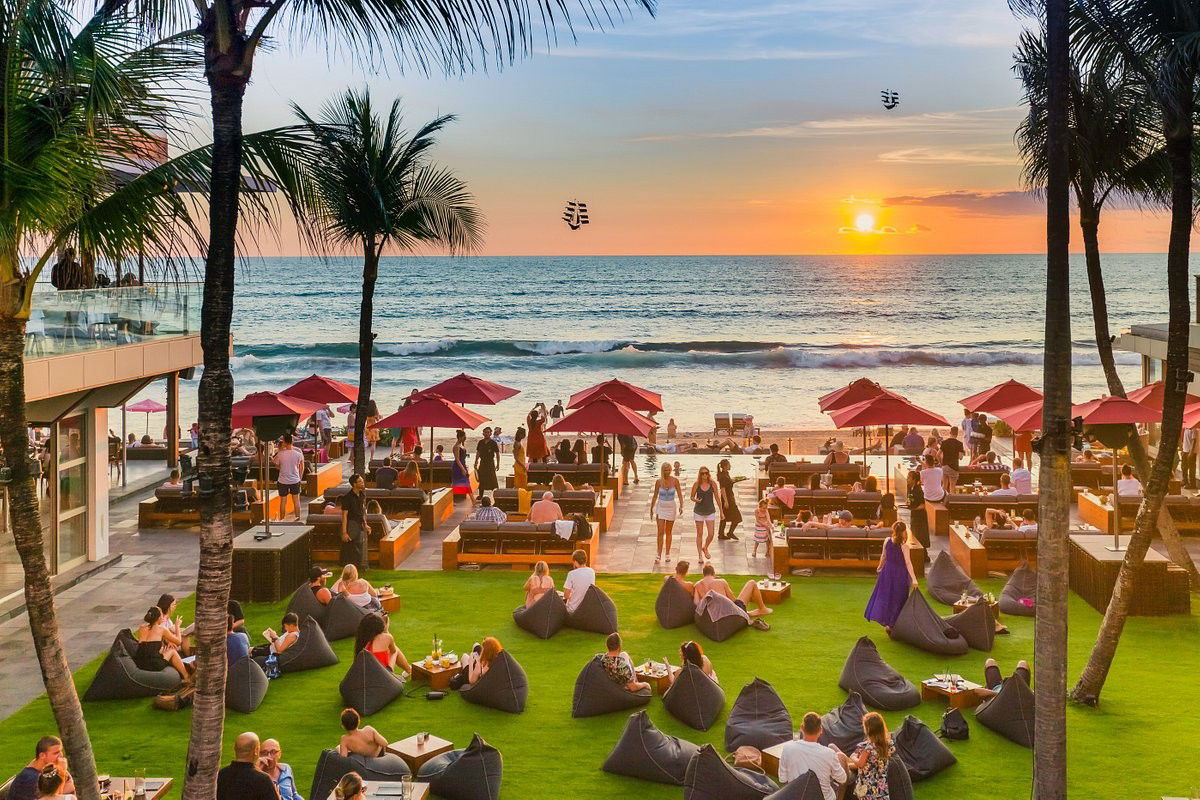
There is a particular quality of late afternoon light on Jalan Kayu Aya that makes any drink taste better — the sun dropping toward the Indian Ocean, the air still carrying heat from the day, the crowd shifting from swimmers to drinkers with the easy inevitability of a tide change. Ku de Ta occupies that moment in Seminyak more completely than almost any other address on the strip. Long before the beach-club format became a competitive category across Southeast Asia, this stretch of Bali's west-facing coast had one dominant reference point, and Ku de Ta was it.
The Seminyak bar scene has expanded considerably since Ku de Ta established itself on Jalan Kayu Aya No. 9, with newer entrants like Potato Head Beach Club and Bikini Restaurant Bali in Badung introducing their own design-led takes on the format. But the peer comparison only reinforces Ku de Ta's position as the original template. Where its competitors arrived with architectural concepts and branded identities shaped partly in response to what had already worked here, Ku de Ta was building the vocabulary from scratch.
A Recognition That Still Carries Weight
In 2009, Ku de Ta appeared at number 35 on the World's 50 Best Bars list — a recognition that placed it among the most consequential cocktail addresses on the planet at the time. For context, this was an era when that list was consolidating its authority as the primary international benchmark for bar programmes, and Southeast Asia had very limited representation. A Seminyak beach club appearing alongside European cocktail institutions was not a foregone conclusion; it was a statement about the seriousness of what was happening in Bali's premium hospitality tier.
The award has aged well as a signal rather than a current ranking. The World's 50 Best ecosystem has evolved, lists have been reconfigured, and newer names from across Asia , including operations in Jakarta like Carrots Bar and No. 11 (Eleven) in South Jakarta , have entered the conversation. But a 2009 entry at that ranking level tells you something durable: the cocktail programme here was, at a formative moment in the region's bar culture, benchmarked against international standards and found to be competitive. That lineage informs how the venue sits within Seminyak's current scene.
A Google score of 4.5 across 8,956 reviews adds a different kind of signal. That volume of feedback, sustained over years and across the full range of visitor profiles, is harder to dismiss than a single award cycle. It suggests consistent delivery rather than a single peak moment.
The Cocktail Programme in Context
Open-air beach-club drinking creates a specific set of technical challenges that indoor cocktail bars in temperate cities never face. Ice dilution rates accelerate. Citrus-forward builds compete with ambient salt air. The physical environment imposes its own flavour logic, and programmes that work well in controlled indoor settings can fall apart under a Balinese afternoon sun. The bars that have succeeded in this format , Ku de Ta among them , have tended to work with tropical ingredients and high-acid, refreshing structures rather than fighting against the climate with spirit-forward compositions designed for different conditions.
This regional approach to cocktail building connects Ku de Ta's programme to a broader tradition of warm-climate drinking that prizes balance and immediate palatability over the cerebral complexity that defines, say, the clarified-drink programmes at venues like Bar Leather Apron in Honolulu or the herb-forward structures at Kumiko in Chicago. The comparison is not hierarchical , these are different programmes solving different problems for different crowds in different conditions. But it situates Ku de Ta within a specific subcategory of cocktail culture where the environment is as much a part of the drink as the ingredients.
Regulars gravitating toward the bar's longer, lighter builds , tropical fruit bases, local spirits, high-carbonation formats , are drinking in a style that Ku de Ta helped normalise for Bali's international visitor crowd. The venue did not invent tropical cocktail culture, but it did bring a level of programme investment to the format that raised expectations across the island. That influence is visible in how Seminyak's subsequent openings have approached their own drink menus.
Seminyak's Broader Drinking Scene
Seminyak sits at the more polished end of Bali's west-coast strip, distinct from Kuta's volume-focused nightlife and from Ubud's quieter, garden-oriented bar culture. The area has developed a self-reinforcing premium ecosystem: visitors who choose Seminyak typically do so because the neighbourhood's bars, restaurants, and hotels calibrate for a particular kind of experience, and Ku de Ta has been part of building that expectation for two decades. See our full Seminyak restaurants guide for a broader map of where the neighbourhood's food and drink scene stands today.
Within that ecosystem, the address on Jalan Kayu Aya operates at the more established, higher-volume end of the premium beach-club tier. Newer venues like Métis in Banjar Badung have carved out slightly different niches , European food-led, with a more restaurant-forward identity , while Ku de Ta has maintained its position as a full-day operation anchored by the bar programme and the beach access. The distinction matters when choosing between them: Ku de Ta is primarily a drinking destination with strong food support, not the reverse.
Bali's inland bar scene, represented by venues like The Night Rooster in Ubud and Night Rooster in Gianyar, offers a comparison that clarifies what Seminyak's beach-facing operations do differently. The Ubud cohort typically programmes for smaller crowds, more intimate formats, and a craft-focused atmosphere removed from the high-energy coastal context. Choosing between these tiers is a question of what kind of drinking experience the visitor is after , not a quality judgment between programmes.
Planning a Visit
Ku de Ta sits at Jalan Kayu Aya No. 9 in Seminyak, in the Kuta subdistrict of Badung Regency. The address is walkable from most of Seminyak's main accommodation strip, though the western-most part of Jalan Kayu Aya sees significant foot and scooter traffic during peak hours. The most practical approach for first-time visitors is to arrive in the mid-to-late afternoon, when the sunset-facing position earns its keep and the bar transitions from daytime service into its evening programme.
Walk-in access is generally possible outside peak periods, but Seminyak's high season , July through August and the Christmas-New Year window , compresses available space at all the area's premium beach clubs. During those periods, arriving early or checking ahead for reservation options reduces the risk of a long wait for seated service. The venue's scale gives it more capacity than smaller specialist operations, but that capacity is not unlimited at peak sunset hour. Phone and booking details are not listed in the EP Club database for this venue; the most current reservation information is leading sourced directly through the venue's current website.
For readers building a broader itinerary around premium cocktail programmes in the region, comparisons with the American market are instructive for calibrating expectations: the open-air, high-volume beach-club format Ku de Ta represents differs substantially from the intimate, technique-driven programmes at addresses like Jewel of the South in New Orleans or Julep in Houston. Those venues optimise for depth; Ku de Ta optimises for scale, setting, and the specific pleasure of a well-made drink at the right hour in the right place.
Frequently Asked Questions
- What do regulars order at Ku de Ta?
- The bar's reputation, reinforced by its 2009 World's 50 Best Bars recognition, has long been built around tropical-forward cocktail formats that work with Bali's climate and available local ingredients. Regulars tend to gravitate toward lighter, citrus-driven builds and long drinks rather than spirit-heavy compositions. The food programme is substantial enough that the venue functions as a dining stop as well as a drinking one, and the combination of both across a long afternoon is the most common usage pattern among repeat visitors.
- What's the main draw of Ku de Ta?
- The combination of a west-facing beach position, a cocktail programme with documented international recognition (number 35 on the 2009 World's 50 Best Bars list), and a scale that supports both full-day visits and evening bar sessions is the core proposition. Seminyak has added strong competitors in the beach-club format since Ku de Ta established the template, but the original's location on Jalan Kayu Aya and its accumulated credibility keep it in the first tier of the area's premium bar addresses. Price ranges are not listed in the EP Club database, but Seminyak's premium beach clubs as a category sit above Kuta's mass-market venues and broadly in line with resort pricing at comparable addresses across Southeast Asia.
- Can I walk in to Ku de Ta?
- Walk-in access is typically available outside the busiest periods, but Seminyak's high season months (July to August, and the Christmas-New Year window) fill capacity at peak sunset hours across all the area's leading beach clubs. During those periods, checking for reservation options in advance is worth the effort. The venue's capacity is larger than many Seminyak competitors, which helps, but sunset-hour demand at an address with this level of sustained reputation is not trivial. Phone and website details are not currently listed in the EP Club database; direct contact through the venue's current online presence is the most reliable route for booking information.
Recognized By

Related editorial
- Best Fine Dining Restaurants in ParisFrom three-Michelin-star icons to the next generation of Parisian chefs pushing boundaries, these are the restaurants that define fine dining in the world's culinary capital.
- Best Luxury Hotels in RomeFrom rooftop terraces overlooking ancient ruins to Michelin-starred hotel dining, these are the luxury hotels that make Rome unforgettable.
- Best Cocktail Bars in KyotoFrom sleek lounges to hidden speakeasies, Kyoto's cocktail scene blends Japanese precision with global influence in ways you won't find anywhere else.
Save or rate Ku de Ta on Pearl
Keep this venue in your Pearl passport, rate it after you visit, and track it alongside every other place you collect.