
Bar in Paris, France
Danico
765ptsGeography-Driven Cocktail Programming


About Danico
Inside Galerie Vivienne, one of Paris's 19th-century glass-roofed arcades, Danico operates as a bar that has earned a #49 ranking on the World's 50 Best Bars list in 2024. Accessed through the Italian restaurant Daroco, it runs a rotating cocktail programme drawing on global ingredients and advanced technique. The Xplorer series, now complete after five country-themed menus, has been replaced by a France-focused special edition.
The Setting: A 19th-Century Arcade, a Fashion House, and a Discreet Door
Paris's covered passages, built in the early 1800s before Haussmann remade the city, were the original shopping arcades: glass-roofed, iron-framed galleries designed to move wealthy Parisians through commerce without exposure to the street. Most have since become slightly faded curios. Galerie Vivienne, off Rue Vivienne in the 2nd arrondissement, is among the better-preserved, its mosaic floors and arching skylights largely intact. It is also, since Danico opened within the former flagship of Jean Paul Gaultier, the address of one of Paris's most formally recognised bars.
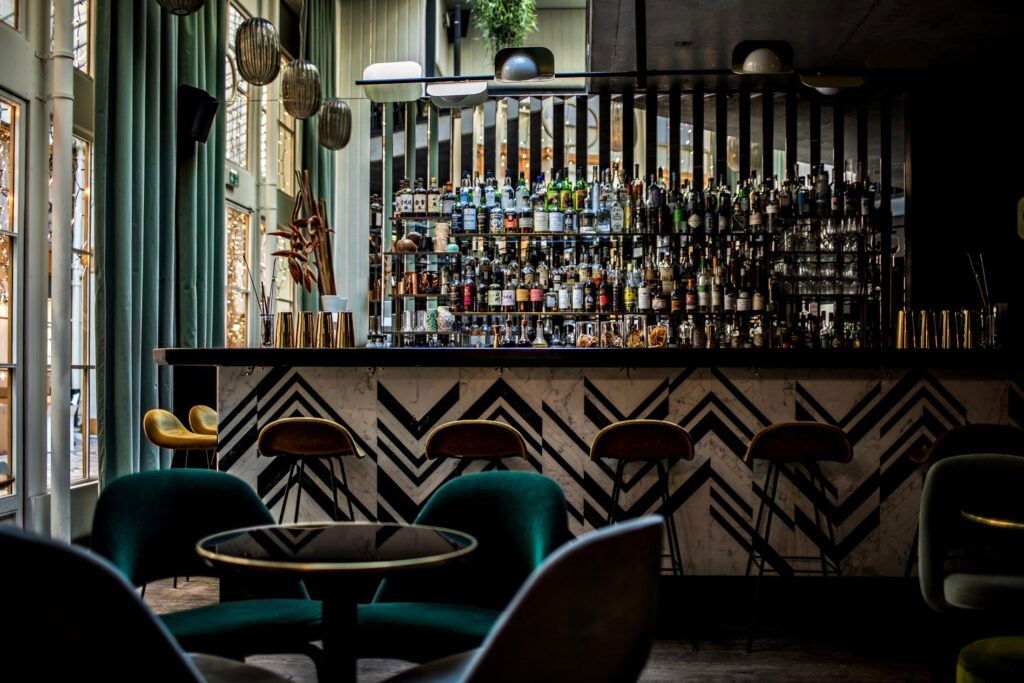
The entrance is not marked from the arcade. To reach Danico, you pass through Daroco, the Italian restaurant that occupies the front of the space, and find the bar beyond it. That routing is not arbitrary: the deliberate pause before arrival sets a register that the interior then maintains. Bold colour, velvet seating, and gold detailing place the room somewhere between the fashion-house history of the building and the kind of late-night bar that takes its drinks more seriously than its atmosphere tries to suggest.
Where Danico Sits in Paris's Cocktail Scene
Paris has not historically been a cocktail city in the way London, New York, or Tokyo have been. The template for serious drinking here ran through wine lists and neighbourhood bistro terraces rather than the bartender-as-technician format that became standard in anglophone cities after 2010. That has shifted considerably in the last decade. A cohort of bars, concentrated in the 2nd, 9th, and 10th arrondissements, now operates with the kind of programme depth that competes internationally rather than locally.
Danico sits at the leading of that cohort. A #49 ranking on the World's 50 Best Bars list in 2024, rising to #17 on the Top 500 Bars ranking in 2025, places it alongside a peer set that is global in scope. Within Paris itself, the relevant comparators are bars operating at similar programme ambition: Candelaria, which built its reputation on a mezcal-forward programme and a taqueria front, and Bar Nouveau. Older institutions like Harry's Bar occupy a different register entirely, their value more archival than technical. Buddha Bar operates at a different scale altogether, closer to hospitality spectacle than cocktail programme.
What distinguishes the upper tier of Paris bars from comparable venues in London or New York is partly a question of density. There are fewer of them, which means the leading operate with less competitive pressure from neighbours and more exposure to an international clientele that arrives already informed. Danico's largely international crowd is not incidental to its identity; it is the audience the bar's programming has consistently addressed.
The Xplorer Series and the Logic Behind It
The cocktail programme that built Danico's international ranking was the Xplorer series: five sequential menus, each structured around a specific country, its ingredients, and its drinking traditions. The concept is direct in premise and demanding in execution. Translating a country's culinary identity into a coherent set of cocktails requires sourcing ingredients that are not necessarily available through standard bar supply chains, developing techniques that serve those ingredients rather than override them, and producing drinks that read as conceptually coherent rather than loosely themed.
The fifth and final instalment of the series drew on Peru, a reasonable endpoint given that Peruvian cuisine has spent the last fifteen years becoming one of the most discussed food cultures in the world. The Leche de Tigre — built around a ceviche distillate, aji amarillo, and coconut — illustrates the approach: a cocktail that references a specific dish and a specific culinary tradition, then reconstructs it in liquid form using advanced distillation. The reference point is precise enough that anyone familiar with the dish will recognise the intent; the execution is far enough from the original that it reads as its own thing rather than a novelty translation.
This kind of programme, where technique serves a conceptual frame rather than the other way around, has become something of a signature format among the bars that consistently appear in international rankings. The risk is always that the concept overwhelms the drink. The Xplorer series' sustained recognition suggests that balance held across five menus.
The France Edition: A Deliberate Pivot
With the Xplorer series complete, Danico has moved to a special edition focused on France. For a bar whose identity was built around a distinctly outward-looking perspective, this is a notable shift in register. France's spirits and wine traditions are deep and well-documented, but the cocktail culture that has grown around them is comparatively recent and still developing its own vocabulary.
The France edition represents a different kind of challenge than any of the Xplorer menus. The audience at Danico is predominantly international, and France as a subject means working with ingredients and traditions that carry preconceptions and associations in ways that, say, Peru or any of the earlier series subjects did not. Whether the bar treats that as a constraint or an opportunity will determine how the edition lands with regulars who followed the series. It also positions Danico within a broader question that the serious cocktail world is starting to ask: what does French cocktail culture actually look like when it is treated with the same rigour applied to its cuisine and wine?
The Bar in Broader French Context
Danico's position in Paris is worth considering alongside what is happening in the wider French bar scene. The cities developing serious cocktail programmes outside the capital include Lyon, where La Maison M. has established a following, and Bordeaux, where Bar Casa Bordeaux operates in a city whose identity remains wine-dominant. Toulouse has Coté Vin, Strasbourg has Au Brasseur, Montpellier has Papa Doble, and the Riviera has Le Café de la Fontaine in La Turbie. None of these operate at the international ranking level Danico has reached, which reflects both Paris's concentration of talent and the city's access to the global clientele that sustains venues at that tier.
For international visitors with a specific interest in cocktail programmes, the Paris bar scene is worth mapping beyond Danico. Our full Paris restaurants and bars guide covers the broader picture across neighbourhoods and price points. Internationally, Bar Leather Apron in Honolulu operates at a comparable level of programme seriousness in a very different geographic context, which is a useful illustration of how bars in this tier function more as international peers than local competitors.
Planning Your Visit
Danico is located at 6 Rue Vivienne, 75002 Paris, inside Galerie Vivienne. Access is through the Daroco restaurant entrance. The 2nd arrondissement is walkable from the Palais-Royal and Grands Boulevards areas, and served by Bourse metro (line 3).
The bar carries a 4.7 rating across 947 Google reviews, a figure that is consistent with the level of execution the World's 50 Best Bars ranking implies. Booking in advance is advisable, particularly for weekend evenings when the bar's reputation draws visitors specifically to see the current programme.
| Venue | Format | Programme Style | Recognition |
|---|---|---|---|
| Danico | Bar within restaurant complex | Rotating concept menus, global ingredients | World's 50 Best #49 (2024), Top 500 #17 (2025) |
| Candelaria | Taqueria front, bar behind | Mezcal-forward, Latin American | Paris cocktail bar staple |
| Harry's Bar | Classic hotel-adjacent bar | Historic cocktails, archival identity | Long-established Paris institution |
| Bar Nouveau | Stand-alone bar | Contemporary programme | Paris cocktail scene |
Frequently Asked Questions
- What is the leading thing to order at Danico?
- The Xplorer series, which ran five country-themed menus across the bar's history, produced the most discussed drinks on the programme. The Leche de Tigre from the Peru edition , built on a ceviche distillate with aji amarillo and coconut , is the clearest illustration of how the bar approaches conceptual cocktail-making: a specific culinary reference point reconstructed through advanced technique. With the France special edition now in place, the current menu is structured around French ingredients and traditions, making it a different but equally deliberate experience. Ask the bar team which drink on the current menu represents the programme's central argument; at a bar ranked #49 on the World's 50 Best Bars list, the answer will be informed.
- What is the standout thing about Danico?
- Among Paris bars, Danico operates at a tier defined more by international ranking than by local competition. Its position at #49 on the World's 50 Best Bars list in 2024, improving to #17 on Top 500 Bars in 2025, places it in a peer group that is global rather than Parisian. The location, inside a 19th-century arcade that was once a Jean Paul Gaultier flagship and accessed through an Italian restaurant, adds a layer of contextual specificity that most bars in this ranking tier lack. The combination of that setting, the sustained programme ambition of the Xplorer series, and an international clientele that follows the bar's output rather than stumbles upon it, is what separates Danico from the broader Paris cocktail scene.
Recognized By


Similar venues by awards
Related editorial
- Best Fine Dining Restaurants in ParisFrom three-Michelin-star icons to the next generation of Parisian chefs pushing boundaries, these are the restaurants that define fine dining in the world's culinary capital.
- Best Luxury Hotels in RomeFrom rooftop terraces overlooking ancient ruins to Michelin-starred hotel dining, these are the luxury hotels that make Rome unforgettable.
- Best Cocktail Bars in KyotoFrom sleek lounges to hidden speakeasies, Kyoto's cocktail scene blends Japanese precision with global influence in ways you won't find anywhere else.
Save or rate Danico on Pearl
Keep this venue in your Pearl passport, rate it after you visit, and track it alongside every other place you collect.